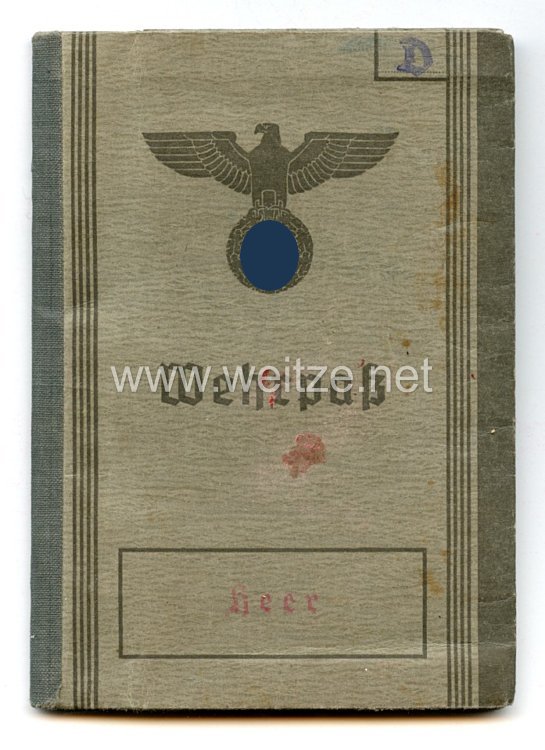
Wehrpass for a Man Born in 1894 with Training as an Aircraft Pilot
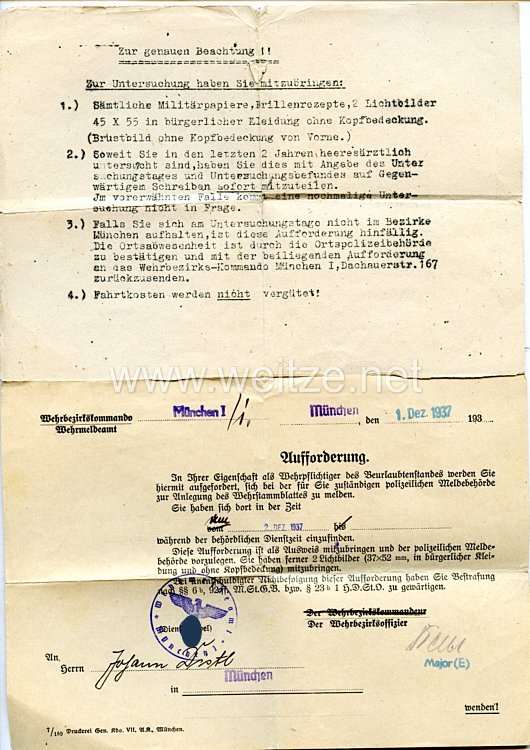
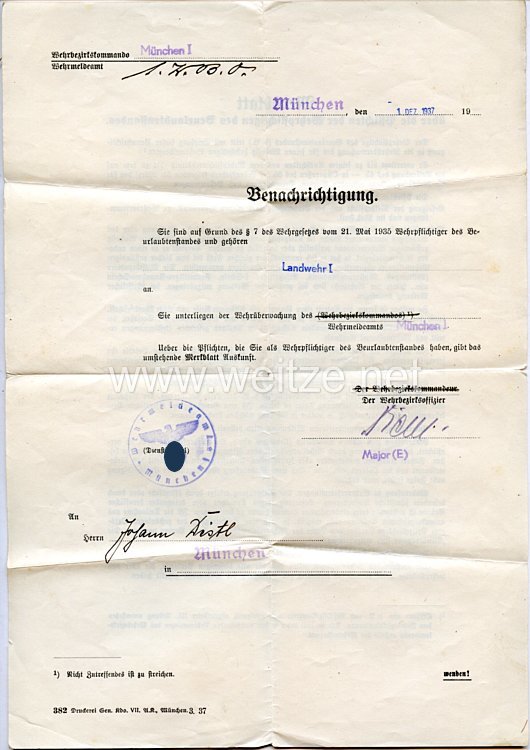
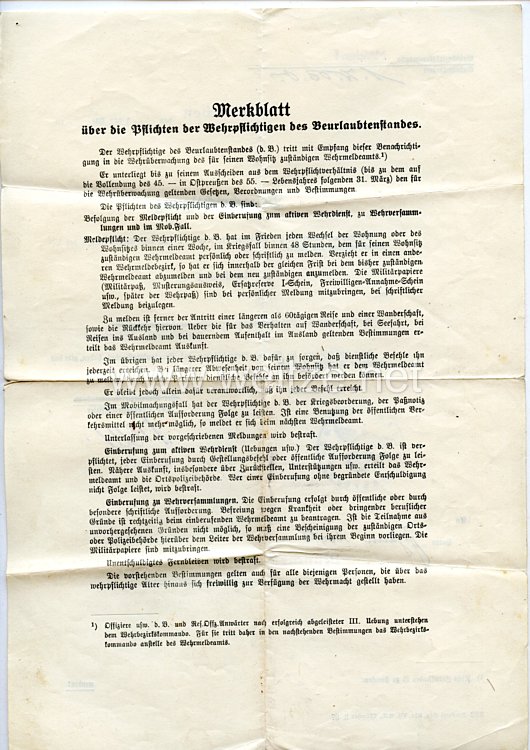
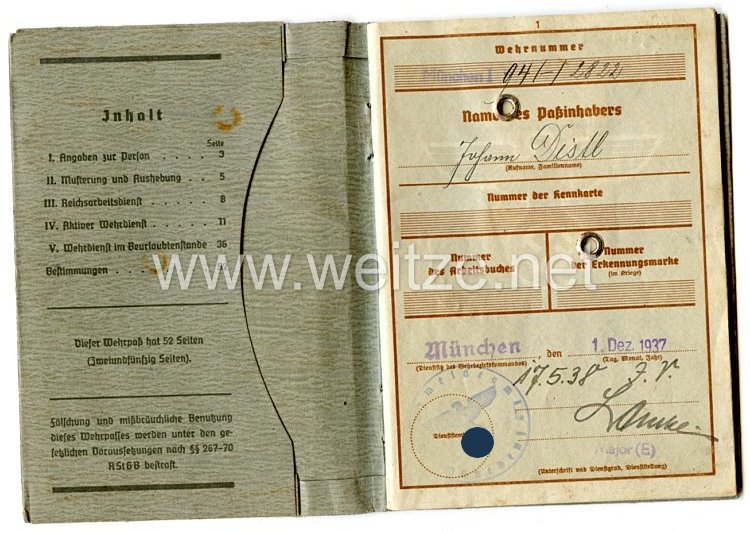
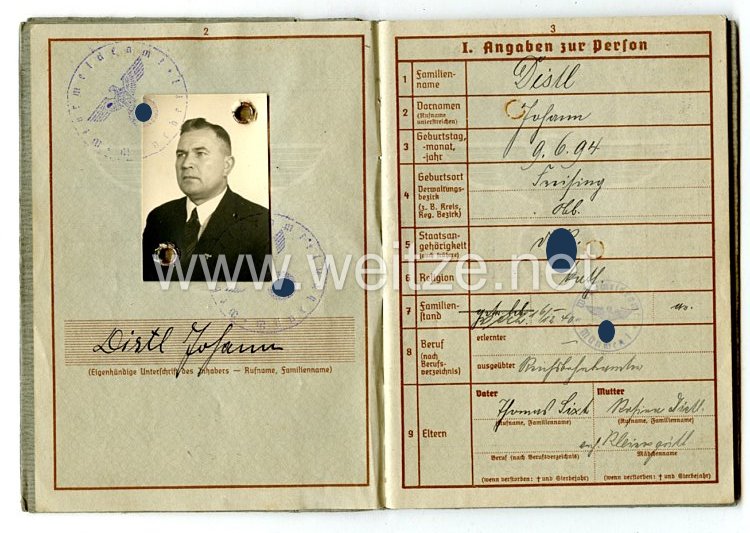
The Wehrpass (military service book) of a German soldier born in 1894 represents a significant contemporary historical document that chronicles a military career spanning two World Wars. This particular pass, issued on December 1, 1937, in Munich, belonged to a man who served in both World War I and during the era of the Third Reich, receiving special training as an aircraft pilot.
The Wehrpass had been a central document for registering military conscripts in the German Empire since imperial times. Following the reintroduction of universal conscription through the Defense Law of May 21, 1935, the system of military documentation was reorganized under National Socialist rule. The Wehrpass served as a personal military service record and contained all essential information about a soldier's military service, training, promotions, and decorations.
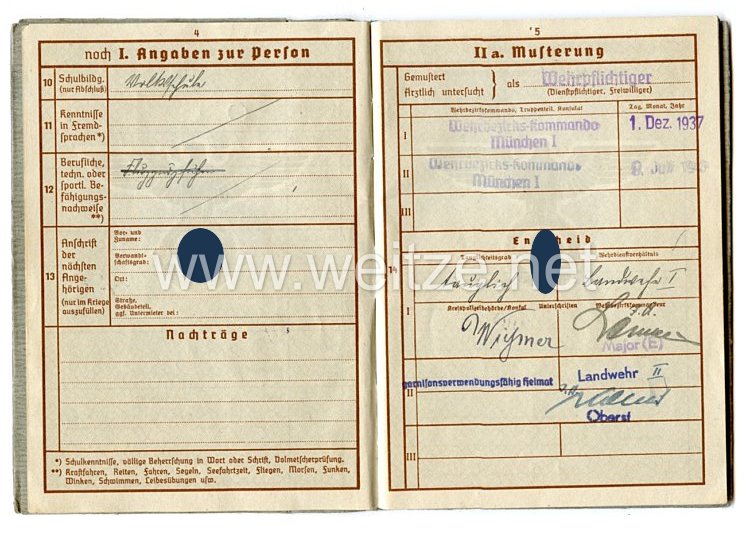
The holder of this pass was examined in 1937 as a conscript for Luftwaffe II (Lw II), indicating his assignment to the reserve forces of the still-young German Air Force. The Luftwaffe had only been officially established in 1935 after the NS regime broke the Versailles Treaty provisions. Assignment to Lw II meant that this experienced pilot, due to his prior service and age, was no longer intended for active front-line duty, but remained of interest to the Wehrmacht as a trained aircraft pilot.
Particularly noteworthy is his training as an aircraft pilot during World War I. Military aviation was still in its infancy between 1914 and 1918, and pilots were considered the military elite. Training to become an aircraft pilot was lengthy and dangerous – many flight students died during training due to immature technology and lack of safety standards. Those who successfully completed training and survived combat operations had demonstrated exceptional skills and nerves of steel.
His promotion to Unteroffizier (non-commissioned officer) in 1916 underscores the passport holder's military distinction. In the German Army of World War I, NCO ranks were only awarded to proven and reliable soldiers who had demonstrated leadership qualities and military aptitude. For aircraft pilots, such promotion was typical, as they fulfilled technically sophisticated and responsibility-heavy duties.
The awarded orders and decorations document his bravery and service in World War I. The Iron Cross 2nd Class was one of the most significant German military decorations and was awarded for exceptional bravery in the face of the enemy. The Bavarian Military Merit Cross 3rd Class with Swords was a specifically Bavarian decoration, indicating that the bearer either came from Bavaria or served in Bavarian military units. The Kingdom of Bavaria maintained its own military system within the German Empire with its own orders and decorations. The Honor Cross for Frontline Fighters was awarded from 1934 by Reich President von Hindenburg to all participants of World War I who had fought at the front.
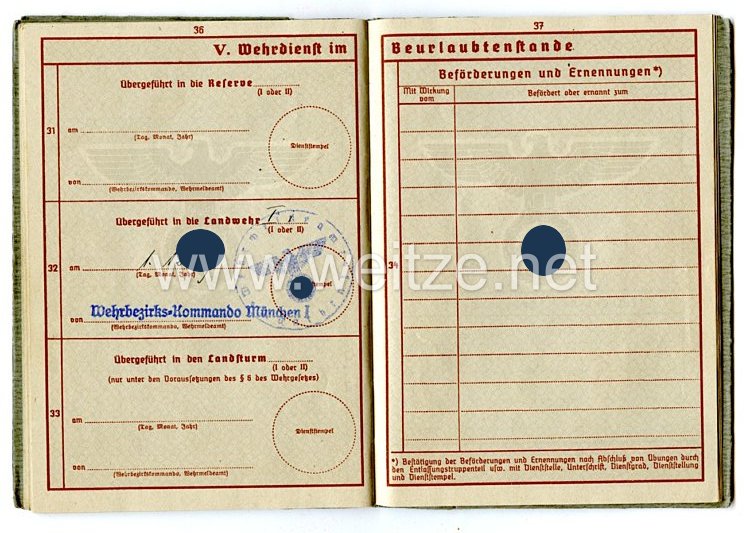
The entry dated July 9, 1943 regarding his indefinite transfer to the Landwehr (territorial reserve) marks an important point in his military career. At this time, the German Reich was already in a critical phase of World War II. The Battle of Stalingrad was lost, and setbacks were mounting on all fronts. A man born in 1894 was already 49 years old in 1943 – an age at which active front-line service was normally no longer reasonable. Transfer to the Landwehr meant he was designated for occupation duties, home defense, or reserve units, but no longer for combat operations at the front.
Such military documents are today important sources for military historical research and family history. They enable individual life stories to be traced within the context of the great military conflicts of the 20th century. Particularly the continuity from World War I to World War II reflected in such documents reveals the burdens borne by an entire generation of German men who had to serve in two World Wars.
The preserved condition of such historical documents varies greatly. Many military service books were lost in the chaos at the war's end in 1945 or were deliberately destroyed. Surviving examples with original photographs and complete entries are therefore of particular documentary and collectible value for museums, archives, and private collectors of military historical documents.