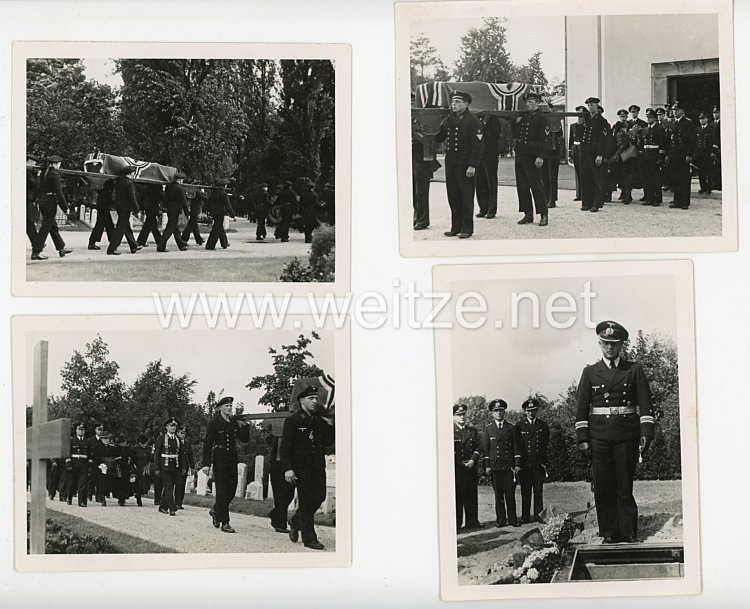
Kriegsmarine Photographs, Funeral of a Soldier

4 photographs, dimensions approximately 12 x 9.2 cm. Used condition.
327198
60,00

Kriegsmarine Photographs, Funeral of a Soldier

These four photographs documenting the funeral of a Kriegsmarine soldier represent a significant historical testament to military burial culture during World War II. Measuring approximately 12 x 9.2 cm, they correspond to the standard format for private and military photographs of that era.

The Kriegsmarine, the German naval force from 1935 to 1945, developed a comprehensive system of military honors and burial rituals as part of its organizational structure. These ceremonies served not only to honor fallen comrades but also to maintain morale and esprit de corps within the troops. Photographic documentation of such events was an important component of military commemorative culture.

During the war, the Kriegsmarine lost approximately 30,000 to 35,000 men through combat operations, accidents, and illness. The U-boat service suffered particularly devastating losses: of approximately 39,000 submariners, around 28,000 did not return. These enormous casualties made military funerals a frequent and significant event at all naval bases and units.

The Wehrmacht's military burial regulations were codified in various service regulations and decrees. They precisely specified how fallen or deceased soldiers were to be buried, including the lying in state, the ceremony itself, and the design of graves. Special elements were prescribed for naval personnel that emphasized the maritime character of the service branch.

A typical Kriegsmarine funeral ceremony included several prescribed elements: the honor guard at the coffin, usually consisting of the deceased's comrades; the escort of the coffin by a formation of naval personnel, often with reversed rifles as a sign of mourning; and military bands playing funeral marches. The coffin was frequently draped with the Reich War Flag, and the deceased's personal decorations were carried on a cushion.

Photography played an important role in documenting military events. Both official war correspondents and private photographs taken by soldiers themselves captured such moments. The photographs here, measuring approximately 12 x 9.2 cm, correspond to the standard format for amateur photographs of the time, suggesting they may have been taken by a participating soldier or relative.

Military cemeteries and memorial cemeteries for the Kriegsmarine were established during the war in many coastal cities and naval bases. Major naval garrisons such as Kiel, Wilhelmshaven, Hamburg, and other port cities maintained dedicated sections for fallen naval personnel. After the war's end, many of these graves were maintained by the Volksbund Deutsche Kriegsgräberfürsorge (German War Graves Commission).

The significance of such photographic documents today lies primarily in their value as historical sources. They show not only the formal aspects of military ceremonies but also provide insight into the emotional reality of war, the mourning for fallen comrades, and attempts to preserve human dignity even during wartime. Simultaneously, they document the uniforms, rank insignia, and organizational structures of the Kriegsmarine.

For collectors and historians, such photographs represent important primary sources. They complement official documents and reports with the personal and emotional dimension of wartime events. The preservation and scholarly analysis of such materials contributes to understanding this historical epoch.

The condition of such photographs often depends on their age and storage. The description as “used condition” indicates that the photos show typical signs of aging but have nevertheless preserved their historical significance. This is not unusual for photographs over 75 years old and does not diminish their documentary value.