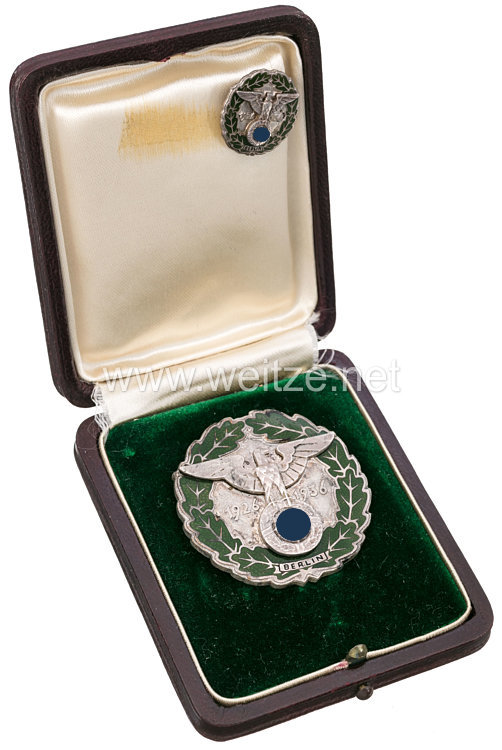
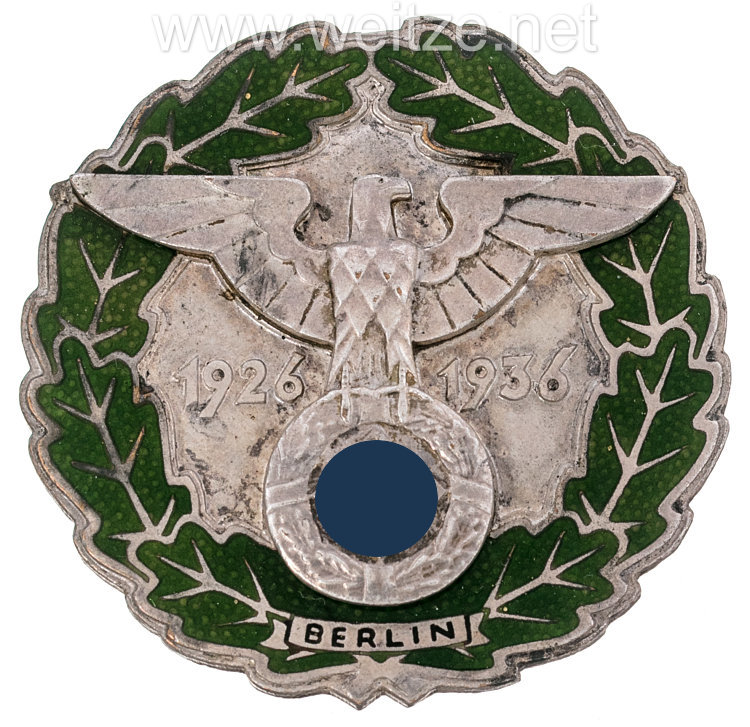
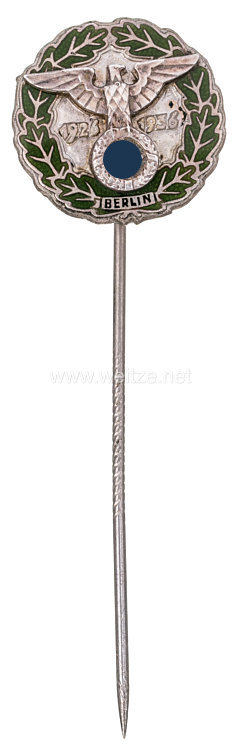
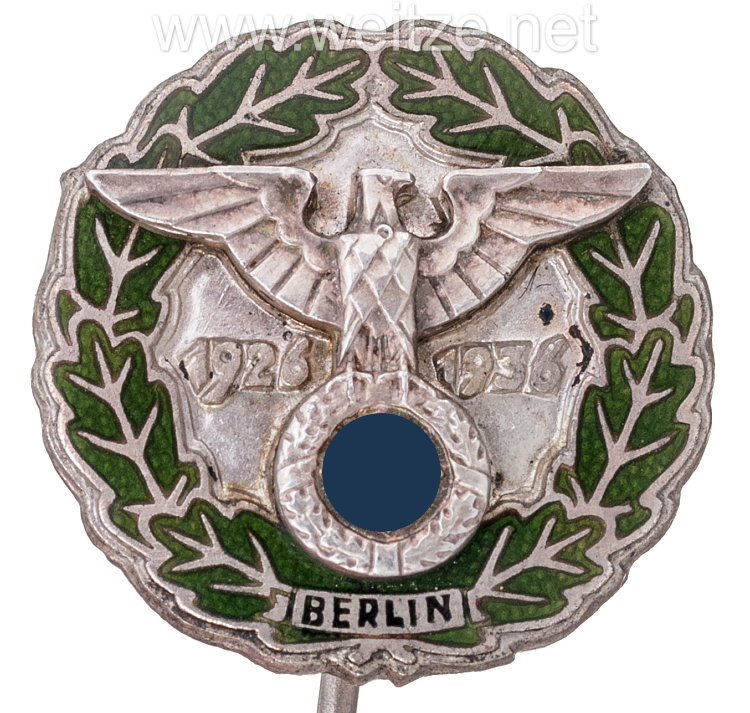
NSDAP Gau Badge of Honor Berlin in Silver 1926 - 1936

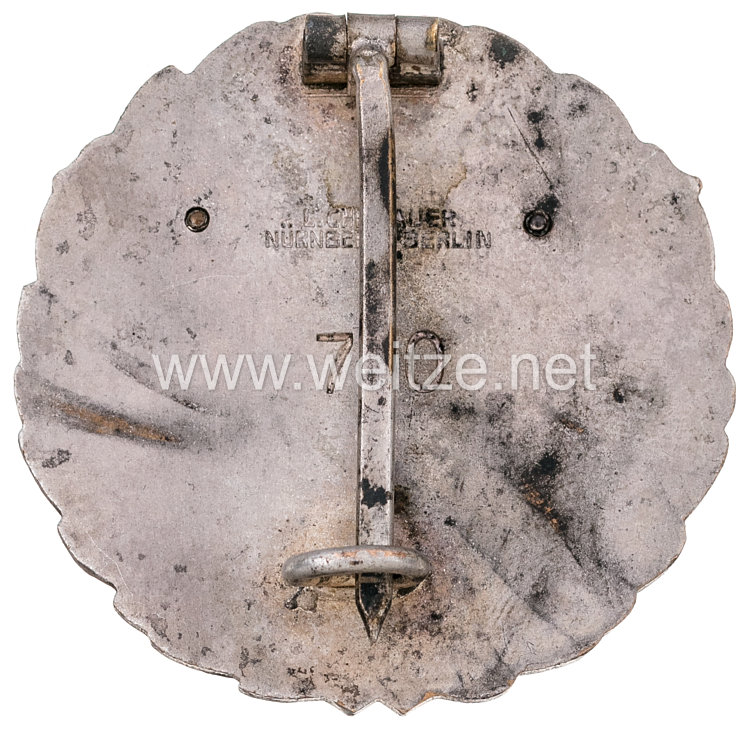
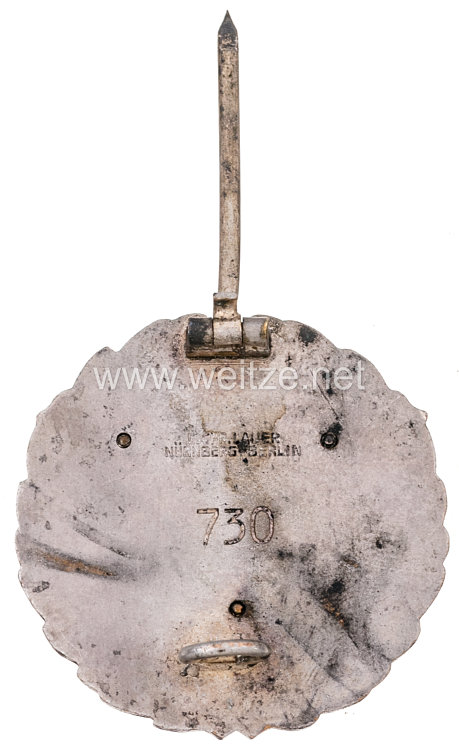
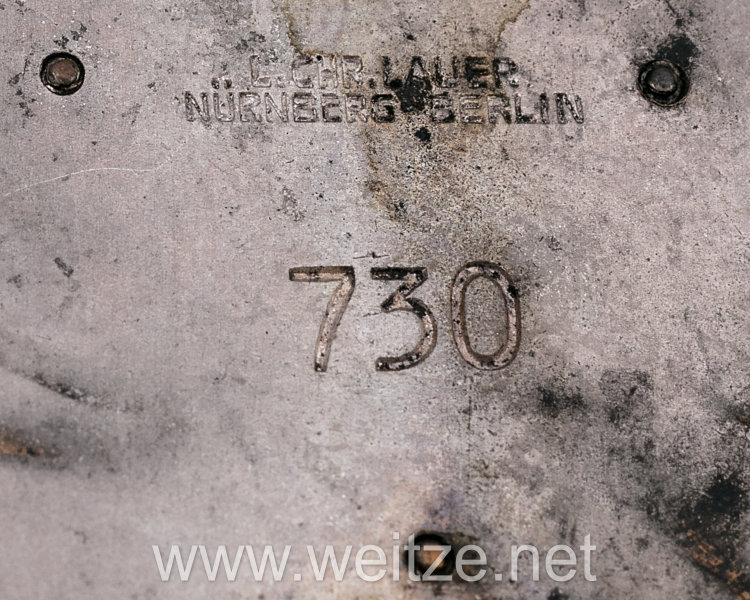
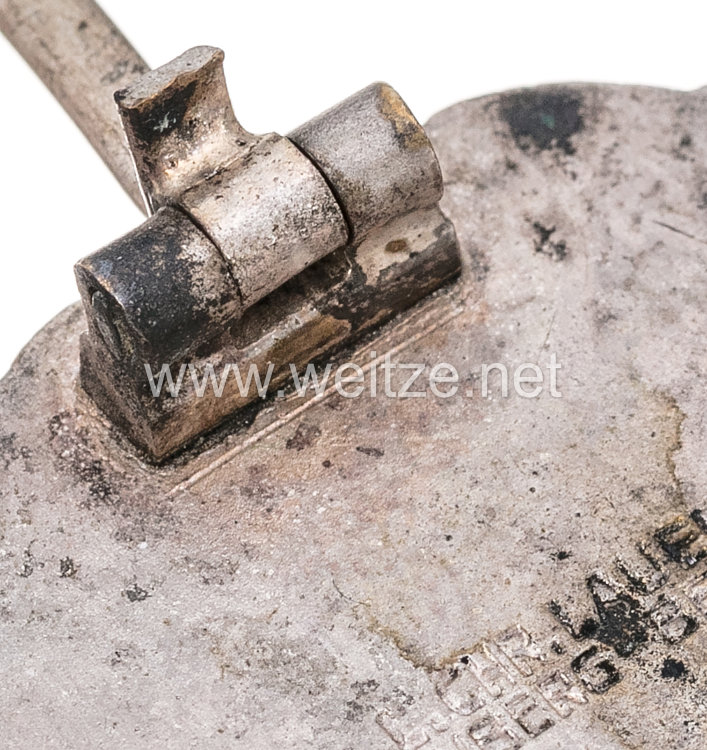
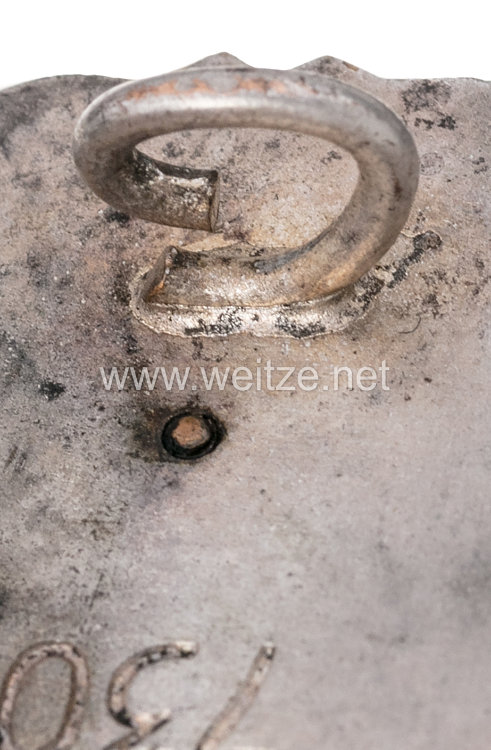
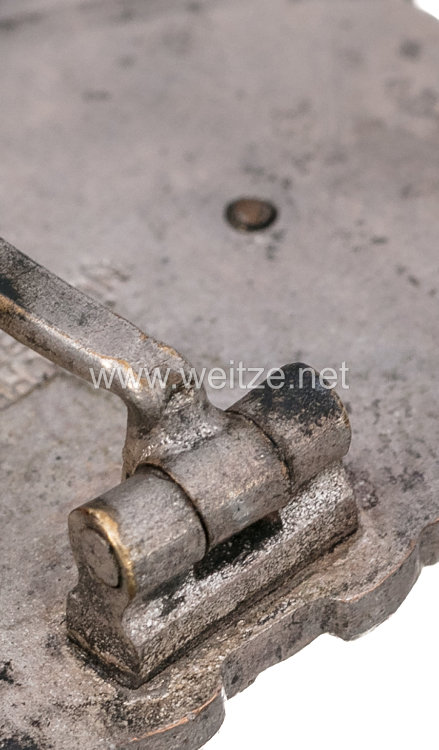
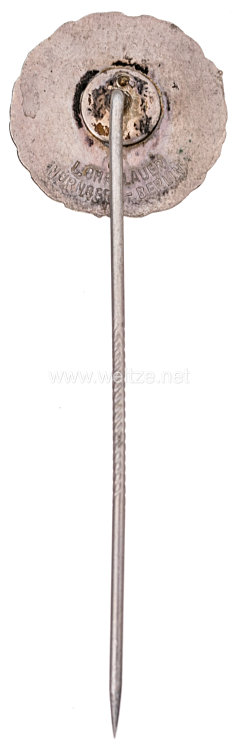
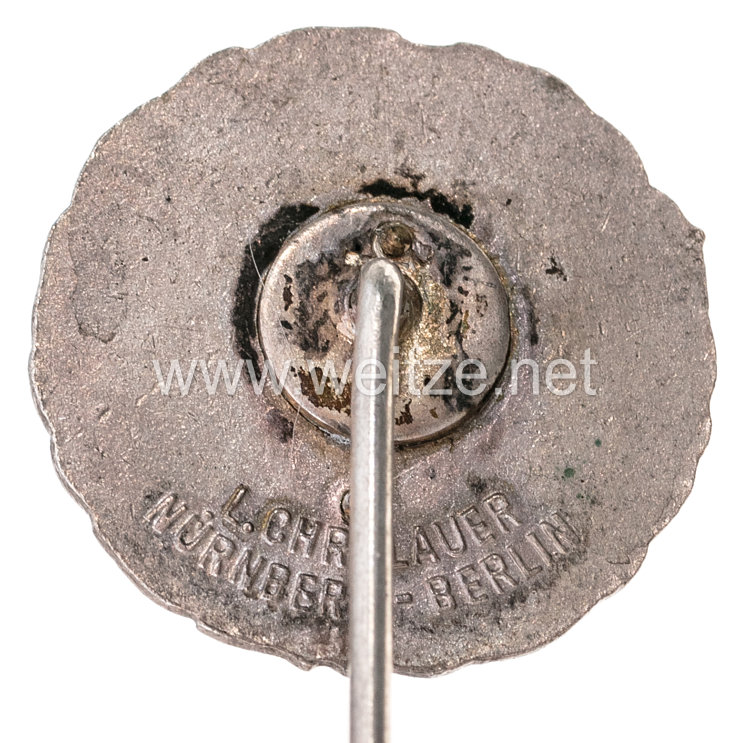
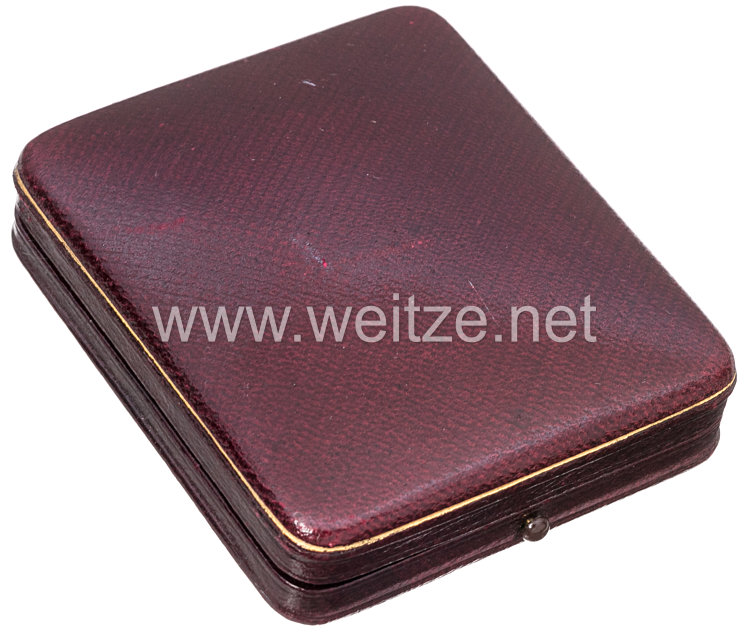
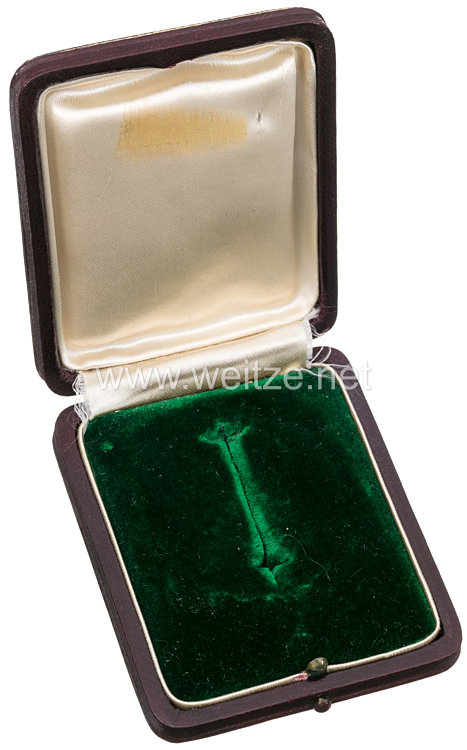
Constructed of silver-plated base metal with applied eagle, the oak leaf wreath enameled in green, beneath the inscription “Berlin” enameled in black. Reverse with maker mark “L. Chr. Lauer Nürnberg Berlin”, with award number 730. Complete with wine-red presentation case, with gold border around the edge, interior with green velvet bed. Accompanied by the large miniature, silver-plated base metal, the eagle separately applied, partially enameled, reverse with maker mark “L. Chr. Lauer Nürnberg Berlin”. Only minimally worn, in wonderful condition!
A superb ensemble. For the first time in over 30 years offered by us, in this completeness a sensation!
300897

NSDAP Gau Badge of Honor Berlin in Silver 1926 - 1936

The NSDAP Gau Honor Badge Berlin in Silver 1926-1936 ranks among the rarest political awards of the National Socialist Party organization. It was instituted in 1936 by the Gauleiter of NSDAP Gau Berlin, Joseph Goebbels, to commemorate the tenth anniversary of the establishment of Gau Berlin. This decoration documents a significant period in the NSDAP's history in the Reich capital and stands as an example of the Gau badge system through which the Party honored long-standing members.

The organizational history of Gau Berlin is more complex than the dates inscribed on the badge might initially suggest. While the organizational designation “Gau Berlin” existed from March 1925, from 1926 to 1928 Berlin was part of Gau Berlin-Brandenburg. Only on October 1, 1928, was it divided into two separate Gaue: Gau Berlin and Gau Brandenburg. Joseph Goebbels was appointed Gauleiter of Berlin-Brandenburg in November 1926 and continued as Gauleiter of the separate Gau Berlin from October 1, 1928, until May 1, 1945. The Nazi Gau system itself was established at a party conference on May 22, 1926, to improve party administration.

Under Goebbels' leadership, the NSDAP in Berlin transformed from a small, conflict-ridden organization of a few hundred members in 1926 into a powerful political force. The award of the honor badge for the tenth anniversary in 1936 occurred in a year when Hitler issued new regulations regarding NSDAP orders and awards, with Gau badges explicitly listed among recognized NSDAP awards.

The badge was issued in two classes: Gold and Silver. The Silver grade, which is described here, was awarded for continuous membership in the NSDAP since June 1, 1927 or earlier. The Gold grade, by contrast, was awarded to members whose continuous membership dated back to 1926 or earlier. In total, only 31 badges in Gold and 665 badges in Silver were awarded. Of the 665 Silver badges, a remarkable 41 were awarded to women, documenting the role of female party members in the early Berlin NSDAP organization.

Award documents were issued dated October 29, 1936, and signed by the Gauleiter. Known award numbers include Number 48, which was awarded to Hermann Lutz, as well as Numbers 656 and 730. The specimen described here bears award number 730 and thus belongs to the last Silver honor badges awarded.

The badge was manufactured by the renowned coin and medal minting firm L. Chr. Lauer Nürnberg Berlin. The company was founded in 1860, though its roots date back to 1790. During the Third Reich era, the firm was owned by Gustav Rockstroh and maintained locations in Nuremberg (Kleinweidenmühle 12) and Berlin (Ritterstraße 46). The company produced medals, orders, and association badges.

The badge is constructed from silver-plated tombak (brass alloy) with a separately applied eagle positioned on a green enameled oak leaf wreath. Below the eagle is the black enameled inscription “Berlin.” The reverse bears the manufacturer marking “L. Chr. Lauer Nürnberg Berlin” along with the individual award number. The complete ensemble includes the badge in its wine-red presentation case with gold border trim and green velvet interior lining, plus a large miniature version, also manufactured by L. Chr. Lauer, with the eagle separately applied and partially enameled.

Gau badges were political awards of the Nazi Party issued by Gauleiters of Nazi political districts to recognize loyal service or commemorate events. Regulations for award were determined by the Gauleiter. They were considered Party awards but not recognized as national awards. They could be worn at any time except when wearing the Golden Party Badge.

The firm L. Chr. Lauer survived World War II. The company archive was destroyed in 1945 during the war, with only some dies salvaged from the rubble. Shortly after the end of World War II, Lauer produced the Nuremberg War Crimes Trial insignia for the American occupation authorities. In 1982, the company was converted from a limited partnership into a sole proprietorship under owner Gert Rockstroh in Nuremberg. Gau badges as Nazi Party awards became prohibited symbols after 1945.