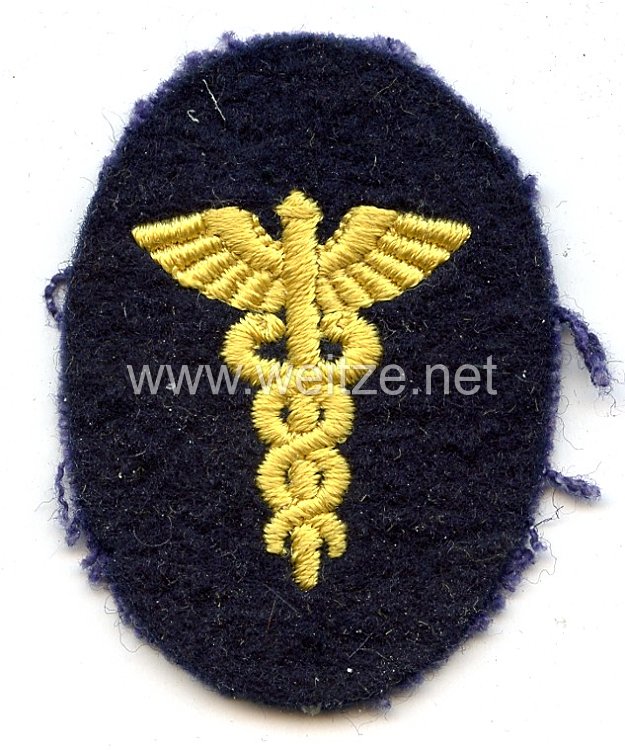
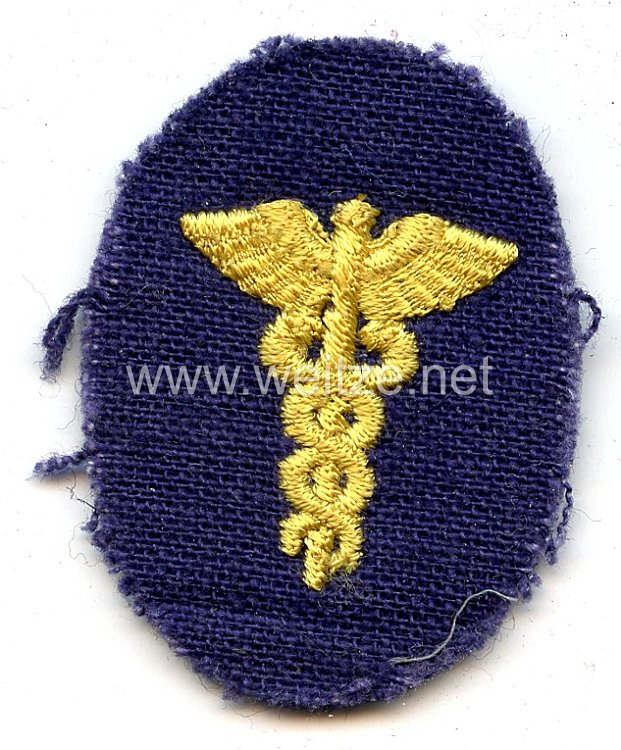
Kriegsmarine Single Sleeve Insignia for an Administrative Officer
The Kriegsmarine single sleeve badge for administrative officers represents a fascinating example of military rank insignia and career designation systems used by the German Navy during World War II. This machine-embroidered version embodies the strict hierarchy and sophisticated identification system that characterized the German Navy between 1935 and 1945.
The Administrative Career Path in the Kriegsmarine was one of several specialized officer careers that existed alongside the actual naval officer career. Administrative officers were responsible for the administrative, economic, and logistical management of the Navy. Their duties encompassed supply, provisions, pay, accounting, and general administrative matters for ships, units, and naval facilities. This career path was considerably rarer compared to combat units, making corresponding badges highly sought-after collectibles today.
The introduction of career badges occurred through various ordinances and regulations of the Supreme Naval Command. Following rearmament and the official founding of the Kriegsmarine in 1935, a comprehensive system of rank insignia and career designations was established. Administrative officers wore their specific career badges on the sleeves of their service jackets to make their specialization clearly visible.
The sleeve badge for administrative officers typically consisted of a golden-yellow anchor or similar maritime symbols combined with specific career colors. The administrative career was designated by the color dark blue, which distinguished it from other careers such as the medical career (dark blue with red piping) or engineering officer career (black). This color coding enabled quick identification of an officer's function.
Machine embroidery was a common manufacturing method for sleeve badges during World War II. Unlike hand-embroidered versions, often used for higher officers or as private commissions, machine-embroidered badges were more standardized and cost-effective to produce. The quality of machine embroidery varied depending on the manufacturer and production period, with early war years often showing higher quality than later productions under wartime conditions.
The wearing of these sleeve badges was precisely regulated by the Kriegsmarine's dress regulations. They were attached to the upper sleeves of blue service jackets (service dress, full dress), with position and orientation precisely prescribed. The badges were worn singly, meaning they were not arranged in pairs but only on the corresponding sleeve.
The organizational significance of administrative officers cannot be underestimated. In a modern navy conducting complex logistical operations over great distances, efficient administration was essential. Administrative officers served on warships, in naval bases, with fleet commands, and in the Naval High Command structure. They ensured that combat units were supplied with everything necessary and that administrative processes ran smoothly.
Training to become an administrative officer occurred through special naval schools and included both military and administrative subjects. Candidates often had to demonstrate commercial or administrative training and then underwent specific naval education. The career offered advancement opportunities up to Fleet Intendant, the highest administrative rank.
The condition of such historical badges varies considerably. A piece designated as “Condition 3” typically shows clear signs of wear, which is quite authentic and historically valuable for worn militaria. Such signs of wear may include thread loss, discoloration, or minor damage that often underscores the authenticity of the piece.
Today, Kriegsmarine sleeve badges are sought-after collectibles for militaria enthusiasts and historians. Particularly rare career paths like administrative officers are especially desirable due to their smaller numbers. Authentication of such pieces requires expertise regarding materials, manufacturing techniques, and historical details, as the market also contains reproductions.
The study of these insignia provides valuable insights into the organizational structure and professional specialization within the German Navy. They represent not just military decorations but important historical documents that illuminate the complex administrative machinery necessary to maintain a modern naval force during one of history's most significant conflicts.