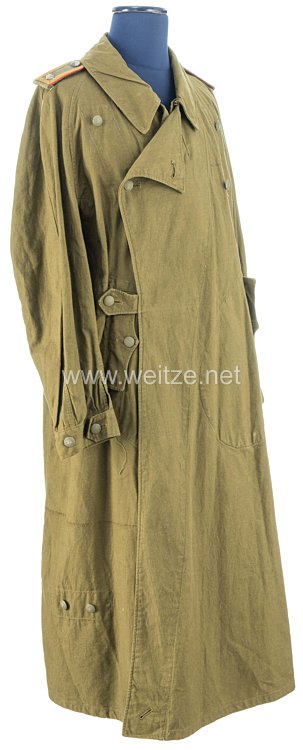
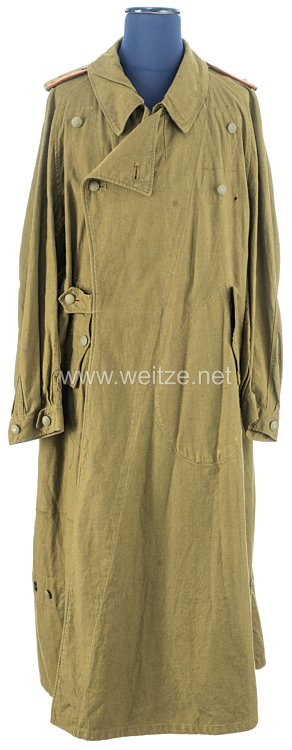
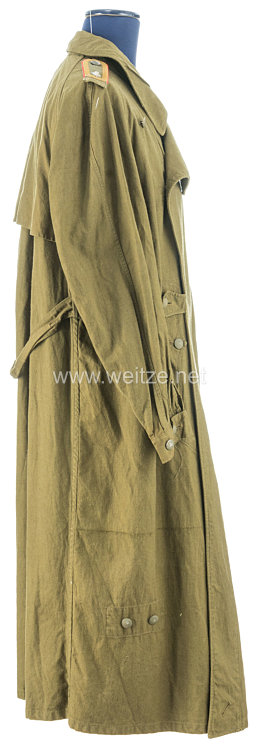
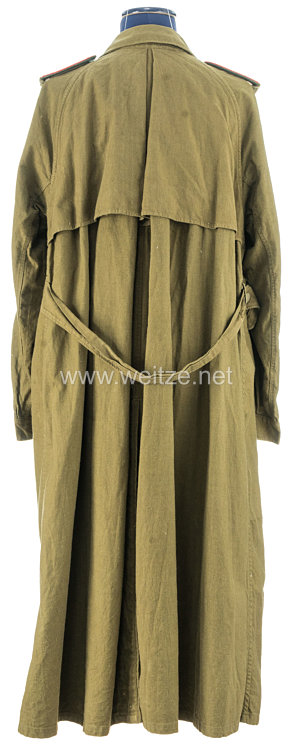
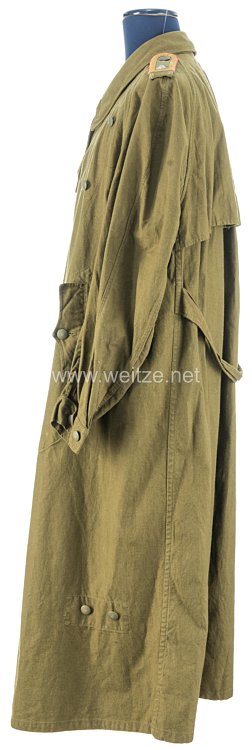
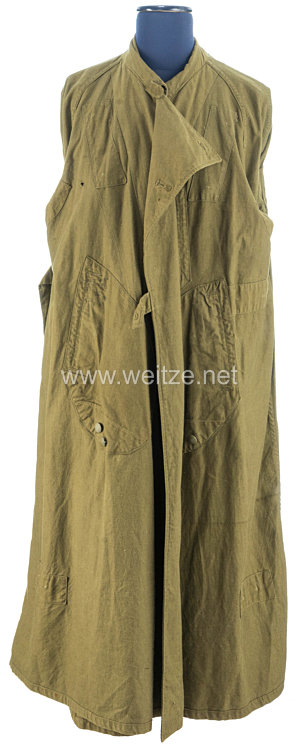
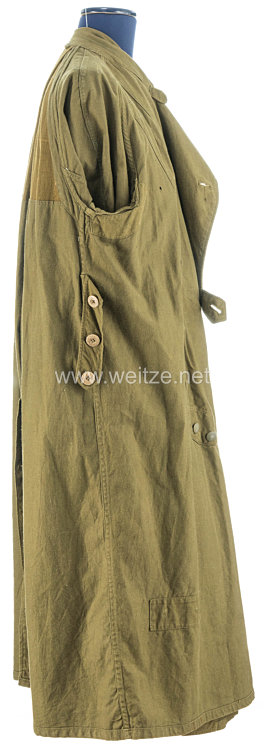
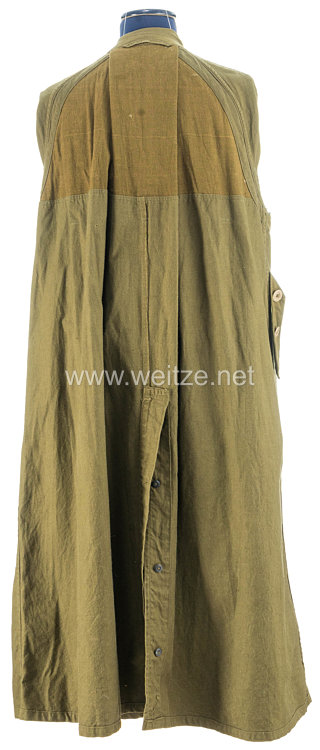
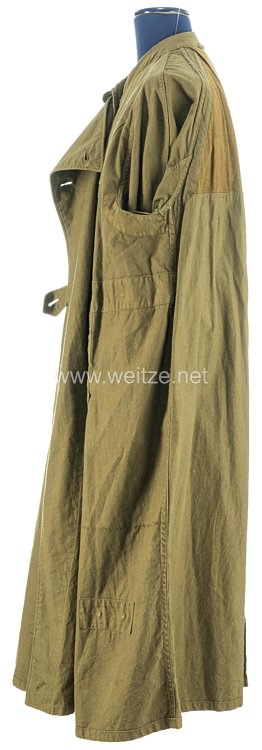
Wehrmacht Afrika Korps Motorcyclist's Coat M 41 for a Feldwebel of the Artillery or Assault Artillery

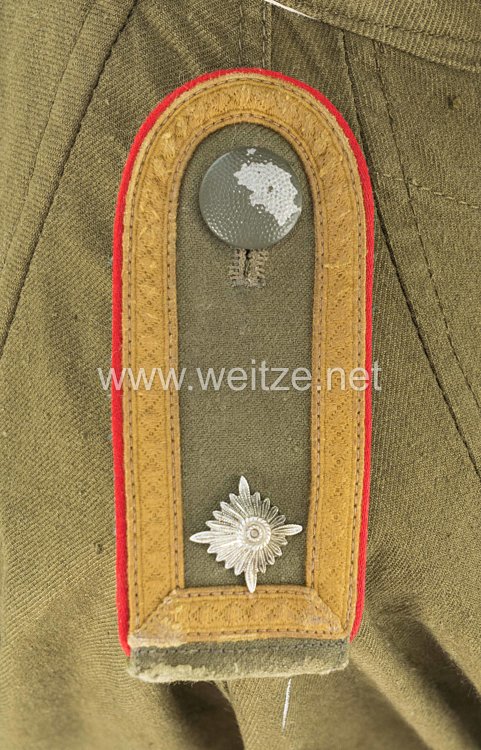
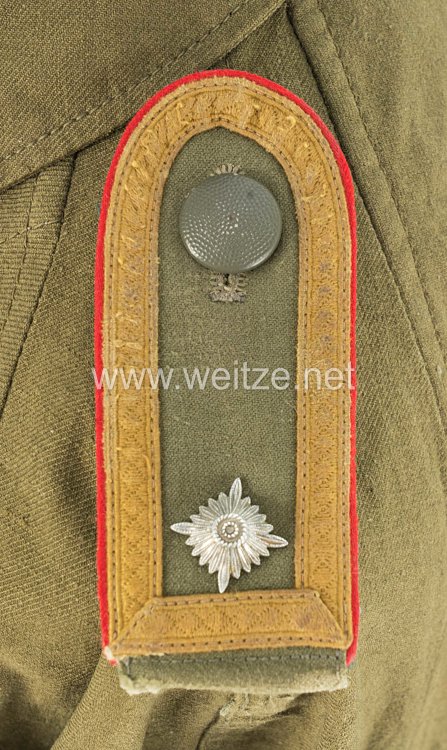
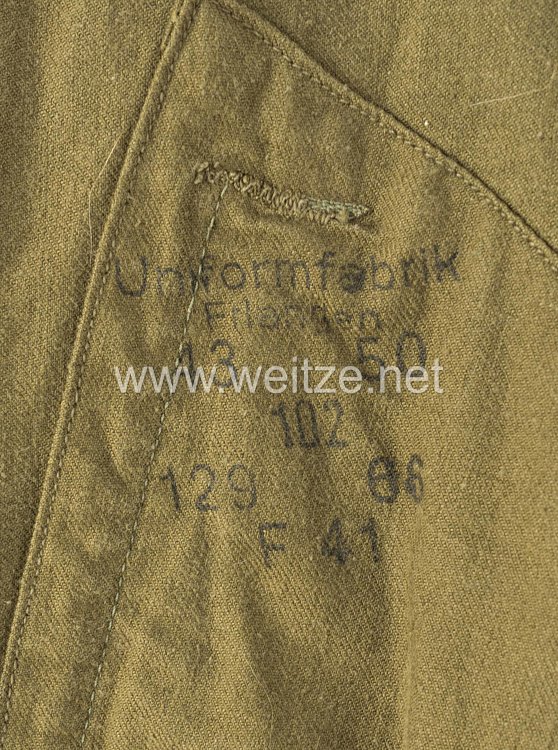
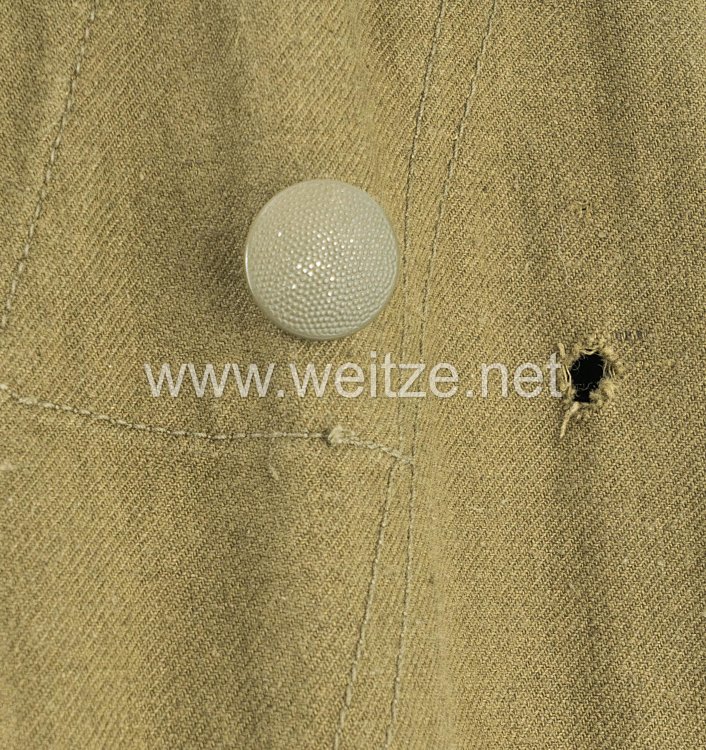
Chamber piece. Made of heavy olive linen fabric in the typical cut for motorcycle dispatch riders, complete with all buttons, painted olive green. The shoulder boards in tropical version with loops. Interior with fine manufacturer's and chamber stamp “Uniformfabrik Erlangen... F 41”. Only lightly worn, condition 2.
407996
1.750,00

Wehrmacht Afrika Korps Motorcyclist's Coat M 41 for a Feldwebel of the Artillery or Assault Artillery

The Kradmantel M 41 (Motorcycle Coat Model 1941) represents one of the most characteristic garments of the German Wehrmacht during World War II. This particular specimen in tropical version for the German Afrika Korps combines functional military clothing with the special requirements of desert warfare in North Africa between 1941 and 1943.

The development of specialized motorcycle coats for military purposes dates back to the increasing motorization of the Wehrmacht in the 1930s. Kradmelder (motorcycle dispatch riders) played a central role in military communications, as they transmitted messages and orders between different units, often under dangerous conditions and in all weather. The characteristic cut of the motorcycle coat took into account the special requirements of motorcycle riding: extended back, wide sleeves for freedom of movement, and robust materials.

The present piece was manufactured by the Uniformfabrik Erlangen (Erlangen Uniform Factory) in 1941, as evidenced by the depot stamp. Erlangen was one of several important centers of German uniform production during the war. The marking “F 41” refers to the production year 1941, a decisive year for the Afrika Korps.

The tropical version differed in several essential aspects from standard models for European theaters. The heavy olive-colored linen cloth provided protection from sand and sun, while being more breathable than the darker wool fabrics of standard uniforms. The olive-green painted buttons prevented reflections in the intense North African sun and corroded less quickly under the extreme climatic conditions of the desert.

The shoulder straps with loops in tropical version indicate the rank of Feldwebel (sergeant with portepee) of the Artillery or Assault Artillery. The red branch color traditionally identified the artillery in the German army. The assault artillery, an innovative branch of service that employed armored self-propelled guns, was officially established as an independent branch in 1940 and also adopted the red branch color.

The German Afrika Korps was established in February 1941 under the command of Lieutenant General Erwin Rommel and dispatched to Libya to support the Italian allies. The special challenges of desert warfare required specially adapted equipment and clothing. Extreme temperature fluctuations, omnipresent sand, intense solar radiation, and limited supply possibilities placed special demands on materials and construction.

Motorcycle dispatch riders in the Afrika Korps fulfilled vital tasks. In the vast desert landscape, where radio communication could be impaired by atmospheric conditions or enemy jamming, motorcycle couriers often remained the most reliable connection between units. They traveled primitive desert tracks, navigated through sandstorms, and delivered orders that could be decisive for the war.

The designation as Kammerstück (depot piece) indicates that this coat came from an official military depot or collection. The excellent state of preservation “only lightly worn, condition 2” is remarkable for a garment over 80 years old and suggests that it was either little used in service or carefully stored.

The Uniformfabrik Erlangen produced uniforms and equipment for the Wehrmacht throughout the war. The quality of manufacture and the complete preservation of all components of this coat testify to the high craftsmanship quality of German uniform production at the beginning of the war, before material shortages and production pressure affected standards.

Today, such original pieces represent important historical documents that provide insight into the material culture of World War II. They document not only military organizational structures and rank insignia, but also the technological and industrial capacities of the time, as well as the practical requirements of warfare in different geographical and climatic regions.

r