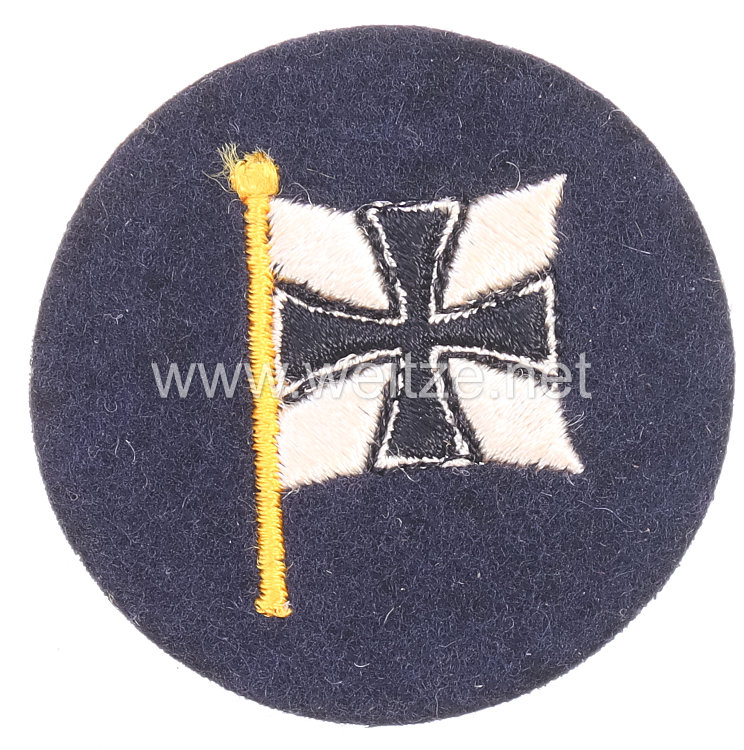
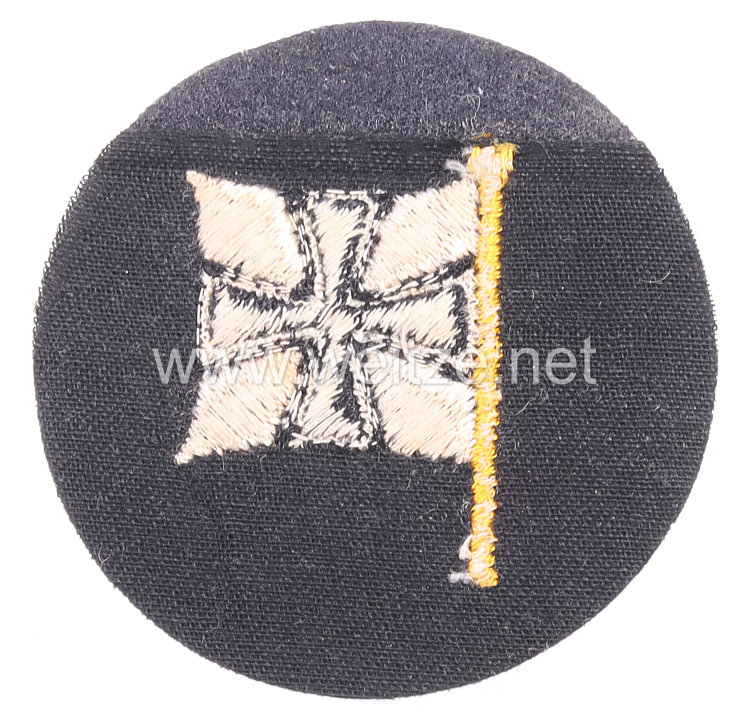
Kriegsmarine Sleeve Insignia for Staff Personnel

Machine-embroidered version for the blue tunic. Unissued condition, Condition 2.
404396
45,00

Kriegsmarine Sleeve Insignia for Staff Personnel

The Kriegsmarine sleeve badge for staff personnel represents an important component of the German Navy's uniform identification system during World War II. This machine-embroidered version for the blue blouse documents the precise hierarchy and organizational structure within the Kriegsmarine, which served as the official designation of the German naval forces from 1935 to 1945.

The introduction of special sleeve badges for various service positions within the Kriegsmarine occurred as part of comprehensive uniform regulations issued after the rearmament of the Wehrmacht from 1935 onwards. The staff personnel occupied a special position, as they performed administrative, logistical, and planning tasks in naval headquarters. This service position required clear visual identification to make hierarchy and functional assignment immediately recognizable.

The machine embroidery on this badge represents industrial manufacturing, which became increasingly important during the war. In contrast to hand-embroidered versions, which were often of higher quality and more detailed, machine production enabled faster and more cost-effective manufacturing. This production method was particularly used for badges for enlisted ranks and lower grades, but was also employed for certain special badges.

The blue blouse for which this badge was intended formed an essential part of the Kriegsmarine uniform. The navy blue working and service uniform was worn during daily duty on land and partially on board ships. It differed significantly from the white summer uniform and the dark dress uniform. The sleeve badges were typically attached to the left upper arm and indicated special functions, qualifications, or affiliations.

The organization of staff personnel within the Kriegsmarine was complexly structured. The High Command of the Navy (Oberkommando der Kriegsmarine, OKM) under Grand Admiral Erich Raeder (until 1943) and later Karl Dönitz had various departments and staffs responsible for operational planning, logistics, personnel, and administration. At regional and local levels, additional staff structures existed within fleets, fleet units, and naval shore establishments.

The Kriegsmarine's uniform regulations were detailed in various service regulations. The Dress Regulations for the Kriegsmarine precisely governed which uniform components were to be worn on which occasions and how badges were to be attached. These regulations were modified several times during the war, with increasingly simplified versions being authorized for material reasons.

The unworn condition of the present badge is of particular historical significance. Many uniform items and badges were actually worn during the war and show corresponding signs of use. Unworn specimens may have various reasons: they were possibly procured as replacements but never used, or they remained as warehouse stock until the end of the war. Such pieces enable an authentic assessment of the original manufacturing condition today.

Machine embroidery typically exhibits characteristic features: uniform stitches, precise contours, and a certain standardization in design. The threads used were mostly artificial silk or cotton, with coloring required to comply with regulations. For badges on the blue uniform, silver-gray or white threads on a dark blue background were frequently used.

In the context of military history, such sleeve badges document the pronounced symbolism and hierarchy of the Wehrmacht branches. The Kriegsmarine developed a particularly differentiated system of badges that indicated not only ranks but also specializations, qualifications, and special assignments. This reflected the technical complexity and specialized tasks of the naval forces.

The production of these badges involved specialized manufacturers who worked under contract for the military. Quality control was important to ensure standardization across different production facilities. The use of machine embroidery allowed for mass production while maintaining acceptable quality standards, which was crucial for equipping a rapidly expanding military force.

Today, such badges are important objects of study for military historians and uniform specialists. They enable conclusions about production methods, material usage, and organizational structures. At the same time, they serve as reminders of the National Socialist era and the Wehrmacht's role in World War II.

r