Königreich Bayern Ehrensäbel für Tapferkeit aus den Napoleonischen Kriegen 1805 - 1813
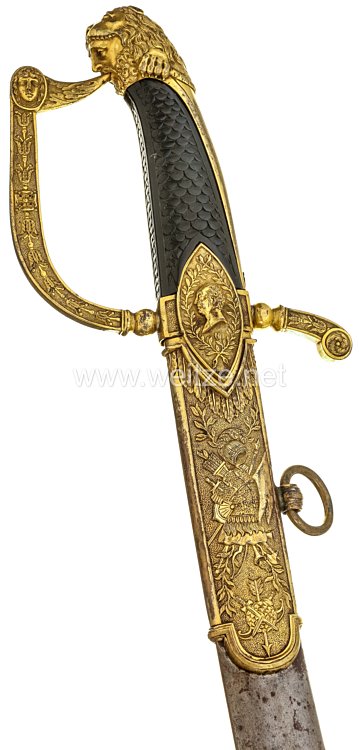
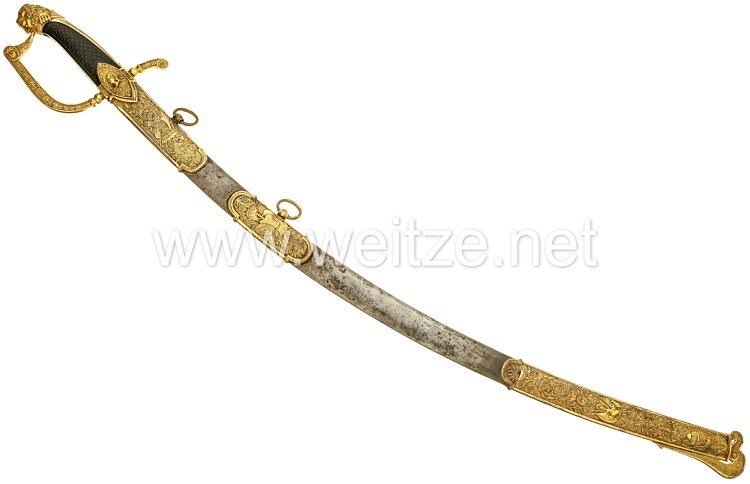
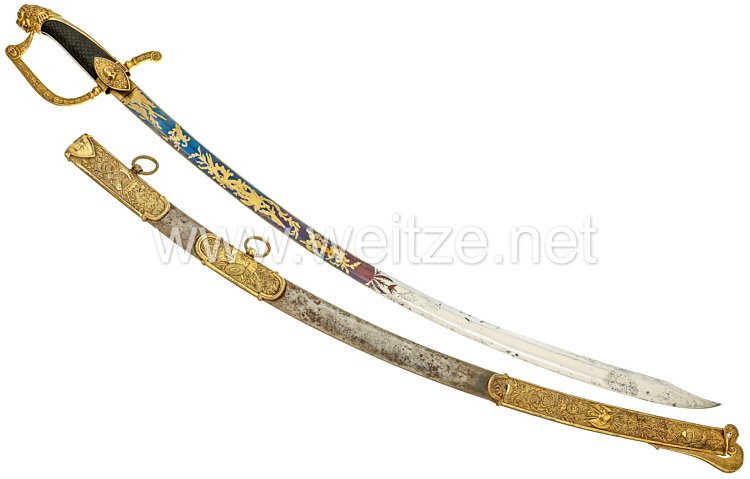
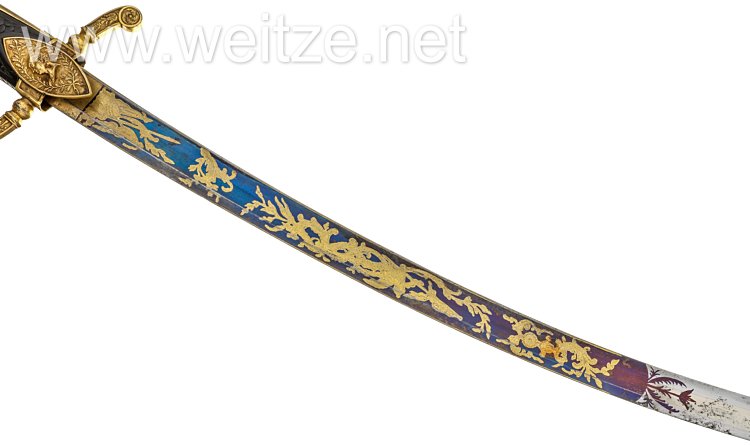
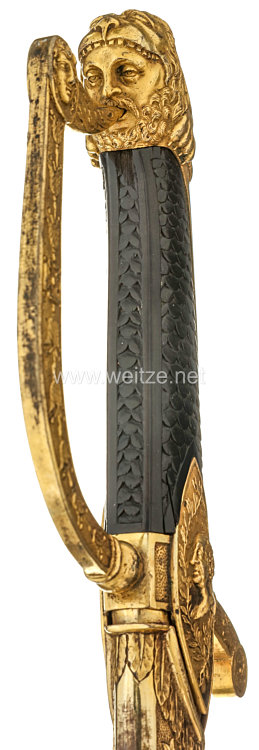
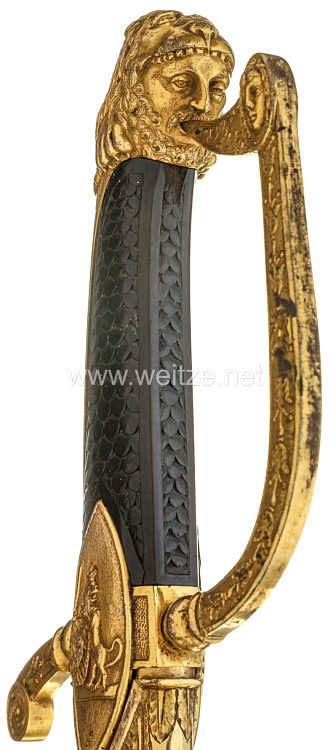
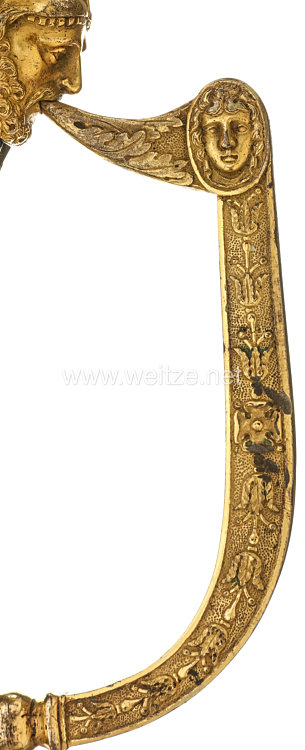
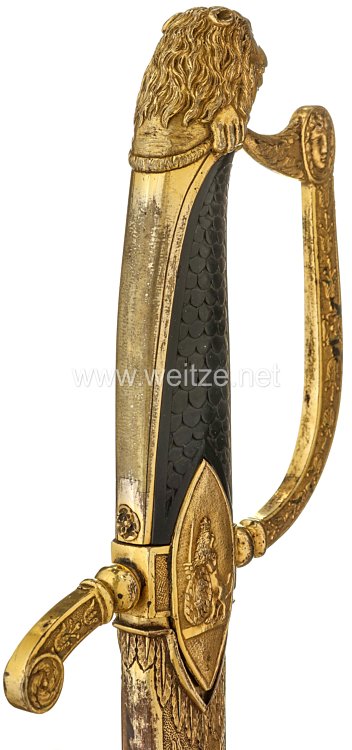
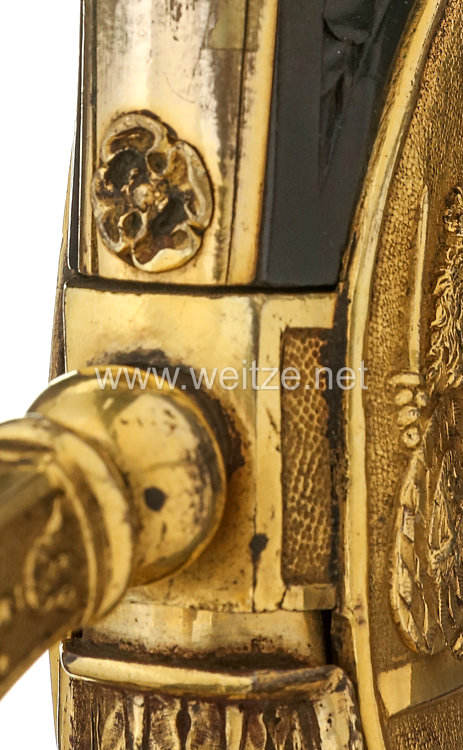
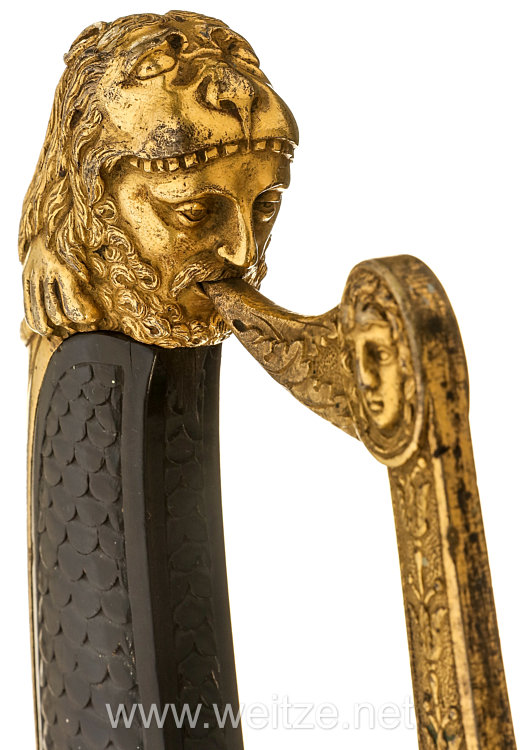
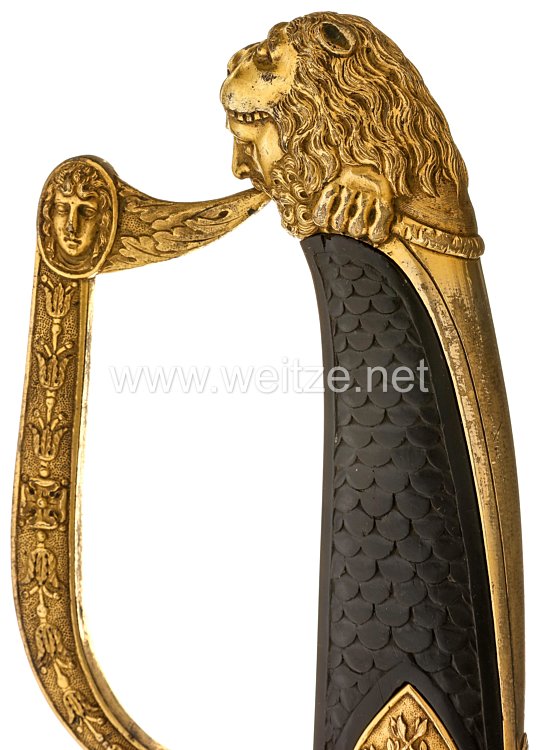
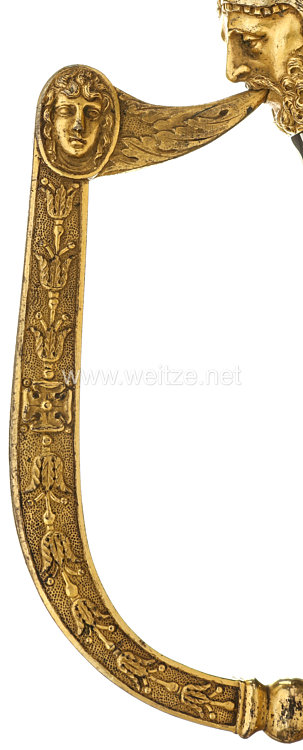
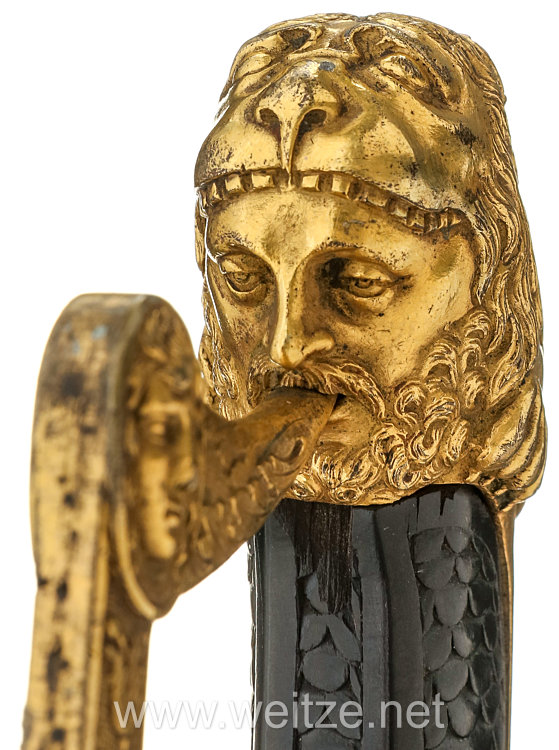
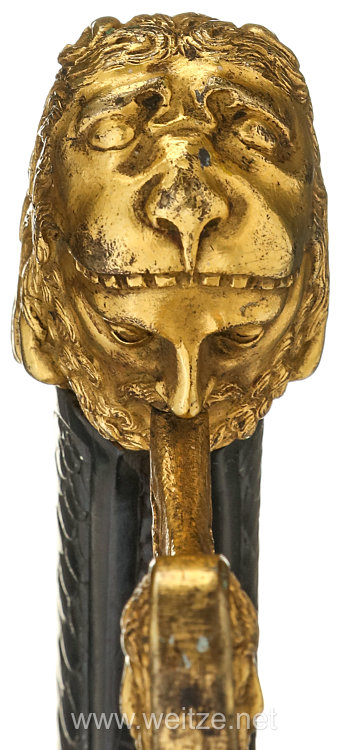
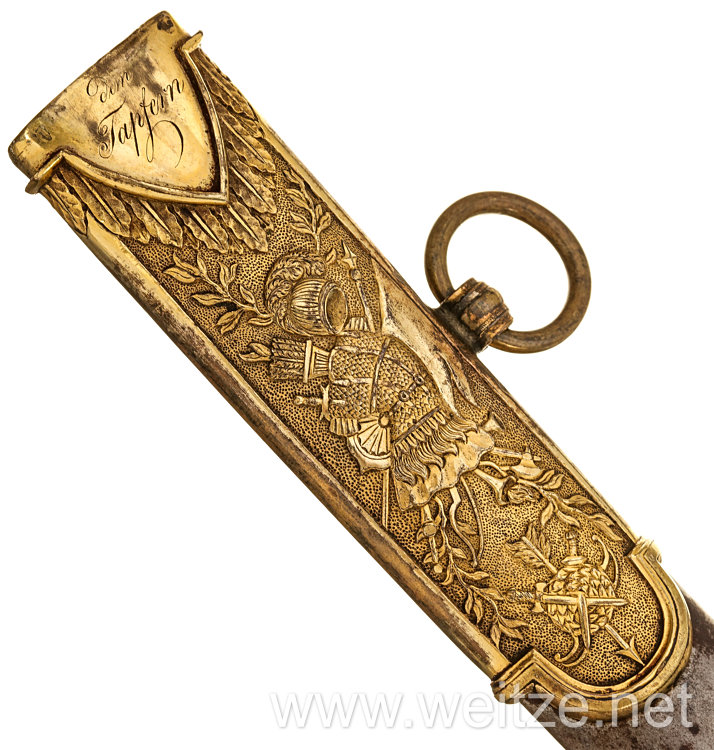
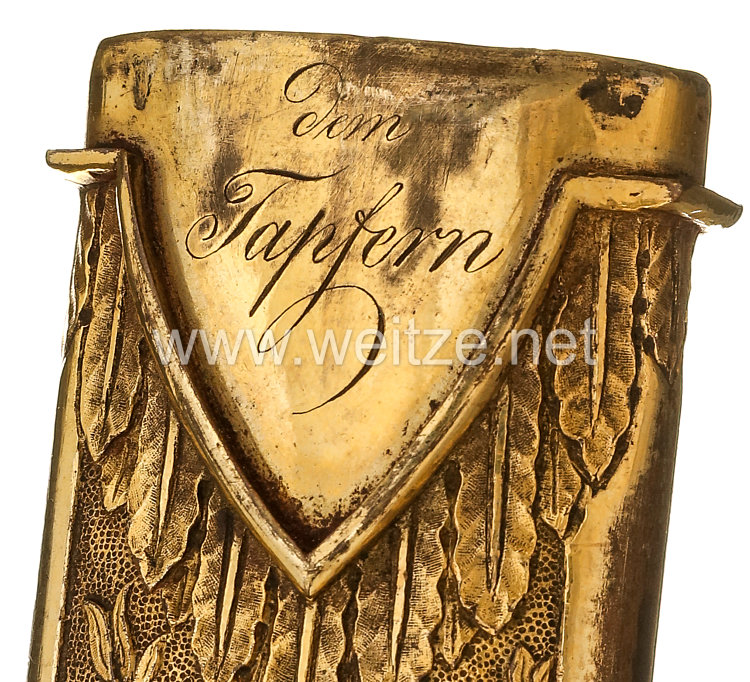
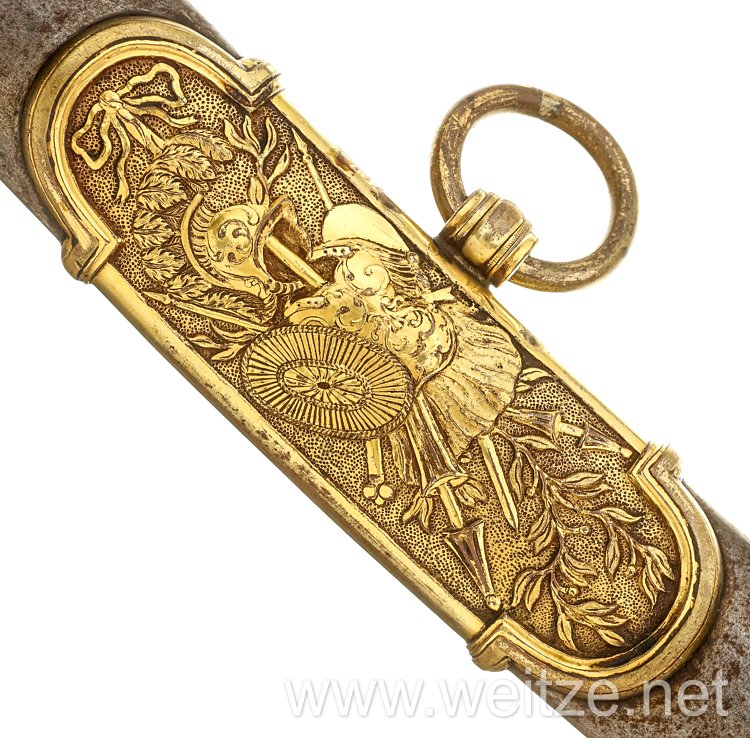
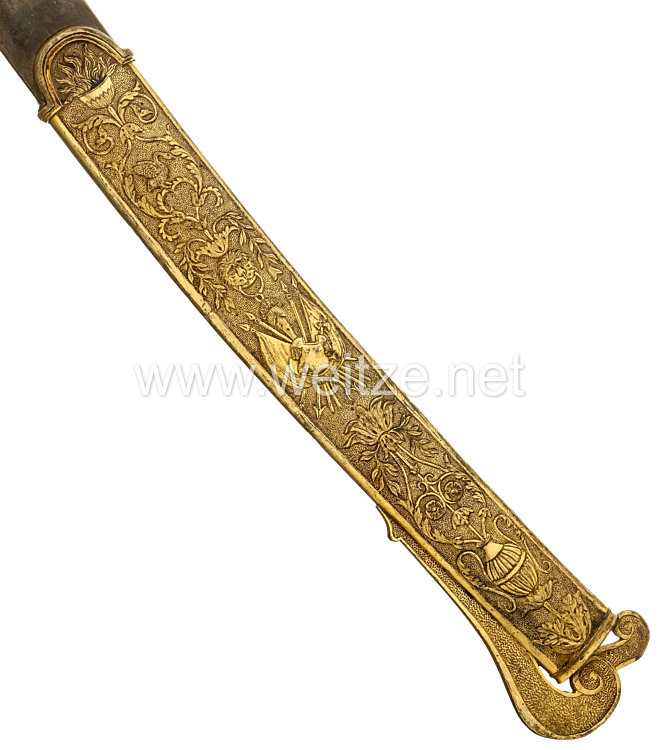
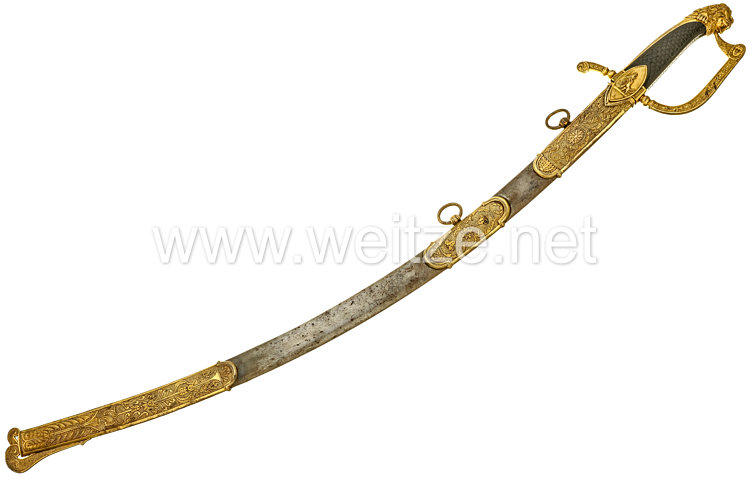
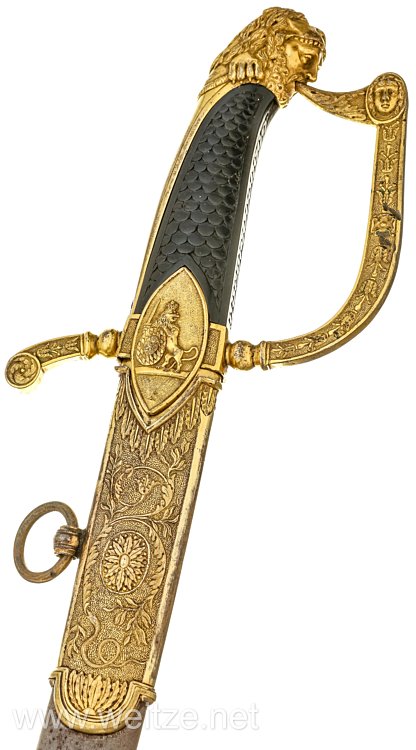
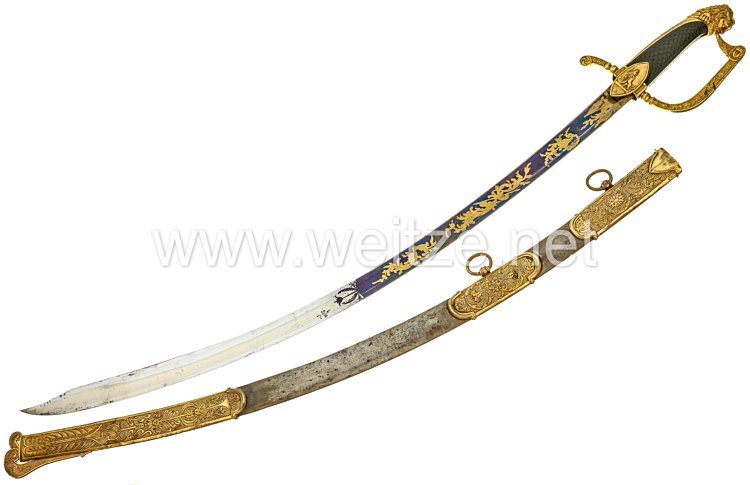
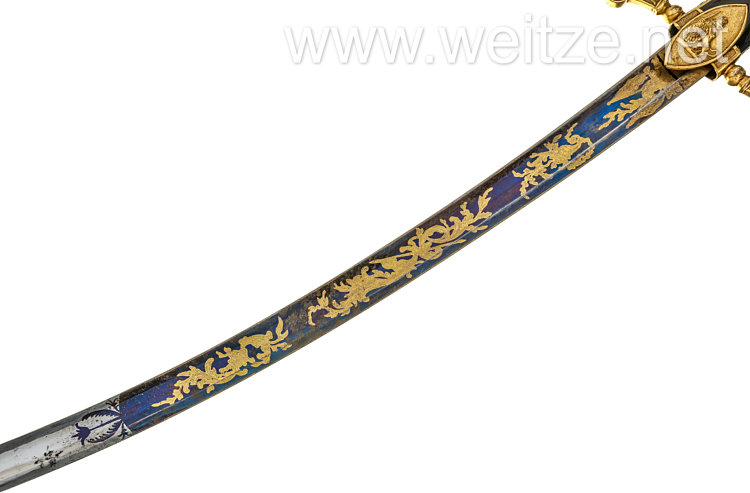
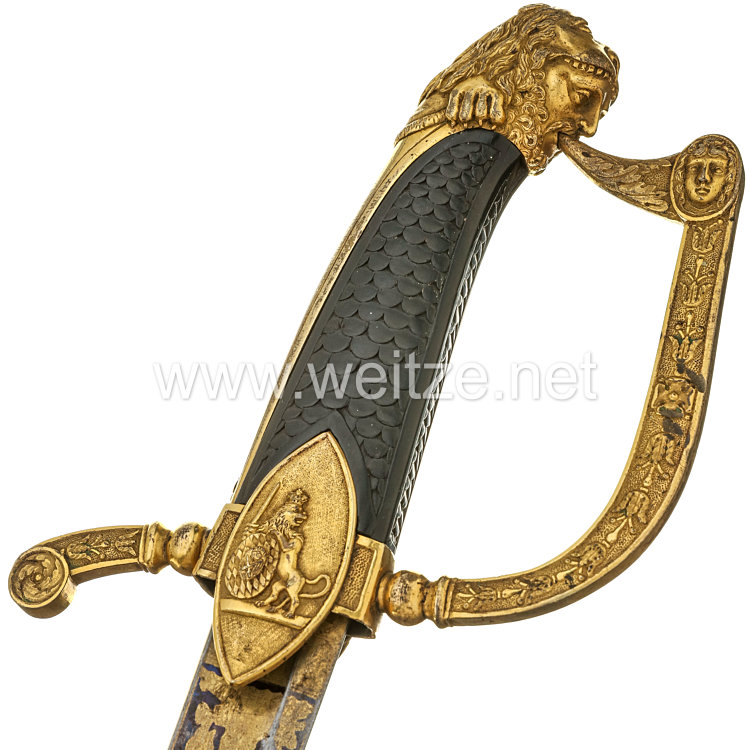
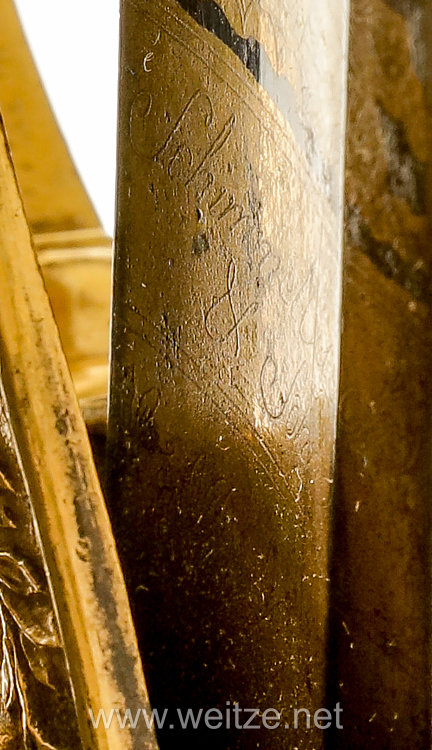
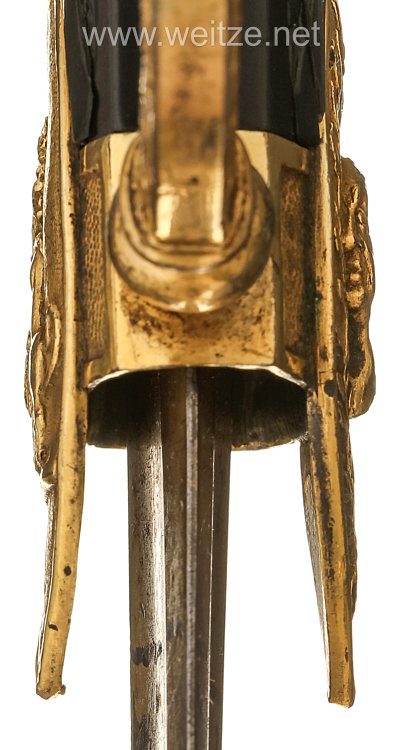
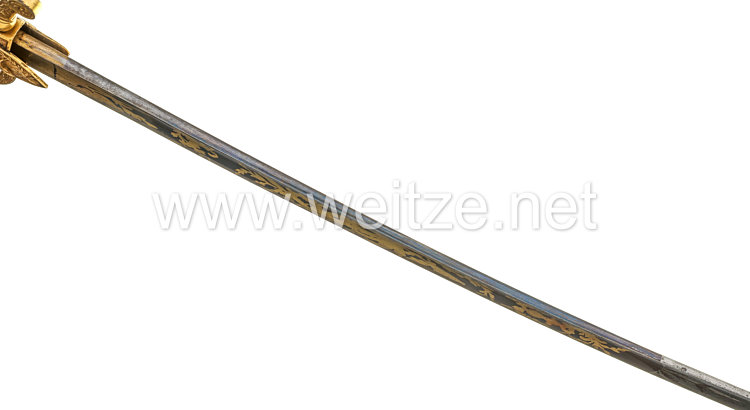
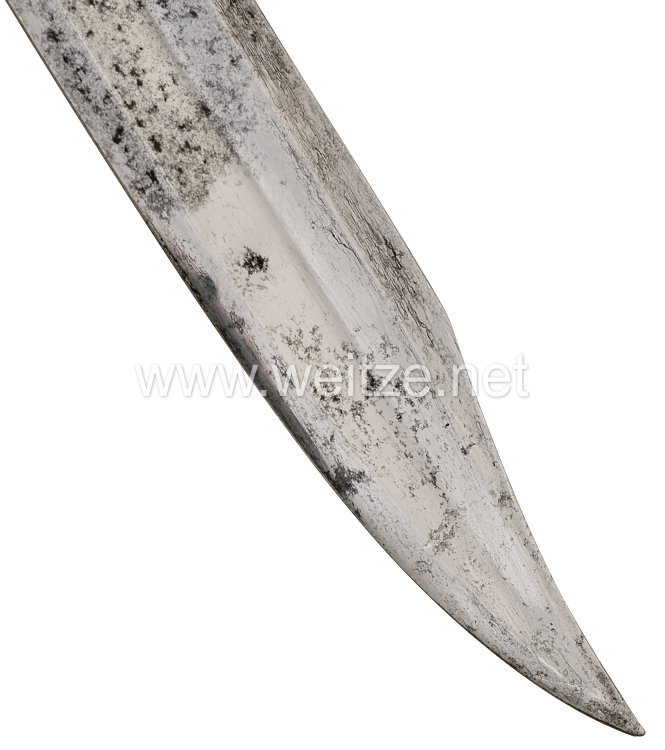
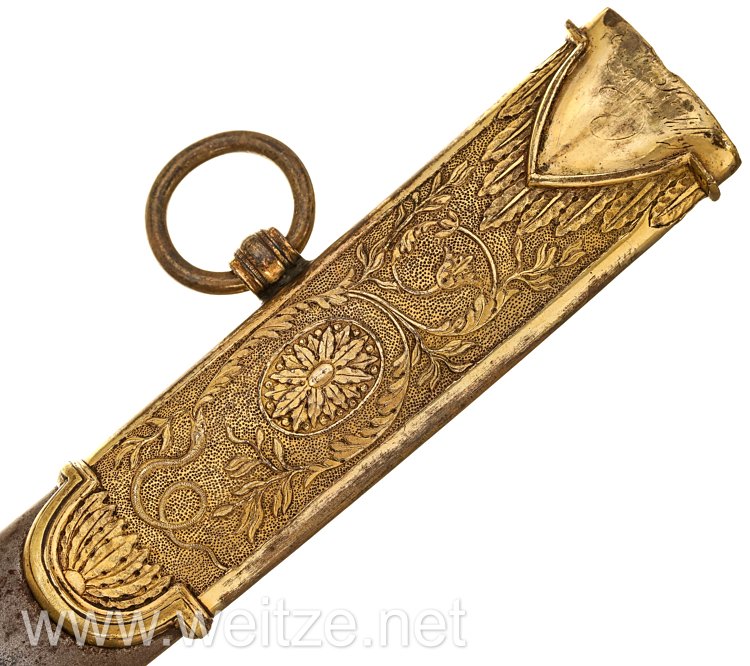
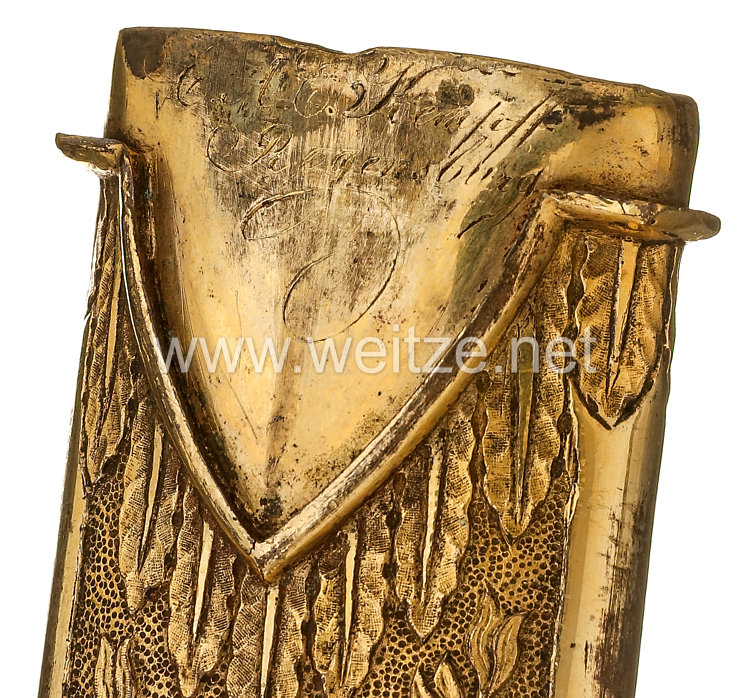
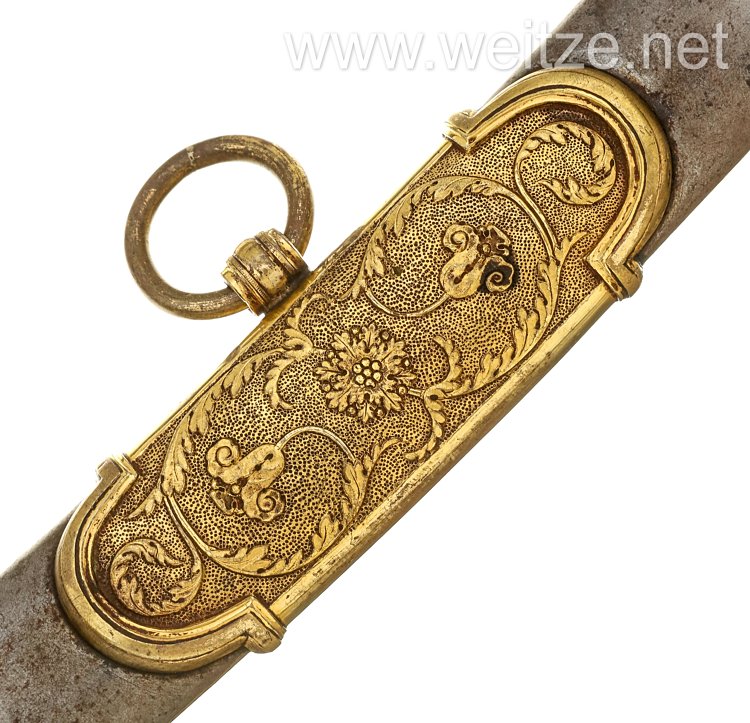
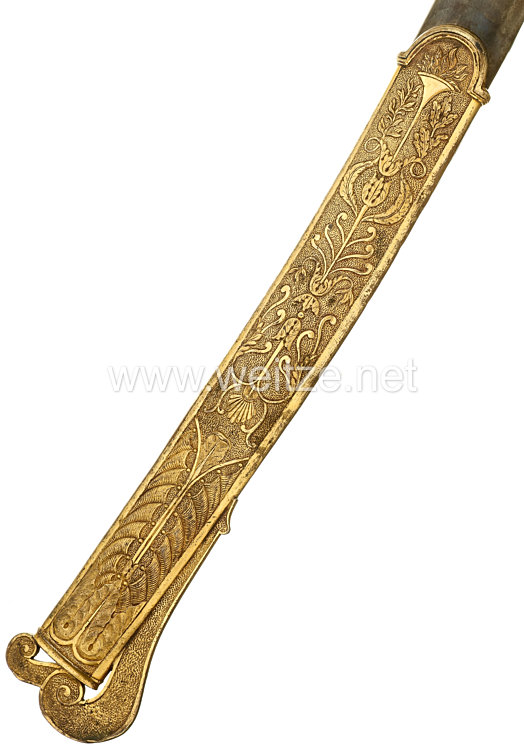
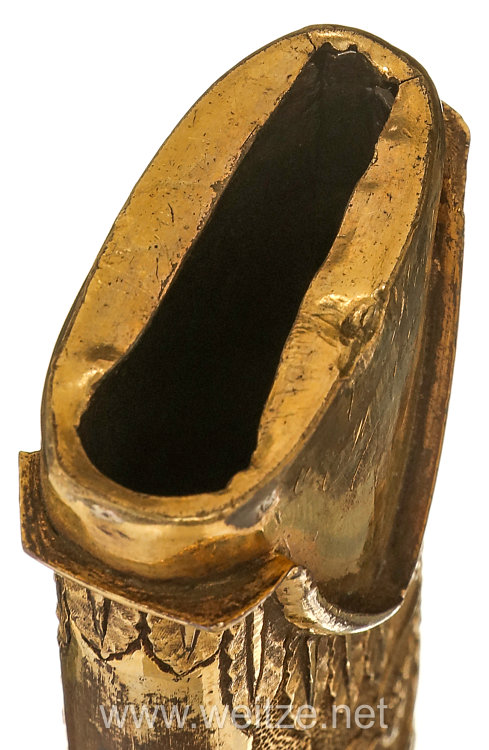
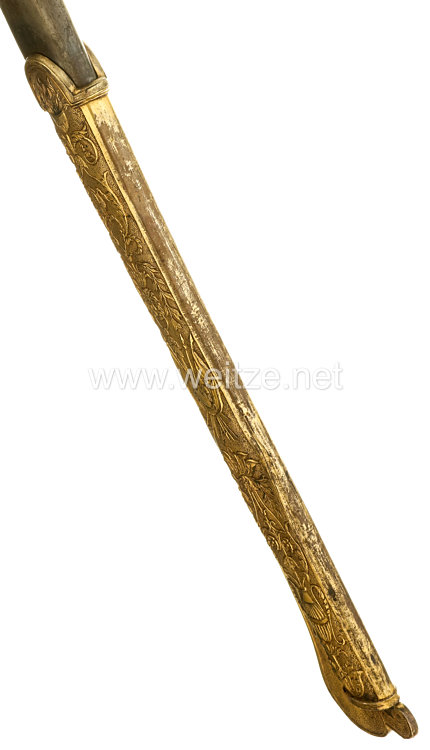
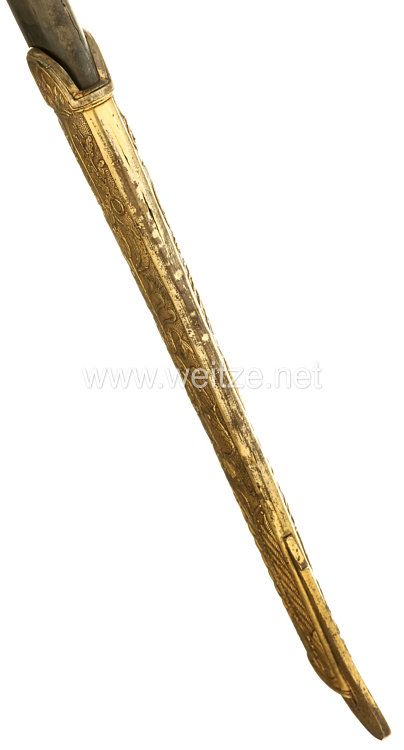
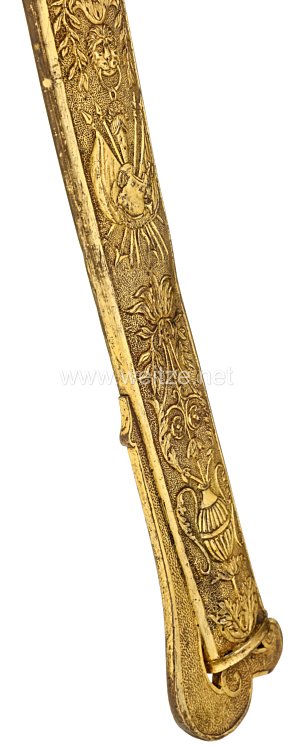
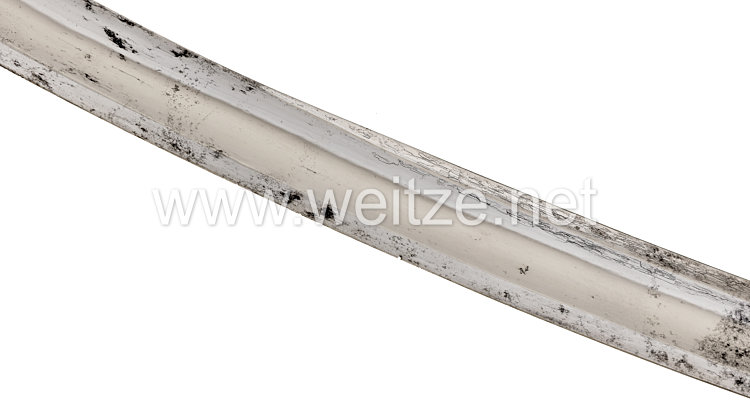
Prunkvoller Ehrensäbel für Tapferkeit aus der Regierungszeit König Max I. Joseph (1806 – 1825) nach französischem Vorbild. Reich reliefiertes, vergoldetes Messingbügelgefäß, die Metallteile im klassizistischen Stil verziert. Der Knauf als Herkuleshaupt mit Löwenfell, auf dem Parierbügel mit Medusenkopf, Eichenlaub und Rankenverzierungen. In der Mitte der Parierstange beidseitig ein spitzovales Medaillon. Auf der Vorderseite mit dem Profil König Max I. Josephs zwischen Lorbeerzweigen, auf der Gegenseite der bekrönte bayerische Löwe mit Schwert und Wappenschild. Das Griffstück aus schwarzem Ebenholz mit fein geschnitzten Schuppen. Kräftige gekrümmte Rückenklinge mit beidseitiger Hohlkehle und zweischneidiger Pandurenspitze, beidseitig zur Hälfte verziert mit geätztem, vergoldetem Laubwerk und Trophäen auf gebläutem Grund. Auf der Fehlschärfe der Vorderseite die Signatur des Klingenherstellers "Schimmelbusch & Sohn" in Solingen. Die Stahlblechscheide mit reich verzierten, prunkvoll reliefierten und vergoldeten Messingbeschlägen, zwei bewegliche Trageringe. Auf dem Mundblech vorderseitig die Gravur "dem Tapfern" und auf der Gegenseite "E. A. C. Kempff Regensburg" (= Elias Andreas Conrad Kempff, Schwertfeger in Regensburg). Der Säbel ist nur leicht getragen, die original Vergoldung der Griff- und Scheidenbeschläge großteils noch erhalten, in gutem unberührten Originalzustand . Länge ca. 102 cm.
Die Darstellungen auf dem spitzovalen Medaillons stellen die Ordensdekoration der Bayerischen Tapferkeitsmedaille der Zeit zwischen 1806 bis 1825 dar.
Aufgrund der Gestaltung des Säbels nach napoleonischem Vorbild gehen wir davon aus, dass es sich um einen Ehrensäbel für Generale handelt aus dem Zeitraum zwischen der Schlacht bei Austerlitz 1805 und dem Rußlandfeldzug 1812.
Einzigartiges Objekt von musealem Rang.
Die Darstellungen auf dem spitzovalen Medaillons stellen die Ordensdekoration der Bayerischen Tapferkeitsmedaille der Zeit zwischen 1806 bis 1825 dar.
Aufgrund der Gestaltung des Säbels nach napoleonischem Vorbild gehen wir davon aus, dass es sich um einen Ehrensäbel für Generale handelt aus dem Zeitraum zwischen der Schlacht bei Austerlitz 1805 und dem Rußlandfeldzug 1812.
Einzigartiges Objekt von musealem Rang.