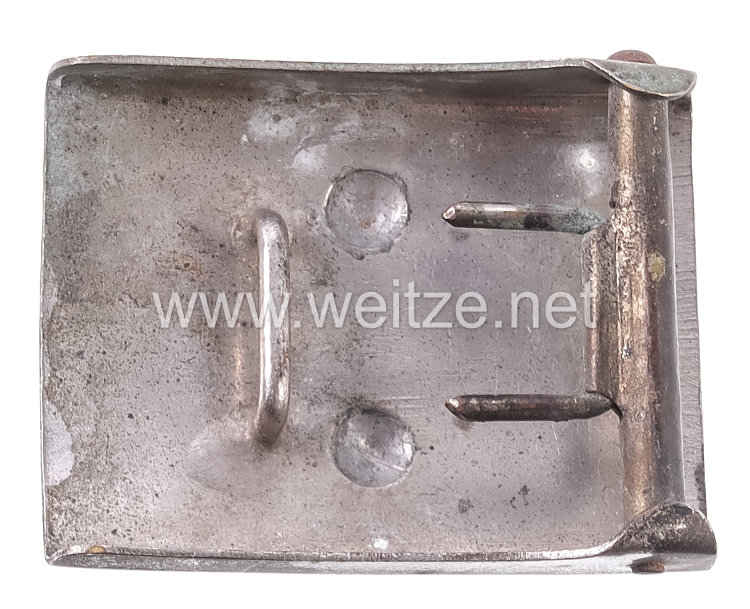
DRK - German Red Cross Belt Buckle until 1934
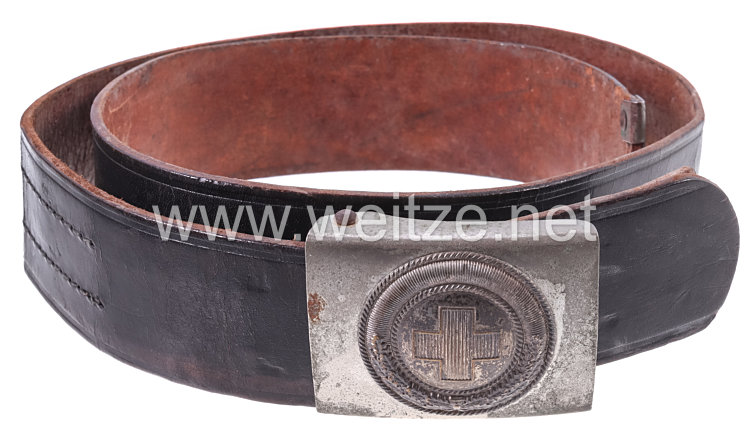
The belt buckle of the German Red Cross (Deutsches Rotes Kreuz, DRK) from the period up to 1934 represents a significant artifact of paramilitary and humanitarian organizations during the Weimar Republic and early Nazi era. This piece, manufactured from nickel-plated brass, was worn on a leather belt and served as an official insignia for members of the German Red Cross.
The German Red Cross was founded in 1921 as an umbrella organization uniting various German Red Cross associations that had become fragmented after World War I. The organization stood in the tradition of the International Committee of the Red Cross, founded in 1863, and adhered to the Geneva Conventions. During the Weimar Republic, the DRK assumed important responsibilities in civilian medical services, disaster relief, and social welfare.
Belt buckles from this period typically display the red cross on a white background, surrounded by an oak wreath or similar decorative elements. Manufacturing from brass with nickel plating was standard for such equipment items, offering a cost-effective yet presentable solution. The nickel plating protected the base metal from corrosion and gave the buckle a silvery shine appropriate to the official character of the organization.
The timeframe “up to 1934” holds particular historical significance. Following the Nazi seizure of power in 1933, all German organizations were successively brought into line through the process of Gleichschaltung. The German Red Cross was no exception. In 1934, a fundamental reorganization of the organization took place, largely stripping it of its independence and integrating it into the Nazi system of control. The Duke of Saxe-Coburg and Gotha, who served as president from 1933, implemented Nazi ideology within the organization.
The changes of 1934 affected not only the organizational structure but also uniforms and insignia. New designs were introduced that more closely aligned with Nazi aesthetics and frequently incorporated the swastika. Therefore, 1934 marks a clear caesura in the history of the DRK and its equipment items.
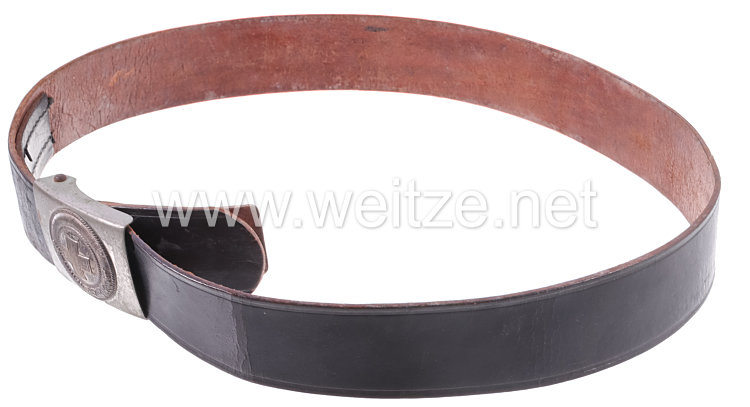
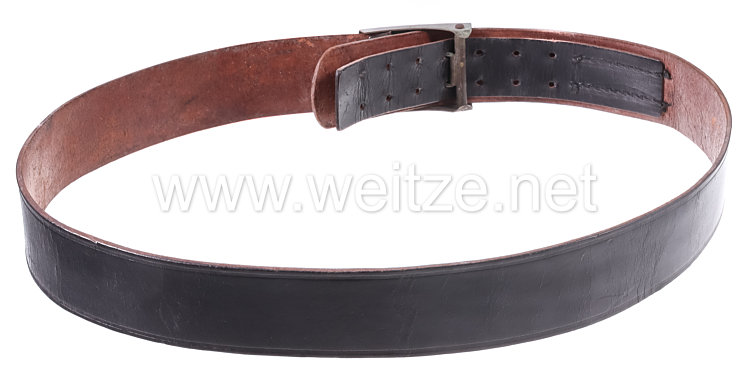
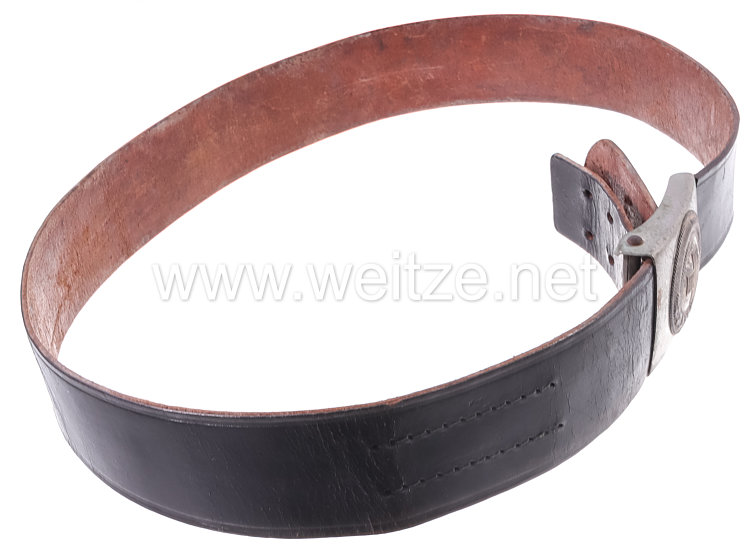
The belt buckle was worn on a waist belt, which in this case measures approximately 95 centimeters in length. Such belts were made from robust leather and served not only to secure the buckle but also as a carrying system for additional equipment such as bread bags, canteens, or medical pouches. DRK members wore this equipment during operations, training exercises, and official occasions.
Membership in the German Red Cross encompassed various categories: full-time employees, volunteers, nursing sisterhoods, and the DRK emergency response units (Bereitschaften). The latter were paramilitarily organized units responsible for medical services at large events and during disasters. Uniform equipment including belt buckles and other uniform components served identification purposes and fostered esprit de corps.
From a collector's and historical perspective, such pre-war belt buckles are of particular interest. They document the transitional phase between the democratic Weimar Republic and the Nazi dictatorship. The relatively short period of use until 1934 makes these pieces rarer than later variants. The condition grade 2 (according to common collector scales) indicates well-preserved, lightly used condition, which is remarkable for objects over 90 years old.
The provenance of such objects is often difficult to reconstruct. Many belt buckles were kept by former wearers after 1945, entered the market through estates, or were taken as souvenirs by Allied soldiers. Historical research uses such objects to understand the development of paramilitary organizations, uniform regulations, and the material culture of the period.
The complete leather belt with its length of approximately 95 centimeters provides additional context. Standard military and paramilitary belts of this era were typically black or brown leather, approximately 4-5 centimeters wide, designed to support not only the buckle but also various pouches and equipment. The survival of such complete assemblies is less common than isolated buckles, adding to the historical value.
In summary, this DRK belt buckle represents an important chapter in German history: the period of a humanitarian organization before its complete co-optation by the Nazi regime, a time when the German Red Cross still retained remnants of its original mission based on the Geneva Conventions.