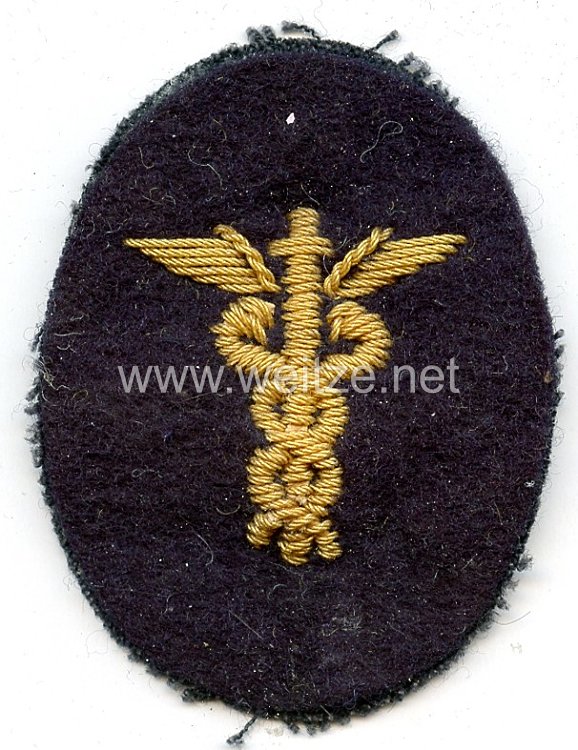
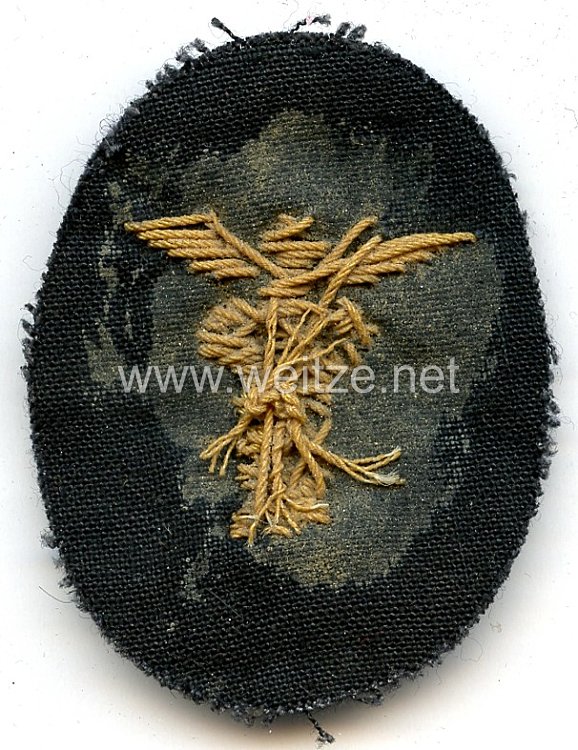
Kriegsmarine Single Sleeve Insignia for an Administrative Officer

Celleon hand-embroidered version. Worn condition, Grade 2-.
441095
15,00

Kriegsmarine Single Sleeve Insignia for an Administrative Officer

This Kriegsmarine single sleeve insignia for an administrative officer represents an authentic artifact of German naval uniform regulations during World War II. This hand-embroidered celleon execution embodies the high craftsmanship quality that was standard for officer insignia in the Kriegsmarine.

The Kriegsmarine, as the naval force of National Socialist Germany from 1935 to 1945, maintained a complex system of rank insignia and career branch identifications. Administrative officers formed their own officer career path, responsible for the logistical, administrative, and economic management of the navy. These officers were indispensable for operating a modern naval force, as they organized supply, payroll, provisions, and the entire administrative infrastructure.

The sleeve insignia of the Kriegsmarine served to identify the various officer career branches. While sea-going officers wore no special career badges, all other officer branches were marked by specific symbols on their sleeve stripes. Administrative officers wore a characteristic symbol that represented their administrative function and distinguished them from engineers, physicians, judges, and other specialist branches.

Celleon embroidery was a particularly high-quality manufacturing method for naval insignia. This technique used a thin, transparent celluloid material as a backing, onto which the embroidery was applied. This method created a slightly raised, three-dimensional effect and gave the insignia a characteristic sheen. Celleon insignia were typically privately procured pieces of higher quality than standard woven or machine-made variants. Officers frequently acquired such insignia from specialized naval tailors or military effects dealers in major naval bases such as Kiel, Wilhelmshaven, or Hamburg.

The hand embroidery suggests manufacture during the war years, when experienced craftsmen produced these insignia individually or in small series. The quality of execution reflects the pride that officers took in their uniforms and their correct outfitting, even under the difficult conditions of war.

Administrative officers of the Kriegsmarine underwent special training that combined commercial and legal knowledge with military requirements. They were trained at naval schools and often had civilian commercial or legal backgrounds before joining the navy. Their career paths led them through various posts ashore and at sea, from small bases to large naval arsenals and fleet commands.

The uniform regulations of the Kriegsmarine were detailed in various dress regulations (Anzugsordnungen or A.O.). These precisely determined how the various insignia were to be worn, their positioning on the uniform, and the combinations depending on the type of service dress. Sleeve insignia were worn on both sleeves of service jackets and coats, above the sleeve stripes that indicated rank.

The stated condition 2- indicates a worn piece with slight signs of use, which is typical for an authentic wartime item. Such insignia were subjected to wear during service and often show aging of the celleon material, slight discoloration, or minimal damage to the embroidery. These signs of use paradoxically increase historical authenticity, as they provide evidence of actual use during the period of service.

After the war ended in 1945, the Kriegsmarine was dissolved, and its uniforms and insignia became historical artifacts. Today, such pieces are important study objects for military historians and collectors interested in German naval history. They document not only the military rank structure but also the craft traditions and material culture of a bygone era.

The preservation of such objects serves historical research and education by creating concrete, tangible connections to the past and helping to understand the complex organization and structure of the Kriegsmarine. These insignia represent a specialized aspect of naval administration that was crucial to the functioning of the fleet, yet often overlooked in favor of more combat-oriented aspects of naval history.

For researchers and collectors, the technical details of manufacture, the materials used, and the condition of such pieces provide valuable insights into wartime production methods, supply chains, and the daily realities of naval service during World War II.