Germanic SS in the Netherlands Sports Badge

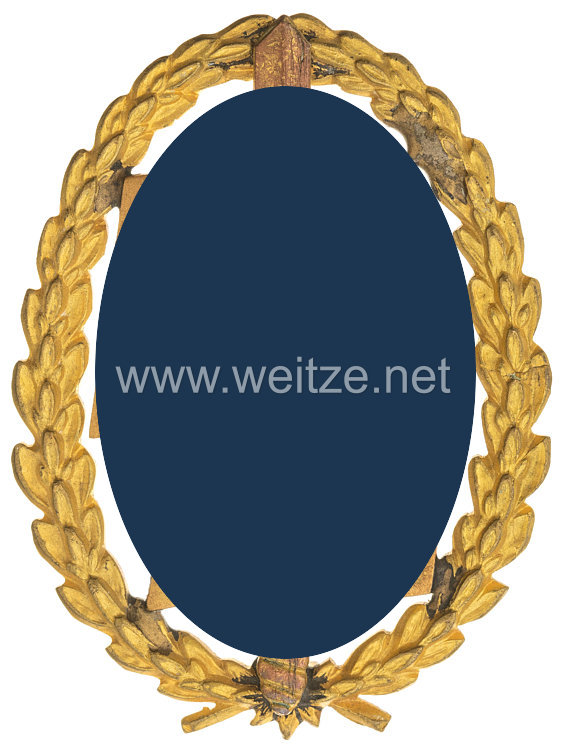
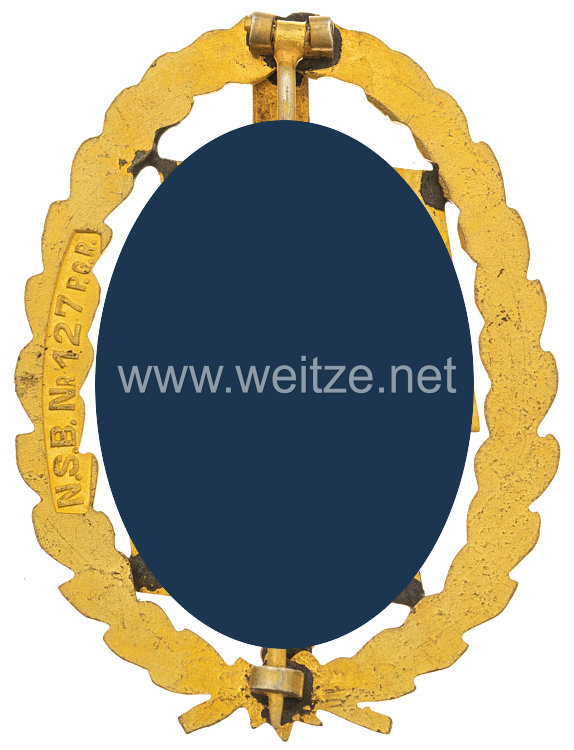
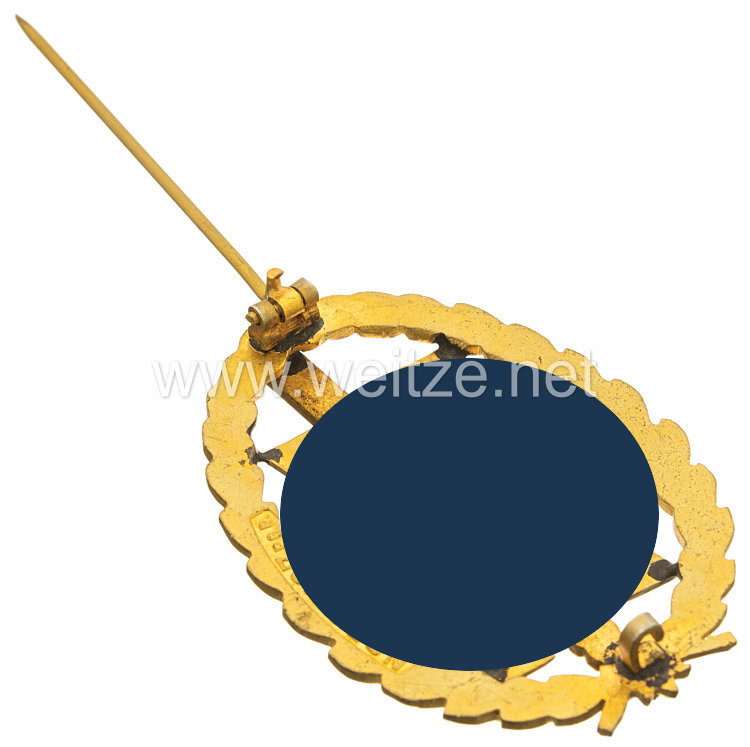
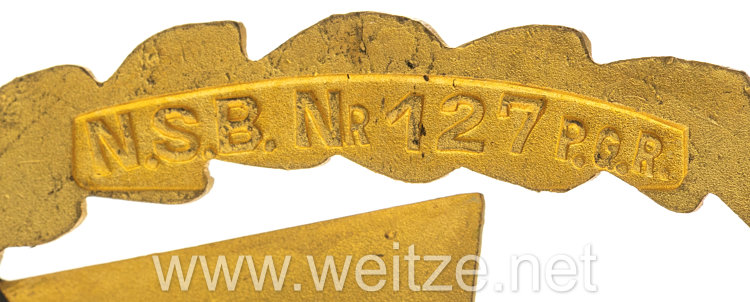
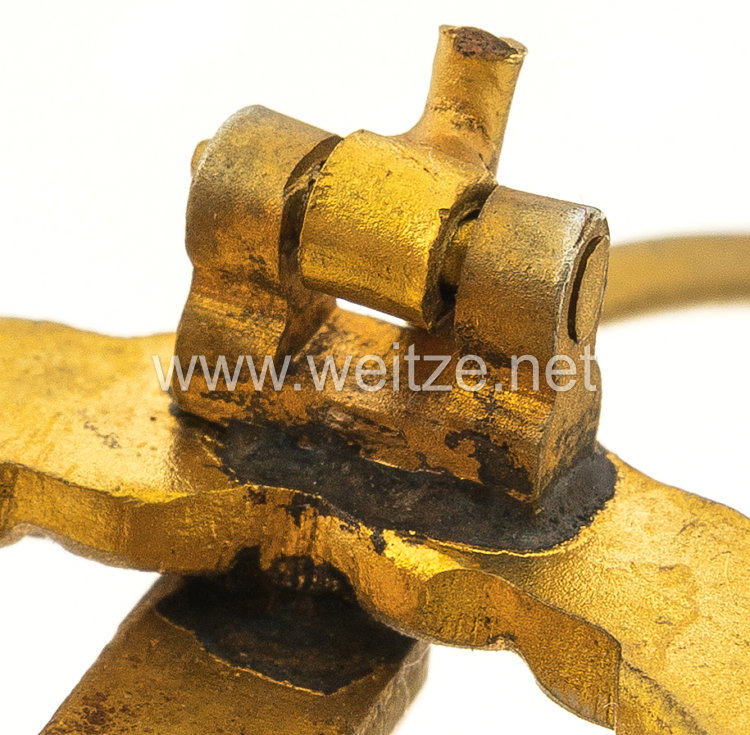
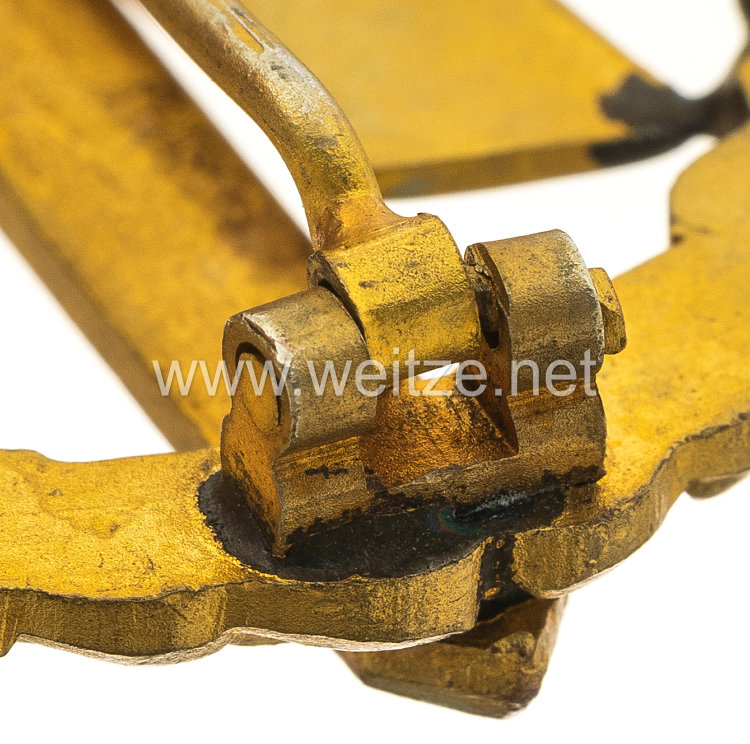
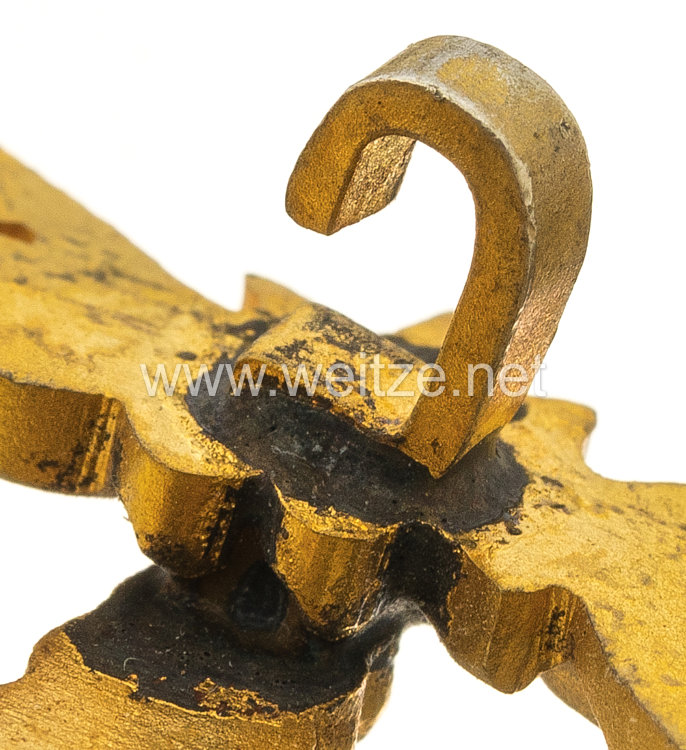
Highly oval pin badge, approx. 59x43 mm, gilt base metal, reverse marked with manufacturer designation “N.S.B. Nr 127 P.G.R.”, with vertical thin pin. Worn condition, Condition 2.
The SS Sports Badges were awarded in Bronze, Silver and Gold. The SS Sports Honor Badge was awarded only in Gold and differs in its design by the upright sword in the center.
436795
3.500,00

Germanic SS in the Netherlands Sports Badge

The SS Sports Badge of the Germanic SS in the Netherlands represents a significant historical document of National Socialist occupation policy and collaboration history during World War II. This oval pin badge, measuring approximately 59x43 mm, was manufactured from gold-plated base metal and bears on its reverse the manufacturer's designation “N.S.B. Nr 127 P.G.R.”, indicating production in connection with the Nationaal-Socialistische Beweging (NSB), the Dutch National Socialist Party.

The Germanic SS was a central element of National Socialist ideology, which sought a “Germanic” community of peoples under German leadership. After the occupation of the Netherlands in May 1940, the Nazi regime systematically began recruiting Dutch volunteers for the Waffen-SS. The Dutch were considered “Germanic” in National Socialist racial ideology and thus particularly valuable for expanding SS formations.

The Sports Badge was awarded in three grades: Bronze, Silver, and Gold. These awards served to document and honor the physical fitness and military training of members. Awards were made according to established performance criteria in various athletic disciplines of military relevance, such as running, jumping, throwing, and swimming. The gold badge represented the highest level and required the best performances.

The SS Sports Badge must be distinguished from the SS Sports Honor Badge, which was awarded exclusively in gold. The essential difference lies in the representation: the Honor Badge shows an upright sword in the center of the motif, while the regular Sports Badge features other symbolic elements. The Honor Badge represented a special award given only for exceptional achievements or merits.

The manufacturer's marking “N.S.B.” points to the close connection between the Dutch National Socialist movement and the production of these badges. The NSB under the leadership of Anton Mussert played a central role in collaboration with the German occupiers. Many NSB members joined Dutch SS formations, particularly the SS Volunteer Legion Netherlands, which was later transformed into the SS Volunteer Panzergrenadier Brigade “Nederland”.

Dutch SS volunteers fought mainly on the Eastern Front against the Soviet Union. Thousands of Dutchmen served in various SS formations, motivated by anti-communist propaganda, National Socialist conviction, or economic hardship. The awarding of badges such as the Sports Badge served to motivate and create a military identity within these formations.

After the war ended in 1945, the awarding and wearing of such badges was prohibited. Many former collaborators were brought to trial, and the symbols of collaboration, including military decorations, were confiscated or destroyed. Today, these objects have exclusively historical and documentary value for researching the occupation period and collaboration history.

The present gold-plated specimen is in worn condition, indicating that it was actually used by a wearer. Such pieces are important witnesses to a dark period of Dutch history and serve for historical examination and remembrance. They document the reality of collaboration and the participation of Dutch citizens in the crimes of the Nazi regime.

Scientific engagement with such objects is important for understanding the mechanisms of propaganda, indoctrination, and military organization in National Socialism. They illustrate how the Nazi regime created loyalty through symbols, awards, and rituals and incorporated people into its criminal structures.