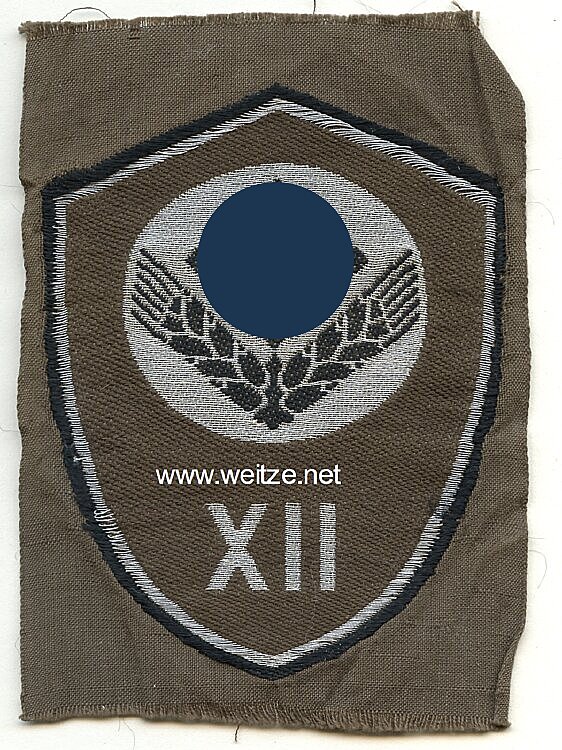
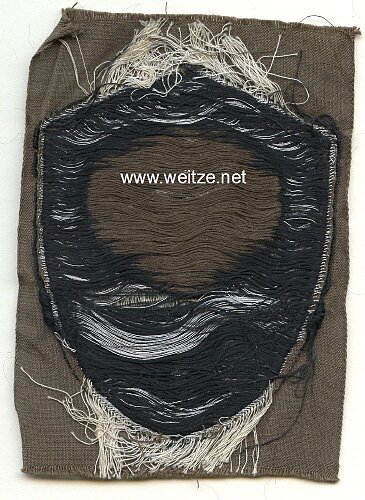
RAD Female Sleeve Shield “XII” for Female Leaders

Bevo-woven construction. Worn condition, Grade 2.
179094
90,00

RAD Female Sleeve Shield “XII” for Female Leaders

The RAD female sleeve shield “XII” for female leaders represents a significant artifact documenting the organizational structure of the Reich Labor Service for Female Youth (RADwJ) during the National Socialist era. This badge, manufactured using Bevo weaving technique, identified female leaders belonging to Labor Service Group XII.

The Reich Labor Service (RAD) was established as mandatory service for all young Germans on June 26, 1935, through the Reich Labor Service Law. While the RAD for male youth was institutionalized earlier, the female Reich Labor Service initially existed on a voluntary basis and only later became compulsory. From 1939 onwards, all young women between 17 and 25 years of age were required to complete six months of labor service before they could begin vocational training or marry.

The Bevo weaving technique, named after the company Bandfabrik Ewald Vorsteher from Wuppertal-Barmen, was the preferred manufacturing method for military and paramilitary insignia during the Third Reich. This machine weaving technique enabled the production of detailed, durable fabric badges with clean edges and precise patterns. Bevo-woven insignia were considered high quality and were used by various organizations of the NS state.

The present sleeve shield bearing the Roman numeral “XII” identified the wearer as a member of the twelfth Labor Service Group. The RAD was territorially divided into various Arbeitsgaue (labor districts), which were further subdivided into groups. Each group comprised several Abteilungen (detachments), which consisted of multiple camps. This hierarchical structure reflected the military organization that formed the basis of the entire RAD structure.

The female leaders of the Labor Service formed the backbone of the organization. They were responsible for training, discipline, and ideological education of the Arbeitsmaiden (labor maidens) under their command. The rank structure of the RADwJ included various service grades, from Maidführerin through Truppführerin to Oberführerin. Wearing correct rank insignia and sleeve shields was strictly regulated and served to make the hierarchy immediately recognizable.

The uniform of the female Labor Service consisted of a dark blue or brown skirt, a blouse, and a characteristic jacket. The sleeve shield was worn on the left upper arm and was an essential component of the service clothing. The placement and type of insignia were detailed in the RAD's dress regulations.

The labor maidens were primarily employed in agriculture, domestic service, and childcare. With the outbreak of war in 1939, the focus increasingly shifted to war-essential tasks, including support for farming families whose men had been drafted for military service. The female leaders organized and supervised these deployments and were also responsible for political education in line with National Socialist ideology.

The designation with group numbers such as “XII” served not only organizational assignment but also fostered esprit de corps and identification with the respective unit. Regional differences in numbering reflected the geographical distribution of RAD structures throughout the German Reich and occupied territories.

After the war ended in 1945, the Reich Labor Service was dissolved by the Allies and banned as part of the National Socialist power structure. Most uniforms and insignia were destroyed or confiscated. Preserved specimens like the described sleeve shield are today historical documents that provide insight into the organization and structure of this compulsory organization.

For military-historical research, such insignia are important sources for understanding the paramilitary structures of the NS regime. They document the mobilization of entire society, including female youth, for the regime's objectives. The present piece in condition 2 shows signs of wear indicating actual use during service time, which increases its documentary value as an authentic historical witness.

r