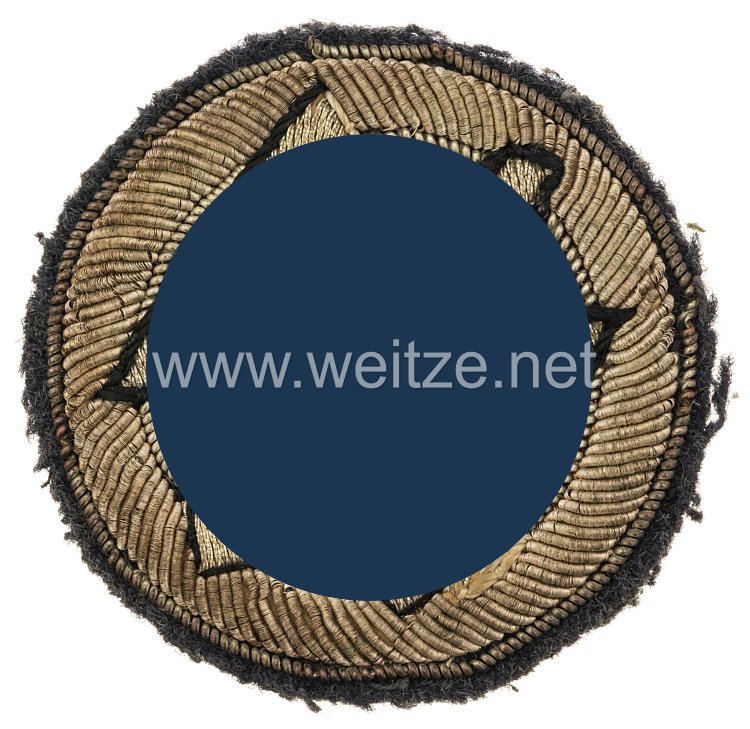
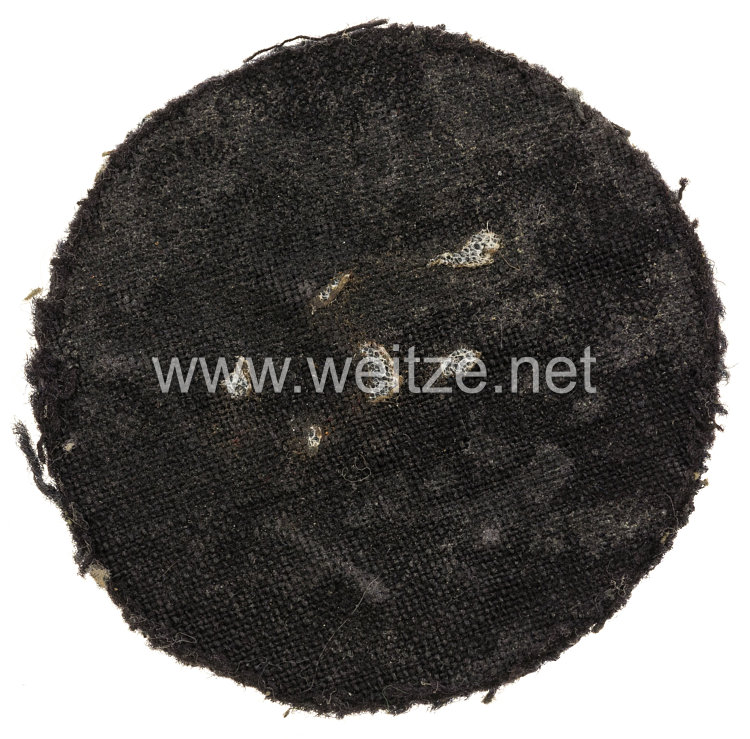
NSFK Sleeve Insignia for Former Members of SA/SS-Fliegerstürme
The NSFK sleeve badge for former members of SA/SS Flying Units represents a significant document of German aviation history between 1933 and 1945. This badge, manufactured around 1935 and hand-embroidered with gold metallic thread on Luftwaffe blue-grey cloth, documents the organizational transition phase from the paramilitary flying units of the SA and SS to the National Socialist Flying Corps (NSFK).
The SA Flying Units were established in the early 1930s as part of the Sturmabteilung (Storm Detachment), while the SS Flying Units were subordinate to the Schutzstaffel. These formations served for basic aviation training and were part of the covert rearmament efforts of the German Reich, which violated the provisions of the 1919 Treaty of Versailles. The Versailles Treaty had explicitly forbidden Germany from possessing military aircraft and training military pilots.
With the Nazi seizure of power in 1933 and the increasingly open rearmament policy, a reorganization of aviation training became necessary. On April 15, 1937, the NSFK was officially established as the successor organization to the German Air Sports Association (DLV), although transitional regulations had been in place since 1935. The NSFK assumed responsibility for preliminary flight training and recruitment for the Luftwaffe, which was officially announced in March 1935.
The present sleeve badge was specifically created for those members who transferred from the SA or SS Flying Units to the NSFK. It served as an honor badge and documented the wearer's aviation background in these earlier formations. The use of hand-embroidered gold thread on the characteristic Luftwaffe blue cloth demonstrates the high-quality execution and special status of this badge.
The manufacture followed the typical hand-embroidery technique common for high-quality military insignia of the period. The Luftwaffe blue-grey cloth as a background was deliberately chosen and established a connection to the Luftwaffe, while the gold honored the special position of former SA/SS aviators. Such badges were typically worn on the left upper arm of the NSFK uniform.
The NSFK itself developed into a mass organization with at times over 500,000 members. It was divided into various training sectors: powered flight, gliding, model aviation, and communications. The organization played a central role in recruiting and preliminary training of pilots, observers, and technical personnel for the Luftwaffe. Many later combat pilots of World War II initially underwent training in the NSFK.
The uniforming and insignia system of the NSFK were strictly regulated. Various ranks, functions, and special qualifications were indicated by specific badges. The badge described here for former SA/SS aviators belonged to the rarer designs, as it only concerned a relatively small group of wearers who had made the transition from the old formations.
The production of such badges was carried out by specialized firms that had often manufactured military insignia during the Imperial and Weimar periods. The quality of hand embroidery varied by manufacturer, with officer and leader versions generally being of higher quality than enlisted versions.
After the end of World War II in 1945, the NSFK and all its branches were dissolved and banned by the Allied forces. The uniforms and badges lost their official significance but are today preserved as historical documents in collections and museums. They document the organization of National Socialist aviation training and the merger of various paramilitary formations in the pre-war period.
For military historical research, such badges are significant as they illustrate the organizational structures and transition periods of German air armament between 1933 and 1937. They also demonstrate the regime's efforts to integrate various traditions while simultaneously creating a new, unified organizational structure.