Bavaria World War I Patriotic Postcard “Fräulein Feldgrau”
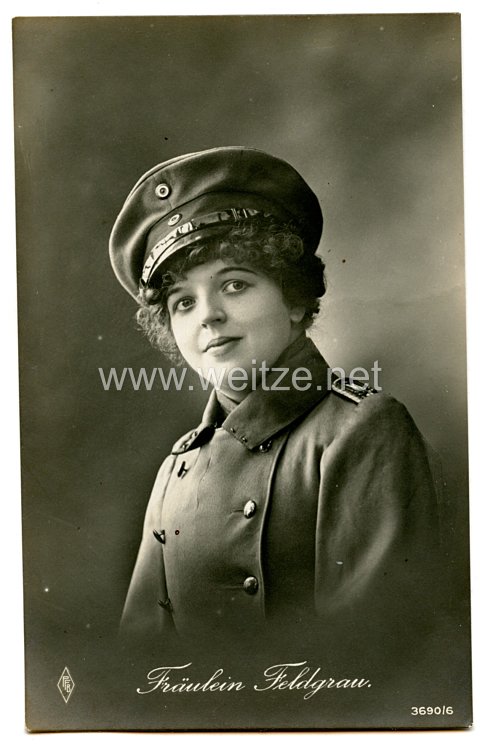
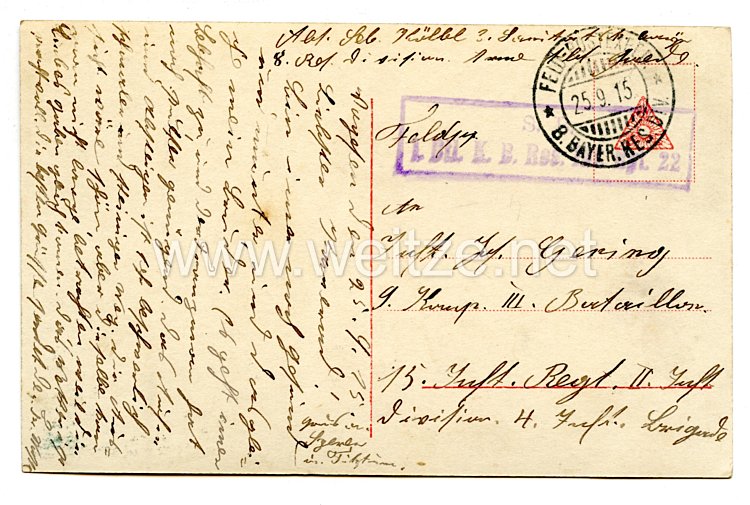
The patriotic postcard “Fräulein Feldgrau” (Miss Field Grey) from 1915 represents a fascinating chapter of German propaganda culture during the First World War. This particular card bears the stamp of the 8th Bavarian Reserve Division and embodies the manifold efforts of the home front to maintain troop morale and strengthen the connection between soldiers and civilian population.
The 8th Bavarian Reserve Division was established in August 1914 at the outbreak of war and consisted primarily of Bavarian reservists. The division fought on various fronts of the war, including the Western Front in France and Belgium. In 1915, when this postcard was stamped, the division was engaged in intensive combat operations that characterized trench warfare.
The motif “Fräulein Feldgrau” was a popular theme in German war propaganda. The term “Feldgrau” refers to the characteristic grey-green uniform color of the German army, introduced in 1910 to replace the previous colorful uniforms. The depiction of young women in military clothing or with military attributes served several propaganda purposes: it romanticized military service, humanized the harsh reality of war, and created an emotional bridge between the front and home.
Patriotic postcards were a mass phenomenon during World War I. Millions of these cards were produced and sent, both from the front to home and within the homeland. They fulfilled important communicative and psychological functions: they enabled soldiers to maintain contact with their families, conveyed official propaganda, and served as collectibles documenting the war's progress.
The postcards were manufactured by various publishers, including both large commercial enterprises and smaller local printers. The motifs ranged from portraits of Kaiser Wilhelm II and other military leaders to battle scenes and sentimental and humorous depictions. The category of patriotic female representations, to which “Fräulein Feldgrau” belongs, was particularly popular and reflected the gender roles and ideals of the time.
Bavarian troops had a special identity within the German Imperial Army. The Kingdom of Bavaria retained a certain military autonomy within the German Empire until 1918. Bavarian units had their own uniform details, rank insignia, and traditions. This explains the specific designation as “8. Bayer. Res. Div.” on the postcard.
The condition grade 2 of this postcard indicates good preservation, which is remarkable for documents from this period. Many field postcards were kept and sent under difficult conditions at the front, leading to damage. Well-preserved specimens with clear postmarks are sought-after collector's items today.
The field post itself was a logistical masterpiece. The German field postal system transported millions of items daily between the front and home during the war. Postcards were particularly popular due to their simple handling and low cost. They were subject to military censorship, which is why personal messages were often kept very general.
The iconography of patriotic female representations in World War I reflects the complex role of women during this time. While millions of men fought at the front, women increasingly took on tasks in the war economy, administration, and nursing. However, the idealized depictions on postcards like “Fräulein Feldgrau” usually showed a romanticized version of this reality.
Today, such postcards are important historical sources for researching the history of mentalities, propaganda, and visual culture of World War I. They offer insights into the values, fears, and hopes of wartime society. Museums and archives systematically collect these documents to preserve the everyday history of the war.