Luftwaffe Tropical Rucksack
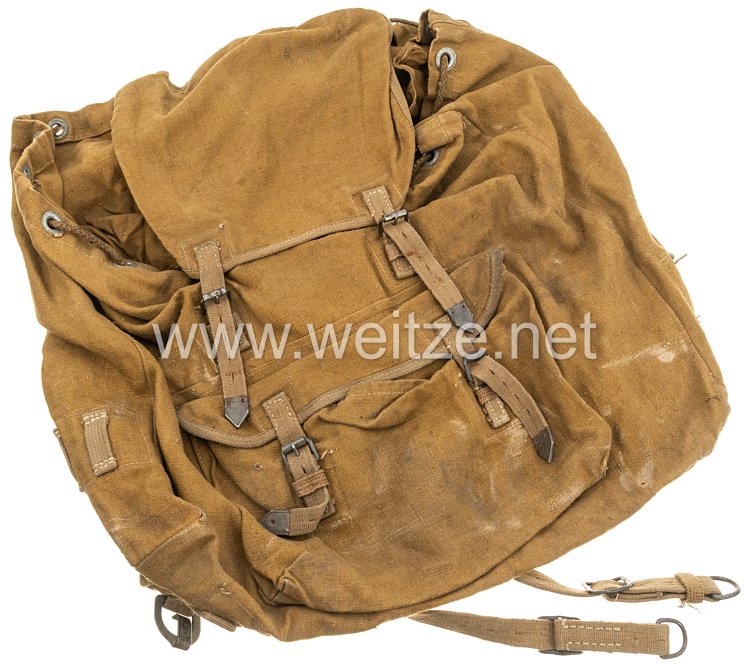
The Luftwaffe Tropenrucksack (tropical backpack) represents a characteristic piece of equipment of the German Luftwaffe during World War II, specifically developed for use in tropical and subtropical climate zones. This piece of equipment reflects the Wehrmacht's comprehensive preparations for operations in various geographic and climatic conditions.
The development of specialized tropical clothing and equipment began in the late 1930s, as the German Reich expanded its military ambitions to various climate zones. Experiences from World War I in the German colonies, as well as observations of other colonial powers, influenced the development. With the beginning of the African campaign in 1941 under Generalfeldmarschall Erwin Rommel and the Deutsches Afrikakorps (DAK), the necessity of special tropical equipment became immediately evident.
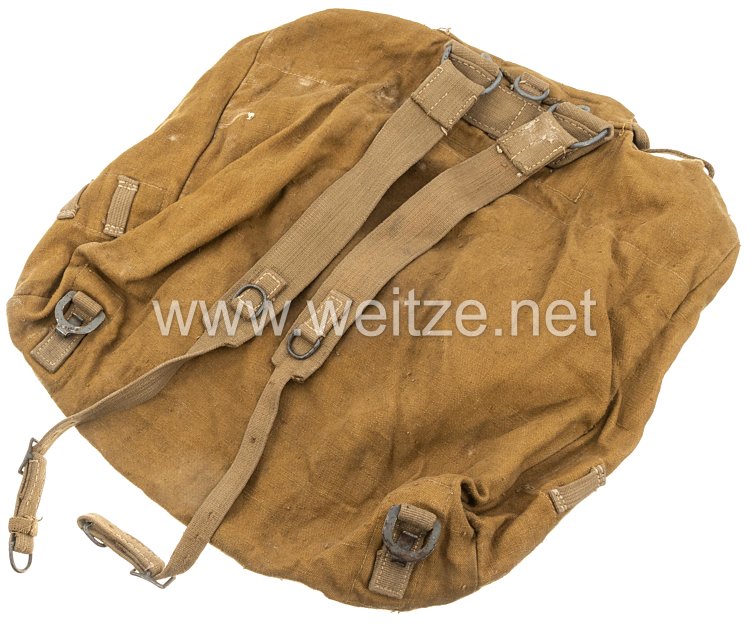
The described backpack in linen construction corresponds to the typical material specifications for Luftwaffe tropical equipment. Linen was deliberately chosen as it offered several advantages in hot climates: the material was more breathable than the cotton or canvas variants used in temperate zones, it dried faster after becoming wet, and was more resistant to intense UV radiation and the abrasive sand of desert regions. The natural lighter coloring of linen also reflected sunlight better than darker materials.
The linen webbing (carrying straps made of linen) was likewise a climate-related adaptation. Leather straps, as used with standard equipment, hardened in extreme heat and dryness, became brittle, or deformed due to sweat exposure. Linen straps remained more flexible and were more practical to handle under extreme conditions.
The Luftwaffe employed tropical equipment primarily in North Africa, the Mediterranean region, and later in southern Italy. Luftwaffe units operated in these regions in various functions: as ground personnel at airfields, in anti-aircraft units, in communications and supply units, as well as in the notorious Fallschirmjäger (paratrooper) formations that were under Luftwaffe command. Particularly the paratroopers required robust and functional backpacks, as they often had to operate with limited equipment.
The Condition 2- of the described object suggests actual field use. The mentioned stains and signs of wear are typical for equipment items used under harsh field conditions. Sand, sweat, oil, and other substances inevitably left traces on the linen. These usage characteristics give the object historical authenticity and connect it directly with the experiences of the soldiers who carried it.
The production of tropical equipment was subject to strict military administration regulations and was carried out by various manufacturers throughout the German Reich. From 1942 onwards, due to material shortages, substitute materials and simplified manufacturing processes were increasingly employed. The quality of equipment varied according to the year of manufacture and the manufacturer.
Luftwaffe tropical backpacks often differed in details from those of the Army, although there were also overlaps. The Luftwaffe traditionally placed greater emphasis on functionality and practical aspects, which was reflected in the construction of their equipment items. The backpacks had to provide sufficient volume for personal equipment, rations, water bottle, and possibly specialized equipment such as maps or optical devices.
After the final defeat of the Axis powers in North Africa in May 1943 and the subsequent course of the war, tropical equipment was partly used in other theaters of war or stored. Many pieces were lost, captured by Allied troops, or used by civilians for civilian purposes after the war.
Today, authentic Luftwaffe tropical equipment pieces are sought-after collector's items that represent important testimonies of military history. They document not only the material culture of World War II but also the technological and logistical challenges faced by the armies of that era. The preservation and documentation of such objects contributes to the understanding of this historical epoch.