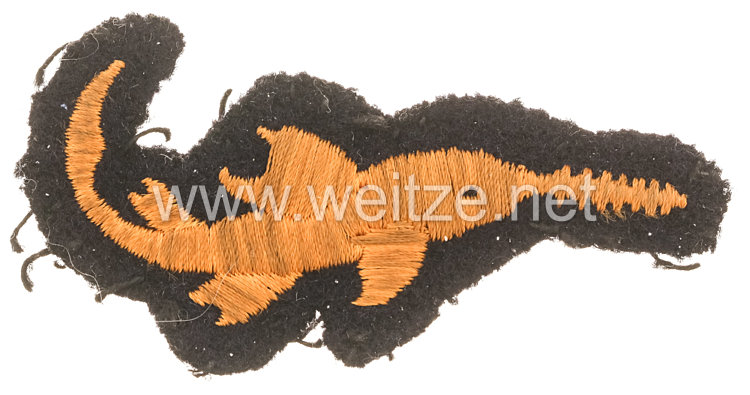
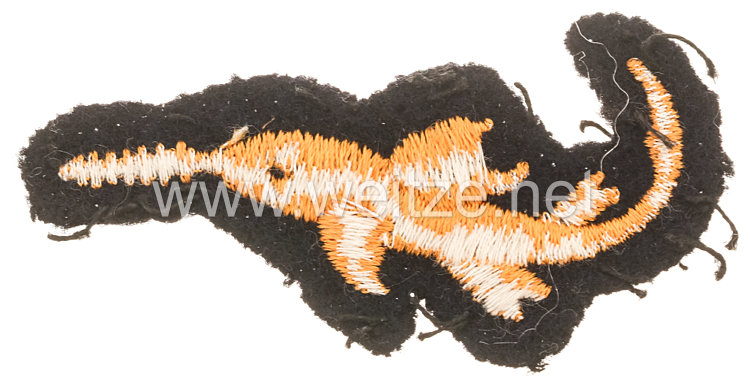
Proficiency Badge for Small Battle Unit Forces

Machine-embroidered cloth version on dark blue wool. Cut out and worn, in good condition.
187393
600,00

Proficiency Badge for Small Battle Unit Forces

The Bewährungsabzeichen für Kleinkampfmittelverbände (Qualification Badge for Small Battle Unit Forces) represents one of the rarest and most specialized decorations of the German Kriegsmarine during World War II. This award was exclusively conferred upon members of the small battle units, highly specialized forces that fought against enemy ships and harbor installations using unconventional weapons and tactics.

The Kleinkampfverbände (Small Battle Units) of the Kriegsmarine were established in 1943 under the command of Vice Admiral Hellmuth Heye. These units operated with various weapon systems, including one-man torpedoes (Neger and Marder), explosive boats (Linse), midget submarines (Biber, Molch, Seehund), and combat swimmers. The operations of these units were extraordinarily dangerous and costly in terms of casualties, as the weapons employed were often primitive and technically immature.

The badge was instituted by a decree dated November 30, 1944 and could be awarded to members of the small battle unit forces who had proven themselves in at least three combat missions. The award criteria were strict, and the decoration was only granted for demonstrated bravery and commitment under extreme conditions.

The present machine-embroidered cloth version on dark blue fabric represents the typical manner of wearing this decoration on the naval uniform. Unlike metal badges worn on parade or walking-out uniforms, the cloth version was intended for daily service and working uniforms. The dark blue cloth corresponds to the base color of Kriegsmarine uniforms and allowed for discreet integration of the badge into service dress.

The badge's design typically features a sword with oak leaves, surrounded by a wreath, symbolizing the maritime combat tradition and the special status of these elite units. Machine embroidery was a cost-effective manufacturing method that nevertheless enabled precise representation of the symbolism.

The operational history of the small battle units was marked by high casualties and limited success. Particularly notable were operations in the Seine Bay following the Normandy invasion in 1944, where Neger and Marder torpedoes were deployed against Allied landing fleets. Further operations took place in the Scheldt estuary, off Anzio, and in the Baltic Sea. The primitive nature of many of these weapons resulted in loss rates exceeding 50 percent in some operations.

Despite the heroic individual performances of many crew members, the small battle units had only limited strategic impact on the course of the war. The technical deficiencies of the systems, combined with overwhelming Allied naval superiority, severely restricted their effectiveness. Nevertheless, they tied down enemy resources and forced the Allies to implement increased security measures in harbor areas.

The Bewährungsabzeichen thus symbolizes not only military bravery but also the desperation of the final phase of the war, when Germany resorted to unconventional and often suicidal tactics. The bearers of this decoration were frequently young volunteers who operated under extremely dangerous conditions and often paid with their lives.

After the war's end, the small battle units were disbanded, and their equipment was confiscated or destroyed by the Allies. The qualification badges themselves were awarded extremely rarely, making them sought-after collector's items. The cloth versions are particularly rare, as they were subject to greater wear in daily use than metal versions.

Today, these badges serve as historical witnesses to specialized warfare and commemorate the young men who risked their lives in the final desperate months of the war. They are important documents for understanding maritime warfare and the technical development of special weapons during World War II.

r