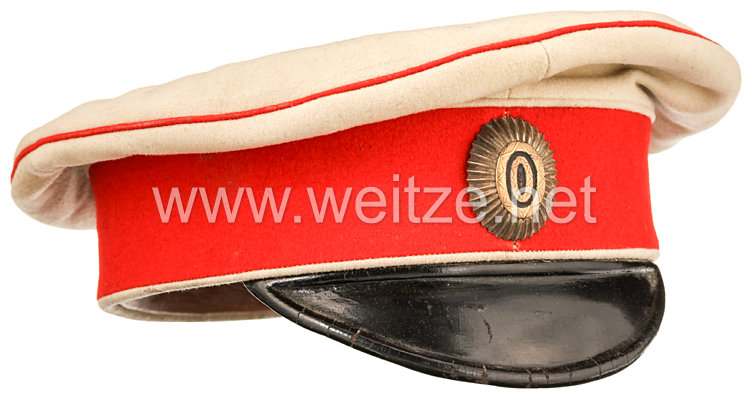
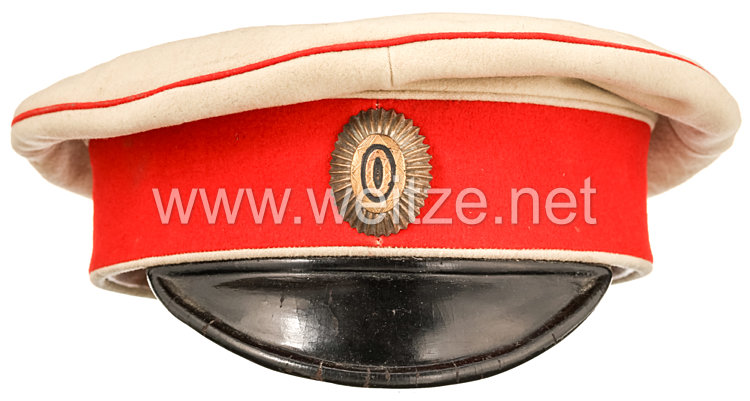
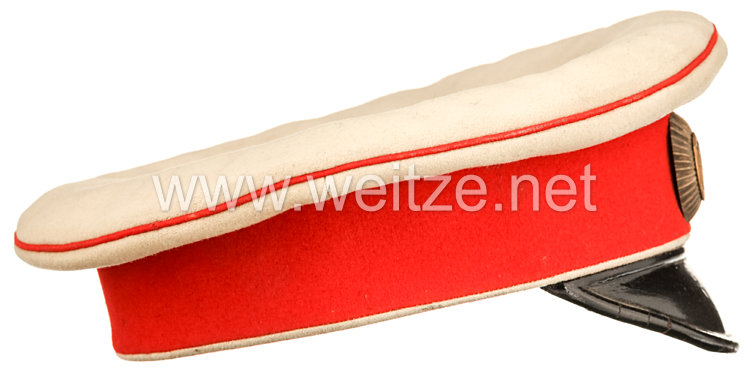
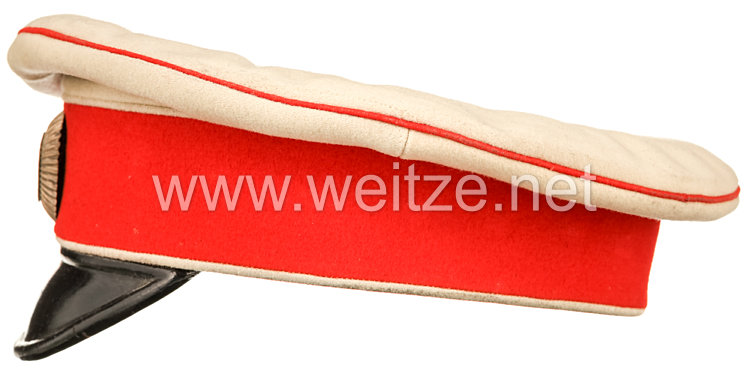
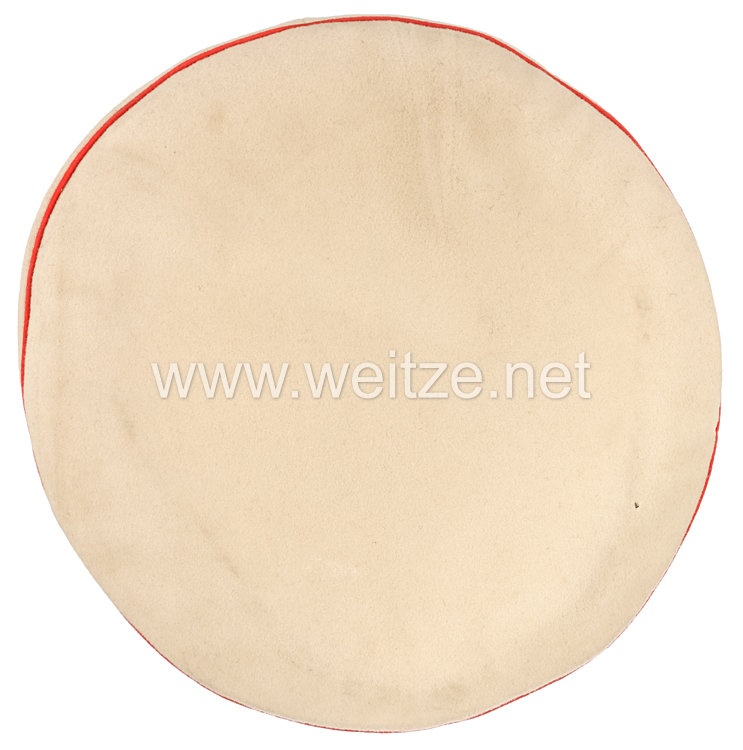
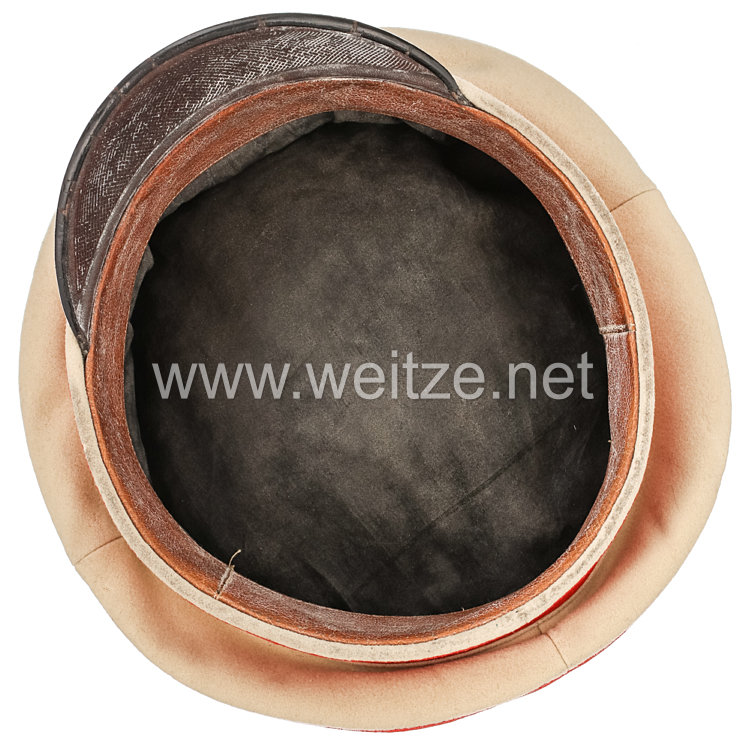
Imperial Russian Visor Cap for Officers of the Chevalier Guard Regiment

Circa 1900. Light saddle-shape construction, white cloth with red band and piping, metal kokarde at front, black lacquered visor. Interior with brown leather sweatband, black lining. Size 57. Only minor wear and age marks. Condition 2.
352992
1.650,00

Imperial Russian Visor Cap for Officers of the Chevalier Guard Regiment

The officer's visor cap of the Chevalier Guard Regiment of Tsarist Russia embodies the distinguished status of one of the most elite units of the Russian Empire. The Chevalier Guard Regiment (Russian: Кавалергардский полк) was founded in 1724 by Empress Catherine I and served as the personal bodyguard of the Russian monarchs until the Revolution of 1917.

This headgear from around 1900 represents the zenith of Russian Guard uniforms during the reign of Tsar Nicholas II (1894-1917). The regiment was renowned for its magnificent white uniforms with red facings, which are reflected in this visor cap. The white cloth with red band and red piping corresponded to the traditional regimental color that distinguished the Chevalier Guard Regiment from other Guard units.

The light saddle form of the cap was characteristic of Russian officers' headgear at the turn of the century. This design evolved from practical military considerations while simultaneously providing the elegant silhouette expected by St. Petersburg's courtly society. The black lacquered visor was a standard feature that offered protection from sun and weather while reinforcing the formal appearance of the uniform.

The metal cockade at the front was an essential identification mark of the Imperial Russian Army. For officers of the Chevalier Guard Regiment, this was often a gilded or silvered cockade featuring the imperial double-headed eagle, the emblem of the Romanov House. These cockades were manufactured and worn according to strict regulations as specified in the military dress regulations of the War Ministry.

The Chevalier Guard Regiment recruited its officers exclusively from the highest Russian nobility. Membership in this regiment was not merely a military honor but also a significant social status. Many officers were members of the most influential families of the empire, including princes, counts, and other aristocrats with direct connections to the Tsar's court.

The uniform worn around 1900 reflected the reform efforts that the Russian military underwent in the late 19th century. Following the Russo-Turkish War (1877-1878) and in anticipation of the Russo-Japanese War (1904-1905), uniform regulations were revised several times. However, the parade uniforms of the Guard regiments retained their traditional colors and decorations while field uniforms were designed more practically.

The brown leather sweatband and black lining inside the cap were typical of high-quality officers' headgear. These details demonstrate the craftsmanship expected from the leading military tailors of St. Petersburg and Moscow. Officers often had their uniforms made by renowned court suppliers who maintained strict standards for materials and workmanship.

The size 57 corresponds to the European standard system for headgear that was also used in Russia. This indicates that the cap was made for an average-sized wearer and followed the standardized measurement systems common in European uniform manufacturing in the late 19th century.

The Chevalier Guard Regiment played an important ceremonial role at state occasions, coronations, imperial weddings, and diplomatic receptions. Officers in their magnificent white uniforms with the characteristic visor caps were a familiar sight at the Winter Palace and during parades on the Field of Mars in St. Petersburg. Their presence symbolized the power and majesty of the Tsarist Empire.

The military function of the regiment extended beyond ceremonial duties. The Chevalier Guard Regiment participated in important military campaigns, including the Napoleonic Wars in the early 19th century and various conflicts in the Caucasus and the Balkans. Despite their elite social standing, the officers were trained cavalrymen who could fight when necessary.

Following the February Revolution of 1917 and the subsequent fall of the monarchy, the Chevalier Guard Regiment, like all other imperial Guard units, was dissolved. Many of its officers joined the White Army in the Russian Civil War, while others went into exile. The magnificent uniforms and equipment were scattered, looted, or destroyed.

Today, preserved uniform items from the Chevalier Guard Regiment are rare witnesses to a vanished world. They are found in museum collections worldwide, including the Hermitage in St. Petersburg, the State Historical Museum in Moscow, and various Western military museums. Such objects document not only military history but also the social structures, artistic traditions, and craftsmanship of Tsarist Russia at the threshold of the 20th century.

r