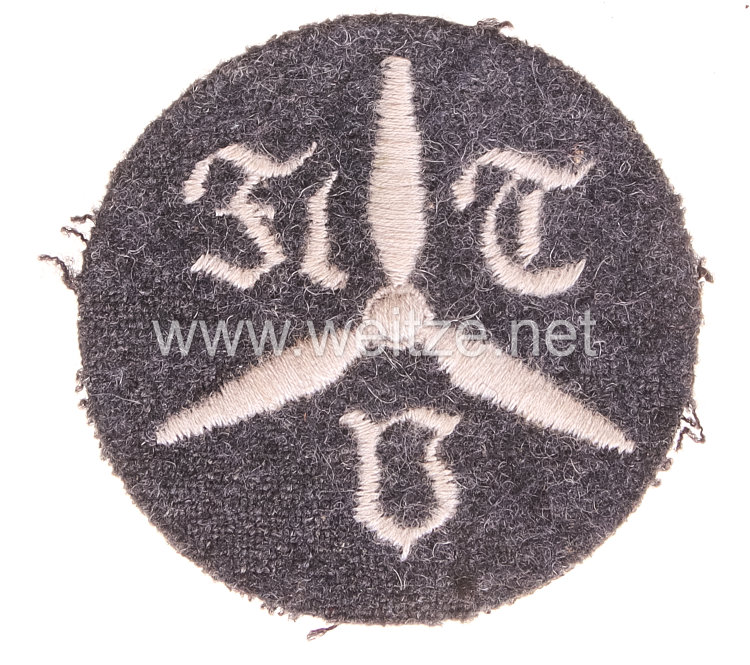
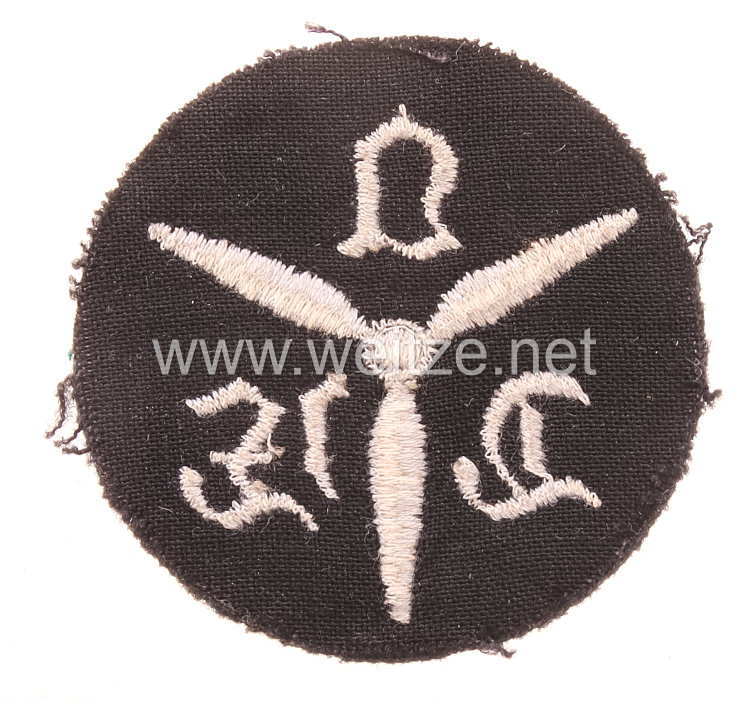
Luftwaffe Sleeve Insignia for Former Members of the Flieger Technische Vorschule

Machine-embroidered version, Condition 2. Rare.
422092
100,00

Luftwaffe Sleeve Insignia for Former Members of the Flieger Technische Vorschule

The sleeve badge for former members of the Flieger-Technische Vorschule (Flight Technical Preparatory School) represents a rare and historically significant piece of German Luftwaffe history. This machine-embroidered badge was worn during World War II by graduates and former members of the Flight Technical Preparatory School, an important training institution of the Luftwaffe.

The Flieger-Technische Vorschulen were established in the 1930s as part of the systematic buildup of the German Luftwaffe. These schools served to provide technical preliminary training for young men who would later be deployed as aircraft mechanics, aircraft engine specialists, or in other technical functions within the Luftwaffe. The training encompassed theoretical and practical knowledge in areas such as aircraft construction, engine technology, aerodynamics, and related technical disciplines.

According to Luftwaffe uniform regulations, the sleeve badge was worn on the right upper arm of the uniform. Machine embroidery was the most common manufacturing method during the war, as it enabled cost-effective and rapid production. Unlike hand-embroidered variants, which were primarily made for officers, machine-embroidered badges were intended for the broad mass of enlisted personnel and non-commissioned officers.

The importance of these preparatory schools cannot be overestimated. With the rapid expansion of the Luftwaffe from 1935 onwards, there was an enormous need for qualified technical personnel. Modern combat aircraft such as the Messerschmitt Bf 109, the Focke-Wulf Fw 190, or bombers like the Heinkel He 111 and Junkers Ju 88 required highly specialized maintenance and repair personnel. The Flight Technical Preparatory Schools formed the foundation of this technical infrastructure.

Wearing such a sleeve badge served multiple purposes. First, it enabled quick identification of individuals with specific preliminary training within the military hierarchy. Second, it fostered esprit de corps and identification with one's own training institution. Third, it documented a specific educational path within the complex organizational structure of the Luftwaffe.

The design of such badges followed strict guidelines from the Reich Air Ministry (Reichsluftfahrtministerium). Each badge had to meet certain quality standards and was produced by authorized manufacturers. Machine-embroidered versions typically used high-quality artificial silk threads on a fabric base chosen to match the uniform color.

The rarity of this badge today can be explained by several factors. Many uniform items and badges were lost during the chaos of war or deliberately destroyed after the war's end. Surviving veterans frequently removed military insignia to protect themselves from possible reprisals. Additionally, the number of graduates from the Flight Technical Preparatory Schools was relatively limited in proportion to the overall strength of the Luftwaffe.

From a military-historical perspective, such badges are important testimonies to the organization and structure of the German Luftwaffe. They document the sophisticated system of training institutions and specializations necessary to maintain a modern air force. The existence of special badges for graduates of preparatory schools underscores the importance attached to technical training.

Collectors and historians value such objects not only for their rarity but also for their documentary value. They help paint a more complete picture of military organization and daily life in the Luftwaffe. Each surviving specimen contributes to the preservation of historical knowledge and enables future generations to better understand this era.

The condition of such badges varies considerably, depending on storage and use over the decades. A well-preserved example still shows the original colors and intact embroidery, which is remarkable for textiles over 80 years old.