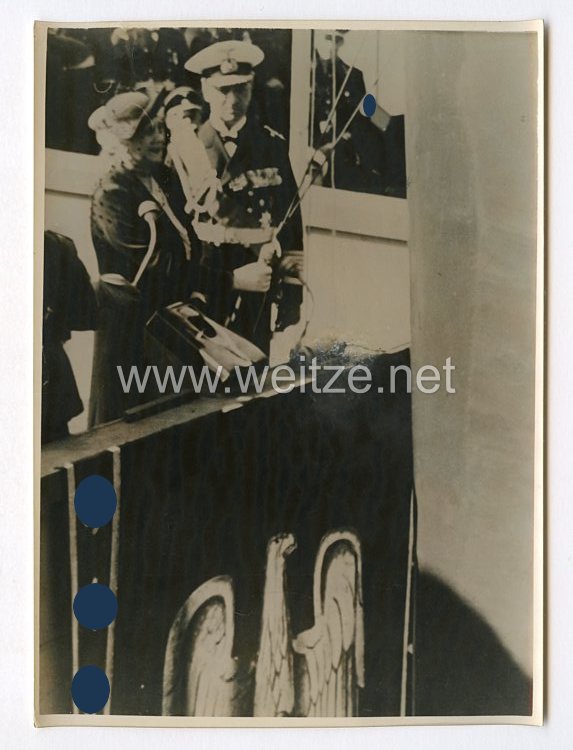
Third Reich Press Photograph.

Dimensions approx. 13 x 18 cm, used condition.
319892
15,00

Third Reich Press Photograph.

Press Photography in the Third Reich: Propaganda and Control of Visual Reporting

Press photographs from the era of the Third Reich (1933-1945) represent important historical documents that provide insight into the sophisticated propaganda and media control policies of the National Socialist regime. These photographs in the 13 x 18 cm format corresponded to the professional standard for press agencies of that time and were deliberately used to influence public opinion.

Organization and Control of Press Photography

After the Nazi seizure of power in 1933, the regime established a comprehensive system to control all media. The Reich Ministry for Public Enlightenment and Propaganda under Joseph Goebbels exercised central control over all press products. The Reich Press Chamber, a subdivision of the Reich Culture Chamber, regulated the entire press landscape from 1933 onwards. Only members of this institution were allowed to work as journalists, enabling the systematic exclusion of undesirable journalists.

Press photos were mainly produced and distributed by state-controlled agencies such as the German News Bureau (Deutsches Nachrichtenbüro, DNB) and the Wehrmacht's Propaganda Companies (Propagandakompanien, PK). These images were subject to the strictest censorship and had to fulfill the ideological requirements of the regime.

Technical Aspects and Distribution

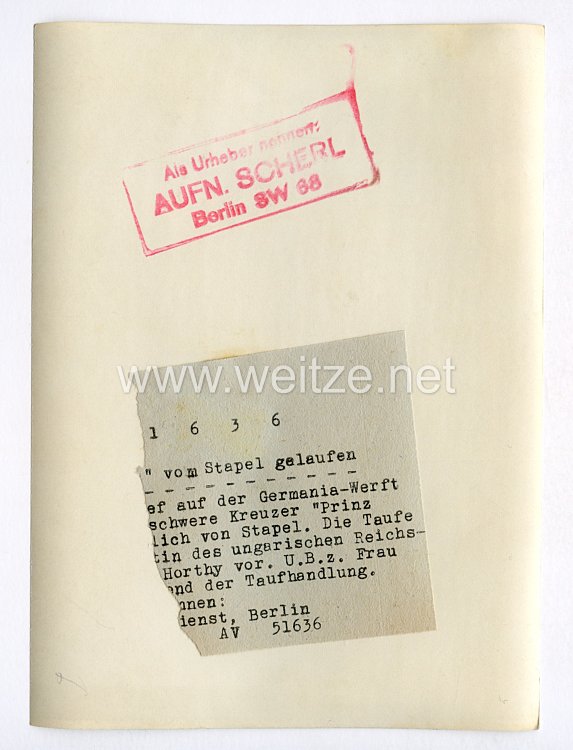
The standard format of approximately 13 x 18 cm was ideal for press work of that era. These prints were produced on high-quality photographic paper and typically bore stamps and inscriptions on the reverse. Commonly found there were censorship numbers, dates, photographer names, and brief image descriptions. The photos were distributed to newspaper editorial offices, illustrated magazines, and other media, which published them according to propaganda directives.

The Propaganda Companies, officially established in 1938, played a central role in visual reporting during World War II. These units consisted of photographers, war correspondents, and cameramen who operated directly at the front. Their task was to document and stage war events in accordance with National Socialist ideology.

Thematic Areas of Nazi Press Photography

Press photos from the Third Reich can be divided into various categories: Führer cult and party rally photographs documented Adolf Hitler and other Nazi leaders in heroic poses. Military success reports showed victorious troops and modern weaponry. Images of “reconstruction” presented infrastructure projects such as autobahns. Propagandistic representations of the “Volkskörper” (national body) idealized the Aryan family and Hitler Youth.

Particularly insidious was the photographic incitement against minorities and war enemies. Many of these images served to dehumanize Jews, Roma, and other persecuted groups. These photographs were an integral part of anti-Semitic propaganda that ideologically prepared for and accompanied the Holocaust.

Photographers and Their Role

Well-known photographers such as Heinrich Hoffmann, Hitler's personal photographer, Hugo Jaeger, and numerous PK photographers created thousands of images. Many of these photographers were convinced National Socialists; others conformed for professional reasons. Their work was subject to strict guidelines: certain motifs were forbidden, others were preferred. Staging was more important than documentary truth.

Historical Significance and Source Criticism

Today, these press photographs are important historical sources that must, however, be viewed extremely critically. They do not document the reality of the Third Reich but rather its self-representation. Historians use them to analyze propaganda mechanisms and understand the regime's visual policies. The photos show what the regime wanted to present to the public, while they often concealed the crimes and the true extent of war suffering.

In academic archives, museums, and collections, such press photographs are preserved and made accessible for research and education. Their use always requires contextualizing explanation to prevent uncritical reproduction of National Socialist propaganda. The German Federal Archives (Bundesarchiv) preserves extensive holdings of these visual sources.

Collector Value and Ethical Considerations

The trade in Nazi press photographs operates in an ethically sensitive area. While their value as historical sources is undisputed, it must be prevented that they are misused to glorify National Socialism. Serious collectors and institutions treat these objects as warnings and study objects, not as devotional items. The used condition of many of these photos with creases, stamps, and inscriptions underscores their authentic use in press work of that time and paradoxically increases their documentary value.