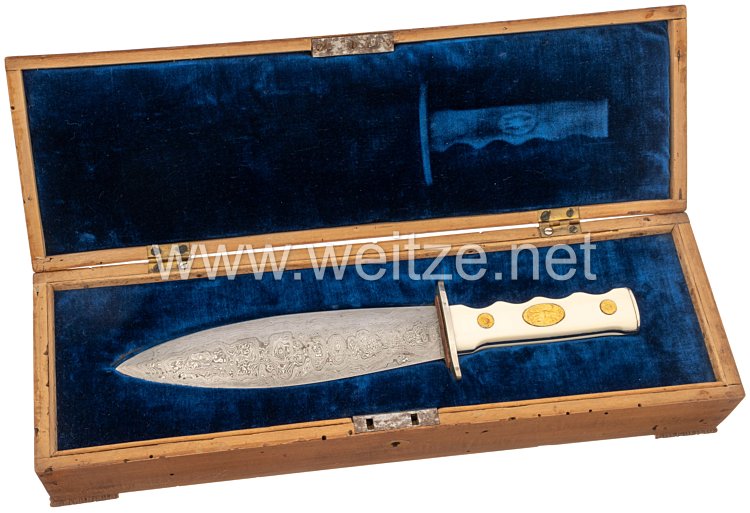
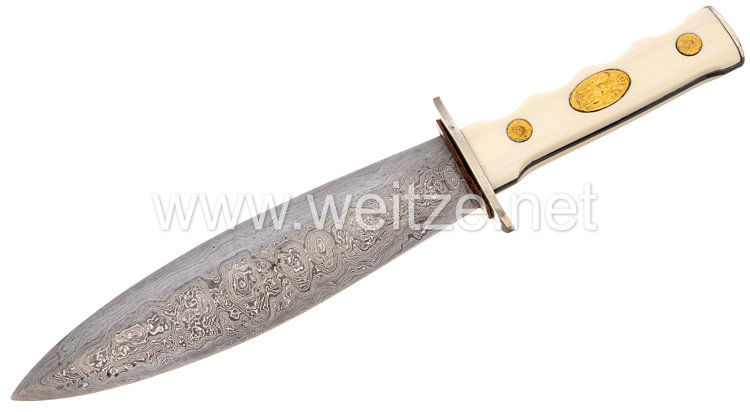
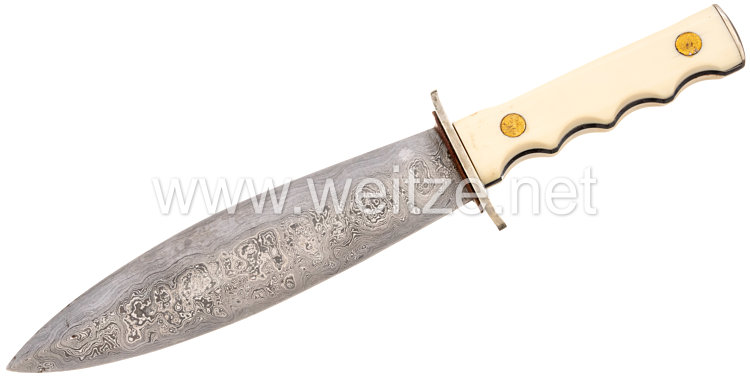
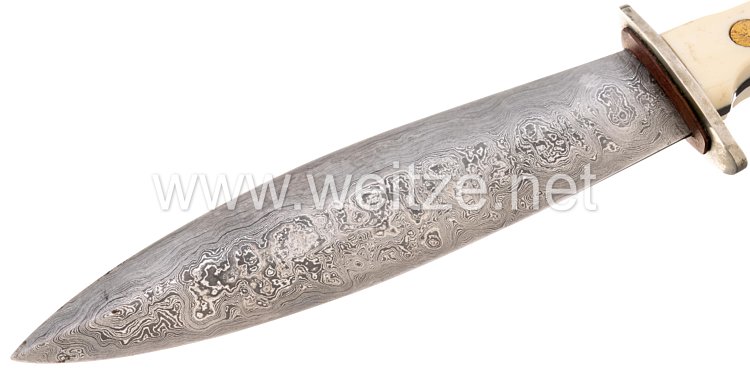
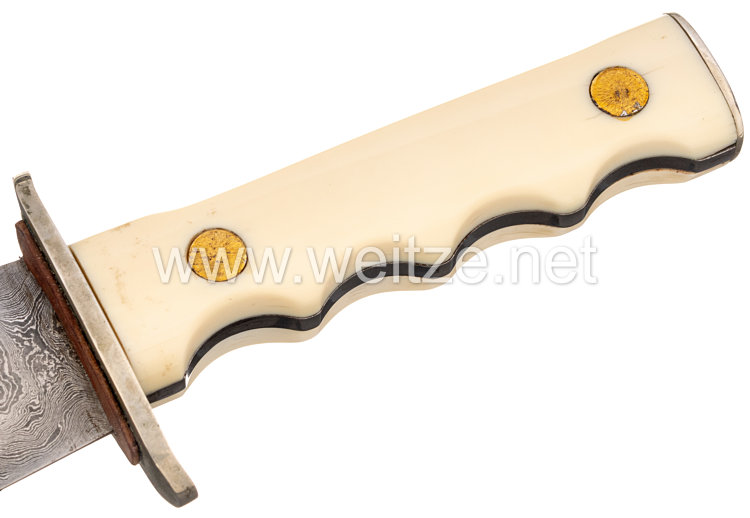
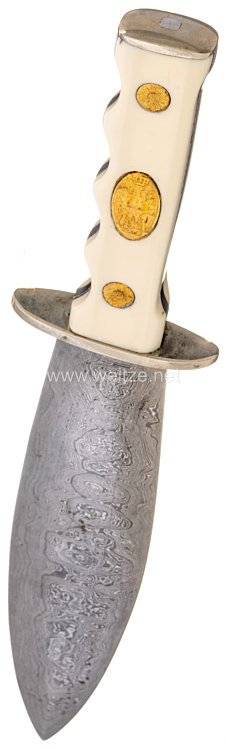
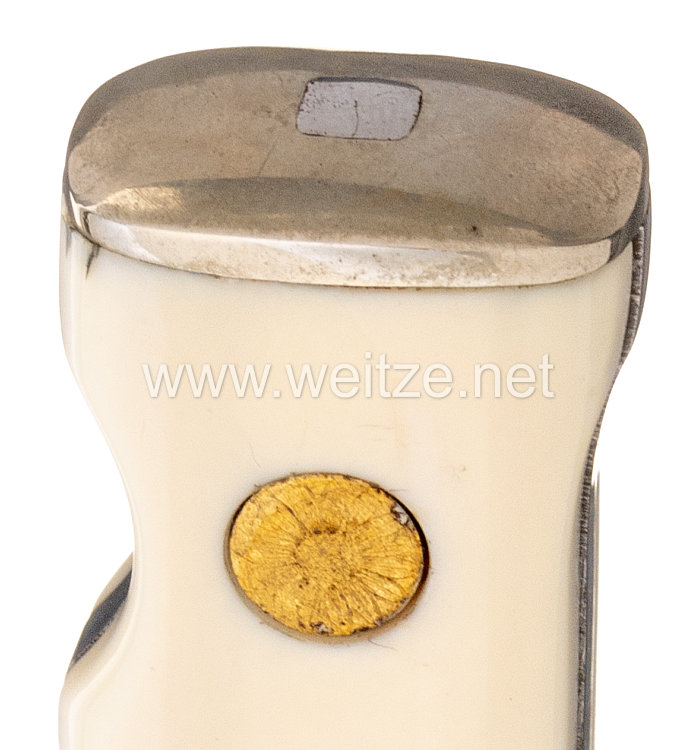
Faschistisches Italien Geschenkdolch der PAI Polizia dell`Africa Italiana an den deutschen Generalleutnant Enno von Rintelen, 1941
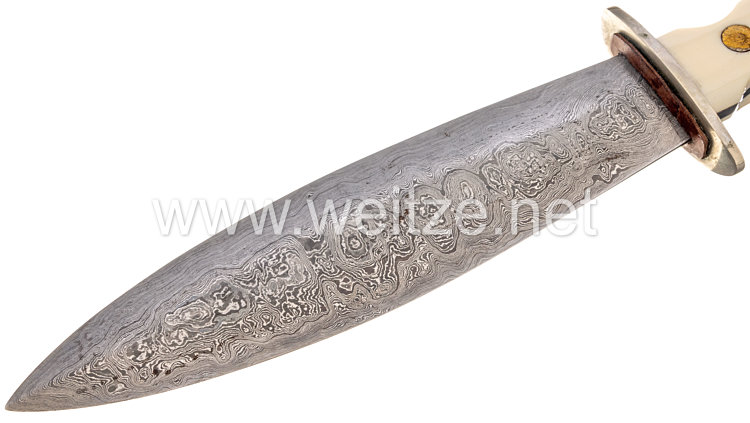
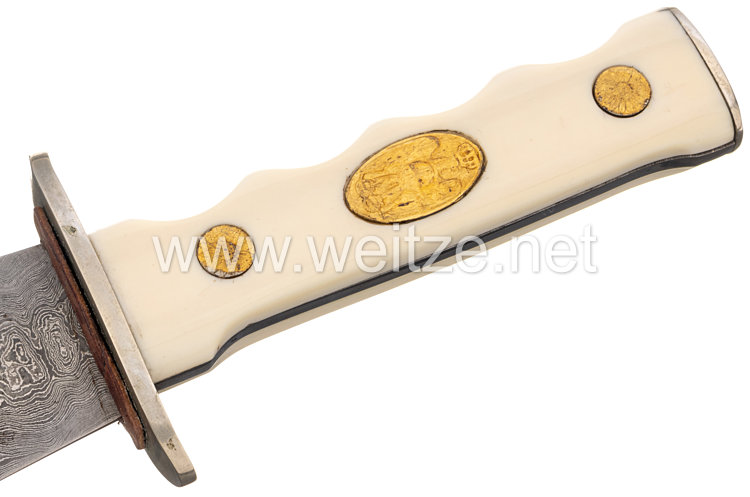
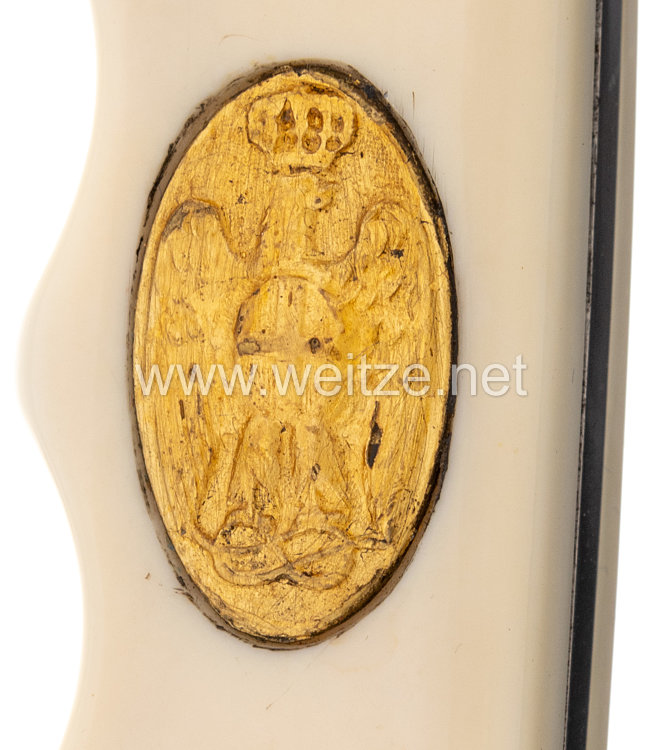
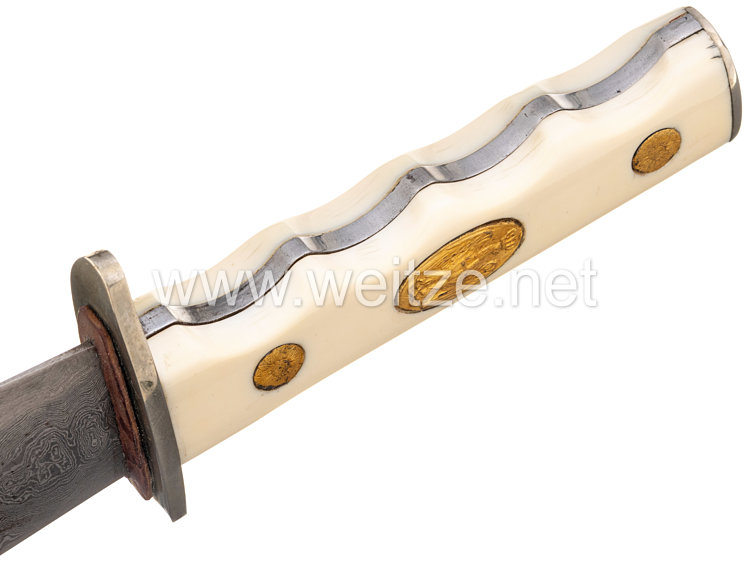
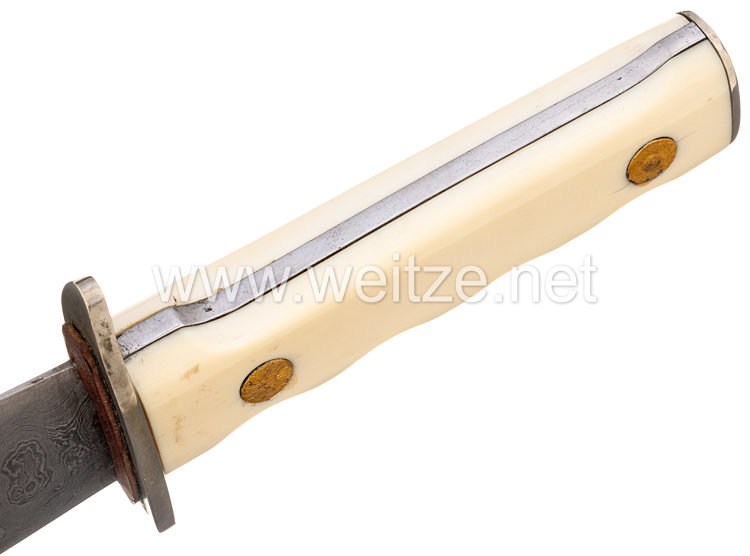
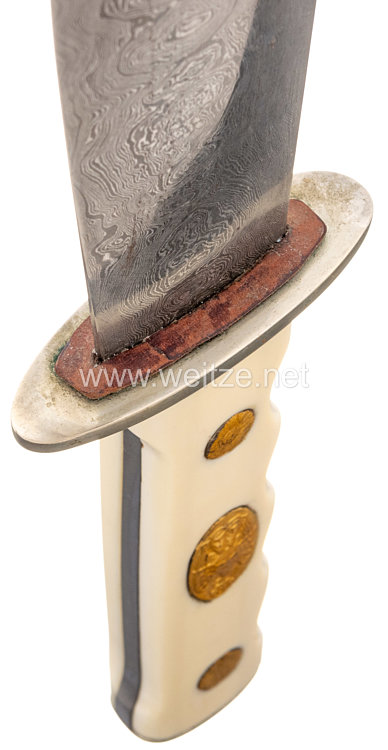
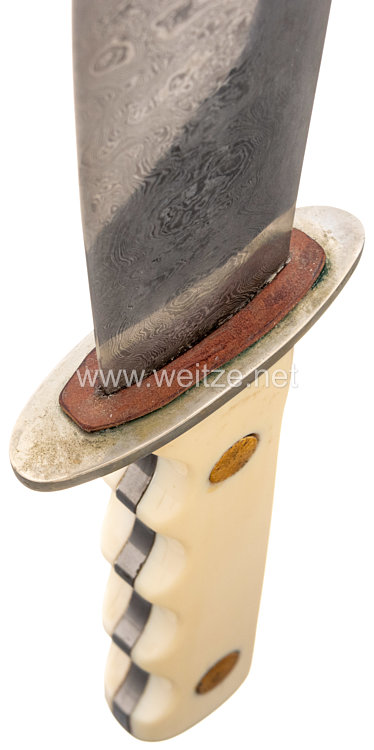
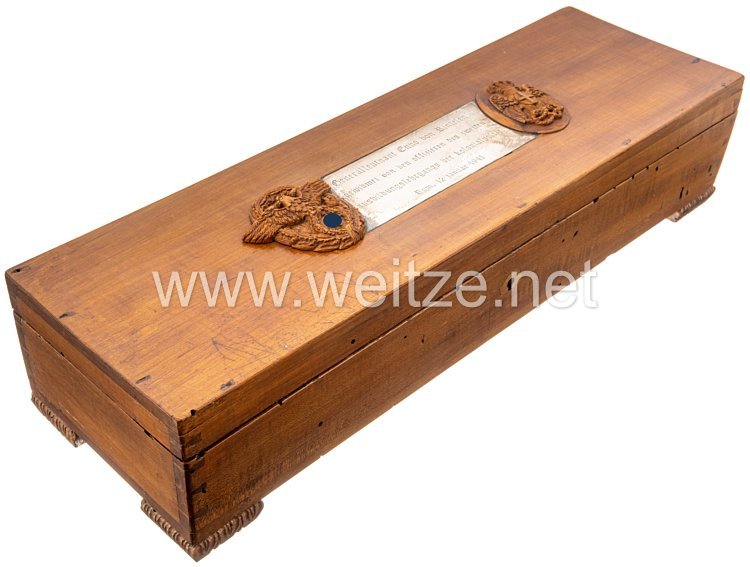
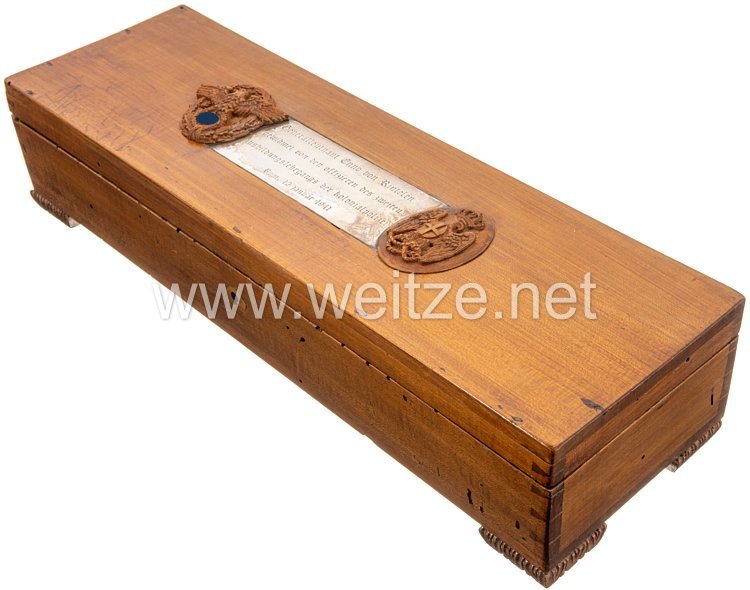
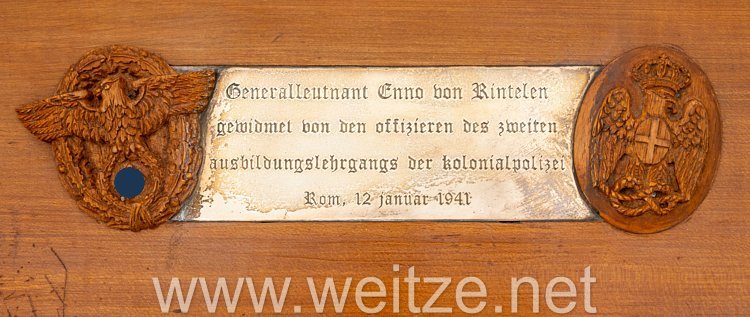
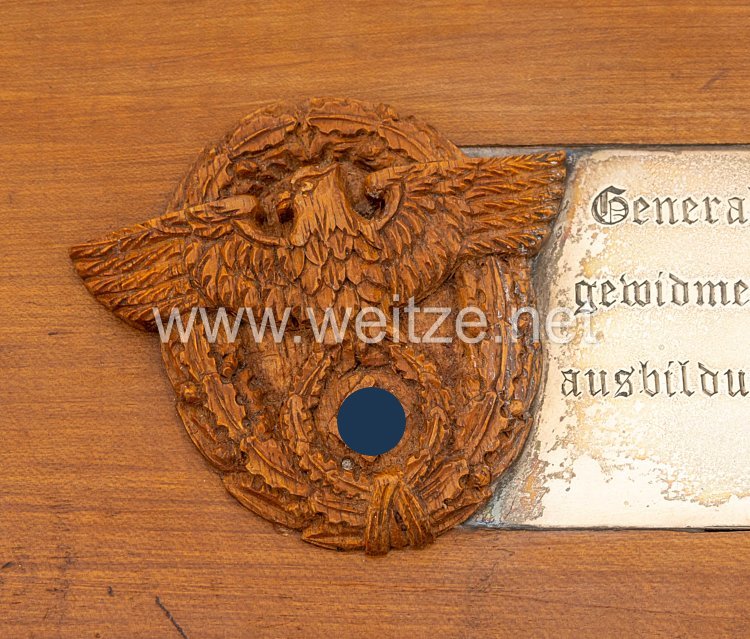
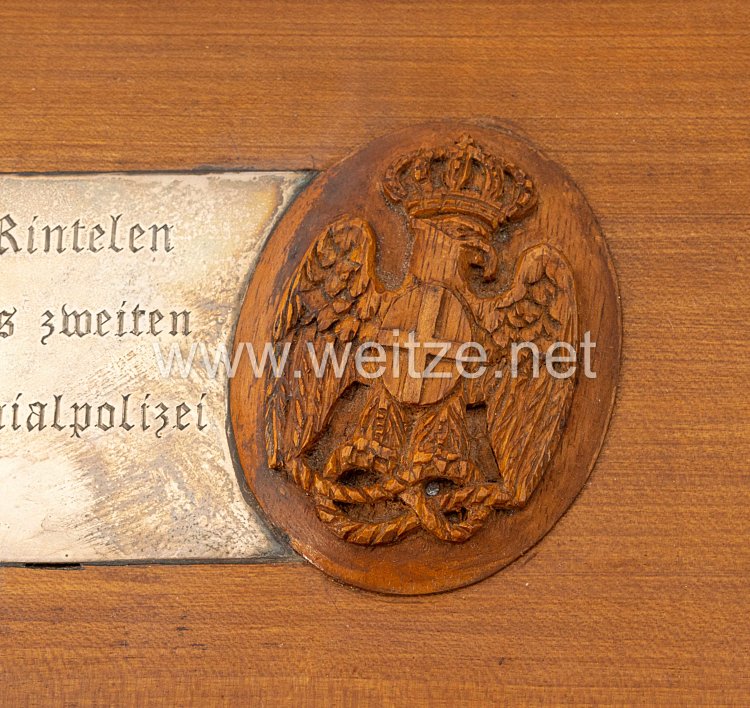
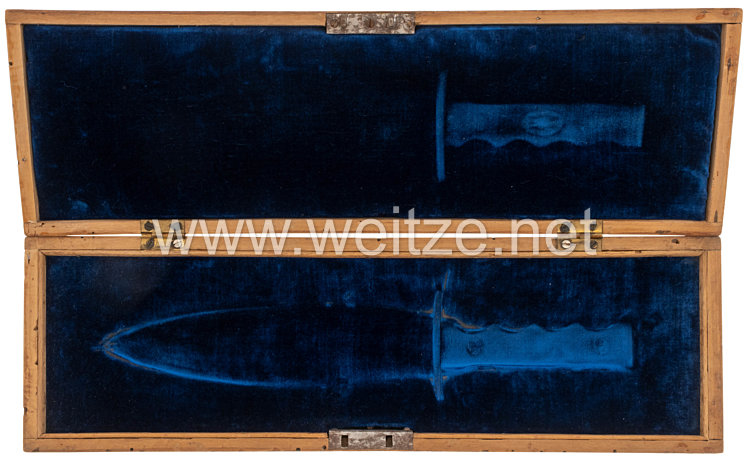
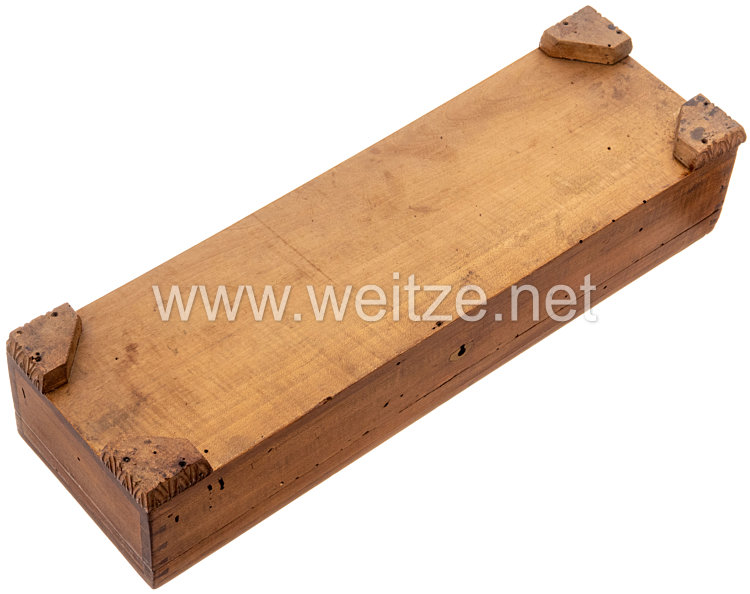
Es handelt sich hierbei um den Ehrendolch der PAI in der Ausführung für Generale, die Griffschalen aus Elfenbein, mit eingelegtem vergoldetem Medaillon mit dem italienischen Adler. Die breite Klinge in feiner Damastausführung. Länge 30,5 cm. Komplett im hölzernen Präsentationskasten, innen mit blauem Samtbett für den Dolch. Auf dem Deckel mit handgeschnitztem deutschen Polizeiadler sowie dem italienischen Hoheitsadler der PAI, in der Mitte eingelegt eine silberne Platte mit Widmungsgravur "Generalleutnant Enno von Rintelen gewidmet von den offizieren des zweiten ausbildungslehrgangs der kolonialpolizei Rom, 12 januar 1941" (der Text wurde offensichtlich von einem italienischen Graveur angefertigt, daher die "Kleinschreibung" der Hauptwörter aus der italienischen Schreibweise). Der Schlüssel für das Schloss fehlt des Kastens fehlt, der Kasten seitlich etwas wurmstichig (der Kasten wurde gegen Holzwurm behandelt.). Maße des Kastens 12 x 40 cm, Höhe 7,5 cm. Zustand 2.
Enno Emil von Rintelen (* 6. November 1891 in Stettin; † 7. August 1971 in Heidelberg) war ein deutscher Offizier, zuletzt General der Infanterie während des Zweiten Weltkriegs. Er entstammte einem alten Herforder Ratsgeschlecht und war der Sohn des preußischen Generalleutnants Wilhelm Rintelen, der im Jahr 1913 in den preußischen Adelsstand erhoben wurde Rintelen trat in die Preußische Armee ein und wurde am 18. September 1910 Fahnenjunker sowie und am 27. Januar 1912 zum Leutnant befördert. Im Ersten Weltkrieg diente er in verschiedenen Truppenverbänden an der Front, zuletzt seit 18. Oktober 1918 als Hauptmann. Er erhielt u.a. das Eiserne Kreuz 1. und 2. Klasse. Nach dem Krieg in die Reichswehr übernommen. Am 1. Dezember 1933 wurde er zum Oberstleutnant und Bataillonskommandeur befördert, und ab 1. Oktober 1935 war er als Oberst an die Wehrmachtakademie versetzt. Ab 1. Oktober 1936 war Rintelen als Militärattaché in Rom eingesetzt. Nach Beginn des Zweiten Weltkriegs wurde er am 20. April 1940 zusätzlich im Rang eines Generalmajors (Beförderung am 1. Juni 1939) zum Bevollmächtigten Deutschen General beim Hauptquartier der italienischen Wehrmacht ernannt. Am 1. Juni 1941 wurde er zum Generalleutnant und am 1. Juli 1942 bereits zum General der Infanterie ernannt. Rintelen wurde zum 1. September 1943 in die Führerreserve versetzt. Am 31. Dezember 1944 wurde Rintelen unter Verleihung des Deutschen Kreuzes in Silber in den Ruhestand verabschiedet.
Die Polizia dell’Africa Italiana (PAI) („Polizei Italienisch-Afrikas“) war eine von 1936 bis 1945 bestehende italienische Kolonialpolizei. Sie unterstand dem Kolonialministerium in Rom und den nachgeordneten Kolonialregierungen in Italienisch-Ostafrika und Italienisch-Libyen. Der Aufbau erfolgte ab Anfang 1937. Die Ausbildung erfolgte an einer zentralen Kolonialpolizeischule in Tivoli bei Rom. An der Schule in Tivoli wurden ab 1939 auch Lehrgänge für deutsche Angehörige der Polizei und der SS abgehalten.Ca. 400 deutsche Offiziere und Mannschaften haben in dem Zeitraum von 1940 bis 1942 an diesen Lehrgängen teilgenommen, die deutschen Lehrgangsteilnehmer erhielten zum Abschluss den Dolch der PAI in einer besonderen Form mit Widmung des kommandierenden Generals "Maraffa".
Enno Emil von Rintelen (* 6. November 1891 in Stettin; † 7. August 1971 in Heidelberg) war ein deutscher Offizier, zuletzt General der Infanterie während des Zweiten Weltkriegs. Er entstammte einem alten Herforder Ratsgeschlecht und war der Sohn des preußischen Generalleutnants Wilhelm Rintelen, der im Jahr 1913 in den preußischen Adelsstand erhoben wurde Rintelen trat in die Preußische Armee ein und wurde am 18. September 1910 Fahnenjunker sowie und am 27. Januar 1912 zum Leutnant befördert. Im Ersten Weltkrieg diente er in verschiedenen Truppenverbänden an der Front, zuletzt seit 18. Oktober 1918 als Hauptmann. Er erhielt u.a. das Eiserne Kreuz 1. und 2. Klasse. Nach dem Krieg in die Reichswehr übernommen. Am 1. Dezember 1933 wurde er zum Oberstleutnant und Bataillonskommandeur befördert, und ab 1. Oktober 1935 war er als Oberst an die Wehrmachtakademie versetzt. Ab 1. Oktober 1936 war Rintelen als Militärattaché in Rom eingesetzt. Nach Beginn des Zweiten Weltkriegs wurde er am 20. April 1940 zusätzlich im Rang eines Generalmajors (Beförderung am 1. Juni 1939) zum Bevollmächtigten Deutschen General beim Hauptquartier der italienischen Wehrmacht ernannt. Am 1. Juni 1941 wurde er zum Generalleutnant und am 1. Juli 1942 bereits zum General der Infanterie ernannt. Rintelen wurde zum 1. September 1943 in die Führerreserve versetzt. Am 31. Dezember 1944 wurde Rintelen unter Verleihung des Deutschen Kreuzes in Silber in den Ruhestand verabschiedet.
Die Polizia dell’Africa Italiana (PAI) („Polizei Italienisch-Afrikas“) war eine von 1936 bis 1945 bestehende italienische Kolonialpolizei. Sie unterstand dem Kolonialministerium in Rom und den nachgeordneten Kolonialregierungen in Italienisch-Ostafrika und Italienisch-Libyen. Der Aufbau erfolgte ab Anfang 1937. Die Ausbildung erfolgte an einer zentralen Kolonialpolizeischule in Tivoli bei Rom. An der Schule in Tivoli wurden ab 1939 auch Lehrgänge für deutsche Angehörige der Polizei und der SS abgehalten.Ca. 400 deutsche Offiziere und Mannschaften haben in dem Zeitraum von 1940 bis 1942 an diesen Lehrgängen teilgenommen, die deutschen Lehrgangsteilnehmer erhielten zum Abschluss den Dolch der PAI in einer besonderen Form mit Widmung des kommandierenden Generals "Maraffa".