USA WWII, M1936 Belt of British Manufacture

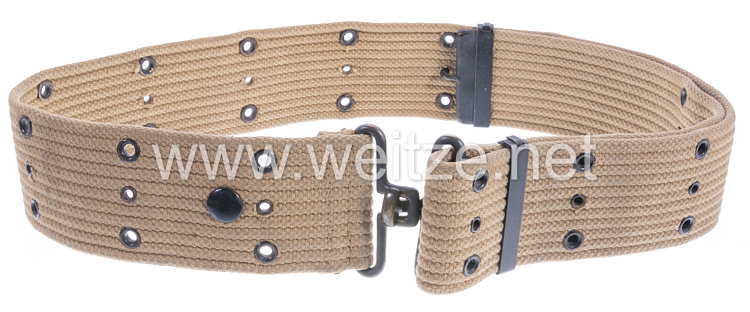
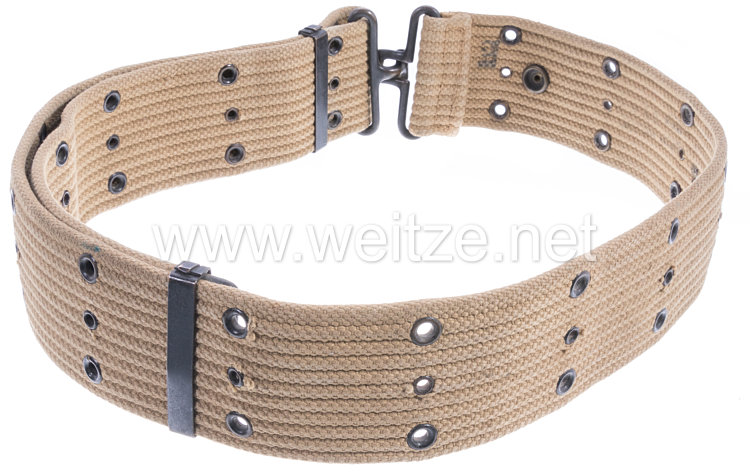
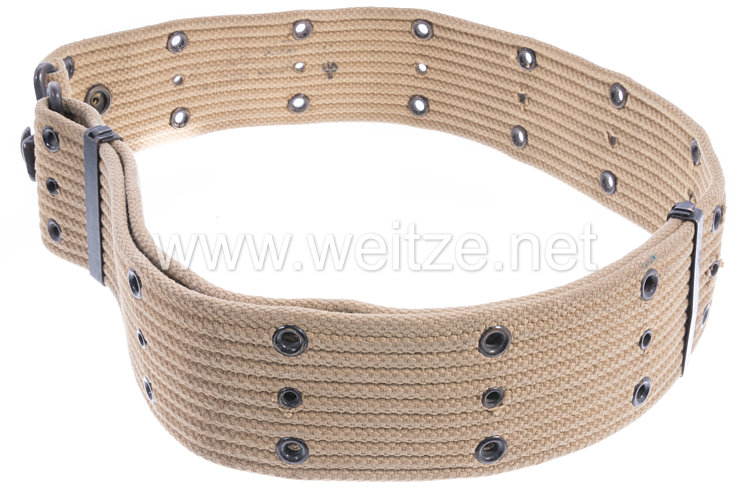
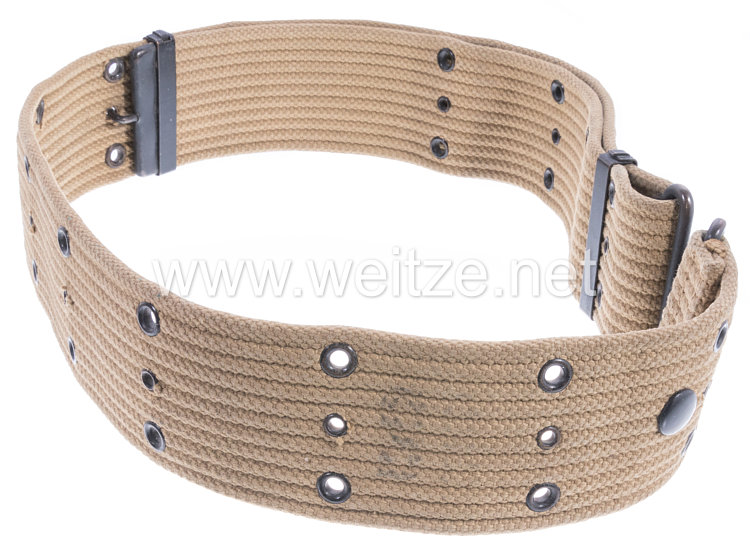
Linen belt with faint British “arrow” acceptance mark, additional stamps barely recognizable, condition 2
337990
80,00

USA WWII, M1936 Belt of British Manufacture

The M1936 pistol belt represents a fascinating example of the complex international logistics and procurement policies during World War II. This particular specimen made of linen with British acceptance stamps documents the extensive military cooperation between the United States and Great Britain during the critical war years.

The M1936 Pistol Belt was originally developed as part of American field equipment and introduced through War Department regulations. The standard version consisted of olive drab cotton webbing, but due to enormous demand and the overload of American production capacities, alternative procurement channels had to be established. American defense industry concentrated primarily on weapons production, vehicles, and complex military equipment, so the manufacture of textile equipment was frequently outsourced to allies.

The British defense industry possessed a centuries-long tradition in textile manufacturing, particularly in the industrial centers of Lancashire and Yorkshire. After the Lend-Lease Act of 1941, military cooperation between both nations intensified considerably. While the USA delivered war material to Great Britain, British industry in turn produced certain equipment items for American forces. This reciprocal arrangement optimized resource utilization and shortened supply lines.

The characteristic “Broad Arrow” stamp, colloquially known as the crow's foot, had been the official property mark of the British Crown for centuries. This symbol, already used in the 17th century to mark naval property, served to identify all military equipment items of British manufacture. On American equipment items from British production, this stamp appeared alongside regular British manufacturer codes and date markings.

The M1936 belt was an essential component of the American soldier's individual equipment. It served as a carrying system for the M1936 suspenders, ammunition belt, canteen, first aid pouch, bayonet, and other equipment items. The development of this system marked a significant improvement over the older leather equipment from World War I, as textile material was lighter, more cost-effective, and easier to mass-produce.

The use of linen instead of cotton in this specimen is noteworthy. Linen was traditionally more available in Europe than cotton and was frequently used in British production facilities. The material offered comparable strength and durability, though it could vary slightly from American standard productions in texture and color. British manufacturers often used their own material specifications that met American requirements but were based on local resources.

The stampings on such equipment items followed precise regulations. Besides the Broad Arrow, manufacturer codes, production years, and inspection stamps typically appeared. The fact that additional stamps are barely recognizable on this specimen testifies to intensive use and the harsh conditions of military deployment. Textile equipment was exposed to various weather conditions, mechanical stress, and frequent cleaning, which led to the wear of stampings.

The production of American equipment in British factories occurred under strict quality control. American inspectors frequently monitored allied production facilities to ensure compliance with U.S. Army specifications. This international division of labor was crucial to the Allied war success, as it enabled flexible and efficient resource allocation.

Such equipment items from British manufacture were primarily issued to American troops stationed in Europe, especially after Operation Overlord in June 1944. The shorter supply routes from British production facilities to combat zones in France, the Netherlands, and Germany meant significant logistical advantages over transatlantic shipments.

The M1936 belt was part of a comprehensive system that also included cartridge belts, suspenders, canteen covers, and various pouches. The modularity of this system allowed soldiers to configure their equipment according to mission requirements. The belt featured metal eyelets for attaching equipment and a brass or steel buckle for closure.

Production standards required specific dimensions, thread counts, and stitching patterns. British manufacturers had to adapt their traditional production methods to meet American specifications, which sometimes required retooling and new quality control procedures. Despite these challenges, British-made items generally met or exceeded U.S. Army standards.

Today, M1936 belts from British production are particularly valued by collectors as they document the often-overlooked history of Allied war production. They represent the pragmatic cooperation of two nations under extreme conditions and the ability of the Allies to coordinate their industrial resources. The condition grade 2 indicates an authentic, field-used specimen that reflects the reality of military deployment.

r