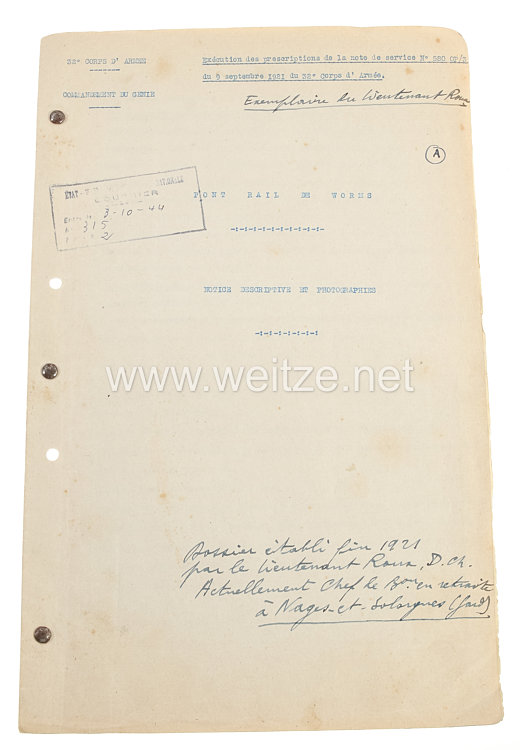
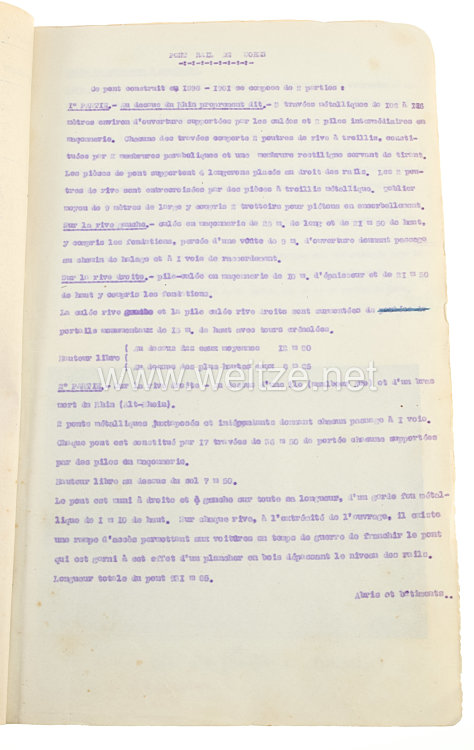
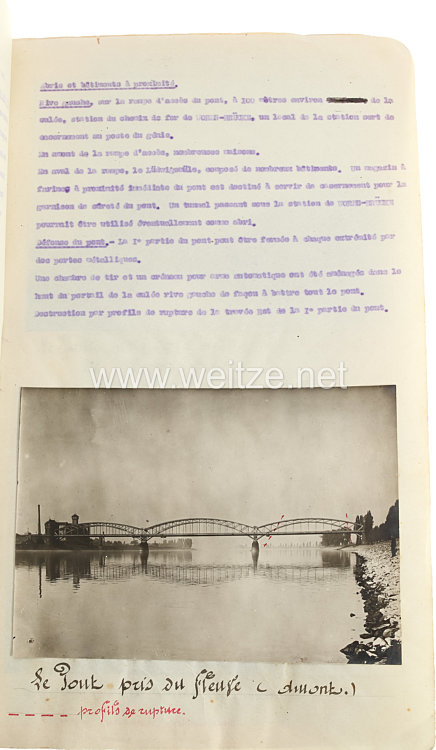
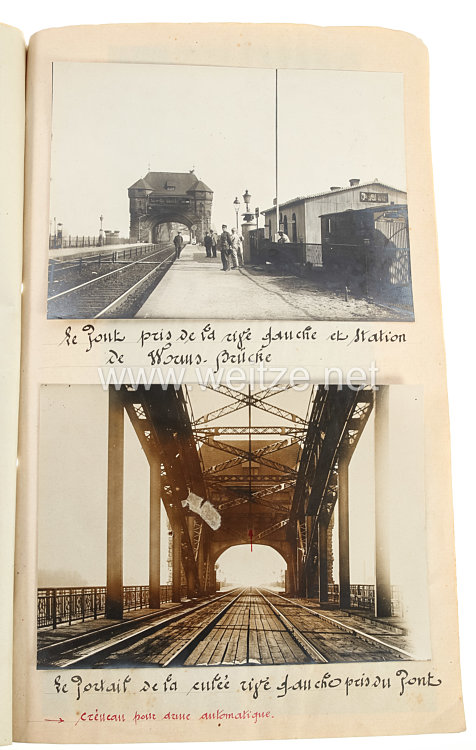
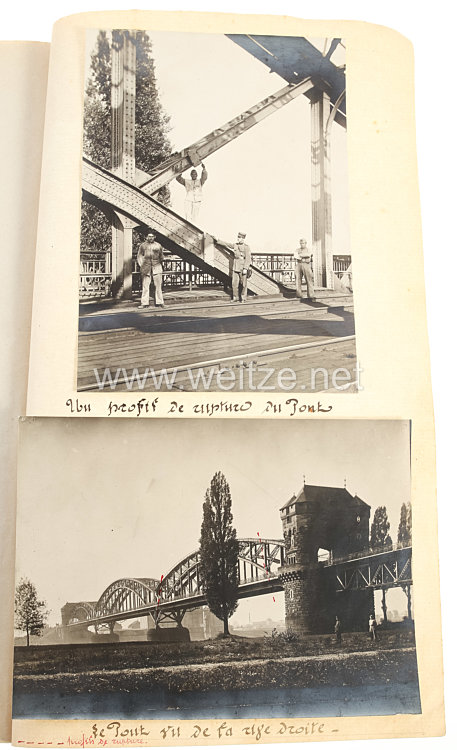
France Photo Album Occupation Army in the Rhineland Photographic Documentation of the Railway Bridge in Worms, September 9, 1921
This photo album documents a significant aspect of the French occupation of the Rhineland following World War I. Published by the 32nd Army Corps of the French armed forces on September 9, 1921, it contains a photographic record of the railway bridge in Worms on the Rhine River.
Following the signing of the Treaty of Versailles on June 28, 1919, the Rhineland was occupied by Allied troops according to Articles 428-432 of the treaty. The French zone encompassed large parts of the left bank of the Rhine, including the strategically important city of Worms. The occupation was divided into three zones and was originally planned to last fifteen years, with a gradual withdrawal in five-year intervals.
The Rhine bridges were of crucial strategic importance to the occupying powers. They not only represented vital transportation links but also served the military control of the region. The French army systematically documented the infrastructure in their occupation zone, with railway bridges receiving particular attention. This documentation served multiple purposes: military planning, administrative management, and recording the condition of the facilities taken over.
The 32nd Army Corps was one of the most important French units in the occupied Rhineland. The systematic photographic documentation of infrastructure objects was part of French occupation policy and reflected modern military administrative practice of the early 1920s. Such photo albums were typically produced for official purposes and distributed in limited editions to military offices.
The railway bridge in Worms held particular significance for regional and inter-regional transportation infrastructure. The Rhine represented a natural barrier, and the few bridges were essential for freight and passenger traffic. The French occupation troops strictly controlled these critical points and monitored all traffic across the river.
The timing of this documentation, September 1921, falls within a phase of relative stabilization of the occupation but also increasing tensions. The question of German reparation payments dominated political discourse, and the French government under Raymond Poincaré took a hard line toward Germany. Just one year later, in 1923, France, together with Belgium, would occupy the Ruhr region when Germany fell behind on its reparation payments.
Photographic documentation like this represents important historical sources today. It enables historians to reconstruct the condition of infrastructure in the post-war period and understand the methods of occupation administration. The fact that the texts were written in French underscores the official character of the document and its intended use by French military authorities.
The French occupation of the Rhineland lasted longer than originally provided for in the Treaty of Versailles. The last zone was not evacuated until 1930, five years earlier than the date stipulated in the treaty, as part of the brief détente policy following the Locarno Treaties (1925). The occupation period left deep marks on Franco-German relations and in the collective memory of both nations.
Such military photo albums are relatively rare in the collectors' market today. They were produced in small print runs and were intended for official use. Many were lost or destroyed over the decades. Surviving copies offer valuable insights into military practice during the interwar period and the concrete implementation of occupation policy on the ground.
The documentation of bridges and other infrastructure facilities was part of a comprehensive military inventory. These records served not only current administration but also long-term planning and, if necessary, military operations in case of unrest or resistance. The systematic nature of this documentation demonstrates the high organizational standards of the French army during this period.