Brunswick Infantry Sword Old Model for Officers in the I. or II. Battalion of Infantry Regiment No. 92
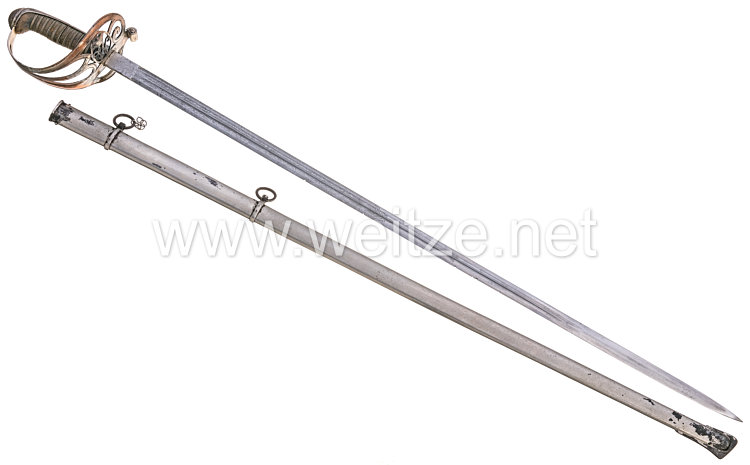
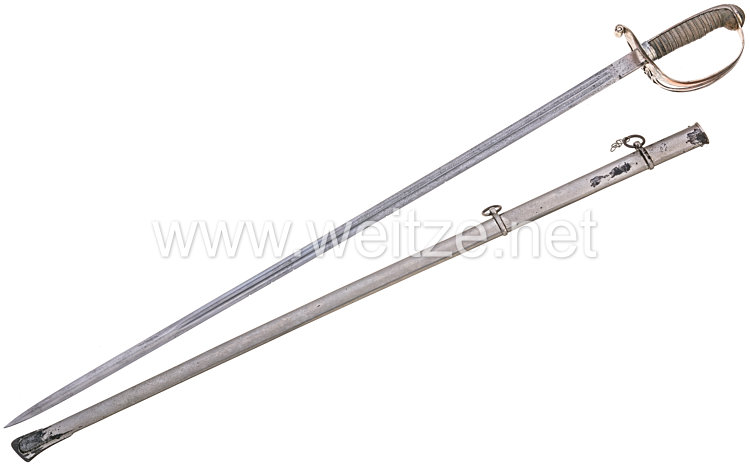
Overall length 101 cm.
The Brunswick Infantry Sword of the old model for officers of the Infantry Regiment No. 92 represents a significant epoch in the history of the Duchy of Brunswick and the later German Empire. This sidearm, manufactured around 1890, embodies not only precision craftsmanship but also the military traditions of one of Germany's most prestigious principalities.
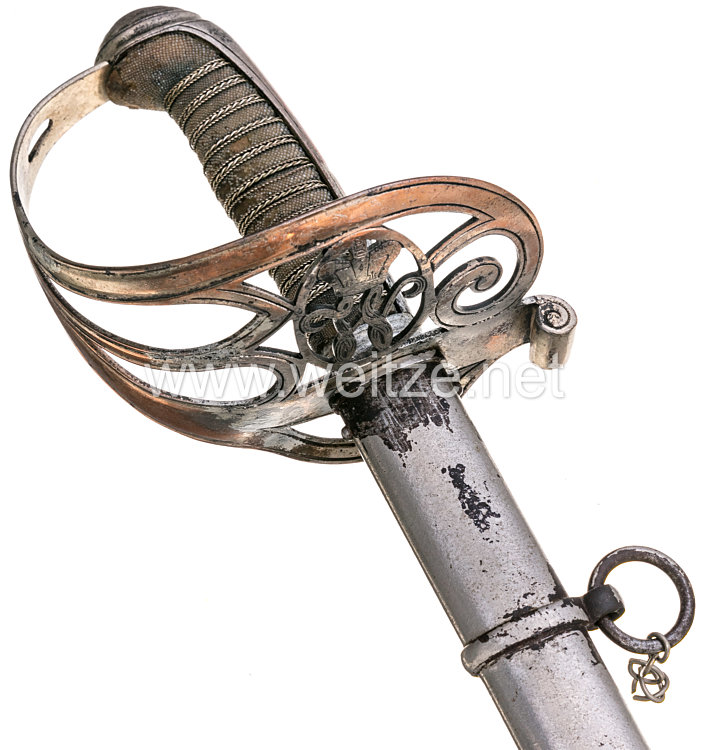
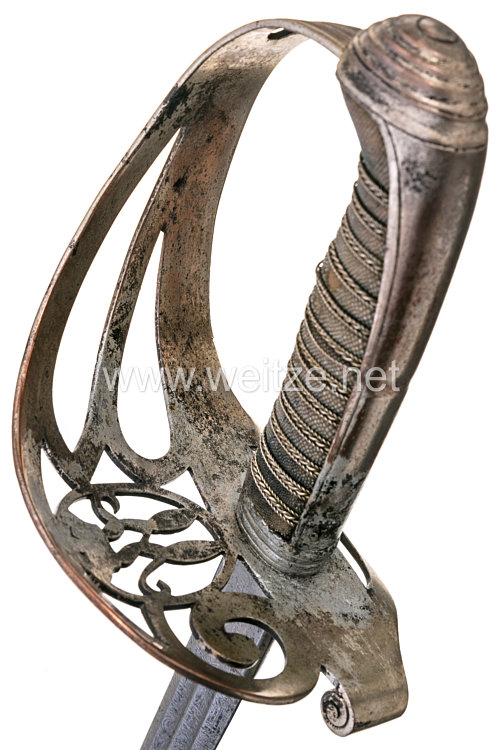
Infantry Regiment No. 92 was one of the Brunswick contingents within the Prussian Army after the German unification in 1871. Duke Wilhelm of Brunswick, whose monogram appears as a crown over “W” on the sword's hilt, reigned from 1831 to 1884. Following his death, a regency was established until his successor assumed power. However, Brunswick troops maintained their own traditions and uniforms, which is reflected in the specific designs of their officers' swords.
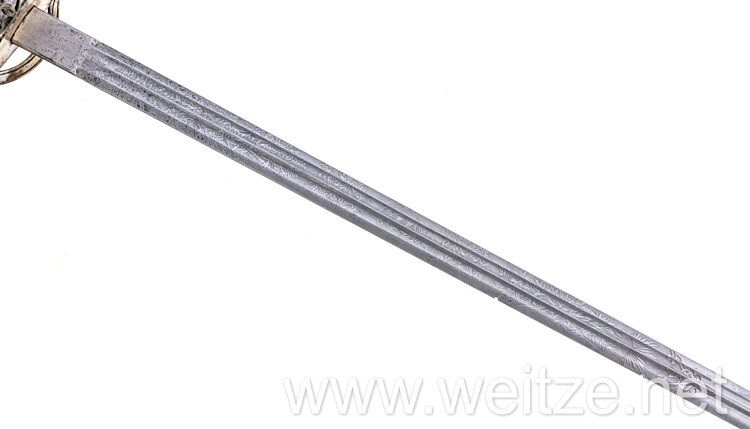
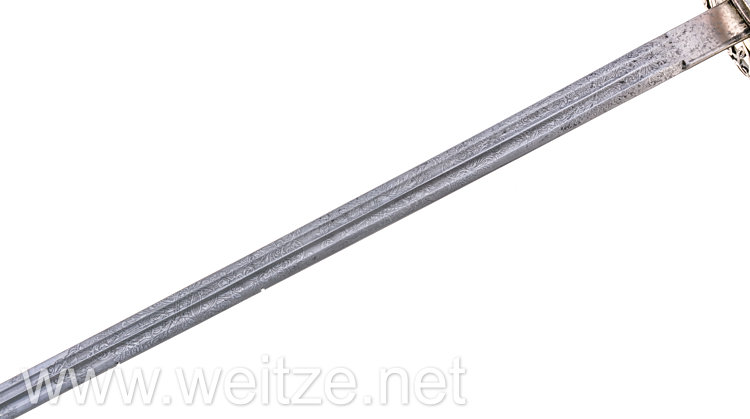
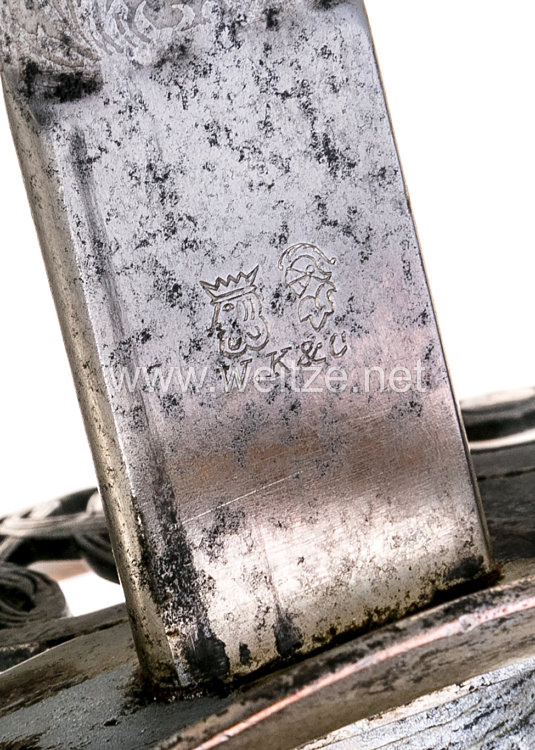
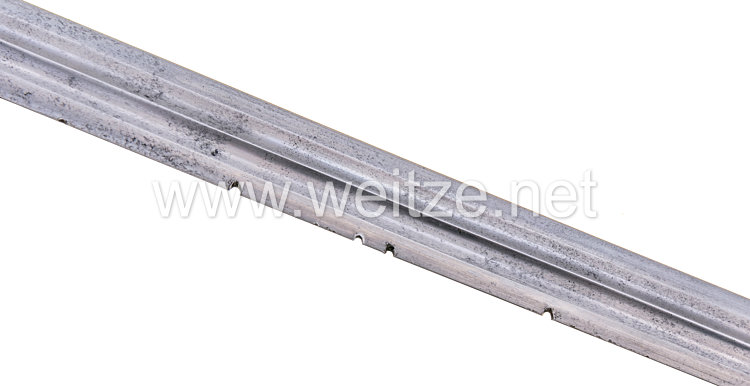
The blade of this sword displays the typical double fullering, a technical refinement that served both to reduce weight and enhance blade stability. The bilateral etching with the Brunswick coat of arms on the obverse side demonstrates loyalty to the duchy. The manufacturer's mark “W.K.&C” on the ricasso of the reverse side refers to an established blade maker of the period, while the name “Carl Lippold Braunschweig” identifies the local supplier, known as a court purveyor for military equipment.
Particularly noteworthy are the six notches on the edge, which testify to fencing practice. These authentic usage marks prove that this sword was not merely a ceremonial weapon but was also used for officers' fencing training. Fencing was mandatory training for Prussian and German officers in the 19th century, serving both physical conditioning and character education.
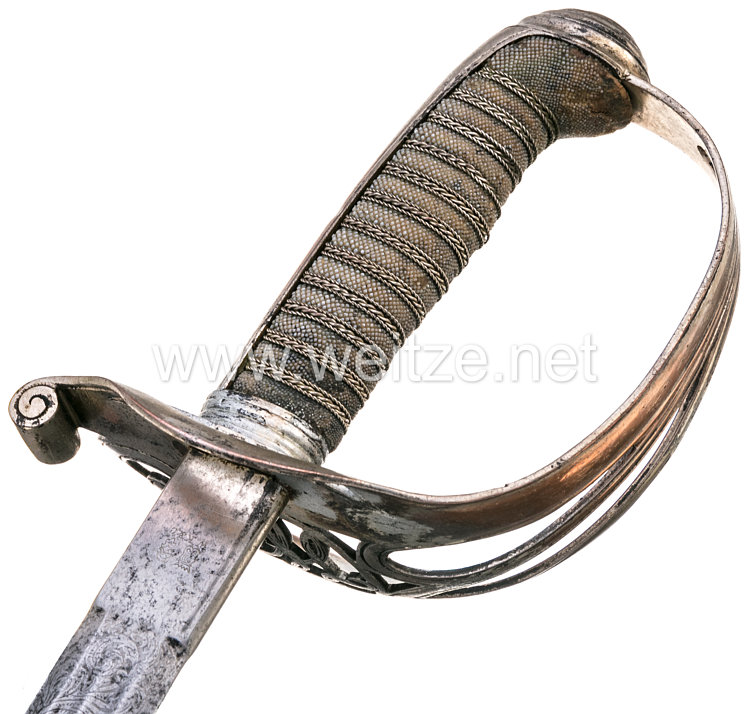
The steel hilt with its pierced royal monogram shows the typical metalwork of the 1890s. The original nickel plating, of which only remnants remain, was a modern surface treatment of the time intended to provide corrosion protection. The underlying copper plating, now more visible, was the standard base layer for nickel plating. The ray skin grip with wire wrapping conformed to Prussian regulations for infantry officers' swords and provided secure handling even with gloves.
The nickel-plated steel scabbard with two ring bands and movable suspension rings enabled carrying on the sword belt, as prescribed for infantry officers. The 80% preserved nickel plating on the scabbard is remarkably well-preserved for a piece over 130 years old.
The distinction between the “old model” and later versions of the infantry sword is important for understanding the evolution of edged weapons. With the introduction of the Infantry Sword Model 1889 for the Prussian Army, other German contingents also began adapting their patterns. The piece described here represents the transitional period when traditional forms still coexisted alongside more modern standardizations.
The overall length of 101 cm corresponds to contemporary regulations for infantry officers' swords, which were meant to ensure a practicable balance between representation and functionality. By the late 19th century, the sword had largely lost its significance as a combat weapon and primarily served as a rank insignia and ceremonial weapon, while retaining its importance in military hierarchy and tradition.
Such swords were personal property of officers and were frequently purchased from specialized court suppliers like Carl Lippold. The quality of workmanship and use of high-grade materials reflected the bearer's social status within the military society of the German Empire.
This particular example, with its combination of Brunswick state symbols and Prussian military standards, illustrates the complex federal structure of the Imperial German Army, where regional identities were preserved within a unified military framework.