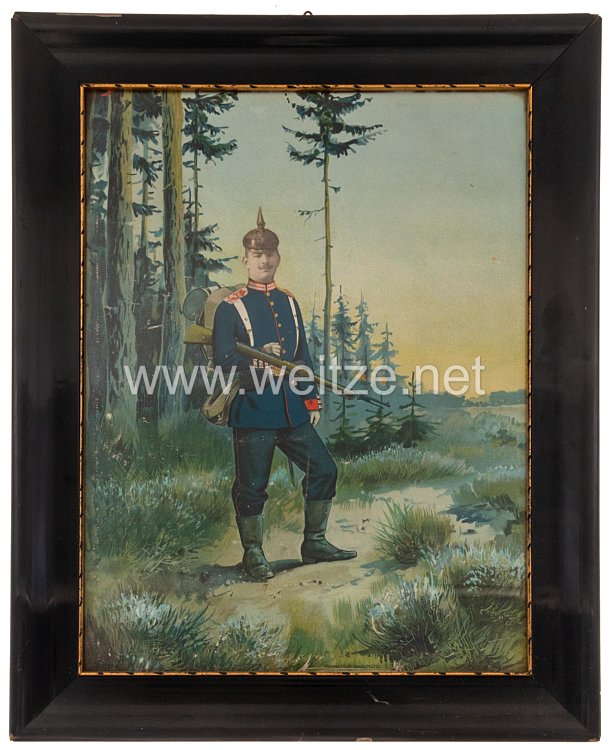
Prussia Photomontage of a Soldier in the Kaiser Alexander Garde-Grenadier-Regiment Nr. 1

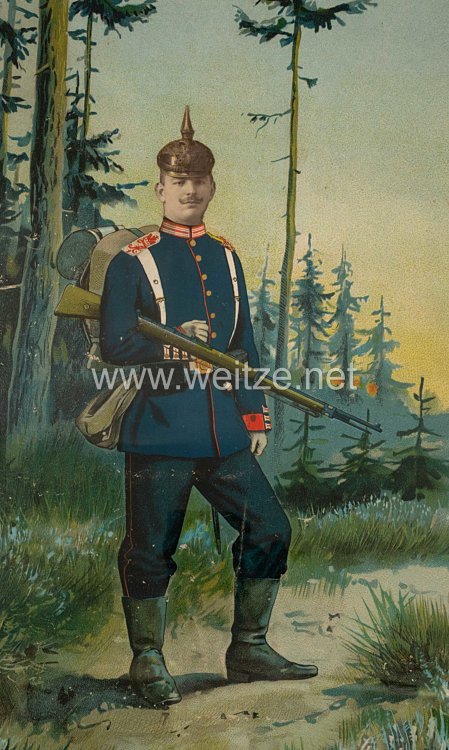
Berlin location, circa 1910. Framed color print, soldier's head inserted from photograph, accoutrements partially hand-colored. Dimensions approximately 42 x 52 cm. Frame with minor damage. Condition 2.
412087
125,00

Prussia Photomontage of a Soldier in the Kaiser Alexander Garde-Grenadier-Regiment Nr. 1

This photomontage of a soldier from the Kaiser Alexander Garde-Grenadier-Regiment Nr. 1 (Emperor Alexander Guard Grenadier Regiment No. 1), dating from around 1910, represents a popular form of military commemorative culture in Wilhelmine Germany. The framed color print with an inserted portrait photograph and hand-colored details was a typical souvenir that soldiers could acquire during or after their military service.

The Kaiser Alexander Garde-Grenadier-Regiment Nr. 1 belonged to the most prestigious units of the Prussian Army. The regiment was founded in 1814 as the 1. Garde-Regiment zu Fuß (1st Foot Guard Regiment) and received its definitive name in 1840 in honor of Russian Tsar Alexander I, who had played a central role as Prussia's ally in the Wars of Liberation against Napoleon. This naming reflected the close dynastic and military relations between the Prussian royal house and the Russian imperial family.

The regiment was stationed in Berlin, where it was garrisoned in the Alexander Barracks on Linienstrasse. As part of the Guard troops, the regiment had not only military but also representative duties. The Guard Grenadiers participated in all important ceremonies and parades in the imperial capital and formed the military elite of the Prussian-German army.

The regiment's uniform was particularly splendid and tradition-conscious. It consisted of the characteristic dark blue tunic with red facings and yellow buttons. The Guard Grenadiers wore the distinctive Grenadier cap, a tall, cylindrical headdress with metal fittings and the Prussian eagle, which harked back to the historic role of grenadiers as an elite force. The shoulder straps displayed the regiment number and the intertwined initials of the regiment's proprietors.

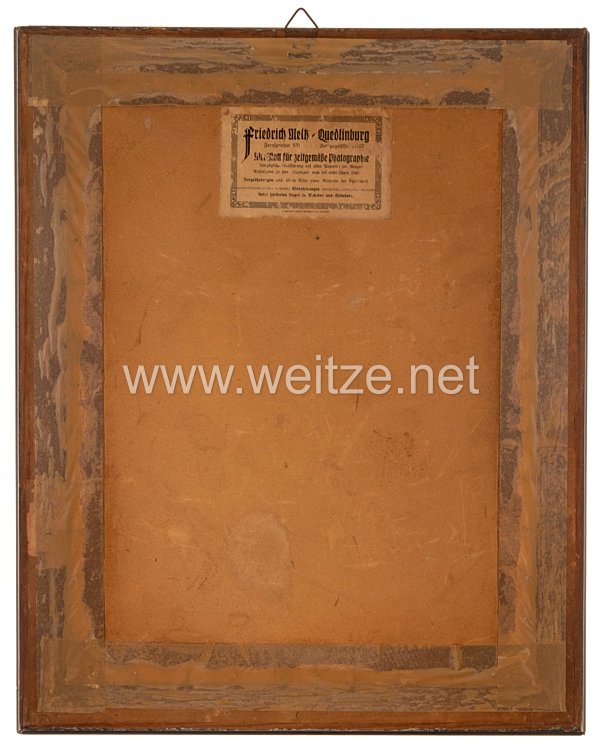
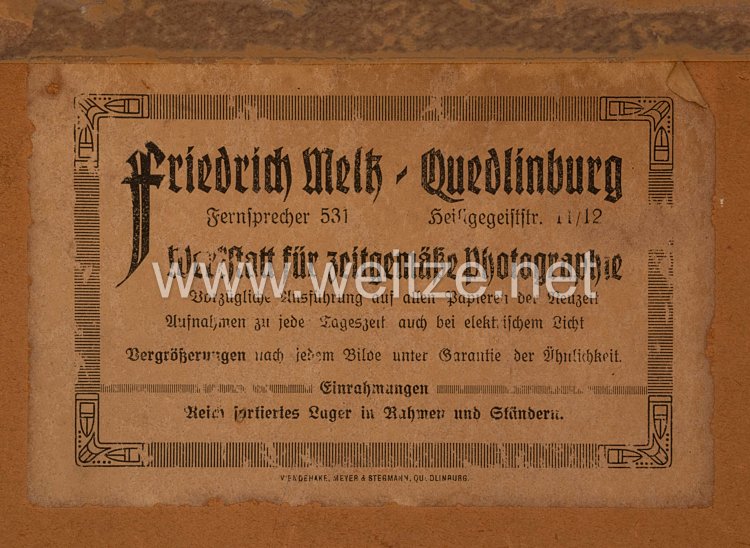
The photomontage technique employed here was widespread around 1910. Photographic studios in garrison towns specialized in producing such souvenirs. The process combined a printed background showing the soldier in full uniform with all details and equipment, with an actual portrait photograph of the individual soldier. The head was carefully cut out and mounted onto the pre-printed body. Subsequently, details such as medals, badges, or uniform parts were often hand-colored to achieve the most realistic effect possible.

These commemorative images fulfilled several functions in Wilhelmine society. On one hand, they served as personal mementos of military service, which represented a formative period in life for many young men. On the other hand, they expressed the high social prestige associated with military service, particularly in a Guard regiment. The elaborate framing and presentation of such images in the domestic environment demonstrated pride in belonging to the military elite.

The period around 1910, when this object was created, was characterized by increasing militarization of German society. Emperor Wilhelm II emphasized the army's role as the “school of the nation” and promoted military spirit in all social spheres. The Guard regiments in Berlin were visible symbols of this policy and enjoyed the highest esteem.

The Kaiser Alexander Garde-Grenadier-Regiment Nr. 1 participated in World War I and was disbanded in 1919 as part of the dissolution of the Prussian Army following the Treaty of Versailles. The traditional Guard regiments ceased to exist after the Revolution of 1918. Today, objects like this photomontage are important testimonies to the military culture of the German Empire and the social significance attributed to military service in that era.

For collectors and historians, such photomontages offer valuable insights into uniformology, military everyday culture, and the visual practices of commemoration in Wilhelmine Germany. They document not only the precise details of military equipment but also the way soldiers and their families wished to perceive and preserve military service for posterity.

r