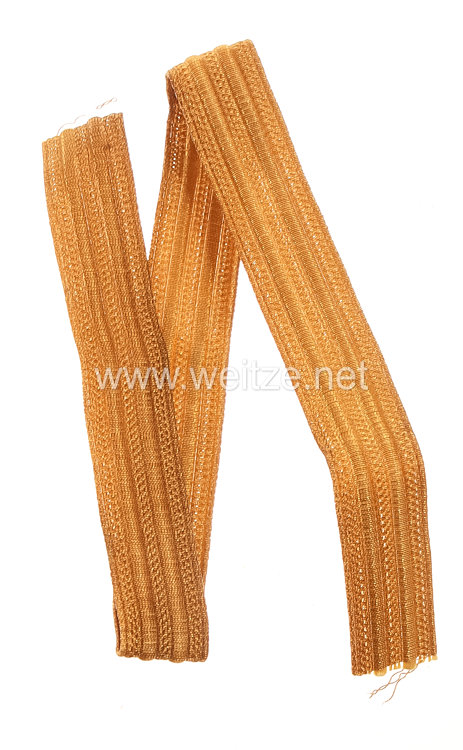
Kriegsmarine Sleeve Braid for a Lieutenant
The Kriegsmarine sleeve braid for a Lieutenant represents an important element of rank insignia and uniform regulations of the German Kriegsmarine during World War II. This metal thread sleeve braid was an essential component of the officer's uniform and served for immediate recognition of rank both aboard ships and ashore.
Historical Context and Development
The Kriegsmarine, as successor to the Reichsmarine, was officially founded on June 1, 1935, and represented the naval forces of National Socialist Germany. With the reintroduction of universal conscription and the abandonment of the Treaty of Versailles, a massive expansion of German naval forces began. Uniform regulations and rank insignia were precisely defined and were partly based on the traditions of the Imperial Navy.
The rank of Leutnant zur See (Lieutenant at Sea) corresponded to the lieutenant rank in other Wehrmacht branches and represented the lowest officer rank. After successfully completing officer training and the Naval Officer School, officer candidates were commissioned as Leutnants zur See. This rank was the first step in the officer career path and typically led to promotion to Oberleutnant zur See (Senior Lieutenant at Sea) after approximately three to four years of service.
Technical Description and Manufacture
The sleeve braid for Leutnants zur See consisted of a single golden stripe approximately 10 to 11 millimeters wide that ran around the sleeve of the uniform jacket. The braid described here, with a width of approximately 140 mm and a length of 34 cm, corresponds to the standard dimensions for attachment to the uniform jacket. Manufacture was from metal thread, with genuine gold or gold-plated threads used for officers, while non-commissioned officers and enlisted men used yellow artificial silk threads.
The braid was crafted through elaborate handwork and had to be precisely sewn onto the dark blue uniform jacket. The position was located approximately 10 cm above the sleeve cuff. The high-quality workmanship and use of metal threads guaranteed long durability and a representative luster befitting the status of a Kriegsmarine officer.
Regulations and Specifications
The exact specifications for rank insignia were defined in the Dress Regulations for the Kriegsmarine, which was revised and supplemented multiple times. These regulations governed not only the width and number of braids but also their exact positioning on various uniform types. Leutnants zur See wore their rank insignia on the service uniform, walking-out uniform, and parade uniform.
The rank identification system of the Kriegsmarine differed significantly from that of the Army and Air Force. While these services relied on shoulder boards, the Navy traditionally used sleeve braids, a practice adopted by many navies worldwide and still in use today.
Use and Significance
For a young officer, the sleeve braid was not merely a rank insignia but also a symbol of successfully completed training and acceptance into the officer corps. The Kriegsmarine placed great emphasis on tradition and esprit de corps, and correct uniform was an essential component of this identity.
Leutnants zur See were deployed on various ship types, from submarines to destroyers to battleships. They assumed important functions as watch officers, division or group officers, and gained practical experience for their further careers.
Collector Value and Preservation
Unworn sleeve braids like the described specimen are sought-after collector's items today. The condition grade of 2- indicates very good preservation, which is remarkable for textiles from this period. The metal threads can tarnish or oxidize over the decades, but with proper storage, these pieces remain well preserved. For military historians and collectors, such objects offer important insights into uniform regulations and the material culture of the Kriegsmarine.
The study of such objects today occurs exclusively from historical-scientific perspectives and serves to understand military history and memorial culture.