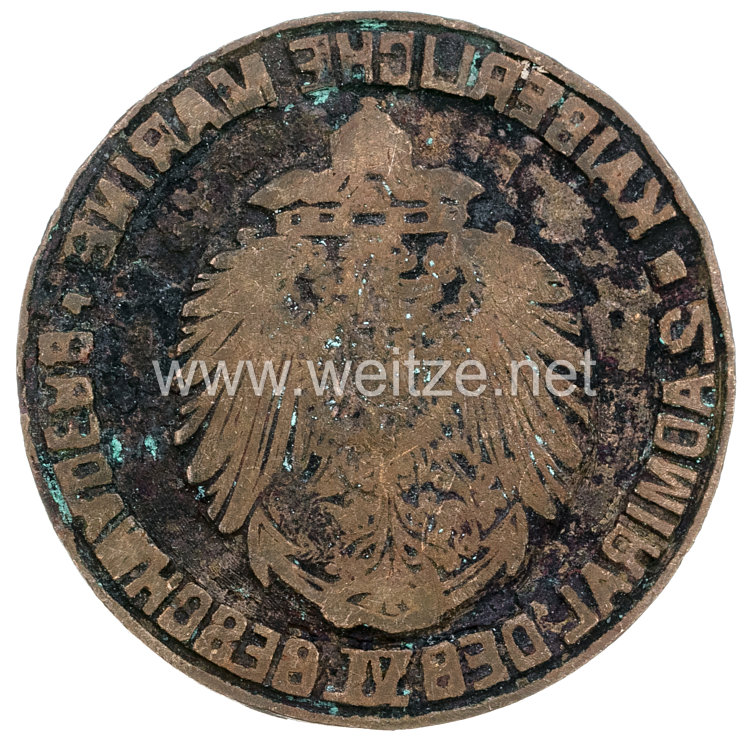
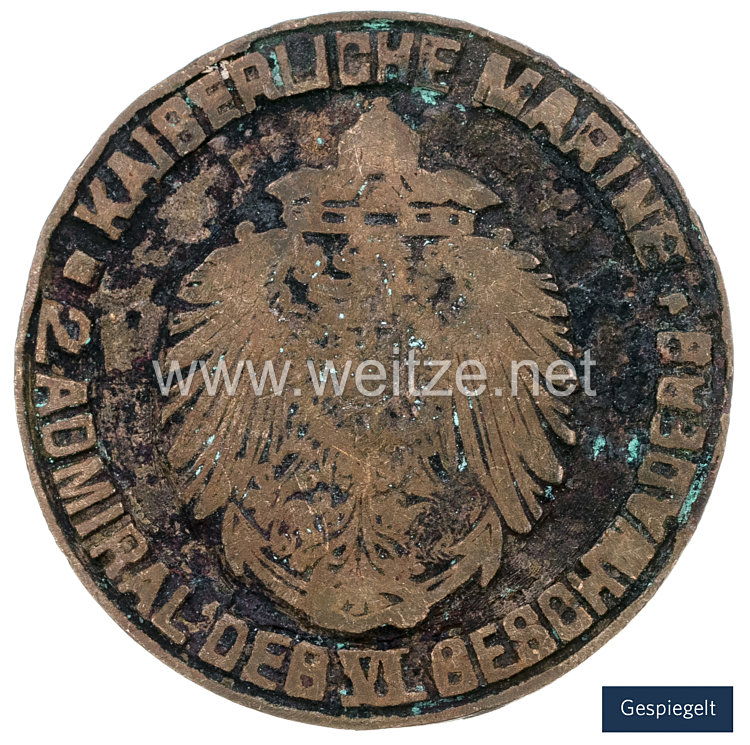
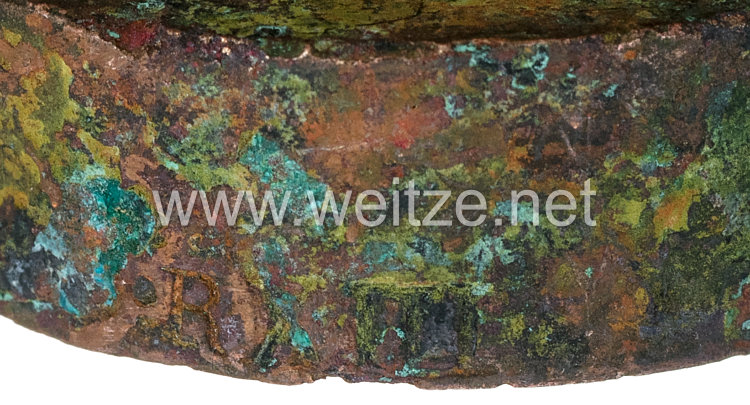
Imperial German Navy Seal/Signet "2nd Admiral of the VI. Squadron"

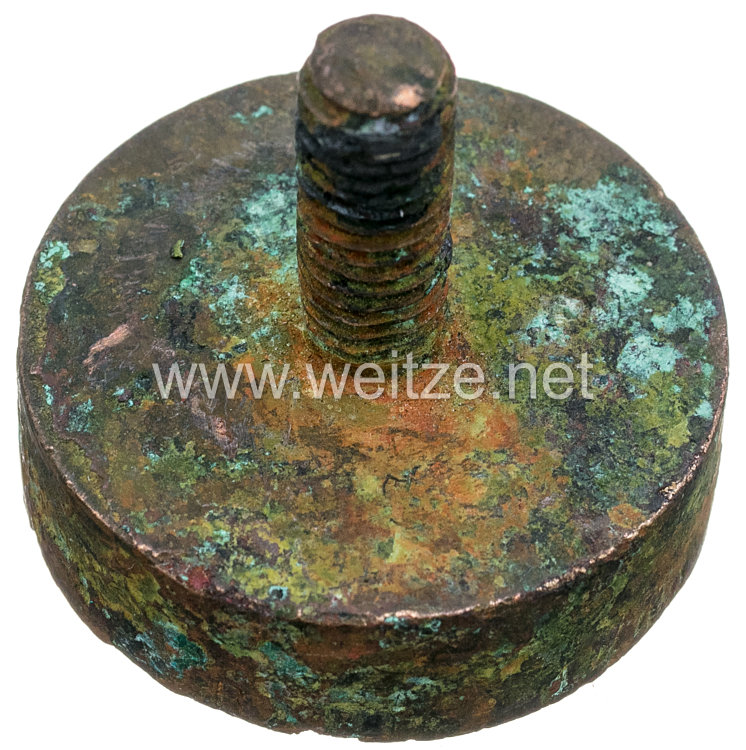
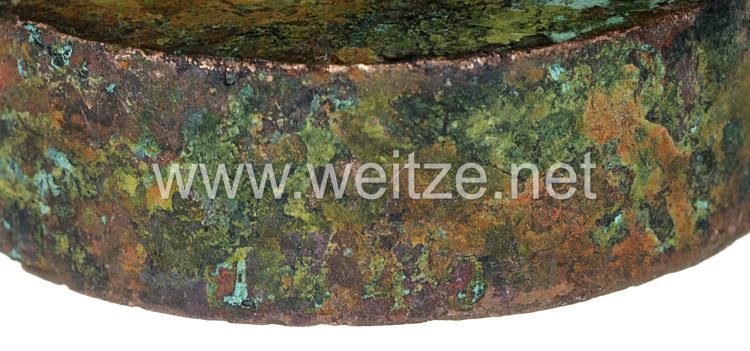
Lead core with brass casing, threaded on reverse side. Condition 2-.

Remaining stock from the former Reichsmarineamt (Imperial Naval Office), circa 1919.

The flagship of the Second Admiral of the Squadron was the "Ägir". This older vessel was reactivated in 1914. The squadron was commanded by Rear Admiral Ehler Behring. He was detached as “Detached Admiral” to the eastern Baltic Sea. The position of Second Admiral was not filled again.
327586
250,00

Imperial German Navy Seal/Signet "2nd Admiral of the VI. Squadron"

This seal or signet of the 2nd Admiral of the VI. Squadron of the Imperial German Navy (Kaiserliche Marine) represents a significant artifact of German naval history during World War I. This official sealing instrument embodies the administrative and ceremonial authority of a high-ranking command position within the complex organizational structure of the Imperial naval forces.

The Kaiserliche Marine developed a sophisticated system of squadrons during its expansion under Kaiser Wilhelm II, each commanded by multiple admirals. The VI. Squadron occupied a particular position as it primarily comprised older vessels that were reactivated for special duties. The position of Second Admiral was traditionally reserved for a Rear Admiral (Konteradmiral) and involved not only operational but also considerable administrative responsibilities.

The flagship of the Second Admiral was the SMS Ägir, a coastal defense ship of the Odin class that had originally been launched in 1896. At the outbreak of war in 1914, this older vessel was brought out of reserve and reactivated for active service. The Ägir and her sister ships were primarily employed for coastal defense duties and patrols in the Baltic Sea, where they could still provide valuable service despite their age.

Rear Admiral Ehler Behring commanded the squadron in his capacity as Second Admiral. Behring, an experienced naval officer, was eventually assigned as a "Detached Admiral" to the eastern Baltic, where German naval forces conducted important strategic operations during World War I. After his transfer, the position of Second Admiral of the VI. Squadron was not filled again, reflecting the changing priorities and increasing concentration of naval resources toward the end of the war.

The technical construction of the seal with a lead core and brass casing and threaded back corresponds to the standard manufacture of official naval seals of this era. This construction ensured both durability and the necessary precision for clear seal impressions on official documents. Such seals were used for authenticating orders, administrative documents, and official correspondence.

The provenance of the object as surplus from the former Imperial Naval Office (Reichsmarineamt) from around 1919 is of particular historical significance. After the end of World War I and the dissolution of the Imperial Navy in accordance with the provisions of the Treaty of Versailles, the holdings of the Imperial Naval Office were dispersed. Many official items, including seals and administrative instruments, were discarded or auctioned at this time. The Imperial Naval Office, which had functioned as the central administrative authority of the Imperial Navy since 1889, was dissolved in 1919, and its functions were transferred to the new Reichsmarine of the Weimar Republic.

Seals and signets played a central role in the military hierarchy of the German Empire. They served not only for document authentication but were also symbols of official authority. The custody of such a seal was strictly regulated, and unauthorized use could be punished as a serious offense. In the naval organization, every position of command authority was equipped with a specific seal bearing the exact designation of the position.

The VI. Squadron and its operations in the Baltic Sea were part of the broader German naval strategy during World War I. While the High Seas Fleet confronted the British Grand Fleet in the North Sea, the Baltic forces played an important role in securing sea lanes, supporting land operations, and maintaining German naval supremacy in this area against the Russian Baltic Fleet.

The technical specifications of such seals followed strict naval regulations. The combination of lead and brass was chosen for practical reasons: the lead core provided the necessary weight and stability for creating clear impressions, while the brass casing protected against corrosion and provided an aesthetically appropriate finish for an official instrument. The threaded attachment allowed the seal to be mounted on various handles or kept securely when not in use.

Today, such seals are important material witnesses to German naval history and are valued by collectors and museums as significant historical artifacts. They provide tangible connections to the persons and institutions that shaped German naval warfare in World War I and document the complex administrative structure of the Imperial Navy. Each such seal represents not just a bureaucratic tool but a piece of the larger story of Germany's maritime ambitions and military organization during the age of imperialism.