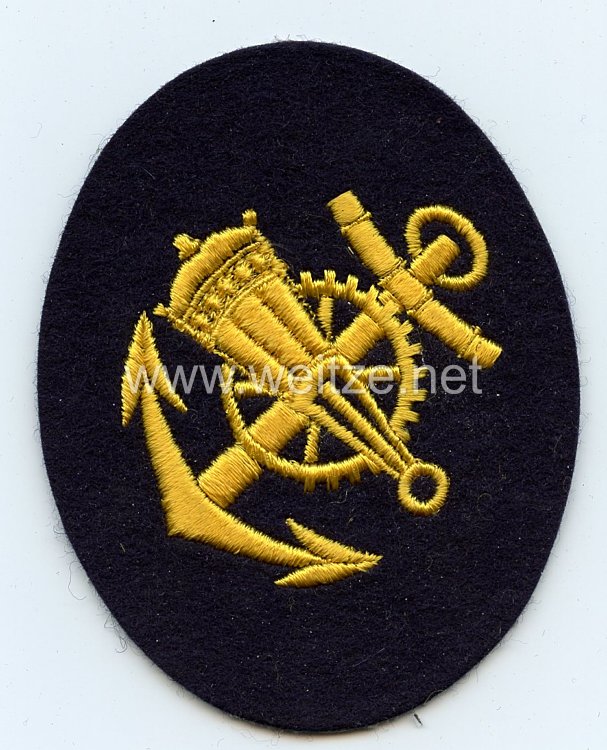
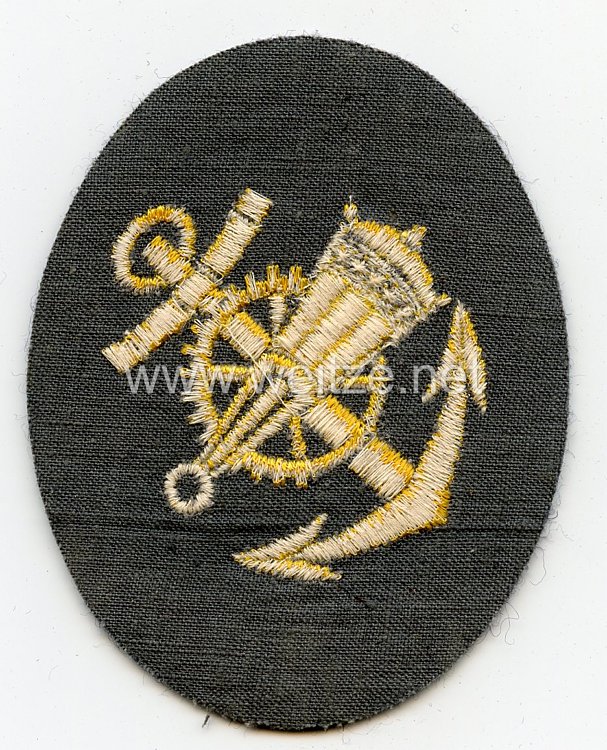
Kriegsmarine Sleeve Insignia Career Path Sperrwaffen - Petty Officer Mechanic
The present Kriegsmarine sleeve badge for the Sperrwaffen career path - Mechanikermaat represents a characteristic example of the identification systems of the German Kriegsmarine during World War II. These badges served the immediate identification of rank and professional specialization of naval personnel.
The Kriegsmarine, as the maritime branch of the Wehrmacht from 1935 to 1945, developed a complex system of uniform badges and insignia. Following the reintroduction of general conscription by the National Socialist regime and the breach of the Treaty of Versailles, the systematic construction of a modern war fleet began. The uniform regulations and badge specifications were established in various service regulations, particularly in the Dress Regulations for the Kriegsmarine.
The Sperrwaffen career path formed a specialized branch within the Kriegsmarine. Members of this career path were responsible for handling mines, torpedo barriers, and other maritime defense systems. This weapon technology played a crucial role in naval warfare, both for offensive operations and for securing own waters and ports. Mine barriers in the North Sea, the Baltic Sea, and other strategically important waters required highly specialized personnel.
The rank of Mechanikermaat designated a non-commissioned officer without portepee in the technical field. The term “Maat” was traditionally the designation for petty officers in the German Navy and had its origins in the Imperial Navy. Mechanikermaate were responsible for the technical maintenance, upkeep, and proper deployment of barrier weapons. This task required extensive technical knowledge and corresponding training in specialized naval schools.
The sleeve badge was worn on the blue blouse, the everyday working and shipboard uniform of the Kriegsmarine. The blue blouse differed from parade uniforms and was used in daily service as well as during practical activities. The attachment of badges followed precise regulations regarding position, orientation, and combination with other markings.
The career path badges of the Kriegsmarine were standardized in their design and indicated the respective professional specialization through specific symbols. They were typically worn on the left upper arm and consisted of embroidered or woven symbols on a usually dark blue background. The coloring and execution varied depending on the purpose of use - simpler variants were often used for work uniforms than for walking out or parade uniforms.
The production of these badges was carried out by various authorized manufacturers who had to comply with the regulations of the High Command of the Navy. Quality could vary depending on the time of manufacture and available materials. Towards the end of the war, as resources became scarcer, simplifications in production frequently appeared.
In the context of naval organization, the barrier weapons units were organized in various commands. The Sperrwaffeninspektion (Barrier Weapons Inspectorate) formed the central administrative and training authority. Important locations were situated in coastal cities such as Kiel, Wilhelmshaven, and other naval bases. Training included both theoretical and practical components, from the functioning of weapons to deployment tactics.
The historical significance of such uniform items today lies in their documentary value. They enable conclusions about the organizational structure, hierarchies, and technical specializations of the Kriegsmarine. Collectors and museums preserve these objects as witnesses of a specific epoch of German naval history.
The condition of such textile badges varies greatly. Factors such as storage conditions, light exposure, and moisture affect material preservation over decades. Original pieces frequently show signs of use that indicate their actual employment.
For historical research, these badges offer important insights into the everyday reality of naval service, beyond the great naval battles and strategic operations. They document the importance of technical specialist forces and the complexity of naval organization during World War II.