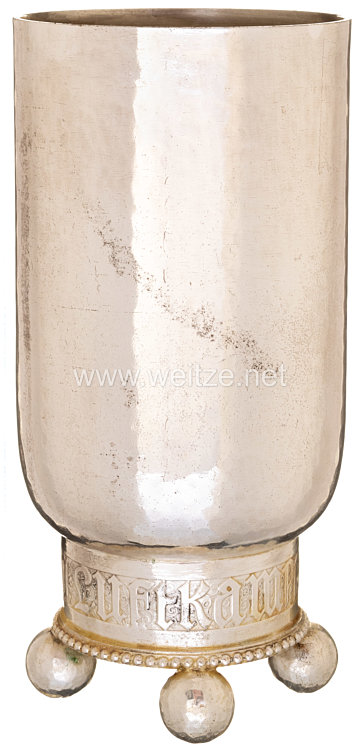
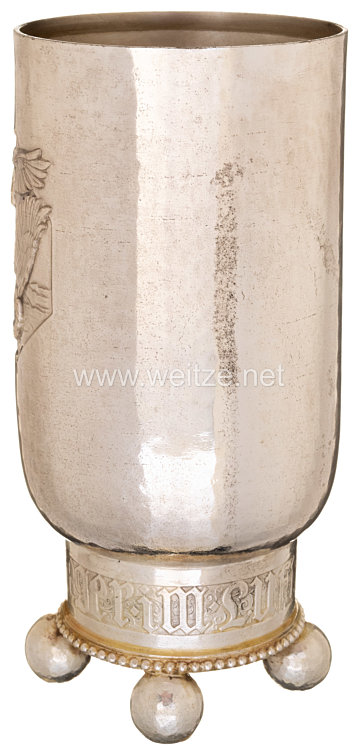
WWI Honor Goblet “To the Victor in Aerial Combat” from the Estate of Leutnant Fritz Schuppan, Killed in Action May 7, 1918

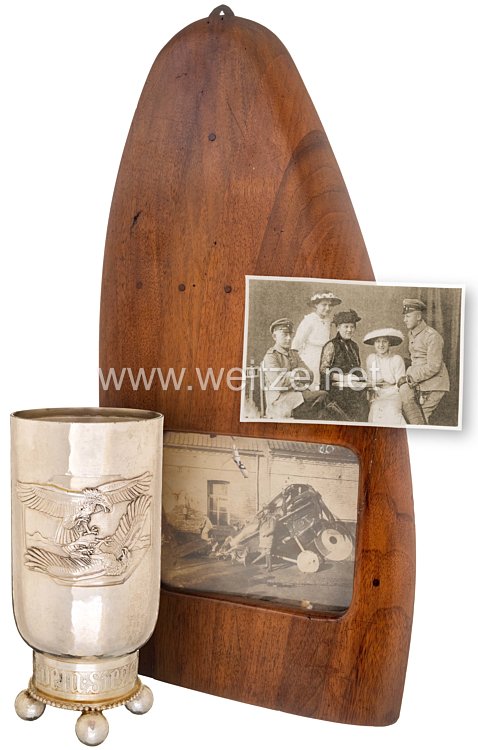
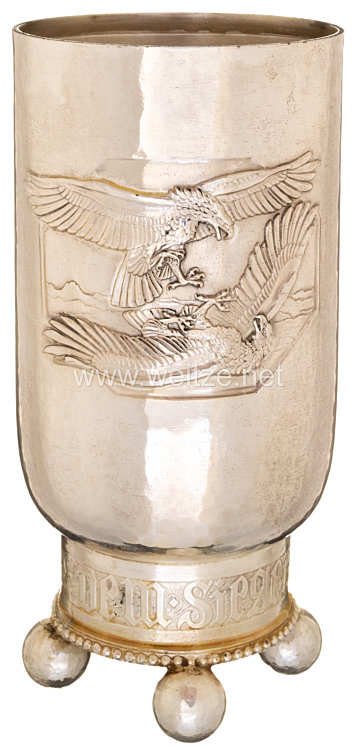
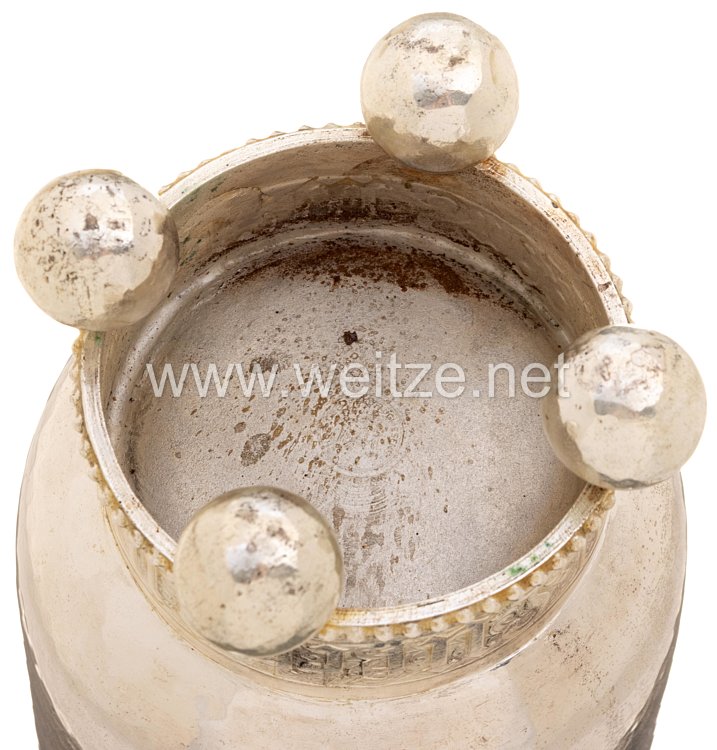
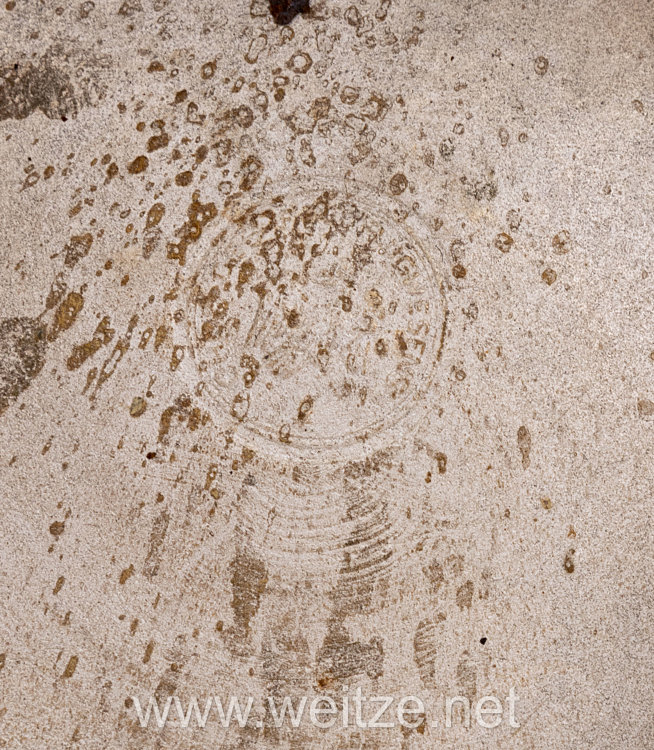
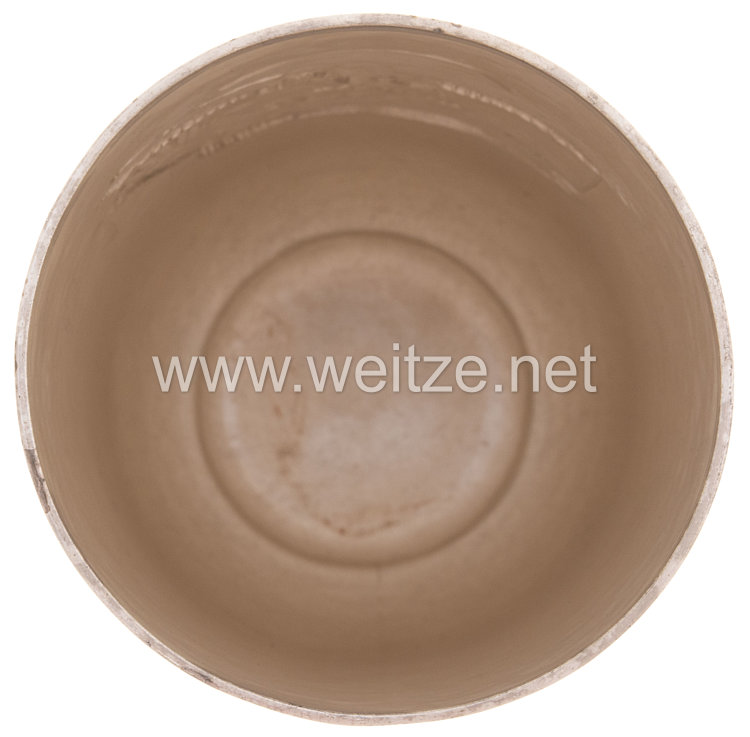
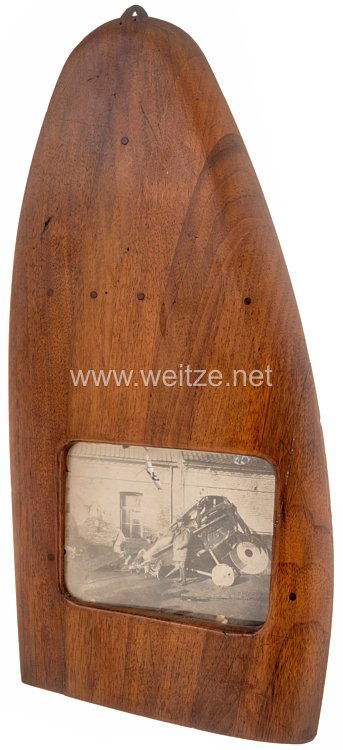
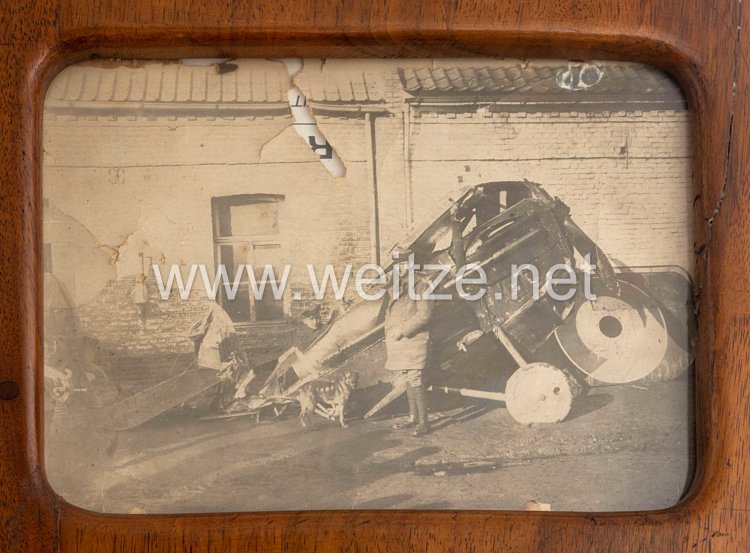
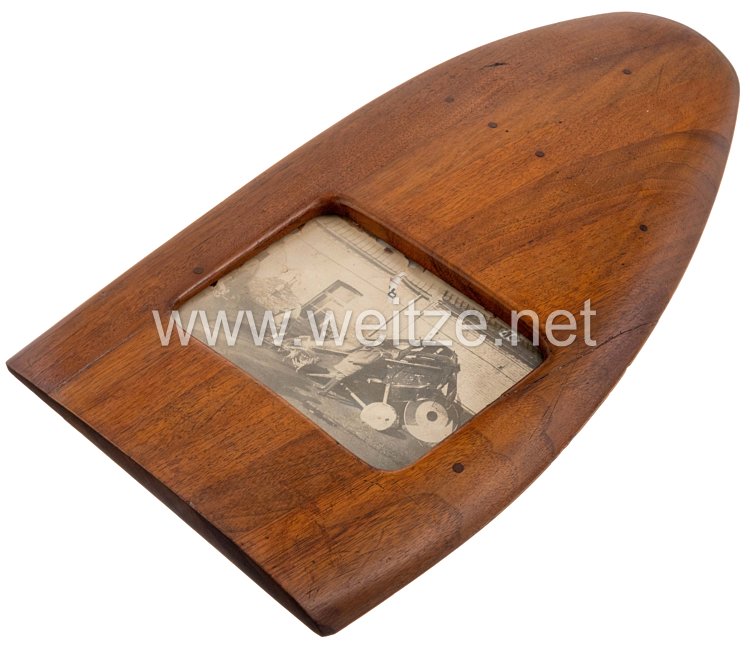
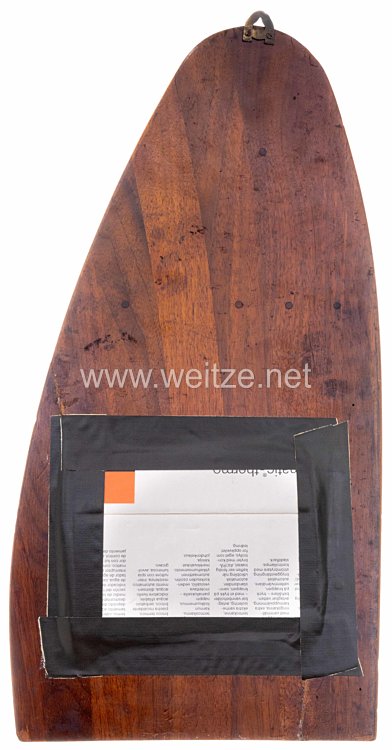
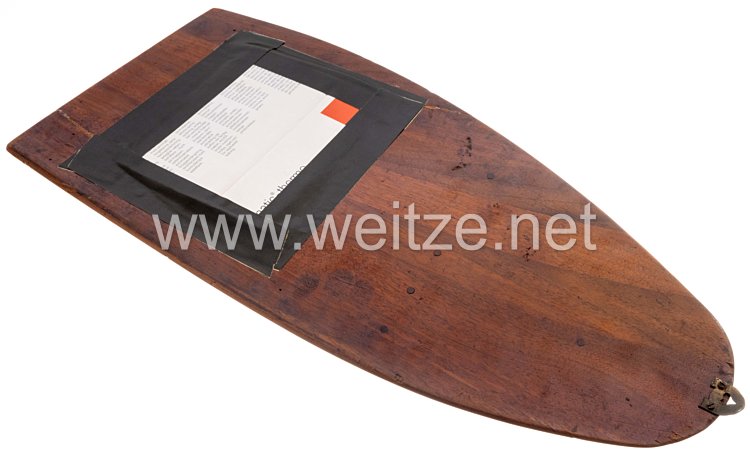
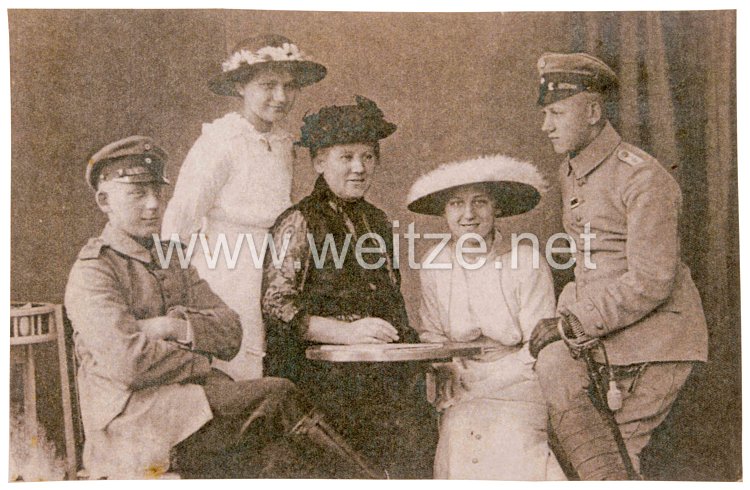
circa 1917/18. Silver-plated iron construction. Base stamped “Chef des Feldflugwesens” (Chief of Field Aviation). Height approximately 20 cm, weight 366 g. The honor goblet was subsequently silver-plated and lacquered by the family after 1918 to protect it from tarnishing, condition 2. Accompanied by a picture frame made from a propeller fragment of a French aircraft shot down by Schuppan, with a photograph of the downed aircraft inset in the center, showing Leutnant Schuppan standing in the foreground (photograph slightly damaged, re-glued on reverse). Height 50 cm. Also included is a photocopy of a family photograph with Schuppan.
Leutnant Fritz Schuppan, born September 27, 1893, killed in action in France on May 7, 1918.
Due to wartime conditions, from late 1917 onwards the honor goblets were no longer made of silver but of iron, and were only awarded after the third aerial victory. Therefore, these are considerably rarer than silver honor goblets.
415985

WWI Honor Goblet “To the Victor in Aerial Combat” from the Estate of Leutnant Fritz Schuppan, Killed in Action May 7, 1918

The Ehrenbecher für den Sieger im Luftkampf (Honor Goblet for the Victor in Air Combat) bearing the inscription "Dem Sieger im Luftkampf" ranks among the most significant decorations of the German air forces during World War I. This non-portable award was instituted during the war by Hermann von der Lieth-Thomsen, Chef des Feldflugwesens (Chief of Field Air Forces), and financed from a monetary reserve made available to him. Lieth-Thomsen served as Chief of Field Air Forces from March 1915 and later as Chief of Staff of the Luftstreitkräfte from November 1916.

The first documented presentations occurred in late December 1915, when the legendary aviators Oswald Boelcke and Max Immelmann both received their honor goblets on December 24, 1915. Originally, the award was presented to fighter pilots for their first confirmed aerial victory. Various silver manufacturers produced the cups, with documented makers including P. Bruckmann & Söhne of Heilbronn and Johann Wagner & Sohn of Berlin.

The present honor goblet from the estate of Leutnant Fritz Schuppan represents the considerably rarer second production variant. Due to deteriorating war conditions and material shortages, production shifted from silver to iron in late 1917, with the goblets subsequently being silvered. Simultaneously, the award criteria tightened: while initially the first aerial victory sufficed, from late 1917 onwards three confirmed victories were required. These iron variants are considerably rarer than silver versions, both due to the shorter production period and the increased victory requirement.

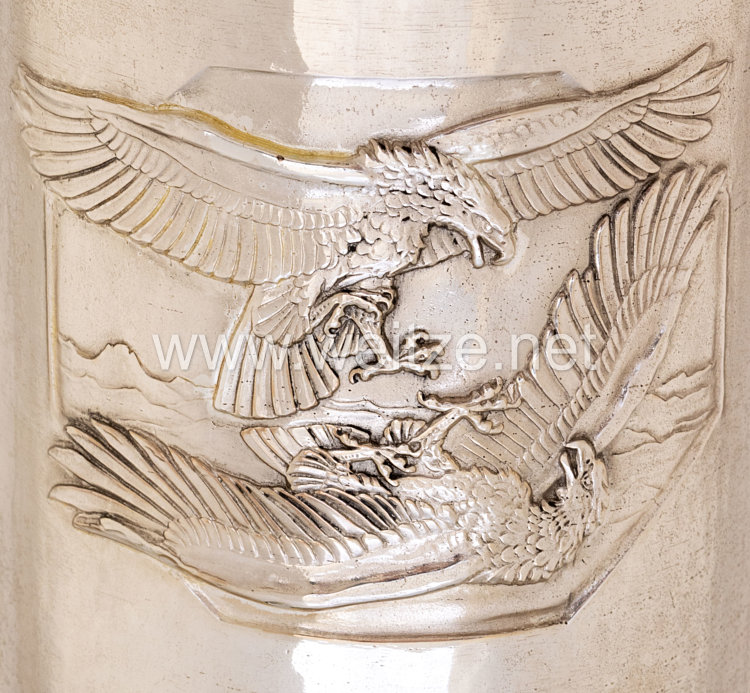
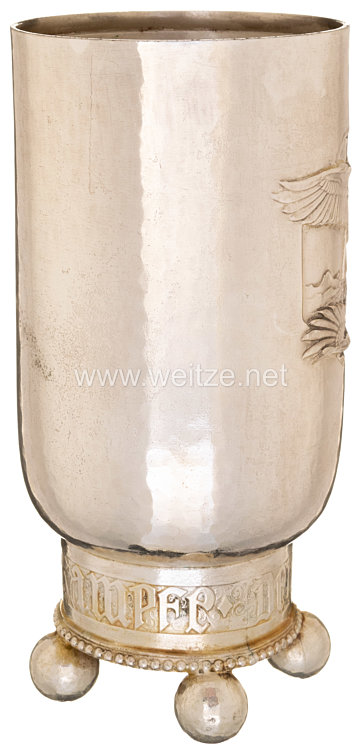
The goblet itself stands on four spherical ball feet and consists of two pieces soldered together. The obverse features two eagles in aerial combat, with one eagle overtaking the other. The base bears the stamp "Chef des Feldflugwesens", often surrounded by an imperial eagle emblem. Silver examples additionally carry maker's marks and silver purity stamps. General dimensions are approximately 200 millimeters in height with a diameter of approximately 100 millimeters.

Fritz Schuppan was born on September 27, 1893, and fell in France on May 7, 1918. The present honor goblet was re-silvered and zaponiert (lacquered) by his family after 1918 to prevent tarnishing. The ensemble includes a picture frame crafted from a propeller piece of a French aircraft shot down by Schuppan, with an inset photograph showing the downed aircraft with Leutnant Schuppan standing in the foreground.

The total number of honor goblets awarded during World War I is estimated at around 2,411 actual goblets, though the exact total remains unknown with certainty. By war's end, only certificates were being issued without the physical goblet. Documented recipients include, besides Boelcke and Immelmann, Hermann Göring (April 15, 1916), Ernst Udet (August 17, 1916), Theo Osterkamp (April 18, 1917), Manfred von Richthofen, and other prominent fighter pilots.

Following World War I, Germany was required to disband its air forces under the Treaty of Versailles. Some honor goblets remained as family heirlooms, as the Schuppan example demonstrates. Some cups were reused as wandering trophies by veterans' associations in the 1920s and 1930s. The award concept itself was revived in February 1940 by Hermann Göring as the Ehrenpokal der Luftwaffe for World War II. After 1945, honor goblets fell out of favor, likely due to their association with the Nazi regime.

Alongside the honor goblet for fighter pilots, an even rarer separate award existed: the Ehrenbecher für erfolgreiche Angriffe aus der Luft (Honor Goblet for Successful Attacks from the Air) for bomber and Zeppelin crews. The iron honor goblet presented here from the estate of Leutnant Fritz Schuppan thus documents not only the personal valor of a fallen aviator but also the material hardship of the final war months and the changing realities of aerial warfare in World War I.

r