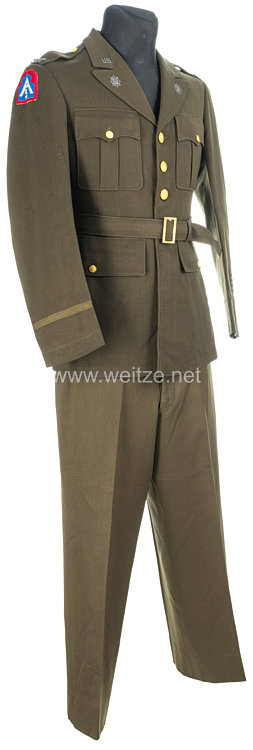
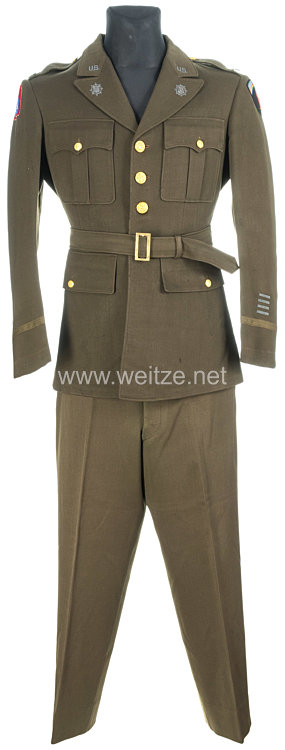
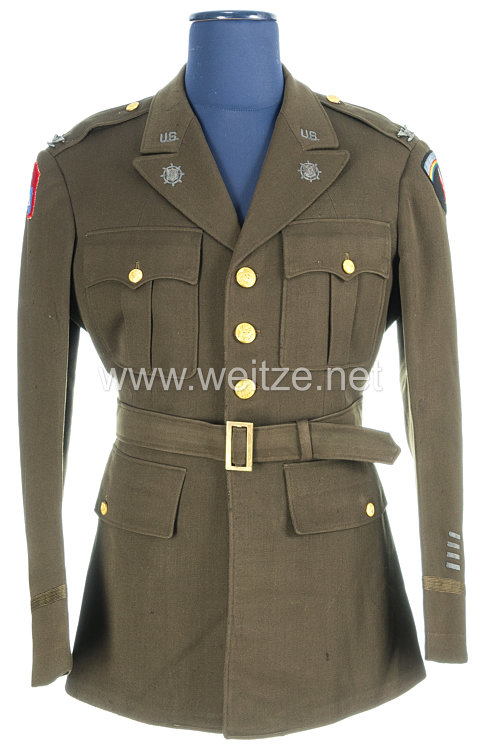
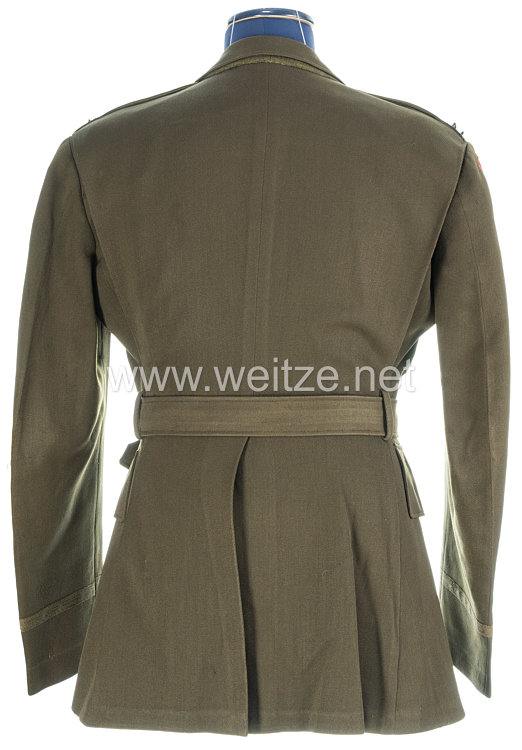
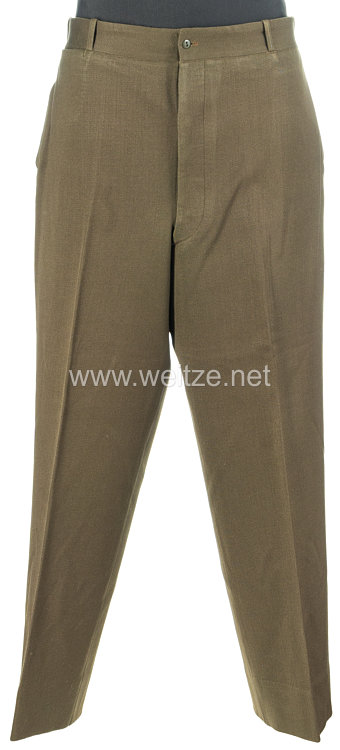
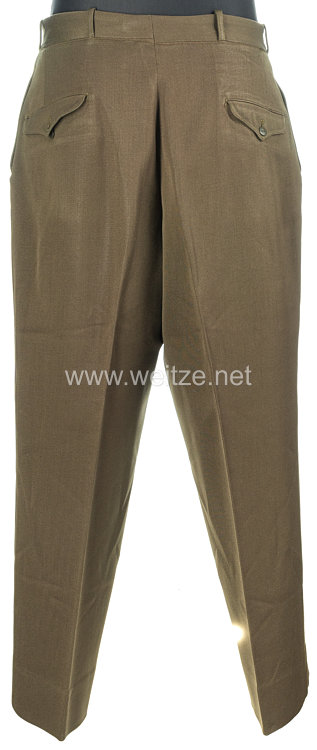
USA World War 2 and Occupation Era: US Army Winter Service Uniform for a Colonel from the Quartermaster Corps with the United States Army Europe

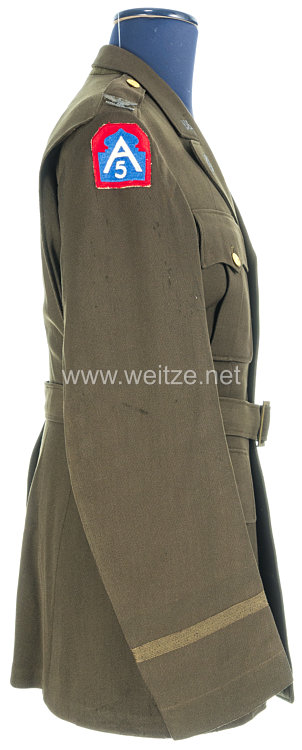
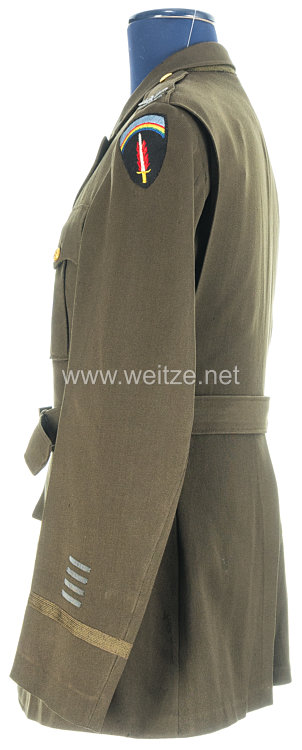
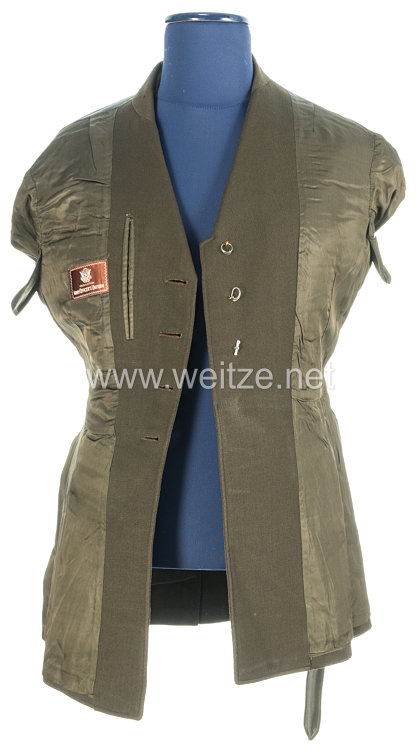
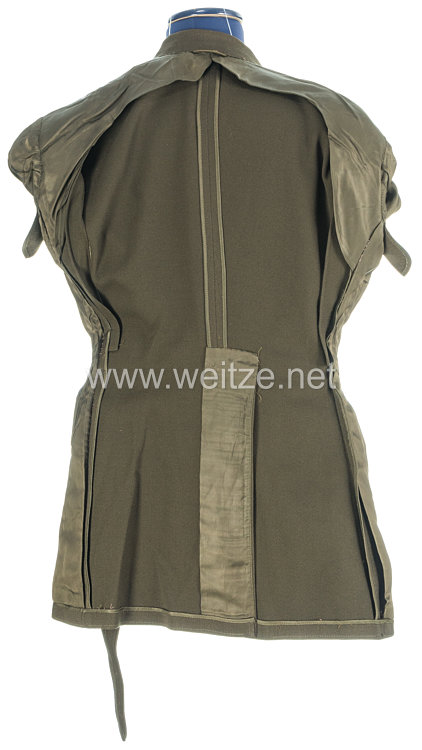
Private purchase, in olive drab shade no. 51 (OD 51), with hand-embroidered U.S. collar devices and metal rank insignia to both shoulders (sterling silver), on the left arm with US Army Europe SSI, on the right arm with the 5th Army SSI. Interior with brown satin lining with tag "Regulation Army Officers Uniform" and quartermaster tag, dated June 24, 1942. Arm length 61 cm, chest circumference 80 cm, length 75 cm, some minor waist moth damages. The waist belt is present. Condition 2-3. Comes with matching trousers, waist circumference 82 cm, length 100 cm, interior with tag "Regulation Army Officers Trousers", several laundry numbers, condition 2.
427484
320,00

USA World War 2 and Occupation Era: US Army Winter Service Uniform for a Colonel from the Quartermaster Corps with the United States Army Europe

This US Army Colonel's Winter Service Uniform from the Quartermaster Corps represents a significant period of American military history spanning from 1942 through the postwar occupation era in Europe. Manufactured in the characteristic Olive Drab Shade No. 51 (OD 51), this uniform embodies not only the technical evolution of military clothing during World War II but also the administrative and logistical organization of US forces in Europe.

The Quartermaster Corps was among the most vital organizational units of the US Army, responsible for all supply logistics including food, clothing, equipment, and transportation. The importance of this branch cannot be overstated, as it provided the material foundation for Allied military success in Europe. A Colonel in this organization bore substantial responsibility for complex logistical operations that sustained thousands of soldiers.

The uniform itself adheres to Army Regulation 600-40 and subsequent modifications that governed officer uniform appearance during the war. The OD 51 shade was selected after intensive studies and represented a compromise between camouflage, recognizability, and practical manufacturing considerations. The privately purchased quality of this uniform indicates an officer who valued superior workmanship, which was common among field-grade officers who could afford better tailoring.

The hand-embroidered U.S. collar devices and sterling silver rank insignia on both shoulders conform to regulations for field-grade officers. Sterling silver was prescribed for Colonels (O-6), while lower ranks wore gold or bronze insignia. The metal rank insignia, the characteristic “eagles” of a Colonel, symbolized considerable military authority.

Particularly revealing are the two Shoulder Sleeve Insignia (SSI). The United States Army Europe (USAREUR) patch on the left arm indicates assignment to American occupation forces in Europe. This organization emerged from the Headquarters of US Forces in Europe and played a central role in the occupation and reconstruction of Germany after 1945. The 5th Army patch on the right arm references previous service, likely in the Mediterranean theater. The 5th Army under General Mark W. Clark led the invasion of Italy, fought at Anzio and Monte Cassino, and was instrumental in the liberation of Italy.

The interior label dated June 24, 1942 places this uniform in a critical phase of World War II. At this time, the United States was preparing for major operations in Europe while already deploying troops to Great Britain. Building the logistical infrastructure for upcoming operations in North Africa (Operation Torch, November 1942) and later in Europe required experienced Quartermaster officers.

The brown satin lining and marking “Regulation Army Officers Uniform” confirm conformity with military standards, while the privately purchased nature indicates superior quality. The Winter Service Uniform was designed for cooler seasons and administrative duties, distinguished from field uniforms by finer materials and construction.

The accompanying trousers with multiple laundry numbers document actual use by the wearer over an extended period. These numbers served to organize uniform cleaning in military facilities and represent authentic traces of use.

The uniform's measurements (arm length 61 cm, chest circumference 80 cm, length 75 cm) correspond to an average-sized officer. The minor moth damage at the waist area is typical for uniforms of this era and confirms the piece's age and organic storage.

This uniform represents more than just a military garment; it documents the American presence in Europe during one of the most significant periods of the 20th century. It connects the struggle against Nazi Germany with the subsequent occupation period, during which the United States played a decisive role in the reconstruction and democratization of Western Europe. The Quartermaster Corps was indispensable in maintaining supply lines across the Atlantic and throughout Europe.

For collectors and historians, this uniform offers material access to the history of the US Army in Europe. It embodies the organizational complexity of modern warfare and the administrative achievement that underpinned Allied military victories. The combination of combat theater insignia and occupation force designation tells a story of service that spanned from wartime operations to peacetime reconstruction, representing the full scope of America's military commitment to European liberation and recovery.

r