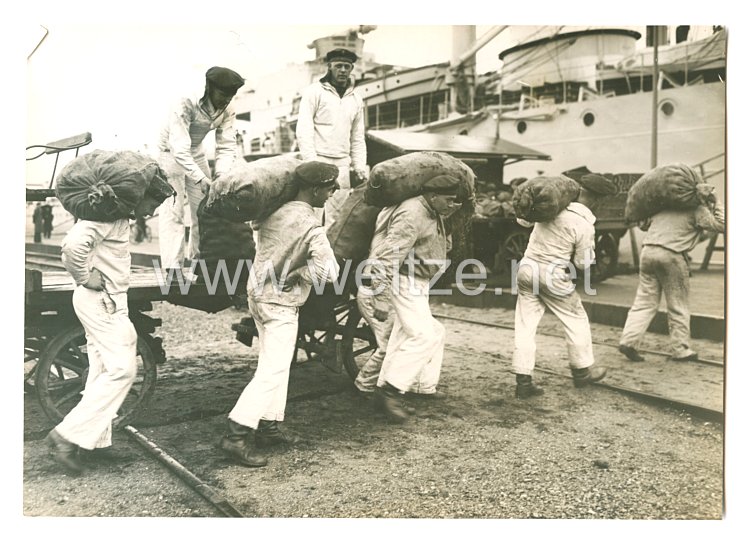
Reichsmarine Press Photo: Transfer Being Brought Aboard

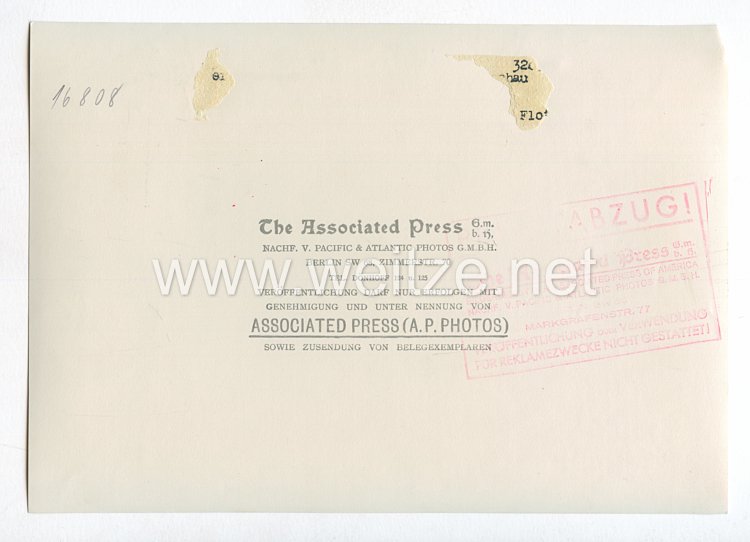
Dimensions approximately 17 x 24 cm, with inscription on reverse. Used condition.
343884
20,00

Reichsmarine Press Photo: Transfer Being Brought Aboard

Reichsmarine Press Photography: Documentation of the German Navy 1919-1935

This press photograph documents a characteristic moment from the daily life of the Reichsmarine, the German naval force during the Weimar Republic period between 1919 and 1935. Measuring approximately 17 x 24 cm, this photograph corresponds to the typical format of professional press images of that era, produced for distribution in newspapers and for archival purposes.

The Reichsmarine emerged after World War I as the successor organization to the Imperial German Navy. The Treaty of Versailles of June 28, 1919, imposed drastic restrictions on the German Navy: the fleet was limited to a maximum of 15,000 men, and only a limited number of ships were permitted. Despite these significant constraints, the Reichsmarine endeavored to maintain its operational capability and public standing.

Press work played a significant role for the Reichsmarine. In a time when the German Navy had lost its former greatness and had to operate under the conditions of the Treaty of Versailles, public relations was an important instrument for legitimization and for maintaining morale within the force. Photographs like this were systematically created to document the Navy's activities and to convey to the public an image of a functioning, modern naval force.

The inscription on the reverse side, a characteristic feature of press photographs, served identification and cataloging purposes. Such annotations typically contained information about the depicted event, the date, location, and sometimes technical details about the photograph. These inscriptions were essential for newspaper editorial offices and archives that had to manage large quantities of pictorial material.

The 17 x 24 cm format was a standard format for professional press photography during the interwar period. It was large enough to make details recognizable, yet practical enough for handling in editorial offices and for archiving. The photographs were usually developed on silver gelatin paper, a photographic process common at that time, valued for its durability and image quality.

The Reichsmarine maintained its own photo reporters and worked closely with civilian press agencies. Photographers accompanied maneuvers, documented daily life on board, and captured official ceremonies. This systematic documentation served multiple purposes: internal documentation, press work, training, and not least, historical preservation.

The maritime daily life captured by such photographs encompassed all aspects of service at sea: from technical work to supply operations to training measures. Each of these activities was part of the complex logistics and organization necessary for operating a naval force, even under the restricted conditions of the Weimar era.

In 1935, the Reichsmarine was renamed the Kriegsmarine after the National Socialist regime began systematically circumventing the restrictions of the Treaty of Versailles. The Anglo-German Naval Agreement of June 18, 1935, officially permitted Germany a larger fleet, marking the end of the Reichsmarine era.

Photographs like this are important historical sources today. They not only provide visual insights into the daily life of the Reichsmarine but also document the technical development, uniforms, and organizational structures of this epoch. For maritime historical research, such press images are indispensable documents that help paint a comprehensive picture of this important transitional period in German naval history.

The used condition of the photograph, with its possibly present creases, stains, or edge wear, is typical of working material from newspaper archives. These signs of use are themselves part of the object's history and testify to its original use in active press reporting of that time.