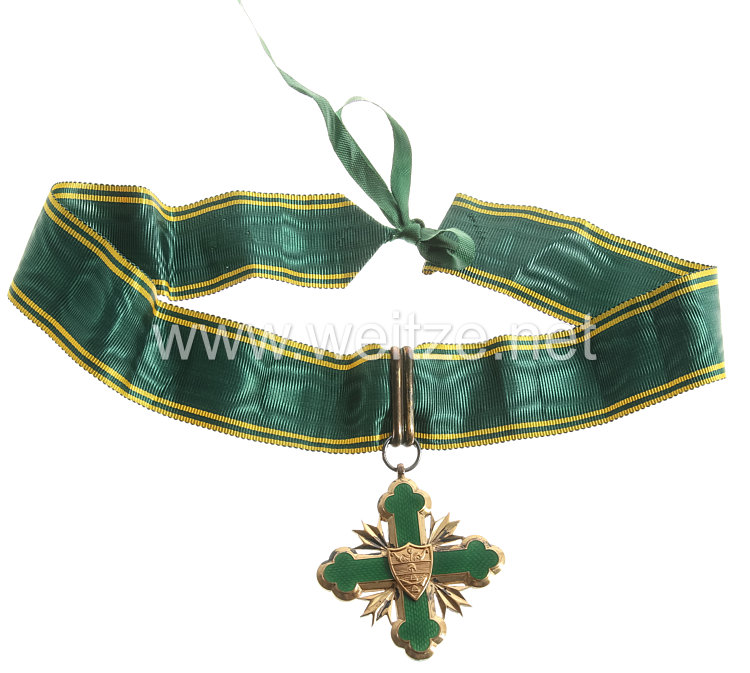
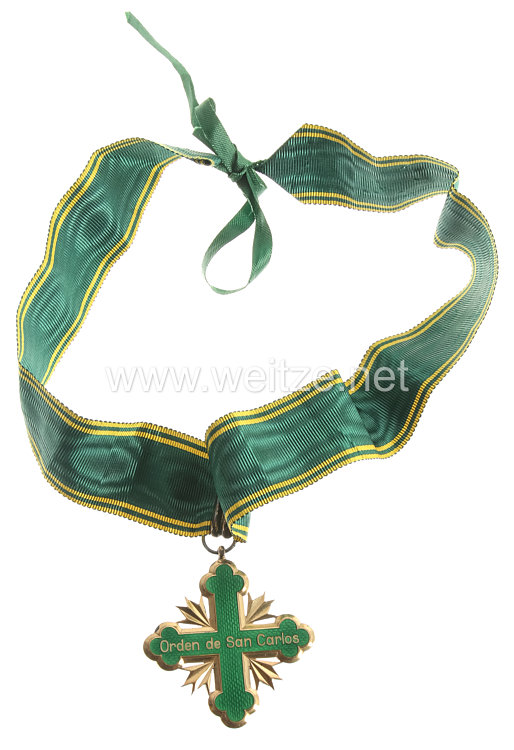
Colombia Order of San Carlos, Commander's Cross

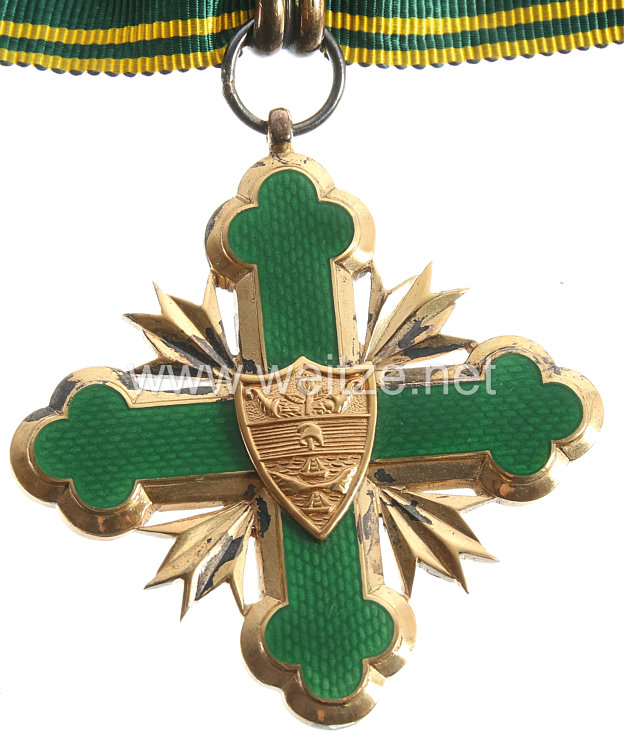
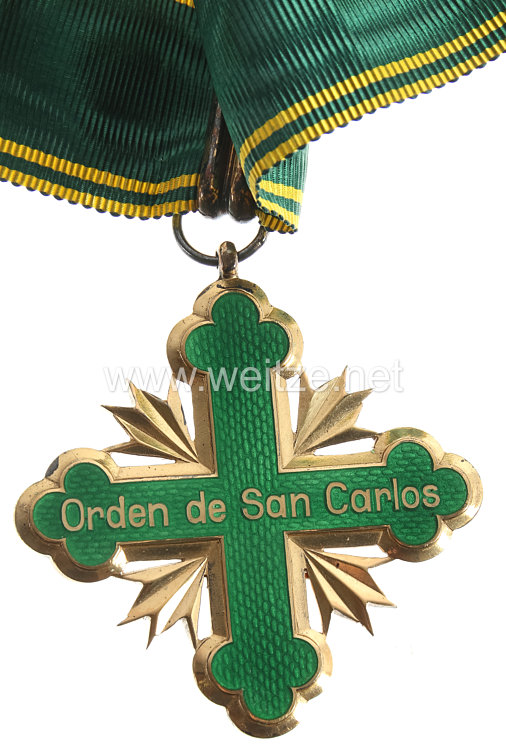
Neck cross. Silver gilt, enameled, complete with neck ribbon, condition 2.
360884
450,00

Colombia Order of San Carlos, Commander's Cross

The Colombian Order of San Carlos (Order of Saint Charles) represents one of the most significant decorations of the Republic of Colombia, reflecting the diplomatic and cultural history of this South American nation. The present Commander's Cross on neck ribbon embodies a high rank of this prestigious decoration, primarily awarded to foreign dignitaries and distinguished personalities in diplomatic service.

The Order was officially established on July 14, 1954, by Decree 2211 under President Gustavo Rojas Pinilla, although its conceptual roots reach back to the early years of the Colombian Republic. The Order's name honors Charlemagne (Carolus Magnus, Spanish: San Carlos), the medieval emperor who symbolizes wisdom, justice, and cultural advancement. This nomenclature underscores Colombia's intention to cultivate international relations and promote cultural exchange.

The Commander's Cross (Comendador) constitutes the third of five grades in the Order's hierarchy. The complete ranking includes: Grand Cross with Chain, Grand Cross, Commander, Officer, and Knight. This gradation follows the classical European order system that was adapted by many Latin American republics during the 19th century as they sought independence and developed their own state honor systems.

The material execution of the present piece corresponds to the traditional standards of Colombian order insignia. The cross is crafted from gilt silver and decorated with enamel - a technique requiring the highest level of craftsmanship. The enameling provides the order with its characteristic colors and ensures the decoration's long-term durability. The Commander's Cross is traditionally worn on a neck ribbon, distinguishing it from lower grades that are attached to ribbons on the chest.

The iconographic elements of the Order of San Carlos combine Colombian state symbolism with universal values. Typically, the order cross displays the colors of the Colombian flag - yellow, blue, and red - as well as state emblems. The design reflects both European order traditions and Colombia's specific national identity, which emerged from the independence wars of the early 19th century.

The context of conferment for the Order is primarily diplomatic in nature. It is predominantly awarded to foreign heads of state, diplomats, ambassadors, and personalities who have rendered distinguished service to bilateral relations with Colombia or to the promotion of Colombian culture abroad. More rarely, Colombian nationals are also honored for exceptional achievements in international contexts. The award is conferred by the Colombian President upon recommendation of the Ministry of Foreign Affairs.

The historical significance of such order insignia extends beyond their decorative character. They document Colombia's diplomatic relations during the second half of the 20th century and beyond. Each conferment represents a moment of international recognition and forms a chapter in the history of Colombian foreign policy. During the Cold War era, such decorations played an important role in maintaining alliances and positioning Colombia in the international arena.

From a collector's perspective, Commander's Crosses of the Order of San Carlos are relatively rare on the market, as their conferment is numerically limited and many pieces remain in family possession or institutional collections. The indicated condition 2 suggests a well-preserved example with minor signs of wear, which is remarkable for a worn order piece. The completeness with neck ribbon significantly increases the historical and material value, as neck ribbons were often stored separately and became lost.

The craftsmanship quality of Colombian order insignia from this period testifies to the development of specialized manufactories in South America. While earlier orders were often manufactured in Europe, local workshops established themselves in the 20th century capable of executing technically demanding work in precious metals and enamel. This reflects Colombia's economic and industrial development.

The Order of San Carlos occupies a special position within Colombia's honors system. Unlike purely military decorations, it serves as an instrument of soft power and cultural diplomacy. Its conferment signals recognition of contributions to international understanding, economic cooperation, or cultural exchange. Recipients have included numerous foreign ministers, ambassadors, artists, scientists, and business leaders who have strengthened ties between Colombia and their respective nations.

The choice of Charlemagne as the Order's patron reflects Colombia's connection to Hispanic and broader Western cultural traditions. Charlemagne, crowned Emperor in 800 CE, symbolized the unity of Christian Europe and the promotion of learning during the Carolingian Renaissance. By invoking his name, Colombia positions itself within a transatlantic cultural framework while asserting its own sovereign dignity as a modern republic.

In summary, this Commander's Cross of the Order of San Carlos represents a significant testimony to Colombian state and diplomatic history. It embodies the aspirations of a Latin American republic to consolidate its place in the international community and to build cultural and political bridges. For collectors of military and civil decorations, it represents a high-quality and historically significant object that illustrates the complex relationships between national identity, international diplomacy, and material culture.

r