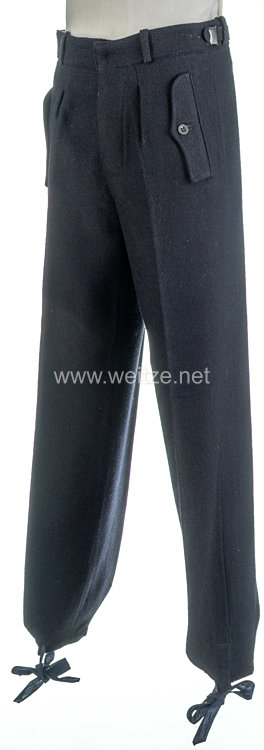
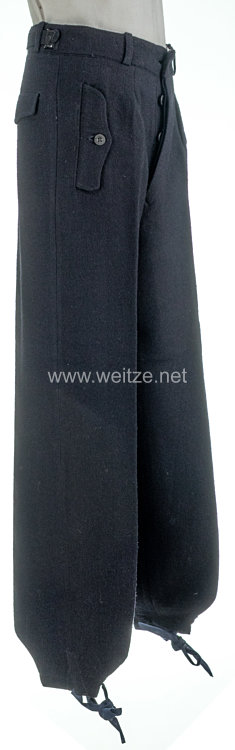
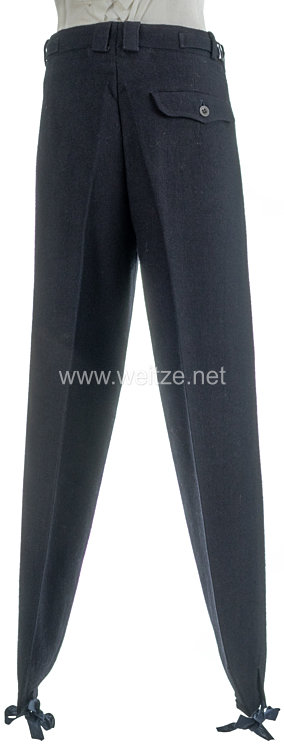
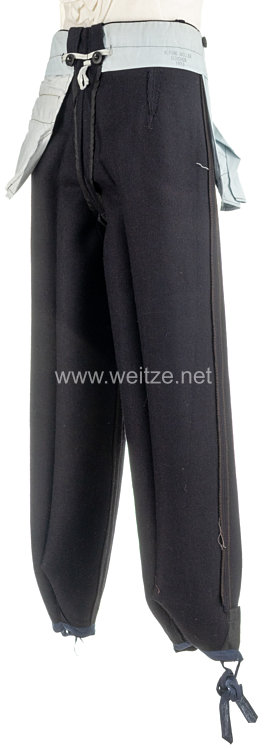
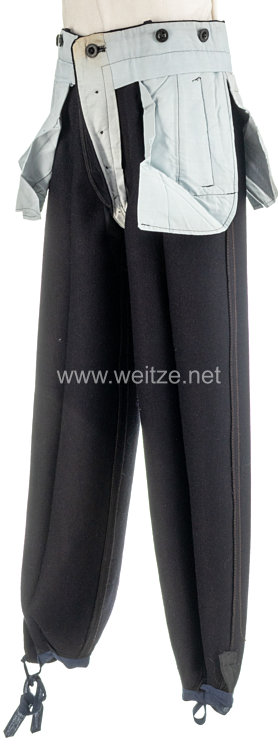
Deutsches Jungvolk (DJ) Long Overfall Trousers

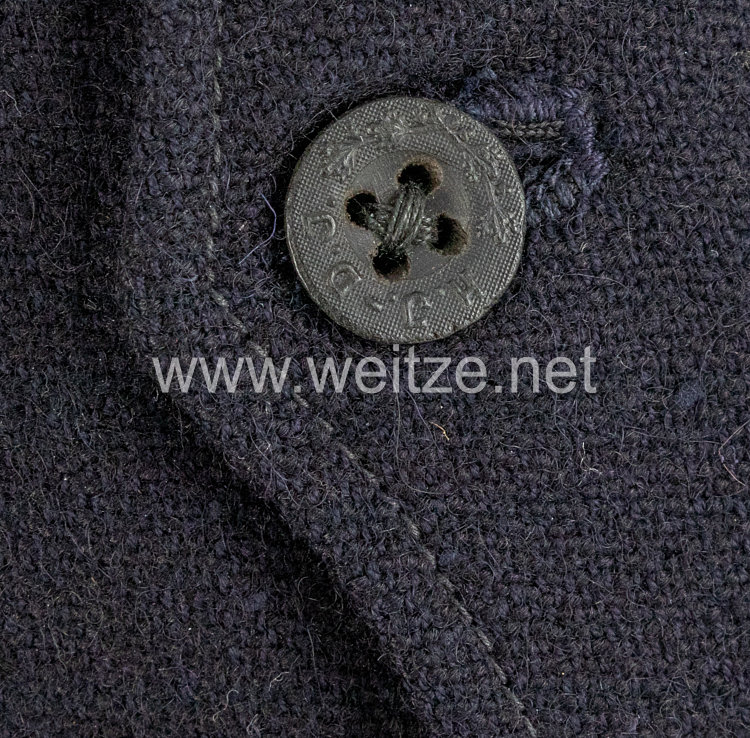
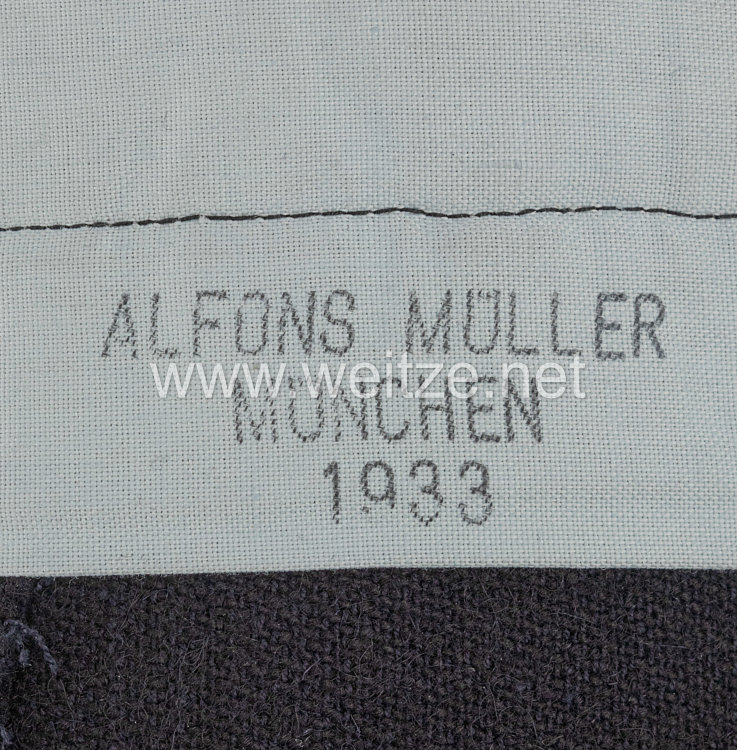
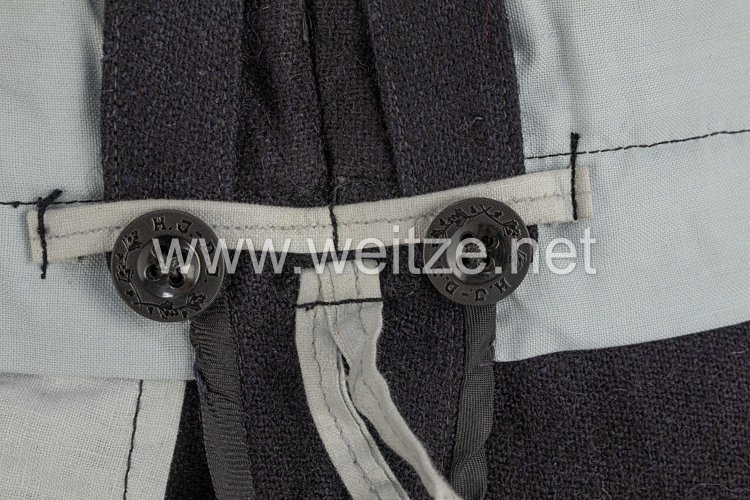
small size, dark blue wool, buttons marked HJ/DJ, interior stamp is not period-correct, without RZM label, waist circumference: 62 cm, length 91 cm, condition 2-.
396583
250,00

Deutsches Jungvolk (DJ) Long Overfall Trousers

This Deutsche Jungvolk (DJ) over-trousers made of dark blue wool represents an important element of the uniform worn by the youngest division of the Hitler Youth during the National Socialist period in Germany.

The Deutsche Jungvolk was established in 1928 as an independent sub-organization of the Hitler Youth and comprised boys aged 10 to 14 years. After the seizure of power in 1933, and particularly following the Law concerning the Hitler Youth of December 1, 1936, the DJ developed into a virtually mandatory organization for all German boys in this age group. In March 1939, membership became effectively compulsory through the introduction of compulsory youth service.

Uniformization played a central role in ideological education and was intended to emphasize the sense of community as well as the paramilitary orientation of the organization. The over-trousers, also known as breeches, were part of the official winter uniform of the Deutsche Jungvolk. This type of trousers was characterized by its wide cut in the thigh area and tighter fit below the knee, where they were tucked into boots or puttees.

The dark blue wool construction corresponded to the official dress regulations of the DJ. While HJ leaders and older members often wore black uniform parts, dark blue was prescribed for the Jungvolk. The choice of wool as material was practical for climatic conditions and was intended to provide protection during field exercises, marches, and the numerous outdoor activities of the organization.

The HJ/DJ-marked buttons are an authentic distinguishing feature of these uniform items. These buttons typically bore the Siegrune symbol of the Hitler Youth or other organization-specific emblems. The marking with HJ/DJ indicates the close connection between the parent Hitler Youth organization and its subdivision.

The absence of an RZM label (Reichszeugmeisterei) is observed in many uniform pieces from this period. The RZM was the central procurement and inspection office of the NSDAP, which from 1929 onwards was responsible for quality control and approval of uniforms and equipment. While many official uniform items were marked with RZM numbers and labels, there were also numerous pieces made by local tailors or privately procured, especially in the later war years when central supply increasingly collapsed.

The measurements of these trousers – waist circumference 62 cm and length 91 cm – correspond to a small size and were typically worn by younger DJ members, presumably aged 10 to 12 years. This underscores the disturbing reality that children at such a young age were already integrated into the ideological and paramilitary organization.

The uniformization of the Deutsche Jungvolk was part of a comprehensive system of indoctrination. Boys were to be introduced to discipline, obedience, and the National Socialist worldview from an early age. The uniform served not only practical purposes but was an important symbol of belonging and collective identity. Wearing the uniform at rallies, camps, and political events was mandatory.

From today's perspective, such uniform pieces are important historical testimonies of a dark period in German history. They document the penetration of National Socialist ideology into all areas of life, including childhood and youth. The systematic registration and uniformization of children from age 10 onwards was part of the totalitarian control exercised by the NS regime over society.

For collectors and historians, authentic DJ uniform pieces are today rare objects that offer important insights into the material culture and organizational structure of the Hitler Youth. Scientific engagement with such objects is essential for historical understanding of this period, even though – or precisely because – they remind us of an unjust system.

The study of these artifacts helps us comprehend how the Nazi regime systematically exploited and manipulated youth for its ideological and military purposes. These uniforms were not merely clothing but instruments of psychological conditioning, designed to transform children into obedient followers of a totalitarian state. Understanding this historical context is crucial for preventing similar manipulation of youth in the future.