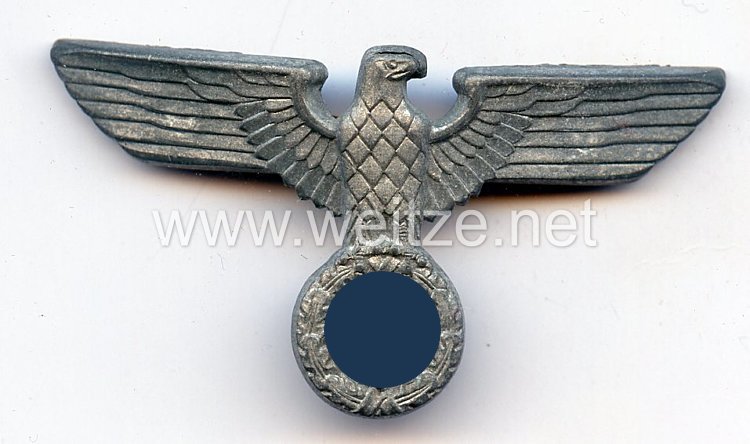
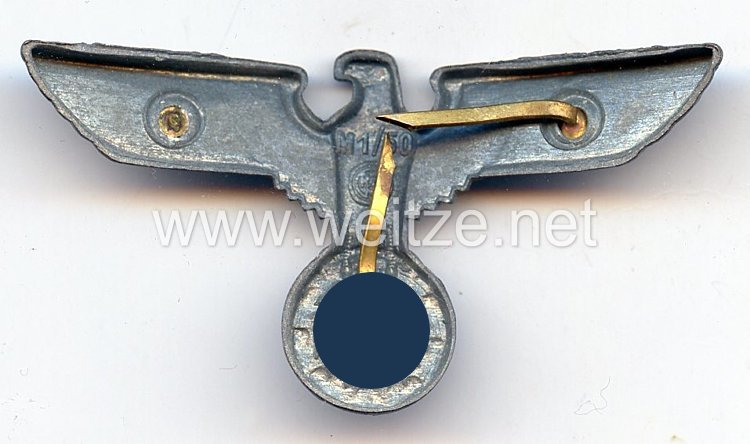
SA Cap Eagle for Visor Cap

Fine zinc, circa 1943, 1 prong missing, condition 2-.
436982
50,00

SA Cap Eagle for Visor Cap

SA Cap Eagle for the Ski Cap: Insignia of the National Socialist Storm Detachment

The present SA cap eagle for the ski cap made of fine zinc, manufactured around 1943, represents a characteristic uniform badge of the Sturmabteilung (SA) of the NSDAP during the National Socialist era. This type of badge played a central role in the visual identity and hierarchy of the paramilitary organization.

The Storm Detachment and Its Uniforms

The SA, founded in 1920/21, developed into the largest paramilitary organization of the NSDAP. The uniforms of SA men followed strict regulations laid down in the SA Clothing Regulations. The eagle as a national emblem was an indispensable component of headgear and symbolized membership in the National Socialist movement.

The ski cap (Schaftmütze) was, alongside the peaked cap, one of the official headgear items for SA members. It was particularly worn during service and at rallies. The cap eagle was attached above the SA cockade and displayed the stylized eagle with outstretched wings, holding a swastika in its talons.

Materials and Manufacturing

The present example is made of fine zinc, a material that was increasingly used from approximately 1942/43 onwards. This change in materials is historically significant and reflects the resource scarcity of the German Reich during World War II. Earlier versions were frequently made of aluminum or silver-plated metal.

The use of zinc from 1943 resulted from the increasing scarcity of strategically important metals needed for armaments production. The Reich government issued various ordinances on metal management that also affected the production of uniform effects. Manufacturers had to resort to substitute materials, with zinc being chosen due to its availability and workability.

Technical Characteristics

The cap eagle was attached to the cap by means of split pins (wire pins). These pins were pushed through the fabric of the cap and bent over on the inside. The present piece shows the loss of one pin, which is not unusual among surviving examples and indicates authentic wear or improper storage.

The design of the eagle followed official guidelines that prescribed a standardized representation. The eagle was depicted in side view with its head facing left and wings spread, holding the swastika in an oak wreath.

Historical Context of 1943

The manufacturing year 1943 marks a caesura in the history of the SA. After the “Röhm Affair” of June 30, 1934, during which the SA leadership was liquidated, the organization had already lost its former position of power. The Schutzstaffel (SS) had surpassed the SA as the most important organization. Nevertheless, the SA continued to exist until the end of the war and still comprised several hundred thousand members in 1943.

In 1943, Germany was engaged in total war. SA members were increasingly deployed for auxiliary services, air raid protection, and guard duties. Many younger SA men had already been drafted into the Wehrmacht.

Collector-Historical Significance

Today, such insignia are the subject of military-historical collections and research. They serve as material witnesses to National Socialist rule and its organizational structures. The handling of such objects in Germany is subject to strict legal regulations, particularly Criminal Code § 86a, which regulates the use of unconstitutional symbols. Exceptions apply to science, research, and education.

The preservation of such objects in museums and educational institutions serves historical documentation and education about the era of National Socialism. They are important sources for uniform studies, military history, and research into the everyday culture of totalitarian regimes.

Conclusion

The SA cap eagle made of fine zinc from circa 1943 is more than a military collectible. It documents the material scarcity of the war years, the organizational structure of the SA, and the visual propaganda of the Nazi regime. Its existence reminds us of a dark chapter in German history and admonishes critical engagement with the past.