Reichsnährstand "4th Reichsnährstand Exhibition München 1937"

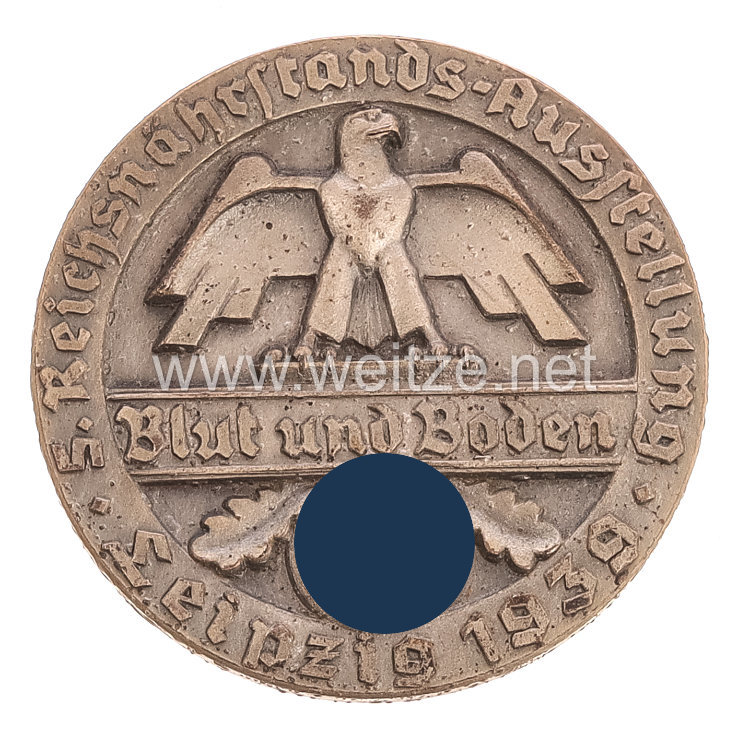
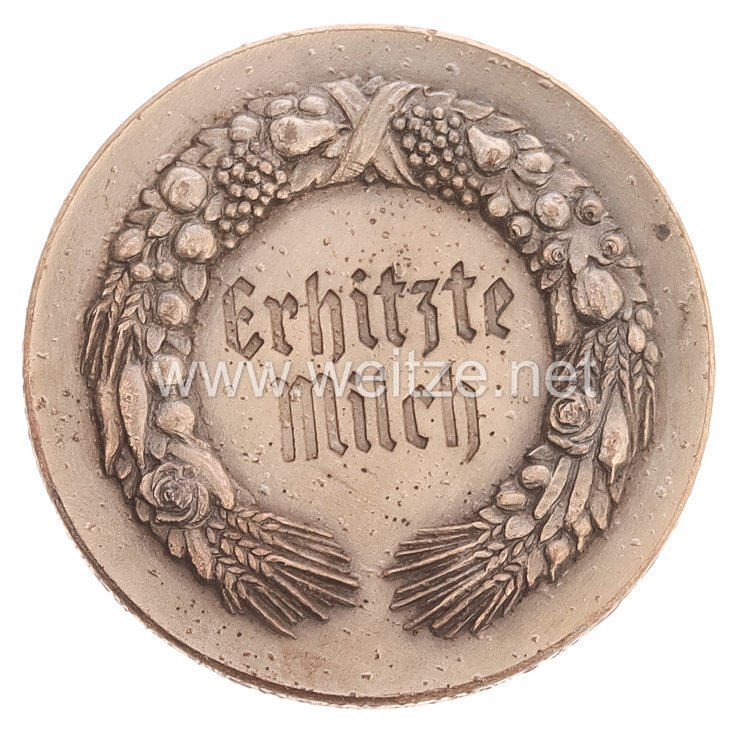
small silver winner's medal "Heated Milk", 38 mm, fine zinc, condition 2.
446982
120,00

Reichsnährstand "4th Reichsnährstand Exhibition München 1937"

This medal originates from the context of the 4th Reichsnährstand Exhibition held in Munich in 1937. It represents a fascinating chapter of National Socialist agricultural policy and its propagandistic staging during the Third Reich.

The Reichsnährstand (Reich Food Estate) was established on September 13, 1933, through the Reichsnährstandsgesetz (Reich Food Estate Law) and represented the central organization of German agriculture and food economy. Under the leadership of Richard Walther Darré, who served as Reich Farmers' Leader and Reich Minister of Food and Agriculture, this compulsory organization encompassed all persons and enterprises active in agriculture, food processing, and food trade. The ideological foundation was the National Socialist Blood and Soil ideology, which glorified peasantry as the life source of the German nation.

The Reichsnährstand Exhibitions were large-scale propaganda events designed to demonstrate the alleged achievements of National Socialist agricultural policy. The fourth of these exhibitions in Munich 1937 took place at a time when the Nazi regime was intensifying its autarky efforts and advancing war preparations. These exhibitions were intended not only to present the efficiency of German agriculture but also to propagandistically stage the connection between peasantry and the people's community.

The described small silver victory medal bearing the inscription “Erhitzte Milch” (Heated Milk) was evidently awarded as a prize within a competition at this exhibition. The dairy industry played a central role in National Socialist nutrition policy. The award for “heated milk” refers to contemporary efforts to improve milk hygiene and processing, an important public health concern of the time. Pasteurization and proper treatment of milk were central topics in the context of public health and food security.

The medal is made of fine zinc, a material frequently used during the NS period for awards and badges. With a diameter of 38 mm, it corresponds to the common dimensions for smaller award medals of this era. The use of zinc instead of precious metals was already partially common in the 1930s and would later, during the war, become the norm as strategic metals had to be reserved for the armaments industry.

The condition grade 2 (according to numismatic evaluation scale) indicates a well-preserved piece with slight signs of use. Such medals were typically presented in special cases or boxes and were often of great significance to recipients as they represented public recognition of their achievements in service of National Socialist economic policy.

The Reichsnährstand exhibitions were carefully choreographed events presenting various aspects of agriculture: from animal breeding to crop cultivation to processing techniques. Competitions and awards formed an essential component of these events. They were intended to create incentives for quality improvements while simultaneously demonstrating the alleged superiority of German agricultural methods.

In historical context, it should be noted that such awards were part of a comprehensive system of control and direction. The Reichsnährstand controlled production, processing, distribution, and prices of agricultural products. The exhibitions and competitions served not only to increase performance but also to integrate agriculture into National Socialist ideology and war economy.

Today, such medals are important historical sources for researching NS agricultural policy and the everyday history of the Third Reich. They document the penetration of all areas of life with National Socialist ideology and the instrumentalization of even seemingly apolitical areas such as the dairy industry for propagandistic purposes. Collectors and historians value such objects as contemporary witnesses providing insight into the mechanisms of Nazi rule.