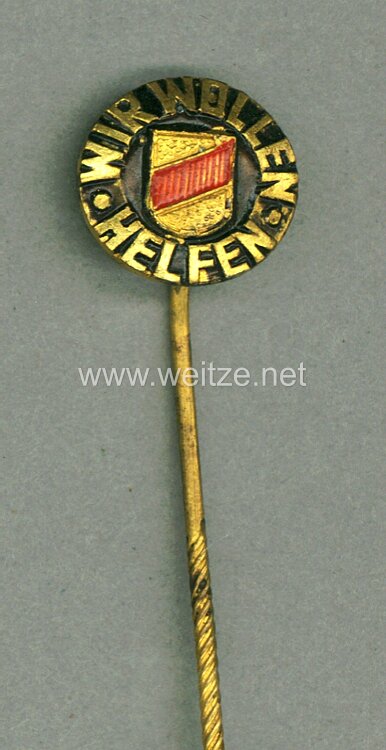
WHW - Gau 1: Baden - 1st WHW 1933/34 "1st Regional Collection October 1933"

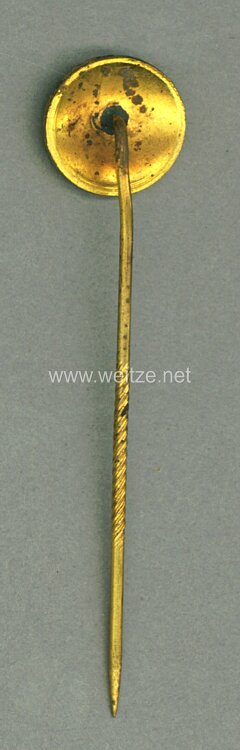
round metal badge, "WIR WOLLEN HELFEN" (We Want to Help), on long pin, condition 2.
243781
50,00

WHW - Gau 1: Baden - 1st WHW 1933/34 "1st Regional Collection October 1933"

This badge originates from the first Winterhilfswerk (Winter Relief) collection (WHW) of 1933/34 and represents Gau Baden, the first regional collection in October 1933. This round metal badge bears the inscription “WIR WOLLEN HELFEN” (We Want to Help) and was attached to a long pin to be worn visibly on clothing as a sign of charitable donation.

The Winterhilfswerk des Deutschen Volkes (Winter Relief of the German People) was established in September 1933 by the National Socialist regime under the leadership of Joseph Goebbels. Officially, it was intended to help needy German families during winter months through collections of money, clothing, coal, and food. The organization was presented as a successor to various welfare institutions of the Weimar Republic, but primarily served propagandistic purposes and demonstrated the supposed “people's community” (Volksgemeinschaft).

The first collection campaign in autumn 1933 was of particular significance as it was meant to demonstrate the new power structure of the Nazi regime. Baden, designated as Gau 1, took a symbolic pioneering role in this first nationwide campaign. The Gaue were administrative units of the NSDAP that replaced traditional state and provincial boundaries. Baden, under Gauleiter Robert Wagner, was known for its early and intensive alignment with National Socialist ideology.

The WHW badges became a characteristic element of National Socialist everyday culture. In return for a donation, citizens received these small pins, which they were expected to wear publicly. This created considerable social pressure: anyone not wearing a badge was suspected of not belonging to the “people's community.” Collections typically took place at street corners, in front of shops, and during door-to-door visits.

The early badges from 1933/34 were relatively simple in design, mostly made of plain metal with clear messages like “WIR WOLLEN HELFEN.” In later years, the badges became more elaborate, often made from various materials such as porcelain, glass, wood, or Bakelite, and displayed diverse motifs ranging from regional symbols to fairy-tale depictions.

The WHW developed into a gigantic organization with thousands of helpers and collectors. Between 1933 and 1945, an estimated several billion Reichsmarks were collected through these campaigns. However, the financial resources did not flow exclusively into welfare purposes but also into financing the regime and its war preparations. The organization also served to control and mobilize the population.

Participation in the WHW was formally voluntary but effectively obligatory. Employers kept lists of their employees' donations, and those who refused faced professional and social consequences. Propaganda portrayed the WHW as proof of the regime's social welfare and used it intensively for self-promotion.

Today, WHW badges are collectors' items that provide insight into the propaganda machinery of the Nazi regime. The early pieces from the 1933/34 collection are particularly interesting as they document the beginning of this systematic campaign. They testify to the rapid establishment of totalitarian structures after the seizure of power in 1933 and the instrumentalization of social welfare for political purposes.

For collectors and historians, these badges offer important insights into the everyday history of National Socialism. They show how the regime attempted to penetrate all areas of life and control and ideologically influence the population through seemingly harmless welfare activities. This specimen from Gau Baden documents the beginning of this development in one of the first regions to be completely brought into line with Nazi ideology.