Prussian Helmet for Officers of the Regiment Garde du Corps, or Garde-Kürassier-Regiment

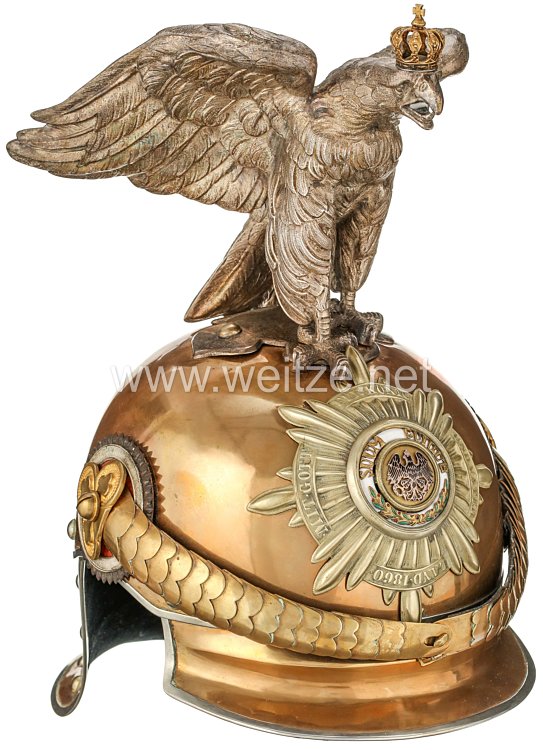
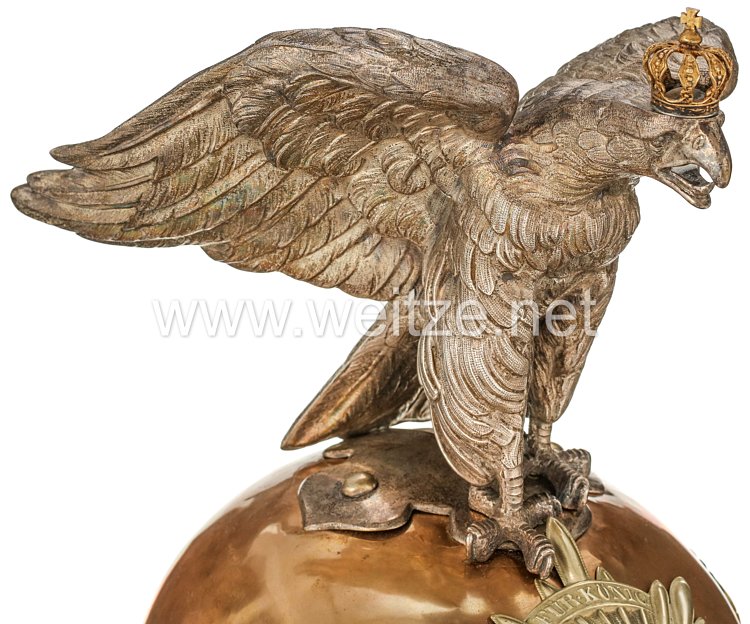
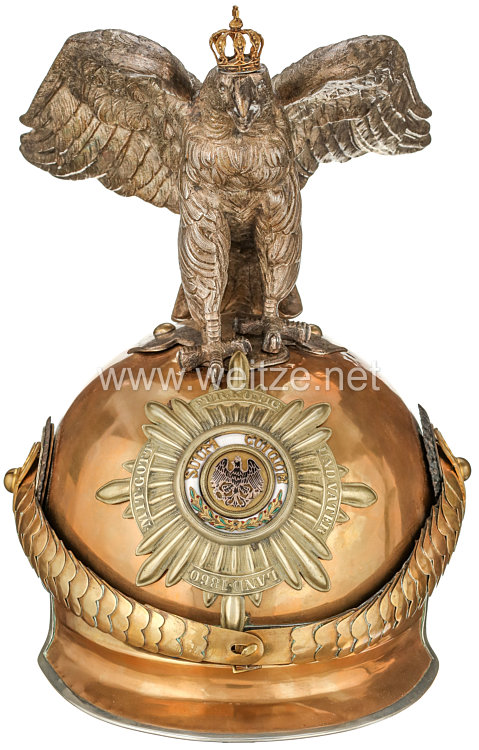
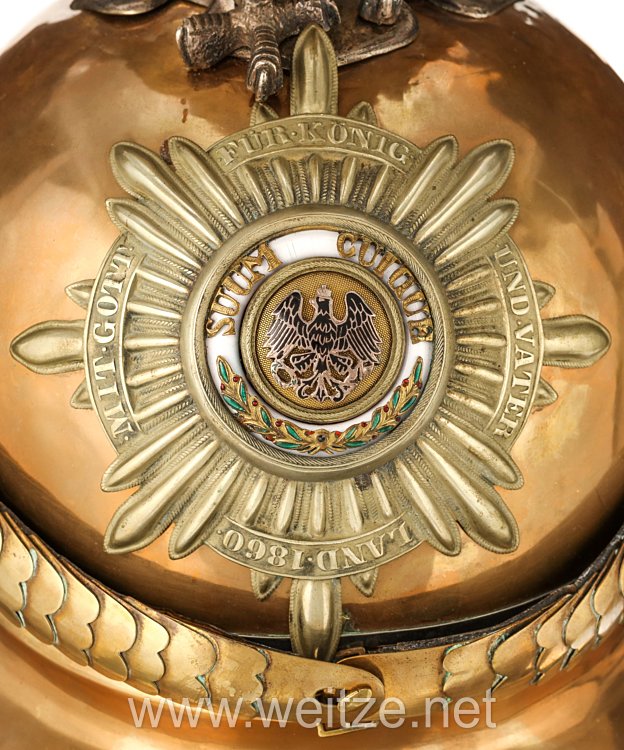
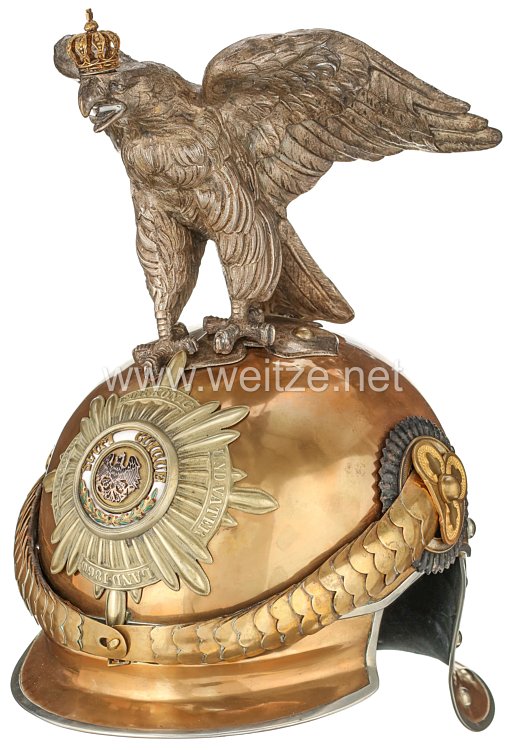
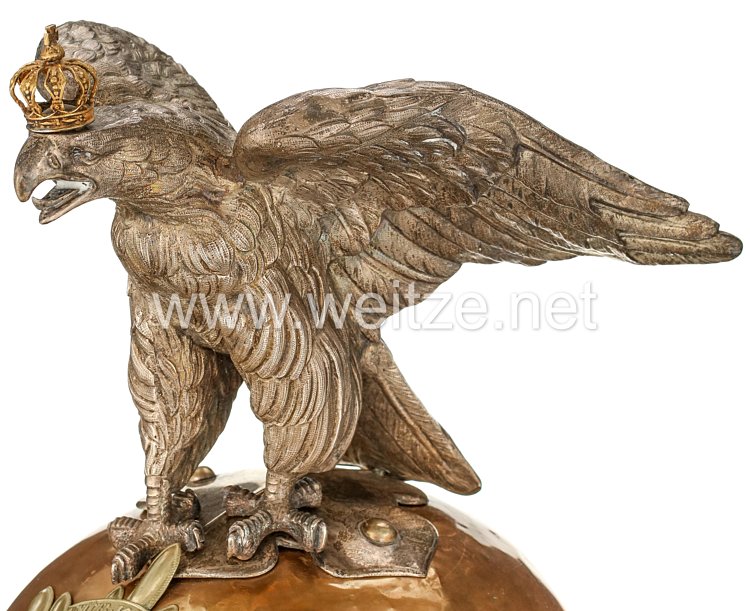
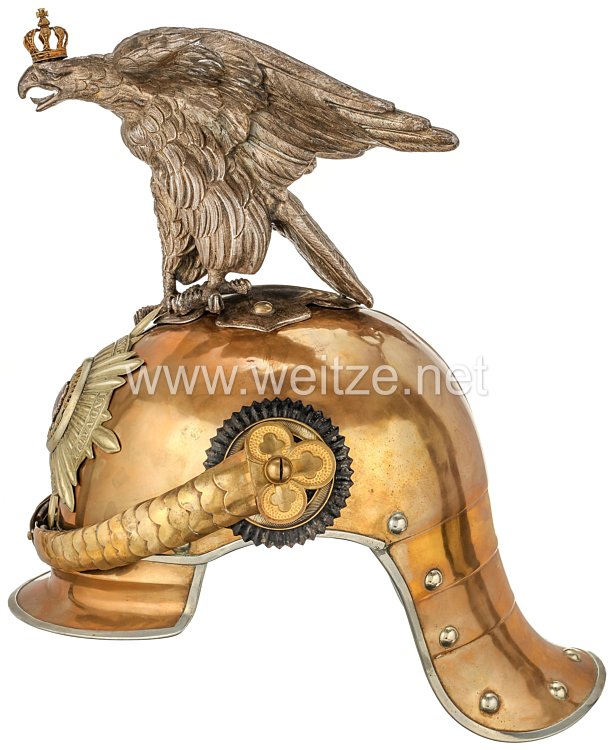
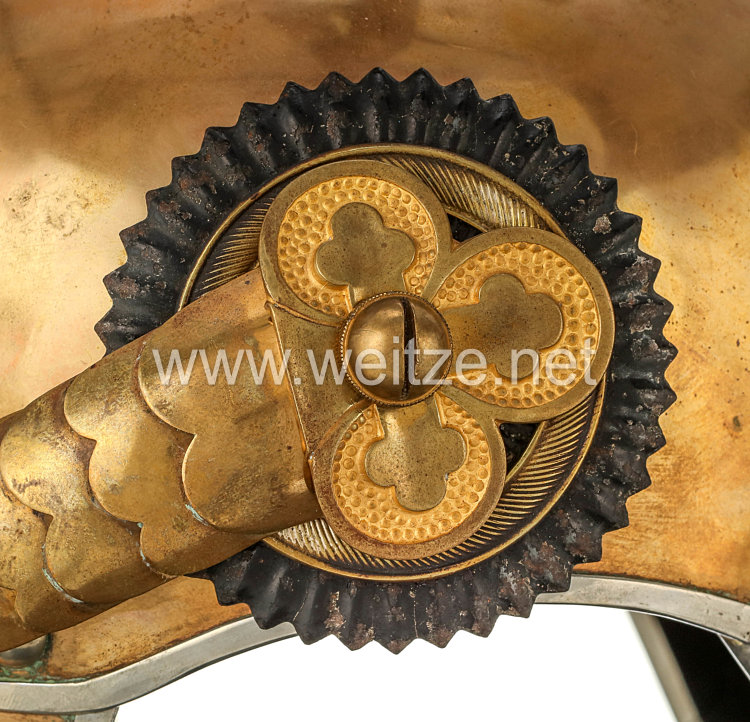
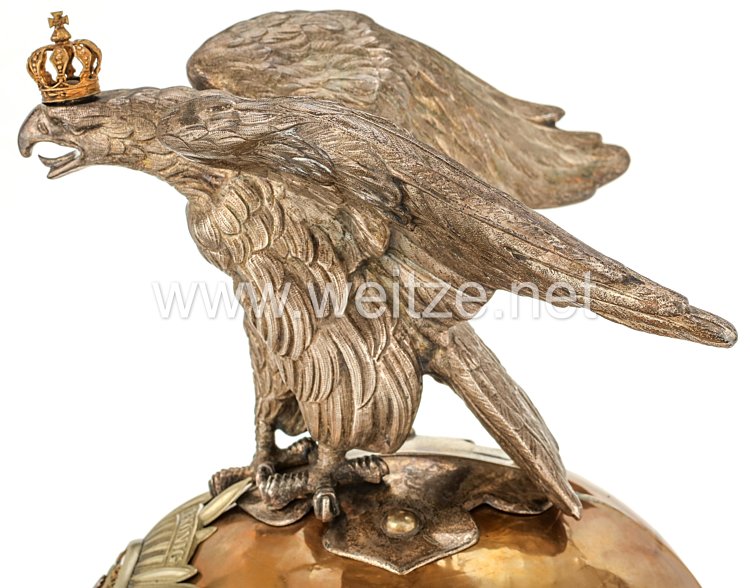
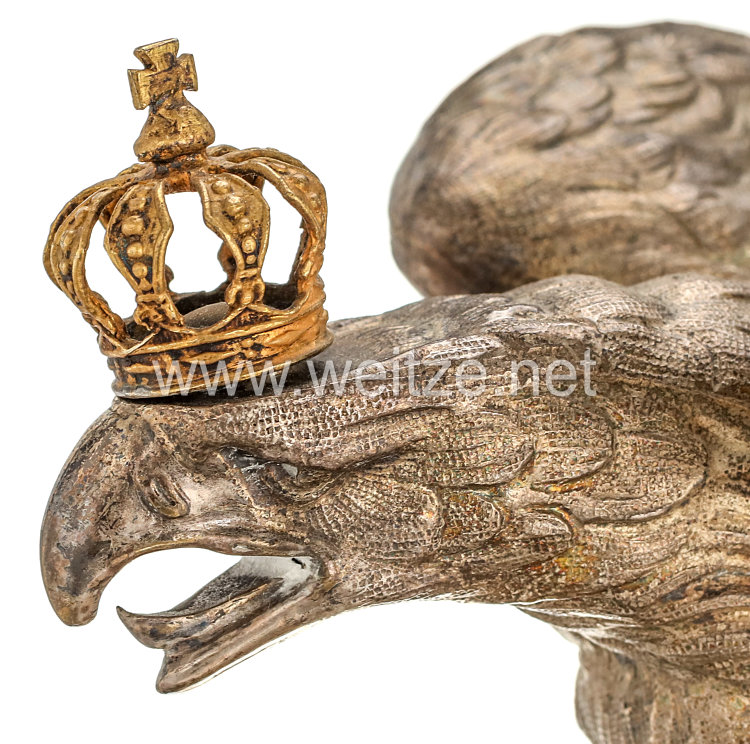
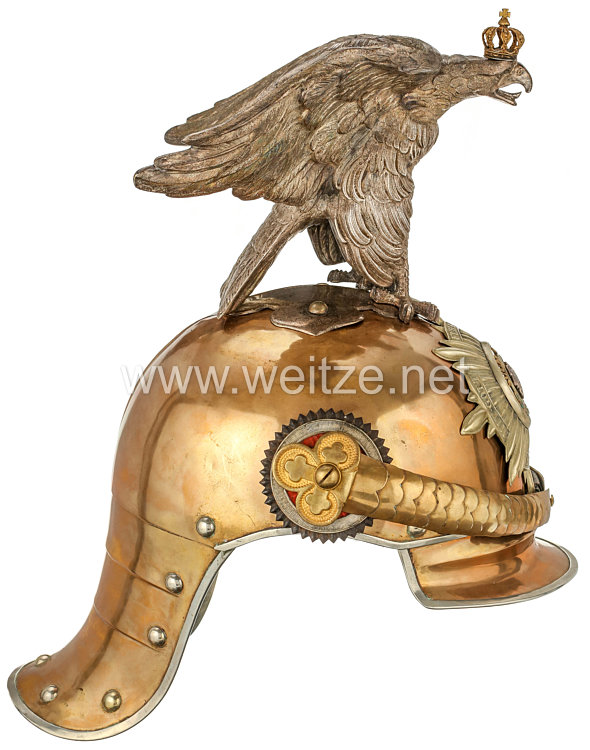
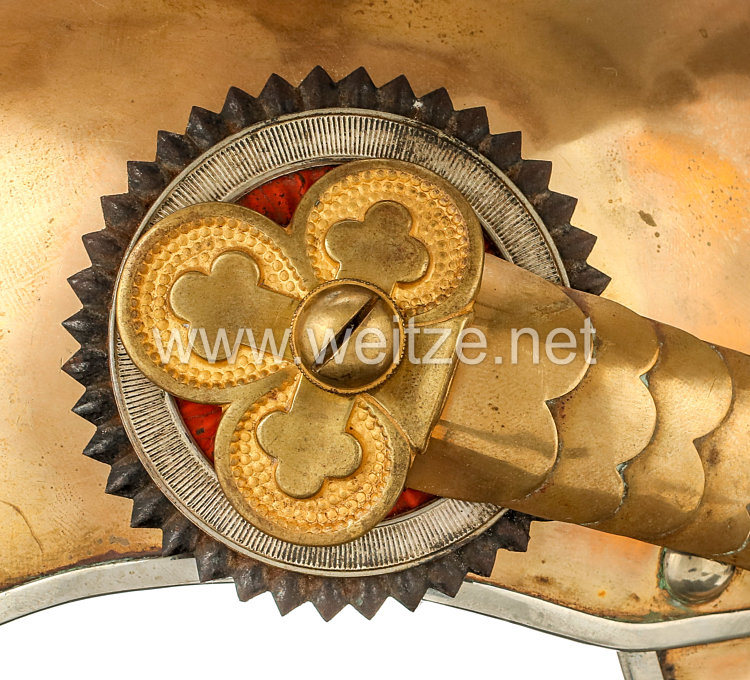
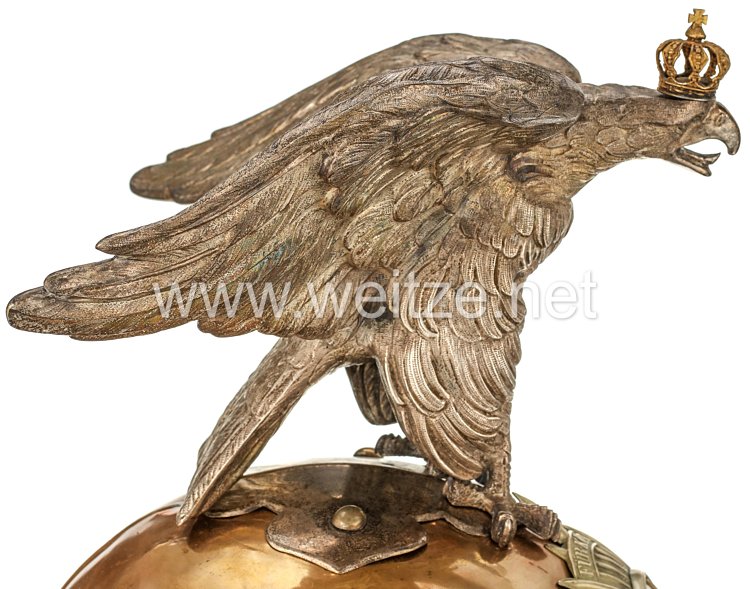
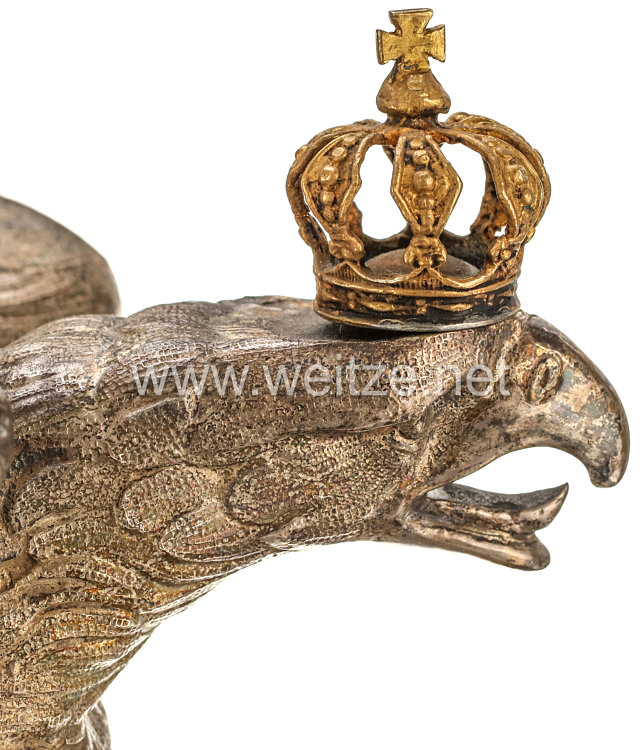
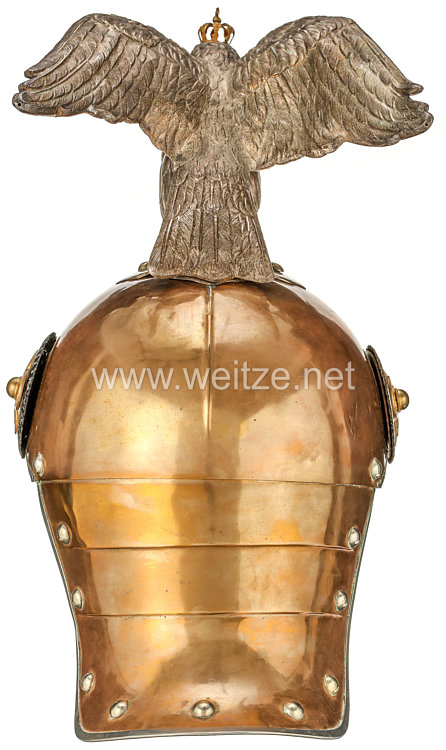
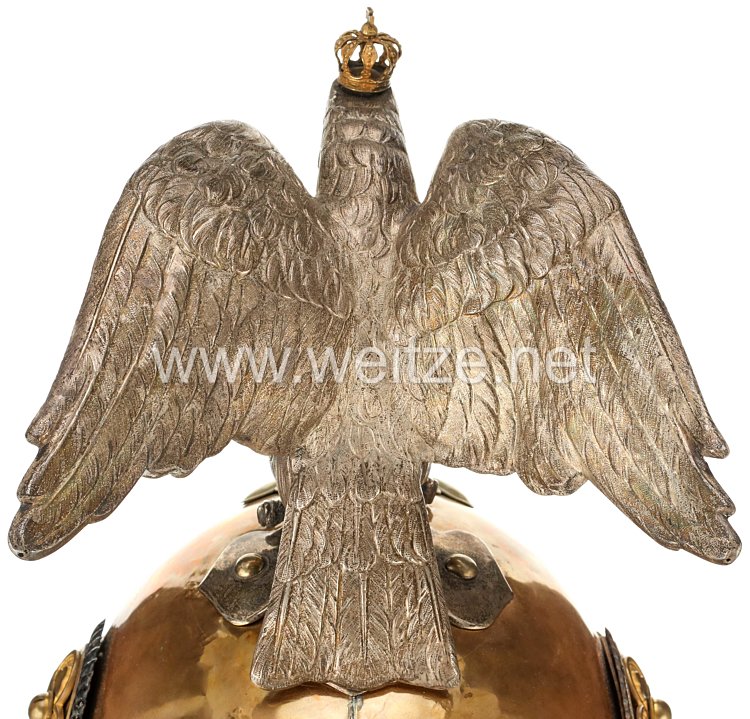
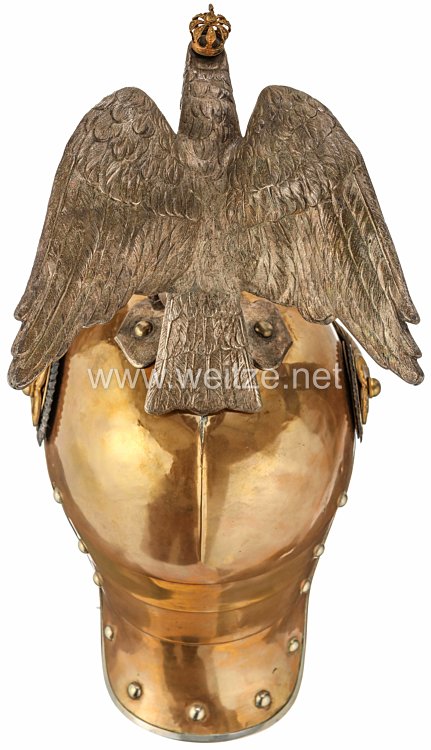
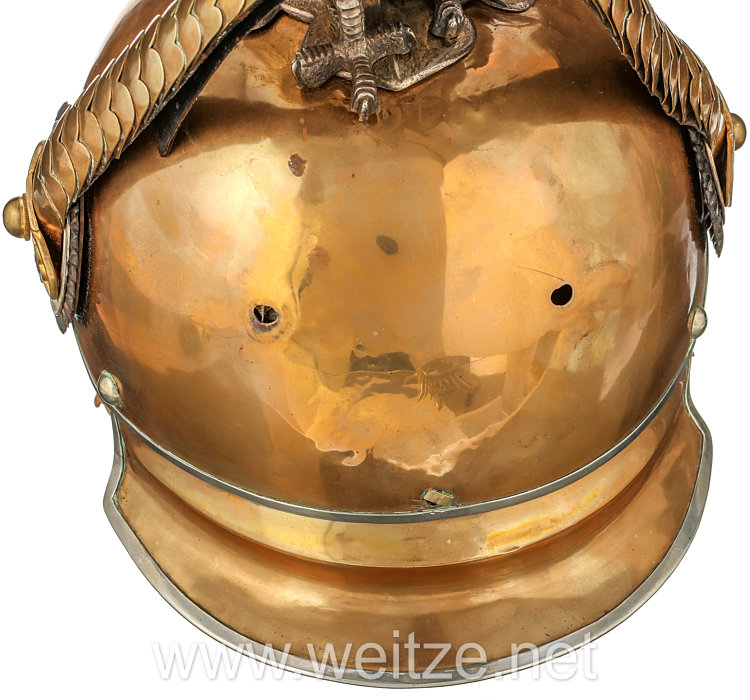
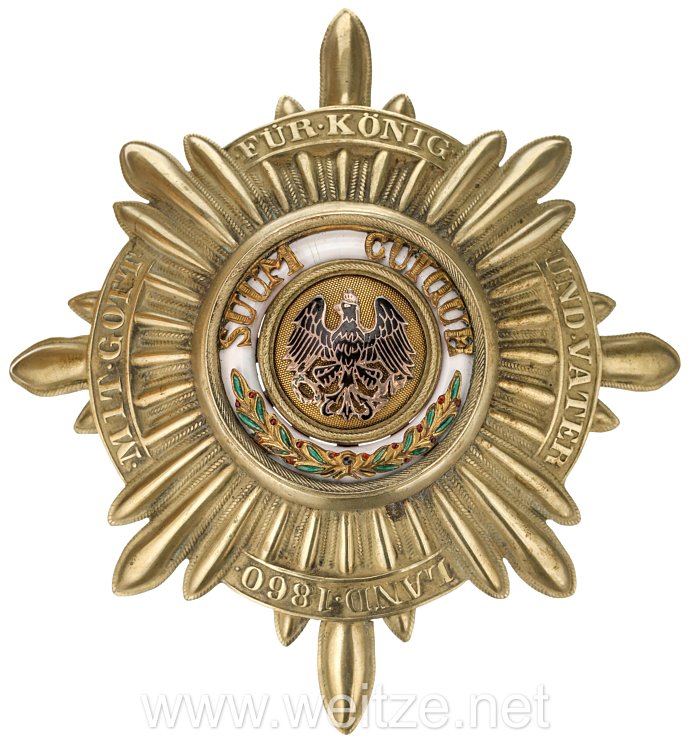
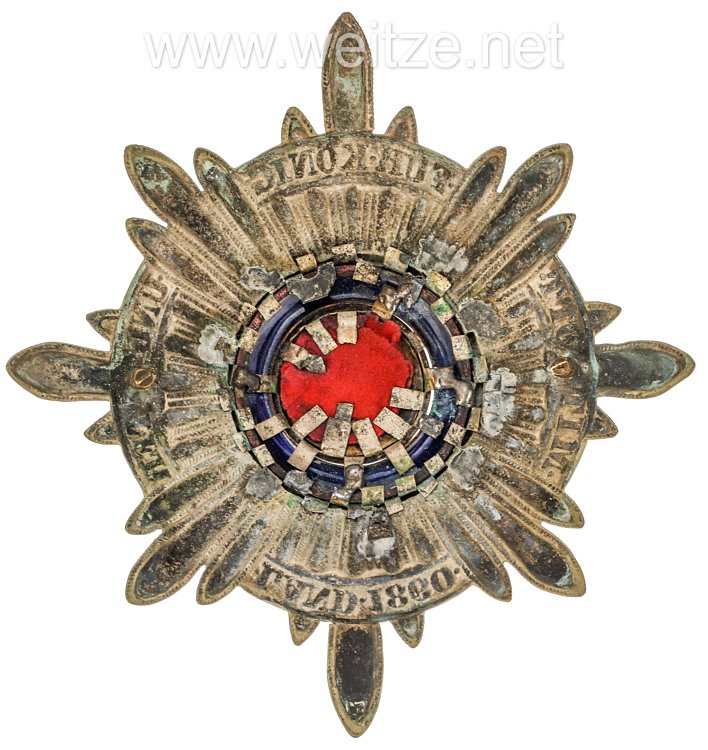
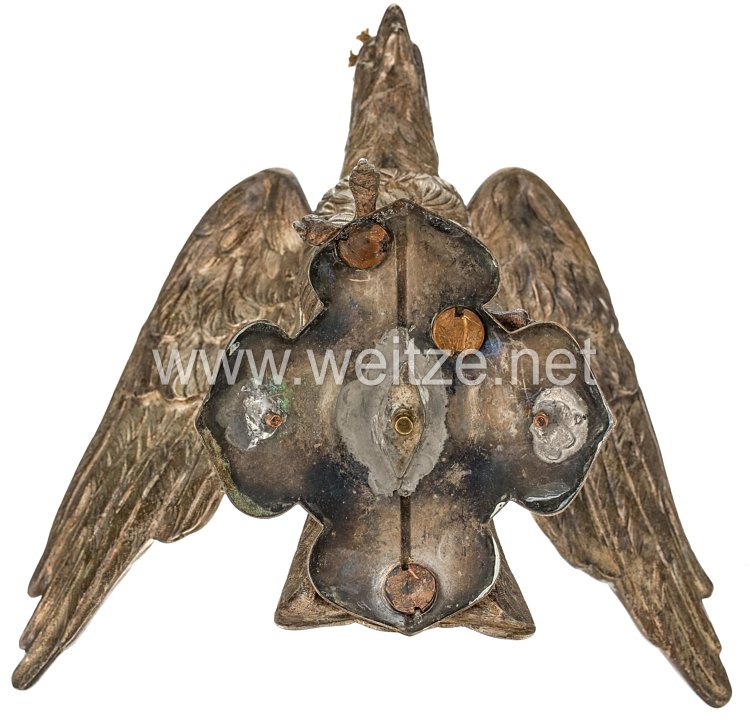
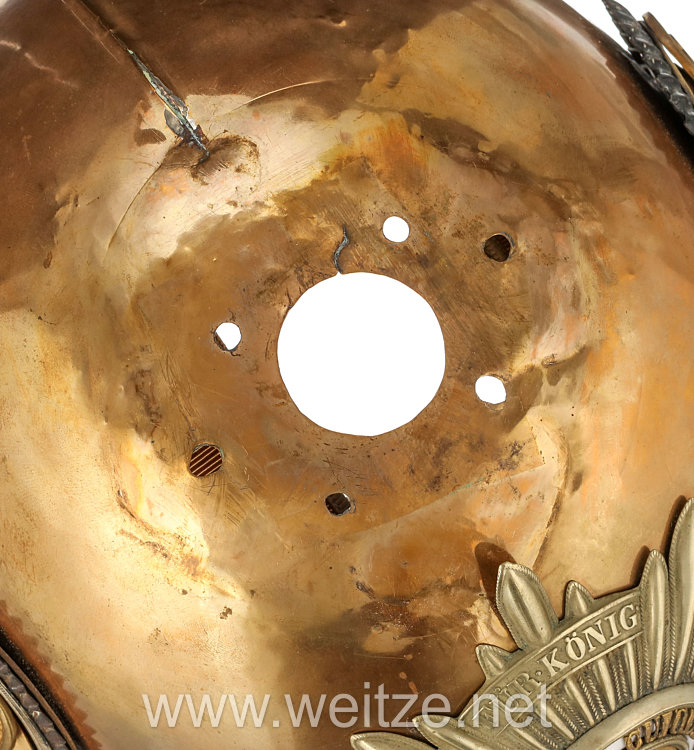
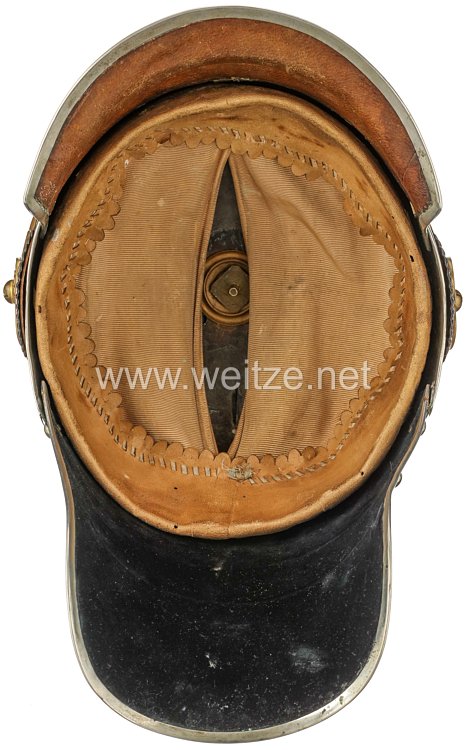
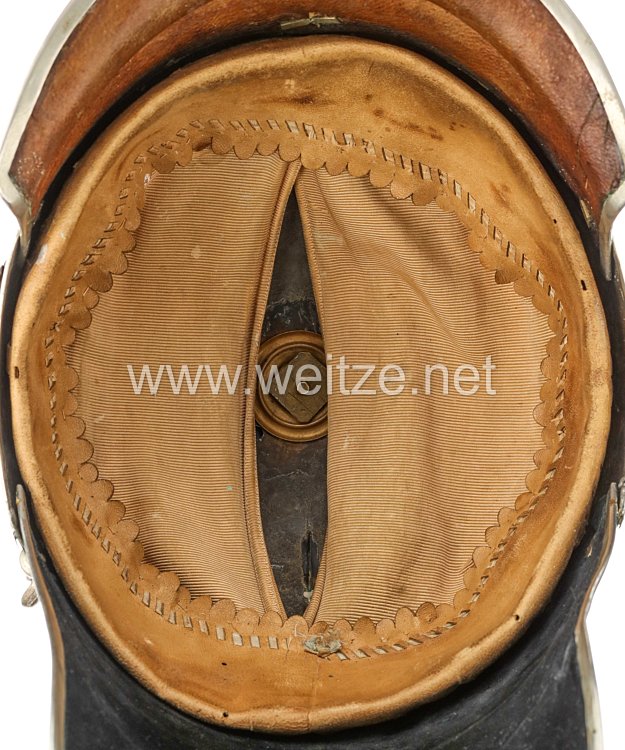
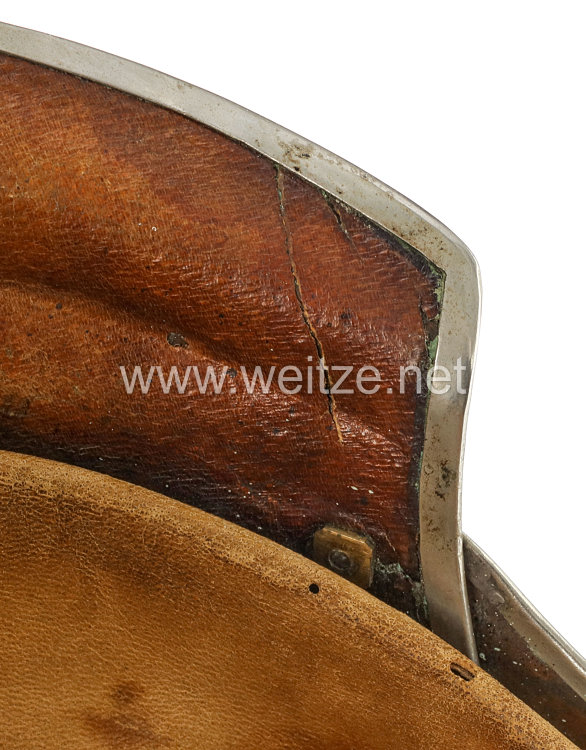
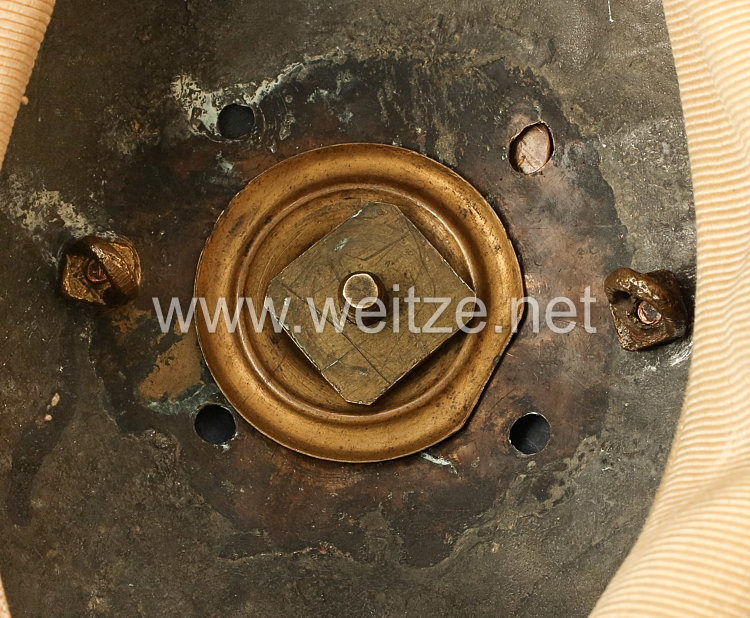
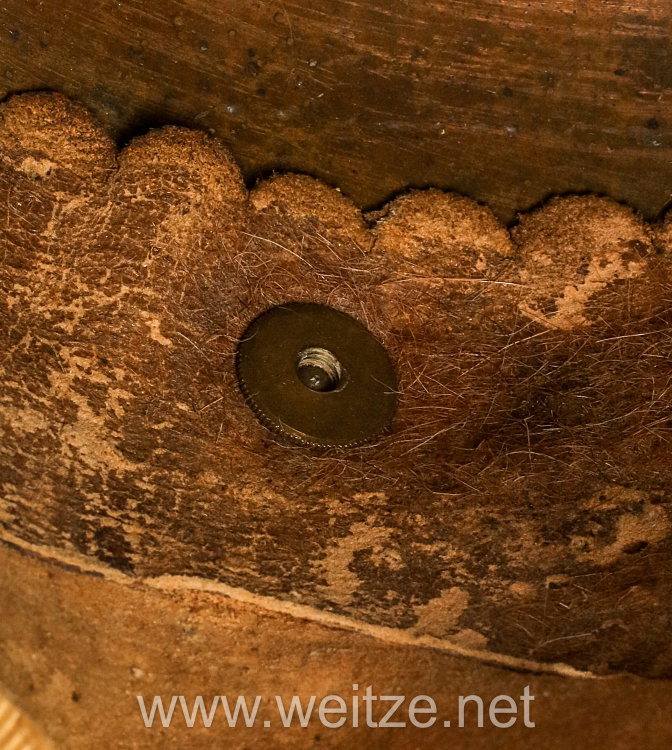
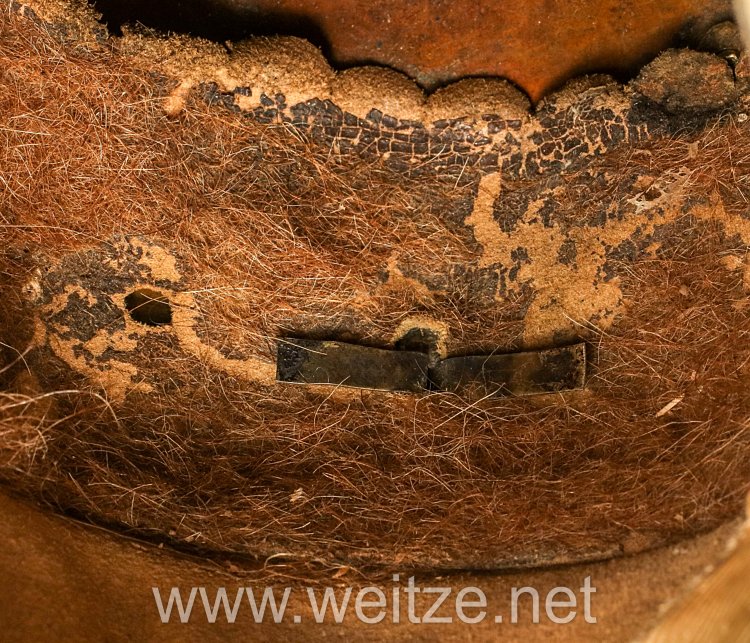
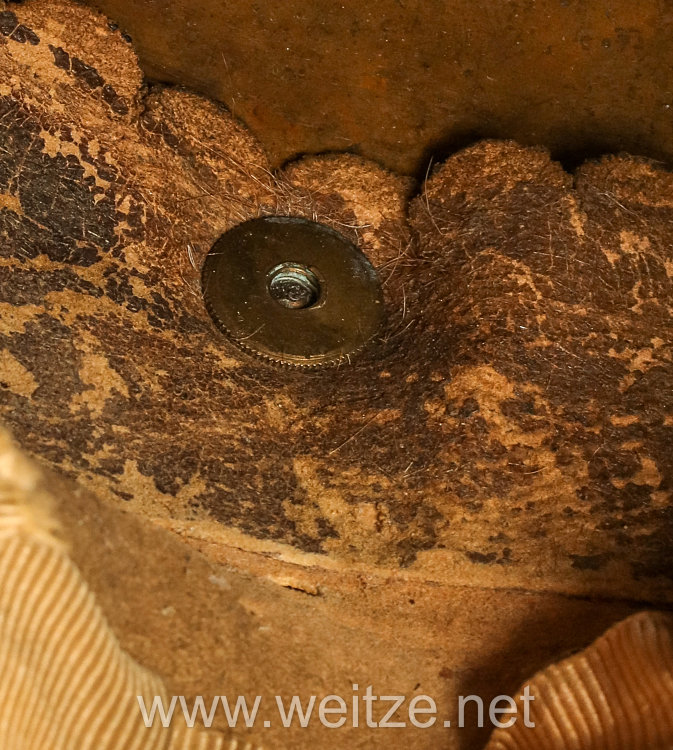
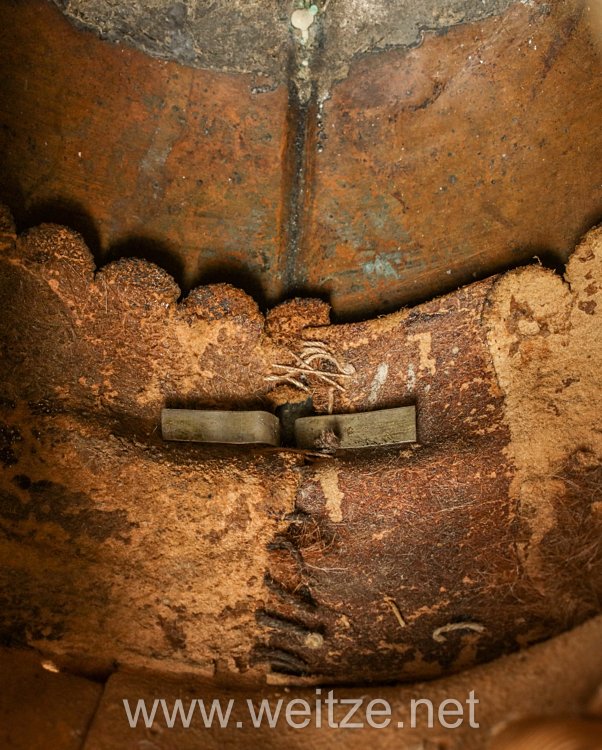
Elegant helmet circa 1910. The helmet skull made of gilded tombac sheet metal with silvered fittings. The helmet plate features the large silver Gardestern (Guards star) with finely enameled medallion, a small crack in the white enamel. Domed gilded scale chinstraps attached to cloverleaf bosses. Both sides with large officer's cockades, tiered front visor. Complete with particularly fine parade eagle in genuine silver, gilded royal crown. Interior with brown sweatband with white silk ribbon drawstring, white silk lining. The front visor lined with brown leather, the neck guard with black velvet. The helmet shows wear, the helmet skull reinforced at the rear with soft solder, the lining with typical wear and age marks. Condition 2.
355181

Prussian Officer’s Helmet (Kürassierhelm) Model 1889 for the Regiment Garde du Corps or the Garde-Kürassier-Regiment

Among the many distinctive forms of military headdress produced during the Imperial German period, few can rival the magnificent tombac cuirassier helmet worn by officers of the Regiment der Gardes du Corps and the Garde-Kürassier-Regiment. This Model 1889 officer’s helmet represents the apex of Prussian military pageantry, combining the finest materials and craftsmanship with the deep symbolism of two of the most prestigious cavalry regiments in the service of the Prussian King and German Kaiser.

The Regiments: Garde du Corps and Garde-Kürassier-Regiment

The Regiment der Gardes du Corps was the royal cuirassier guard regiment of the King of Prussia and, after 1871, of the German Emperor. The unit was founded in 1740 by Frederick the Great, and the reigning monarch served as honorary colonel. Stationed in Potsdam, both men and horses were selected from the very best quality. Uniquely among the Imperial German Army after German unification in 1871, the Garde du Corps was recruited nationally rather than regionally, and was part of the 1st Guards Cavalry Division.

The Garde-Kürassier-Regiment had a somewhat different lineage. Formed in 1815 as an Uhlans (lancer) regiment, it was reorganized as a cuirassier unit in 1821. Stationed in Berlin, the regiment was also part of the Guards Cavalry Division. It fought in the Second Schleswig War, the Austro-Prussian War, the Franco-Prussian War, and the First World War. During the earlier part of the Great War, the regiment fought in Belgium and on the Aisne, and from the summer of 1915 on the Eastern Front — in Poland, Latvia, and the Ukraine.

Both regiments served as personal bodyguard to the Prussian King and German Kaiser and wore identical tombac helmets with silvered fittings and the Garde star, which explains why attribution between the two regiments can be ambiguous without additional provenance.

Construction and Design

The Model 1889 officer’s helmet (also referred to as Model 1889–1899 in some sources) represents the late Imperial period pattern used until World War I. Its construction distinguishes the officer’s version from those of other ranks. The helmet body is made of tombac, a copper and zinc alloy, externally gilt. The fittings are nickel-plated (silvered). The light helmet skull features a stepped front visor, with silvered trims, rivets, and mounts. The helmet also features a distinctive lobster-tail neck guard with a three-piece segmented construction, characteristic of Prussian cuirassier helmets.

To the front of the helmet is fitted a silvered Garde star front plate of multi-piece construction. At its centre is an enamelled Black Eagle Order design. Above the eagle is the legend “SUUM CUIQUE” (“To Each His Own”), picked out in gilt metal, and beneath it a wreath of enamelled laurel leaves, both mounted on a circular white enamel backing.

The chinscales are convex and gilt, fitted to the helmet with gilt officer-quality cloverleaf rosettes set upon Reich and State cockades. These large officer cockades are a further mark of distinction.

The Parade Eagle

Perhaps the most striking feature of this helmet is the detachable parade eagle. This large, finely chased silvered eagle, with its screwed-on gilt crown, was worn for all occasions when full dress was required. For field service and all other occasions, the eagle was removed and replaced by a spike. The regiment wore a white cuirassier uniform with certain special distinctions in full dress, including a red tunic for officers in court dress. The white metal eagle, poised as if about to rise from the bronze helmet on which it sat, was among the most visually dramatic elements of any Imperial German uniform.

Interior Details

The interior of the officer’s helmet is fitted with a brown leather sweatband and a white silk rep lining. The neck guard is lined with black velvet.

Historical Context

This helmet type, dating to around 1900, represents the apex of Imperial Prussian military pageantry, worn during the reign of Kaiser Wilhelm II (1888–1918). The Garde du Corps and Garde-Kürassier-Regiment occupied the very summit of the Prussian military hierarchy, and their equipment reflected this exalted status through the use of precious materials and exceptional workmanship.

End and Legacy

On 10 December 1918, the regiment marched through the Brandenburg Gate in Berlin, where demobilization subsequently began. To suppress unrest in Berlin, three volunteer squadrons were formed from the remnants of the unit. The regiment was disbanded in September 1919. Following the Treaty of Versailles and the dissolution of the Imperial German Army, such helmets became historical artifacts and prized collectors’ items. The tradition was preserved in the Reichswehr and later Wehrmacht in modified form.

For today’s collector, this Model 1889 cuirassier helmet stands as one of the most impressive testimonies to Prussian cavalry tradition — an object where craftsmanship, military hierarchy, and imperial representation converge in extraordinary fashion.

r