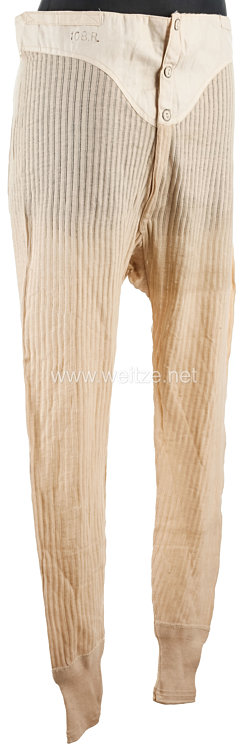
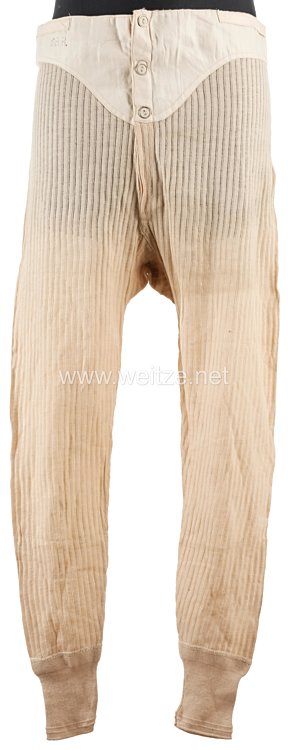
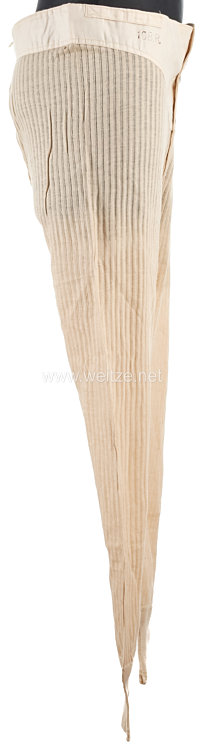
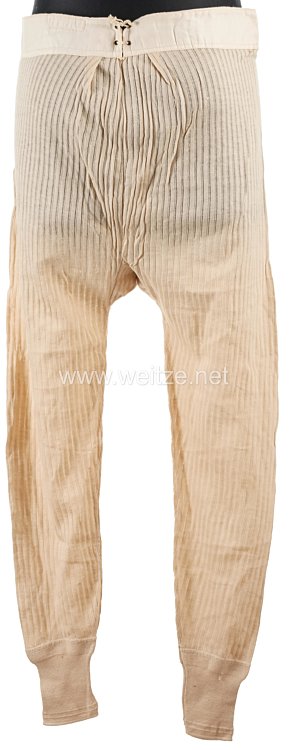
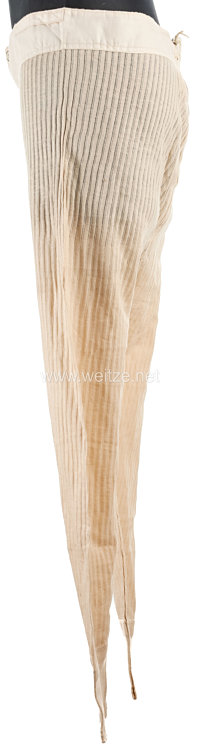
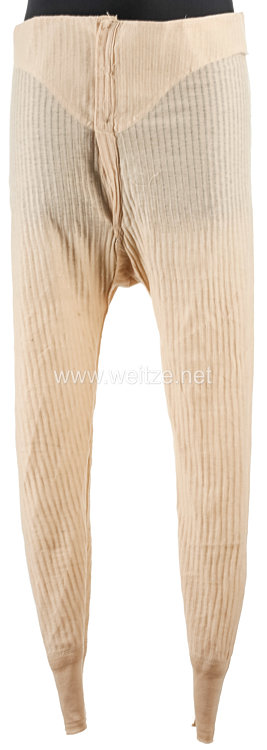
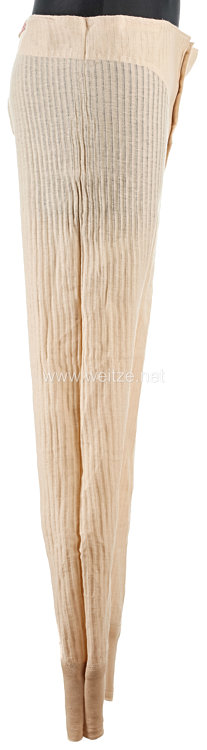
Kingdom of Saxony First World War White Long Underpants for a Member of the Schützen-(Füsilier-) Regiment Prinz Georg Nr. 108

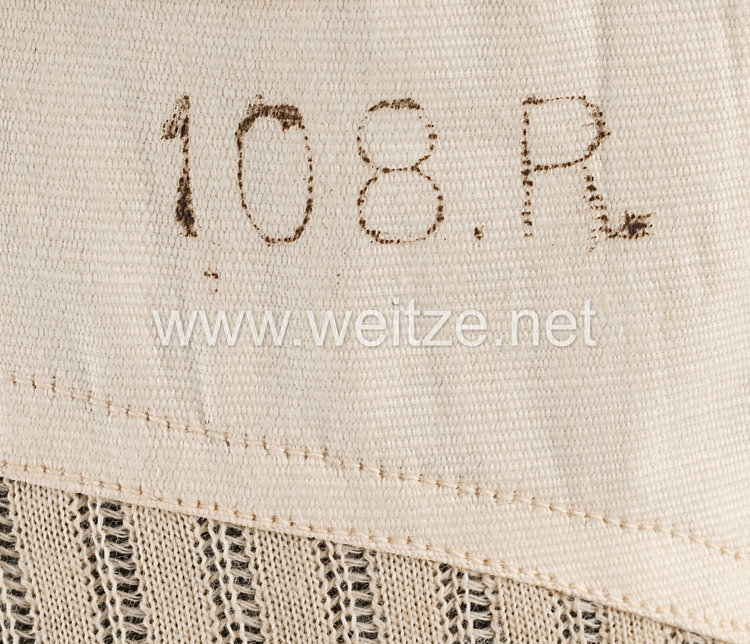
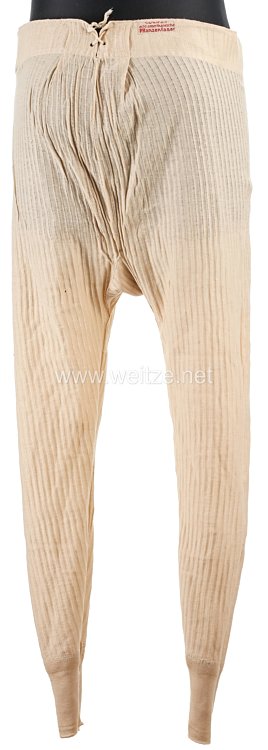
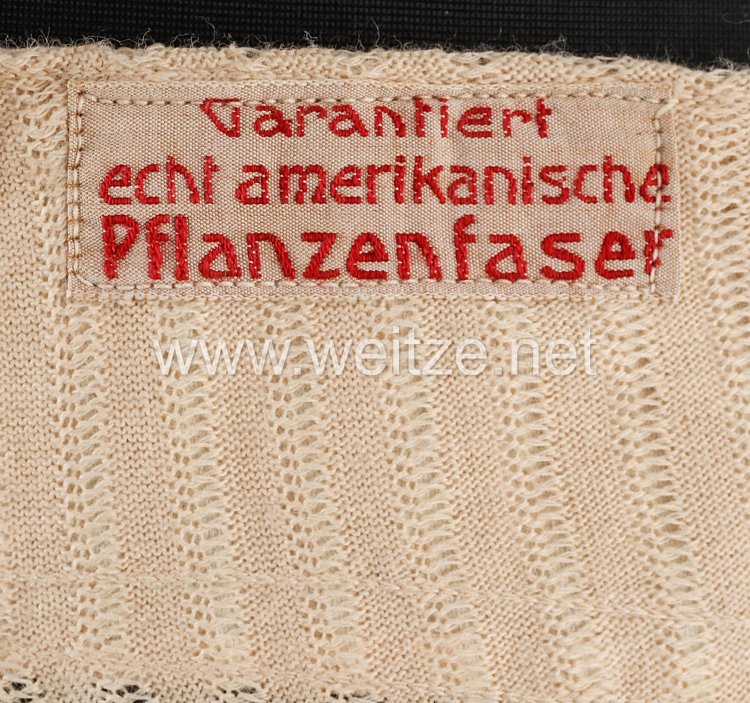
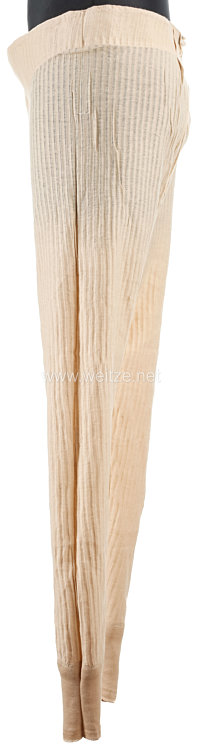
Peacetime garrison Dresden, circa 1914. Long pants made of white cotton. With unit stamp “108. R” and quality label “Guaranteed genuine American plant fiber”. Used condition.
326080
135,00

Kingdom of Saxony First World War White Long Underpants for a Member of the Schützen-(Füsilier-) Regiment Prinz Georg Nr. 108

This white cotton long underwear represents an often overlooked but essential element of military equipment during World War I. The garment belonged to a member of the Royal Saxon Schützen (Fusilier) Regiment “Prinz Georg” No. 108, a traditional unit of the Saxon Army with peacetime garrison in Dresden.

The Schützen-Regiment No. 108 was established as part of the reorganization of the Saxon Army and bore the honorary name “Prinz Georg” in honor of the Saxon Prince. As a Schützen regiment, it belonged to the infantry and was equipped with modern tactics and equipment. Upon the outbreak of World War I in August 1914, the regiment was mobilized and deployed to various fronts, where it participated in significant battles of the war.

The underwear of German soldiers in World War I followed precise clothing regulations established in the various army administrations of the German Empire. The Kingdom of Saxony maintained its own military administration until 1918, which is why Saxon regiments maintained their own depots and supply systems. The stamped chamber mark “108. R” clearly identifies the garment as property of the 108th Regiment and served for administration and tracking of equipment items.

The use of “American plant fiber”, as indicated on the quality label, refers to high-quality cotton from the United States, which constituted a significant portion of European textile imports before the war. This cotton was considered particularly durable and skin-friendly. With the beginning of the war and the British naval blockade, the import of American cotton became increasingly difficult, leading to textile shortages and the use of substitute materials. The fact that this garment was made from genuine American cotton suggests manufacture in peacetime or the early war months around 1914.

The hygiene and underwear of soldiers was a central concern of military medicine. Long cotton underwear served multiple purposes: they protected against cold, prevented skin irritation from coarse uniform wool, and contributed to personal hygiene. In the trenches of World War I, where sanitary conditions were often catastrophic, clean underwear became an important factor for the health and combat effectiveness of troops.

The army's medical services recognized early the connection between lack of hygiene and diseases such as lice infestation, typhus, and skin infections. Regular changes of clothing were prescribed, but in the reality of trench warfare often impossible to implement. Soldiers often wore their underwear for weeks without the possibility of changing. Delousing stations and field baths were established to improve the hygienic situation.

The supply of clothing was organized through the depot regiment in Dresden. Each soldier received upon his conscription a basic equipment, which included several sets of underwear. The chamber stamp made it possible to return the garments to the respective units after washing. The system of marking and managing equipment items was highly developed and reflects Prussian-German administrative precision.

The Kingdom of Saxony provided significant troop contingents for the German Army in World War I. Saxon regiments fought on the Western Front in France and Belgium as well as on the Eastern Front against Russia. The Schützen-Regiment No. 108 shared the fate of many German units: high casualties, grinding positional warfare, and ultimately defeat in 1918.

From today's perspective, such an everyday object as underwear appears as an unusual collector's item. Yet precisely these personal items offer unique insights into soldiers' daily lives beyond weapons and decorations. They remind us that behind military operations stood millions of individual fates – men who struggled with the most basic needs such as warmth, cleanliness, and comfort.

The preservation of such textiles over more than a century is remarkable, as cotton fabrics are sensitive to moisture, light, and biological degradation. The “used condition” of the object testifies to its actual use and gives it an authentic historical value that goes far beyond perfectly preserved, never-worn pieces.

This simple garment thus becomes a tangible connection to the human experience of the Great War, a reminder that military history encompasses not only grand strategies and famous battles, but also the daily realities of millions of soldiers who served their countries under extraordinarily difficult conditions.