Third Reich Reichsbund Deutsche Jägerschaft (RDJ) Hermann Göring - Silver-Mounted Bone Snuff Box

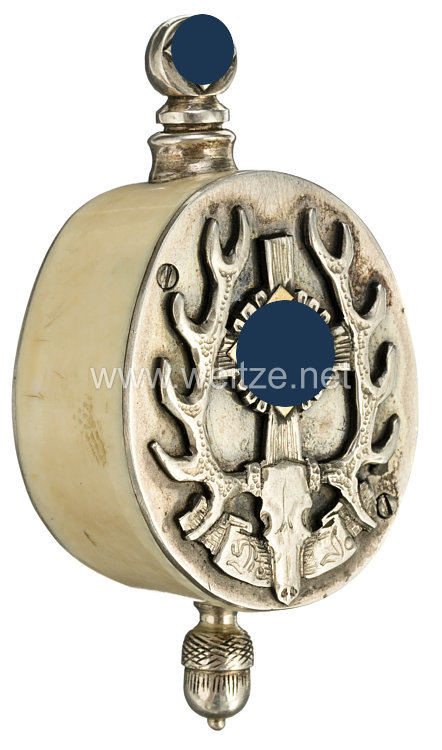
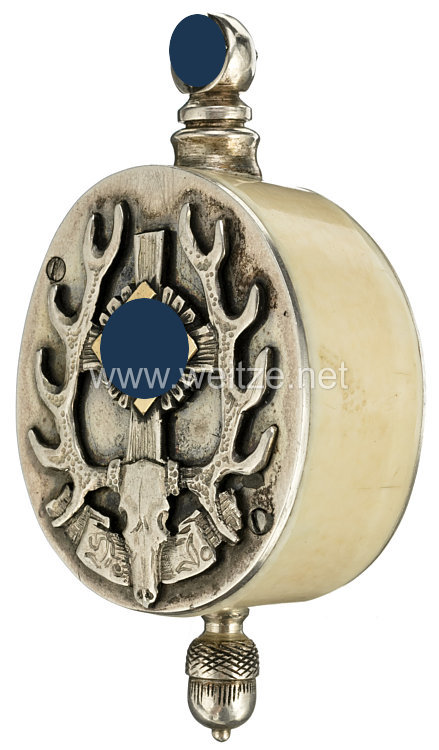
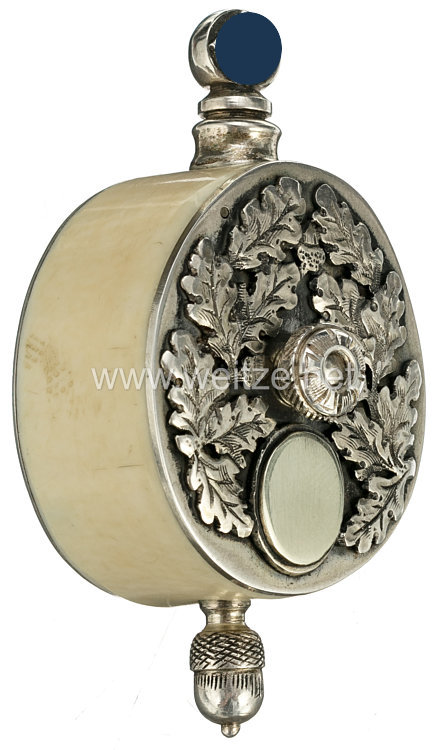
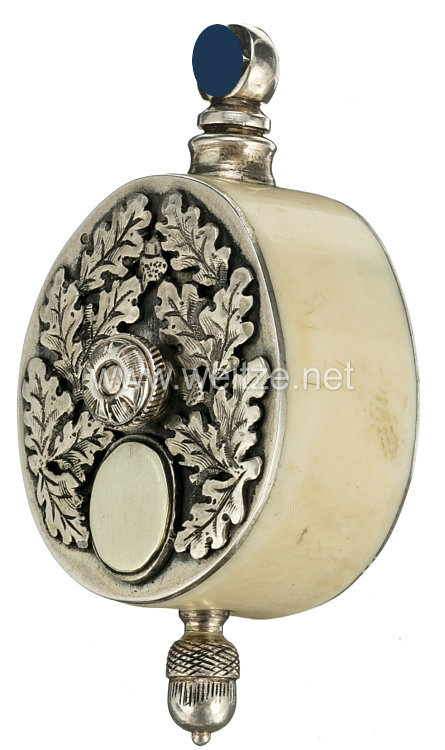
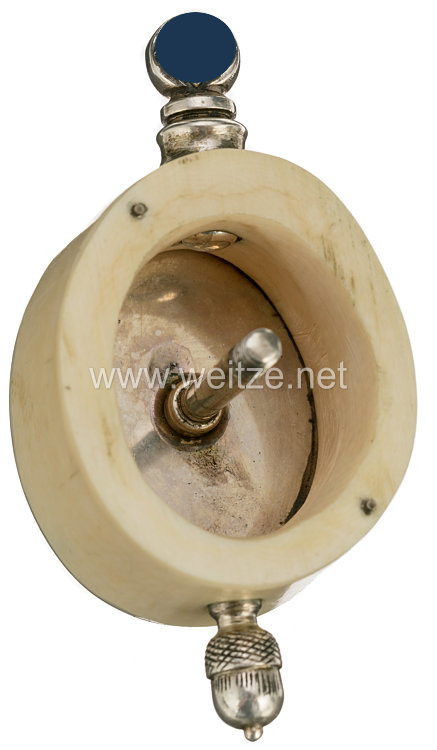
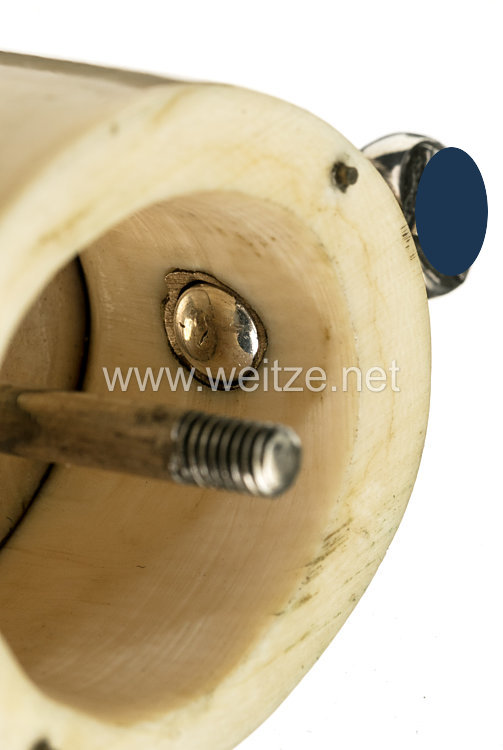
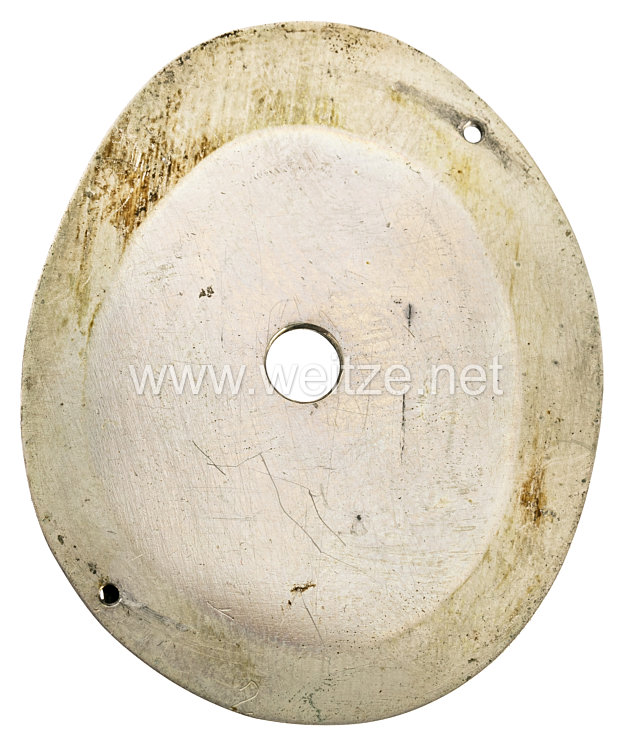
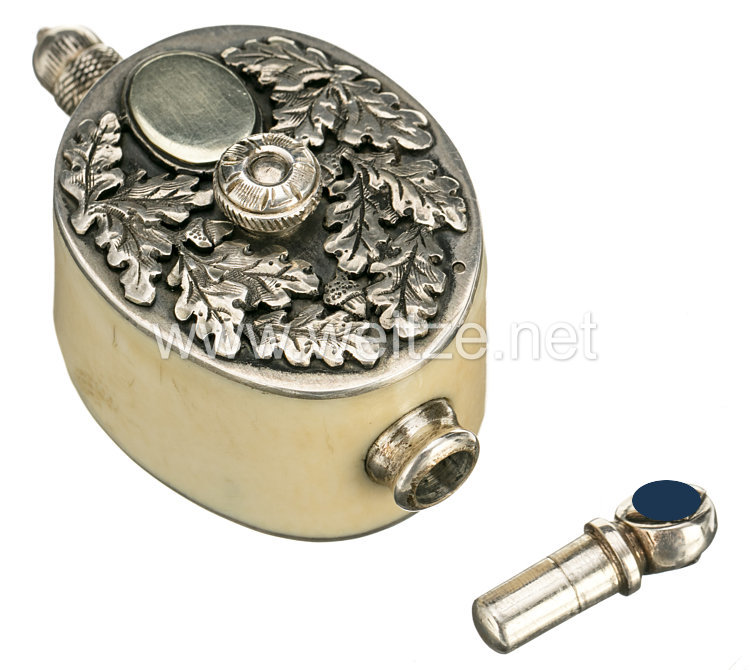
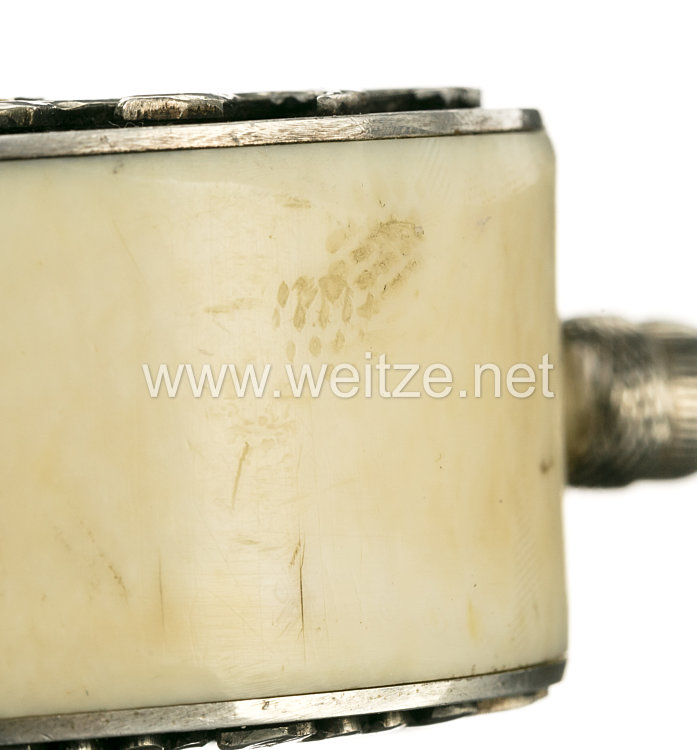
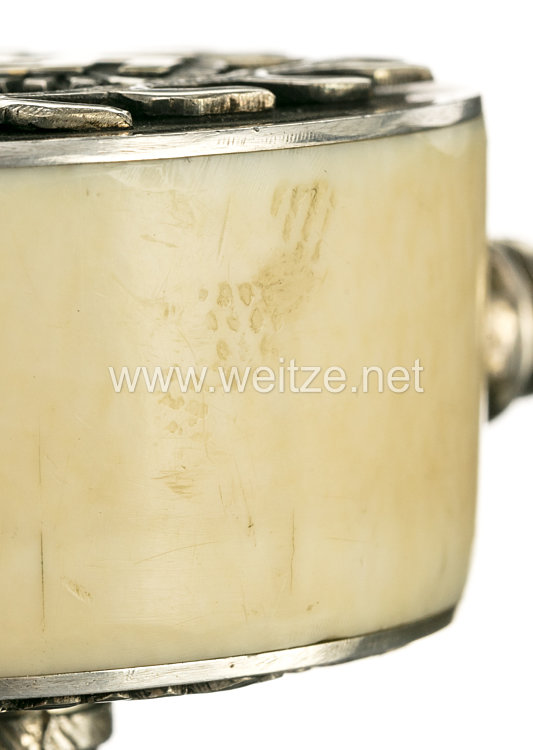
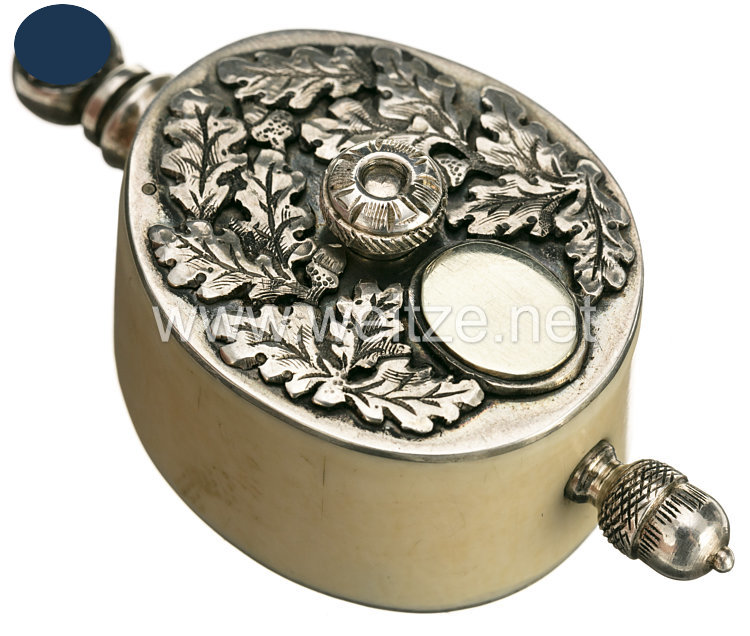
Approx. 80 x 40 mm. Front and reverse with two custom-made silver plates featuring applied stag antlers over bandeau “DJ” of the Deutsche Jägerschaft, the separately applied swastika between the antler tines in gold, and applied oak leaf decoration with silver-gilt vacant monogram medallion. Reverse with engraved silver nut for removing the back plate and filling the hollowed interior of the tooth. Top with screwed silver opening, the silver closure stopper with swastikas in relief. Bottom with a screwed silver acorn finial. Without hallmarks. Total height 78 mm, segment thickness 20 mm. High-quality workmanship, the vacant monogram medallion suggests a presentation gift from Hermann Göring in his capacity as Reichsjägermeister that was likely never awarded. Condition 2.
311779

Third Reich Reichsbund Deutsche Jägerschaft (RDJ) Hermann Göring - Silver-Mounted Bone Snuff Box

This silver-mounted deer antler snuff box represents a fascinating aspect of National Socialist hunting culture and the personal representational politics of Hermann Göring as Reichsjägermeister. The object combines traditional hunting craftsmanship with the institutionalized power structure of the Third Reich and offers significant insights into the organization and administration of German hunting during the Nazi era.

The Reichsbund Deutsche Jägerschaft (RDJ) was founded in July 1934 as the umbrella organization for all German hunters and was directly subordinate to Reichsjägermeister Hermann Göring, who simultaneously held the positions of Reichsforstmeister and Prussian Minister President. The Reichsbund Deutsche Jägerschaft was established as a public corporation under Section 56 of the Reichsjagdgesetz of July 3, 1934, and placed under the supervision of the Reichsjägermeister. The Deutsche Jägerschaft was the official hunting society in Nazi Germany from 1934 to 1945. Membership was mandatory for all who possessed a hunting license. The Deutsche Jägerschaft was created through the Reichsjagdgesetz of 1934, and existing hunting societies were disbanded with membership transferred to the new society.

Hermann Göring, as Reichsjägermeister, wanted to establish hunting as a privilege of a new elite and as an instrument of state representation. His personal passion for hunting significantly shaped the development of the RDJ. He had extensive game reserves established, including the famous Reichsjagdrevier Schorfheide north of Berlin.

The present object measures approximately 80 x 40 millimeters with a total height of 78 millimeters and a segment thickness of 20 millimeters. It is made from a hollowed deer antler serving as storage for snuff tobacco, fitted with custom-made silver plates on the front and back. The front displays an applied deer antler over the bandeau “DJ” of the Deutsche Jägerschaft, with a separately applied gold swastika between the antlers. The back features applied oak leaf decoration with a silver-gilt vacant monogram medallion. An engraved silver nut allows removal of the back plate for filling the hollow interior. The top features a screwed silver opening with a silver closure stopper bearing relief swastikas. The bottom has a screwed silver decorative acorn. The object bears no hallmarks.

These snuff boxes were high-quality custom-made items intended as personal gifts from the Reichsjägermeister. These high awards existed in silver and gold and were only personally awarded by Reichsjägermeister Hermann Göring in very few examples. Of the gold version, only one piece is known. The vacant monogram medallion on this specific example indicates it was never presented to a recipient, representing an unrealized honor gift from Hermann Göring in his function as Reichsjägermeister. The high-quality workmanship underscores the exclusive character of these personal presents.

After the end of World War II, the Reichsbund Deutsche Jägerschaft was dissolved by the Allies. Hunting legislation in the Federal Republic of Germany was federalized and transferred to the individual states. Nevertheless, many technical foundations of the Reichsjagdgesetz remained in modified form. Today such items are significant historical documents that provide insight into the organization and administration of German hunting during the Nazi era.

r