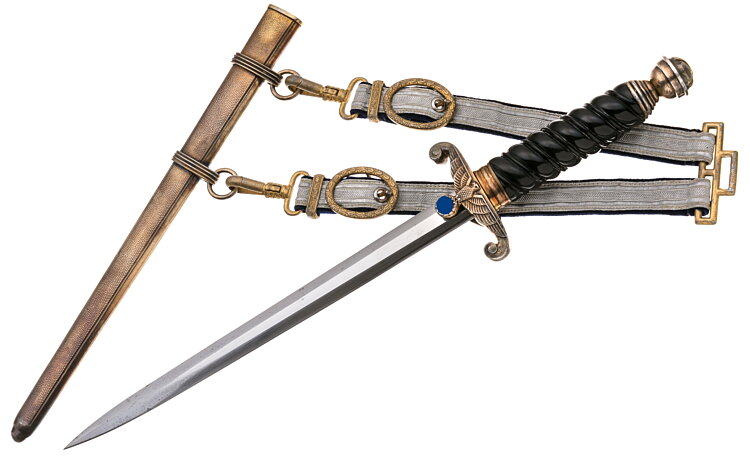
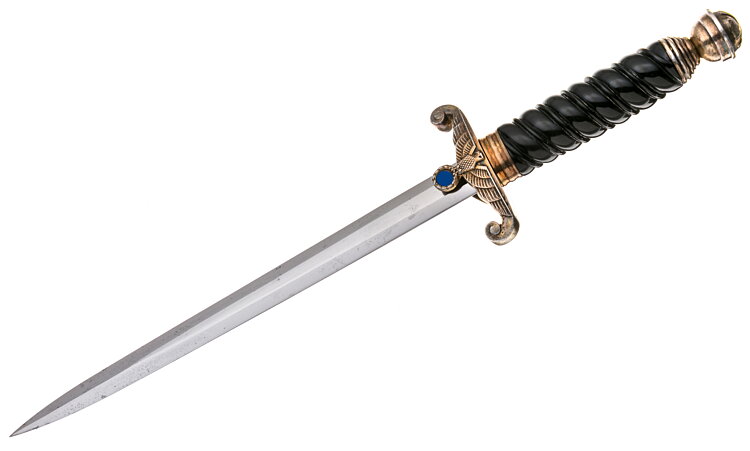
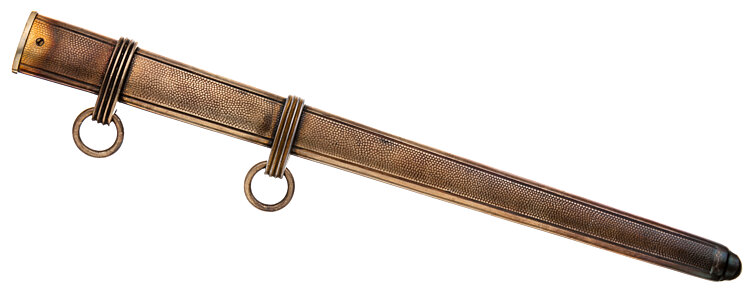
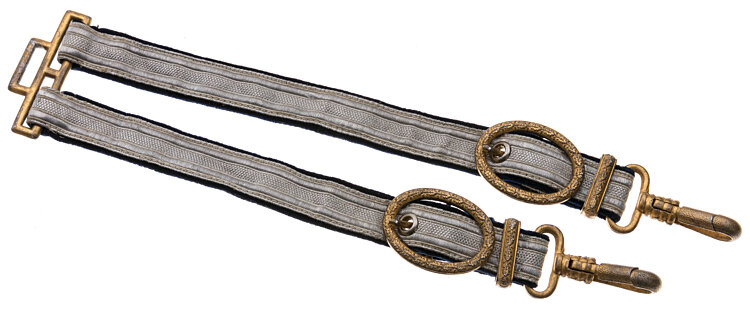
The Reichsbahn Wasserschutz Dolch Modell 1938 in its gold-mounted variant for higher service officers represents one of the most exceptional edged weapons of the Third Reich. Manufactured by Carl Eickhorn, Solingen, this piece constitutes an extremely rare variant reserved exclusively for officials holding the rank of Reichsbahnschutzführer and above.
The Bahnschutzpolizei (Railway Protection Police) was formally established in 1939 through a merger of the Bahnpolizei (Railway Police) and Reichsbahnschutz (Railway Protection Force). Within this organization, the Reichsbahn Wasserschutz (Railway Water Protection) formed a special sub-unit tasked with policing railways in the vicinity of harbours, canals, and inland waterways. Of particular significance were the railway ferry services operating on the Fehmarn Belt crossing and other waterways.
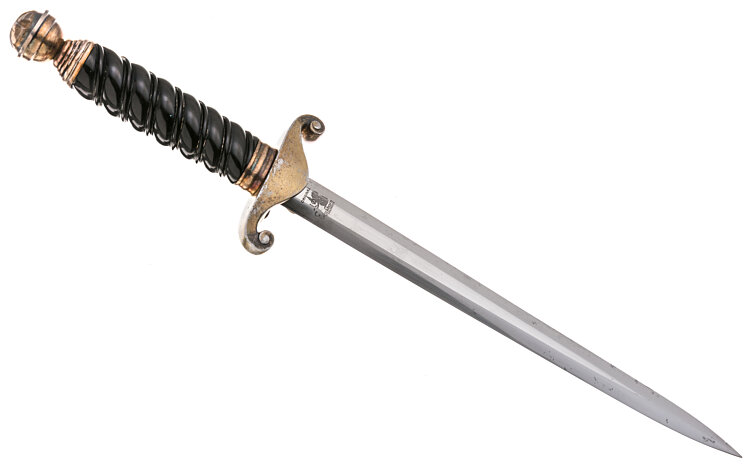
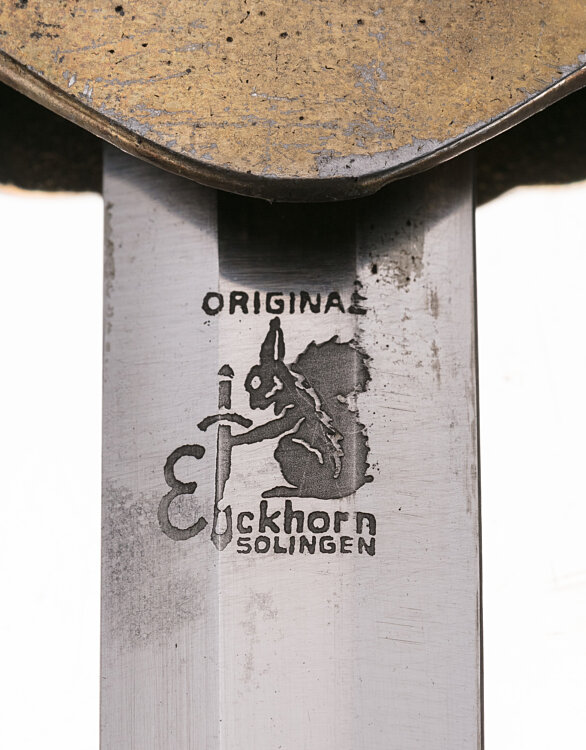
The present example was manufactured by the Eickhorn firm in Solingen, one of Germany's most renowned producers of edged weapons. The blade bears the characteristic marking “Original Eickhorn Solingen” on the reverse ricasso. Early production pieces manufactured between 1935 and 1941 featured the Eickhorn trademark showing a squirrel holding a downward-pointing sword above the text “original” and below “Eickhorn Solingen”.
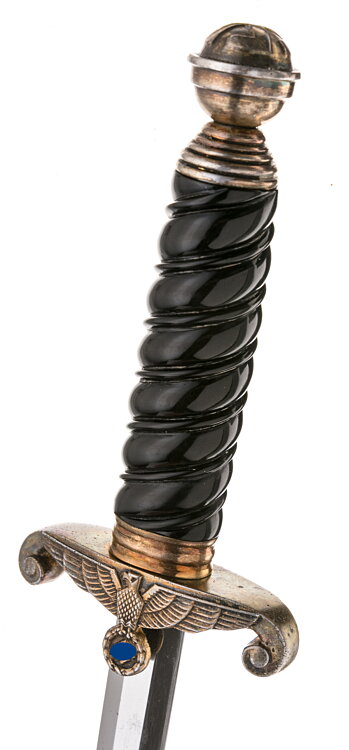
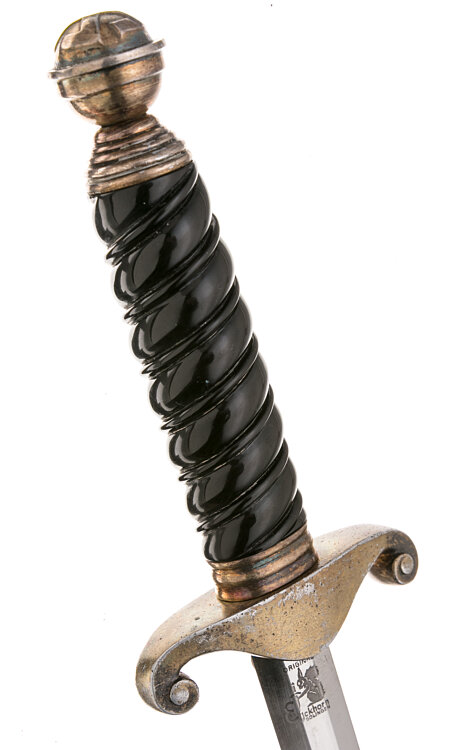
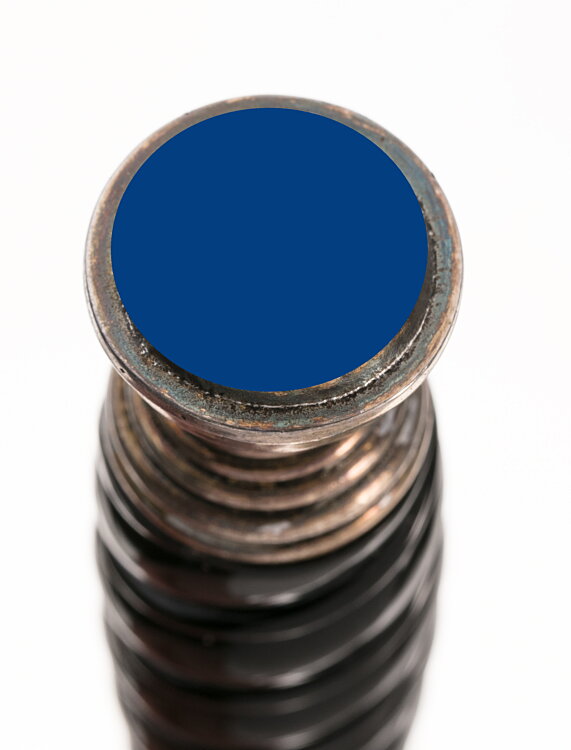
The technical specifications of this dagger are precisely documented. With an overall length of 40.2 centimeters, it features a double-edged, nickel-plated blade. The black grip, manufactured from synthetic material, displays double twisted grooves. The oval two-piece pommel shows a sunwheel swastika on its top surface. The crossguard bears the winged wheel insignia of the Deutsche Reichsbahn (German State Railway) with an eagle head design.
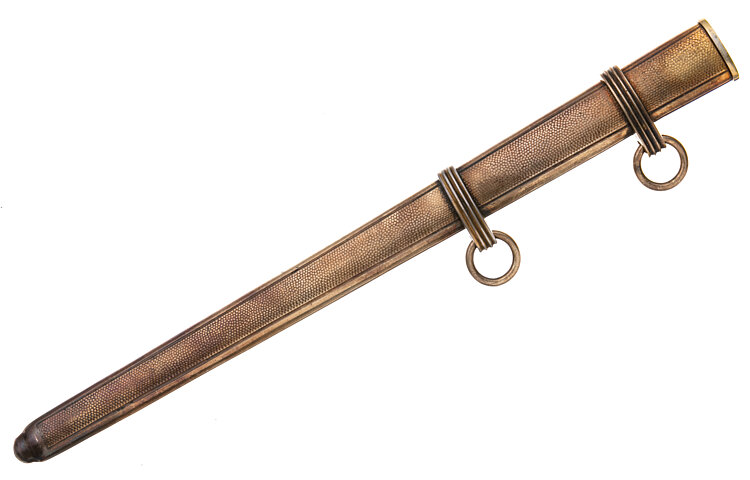
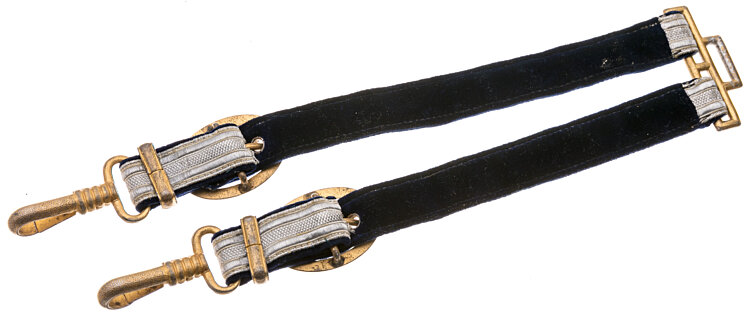
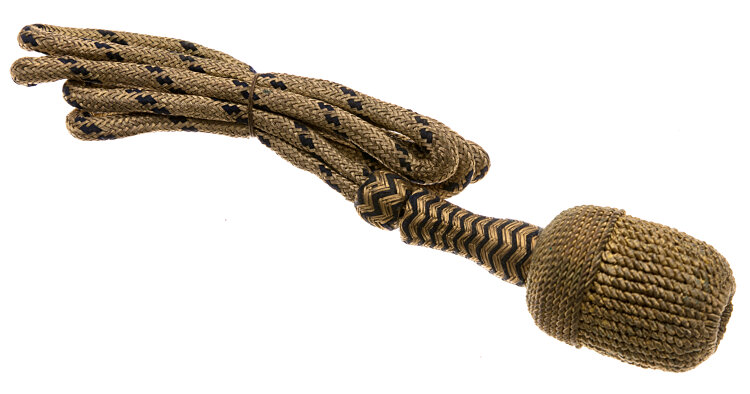
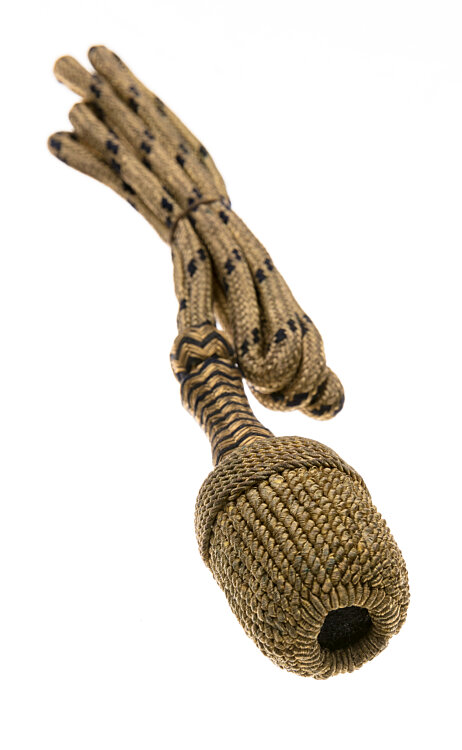
What distinguishes this gold-mounted variant from the standard version is exclusively the finish of the metal fittings. While regular Reichsbahn Wasserschutz daggers featured nickel-plated or silvered fittings for all ranks, this version has all hilt and scabbard fittings manufactured from gilt non-ferrous metal. The accompanying portepee (sword knot) consists of silver braid with gilt metal fittings on a dark blue velvet backing, distinctly different from standard patterns.
The rank structure of the Bahnschutzpolizei followed the traditional German civil service hierarchy of höherer Dienst (higher service), gehobener Dienst (elevated service), mittlerer Dienst (middle service), and einfacher Dienst (simple service). The rank of Reichsbahnschutzführer belonged to the highest of these categories. Members of the Water Protection unit wore a naval-style dark blue uniform instead of the standard railway police attire, appropriate to their special service on ferry vessels and watercraft.
During World War II, most members of the Bahnschutzpolizei served in occupied Eastern European territories. The organization was responsible for railway safety and preventing espionage and sabotage. The Water Protection unit represented a highly specialized subsection whose members performed both police and maritime duties.
After 1945, the Bahnschutzpolizei was dissolved with the end of the Third Reich. The Deutsche Reichsbahn continued in East Germany until 1994, while West Germany established the Deutsche Bundesbahn (German Federal Railway). Railway ferry services between Germany and Denmark continued in civilian operation after the war, including the Großenbrode-Gedser route from 1951 to 1963, followed by Puttgarden-Rødby from 1963 to 2019.
Daggers and edged weapons from the Third Reich became sought-after collectors' items. Due to extremely limited production, the Reichsbahn Wasserschutz dagger ranks among the rarest pieces in this category. The gold-mounted variant for higher service represents an exceptional rarity even within this already scarce group, as it was reserved exclusively for the highest ranks of an inherently small specialized unit.