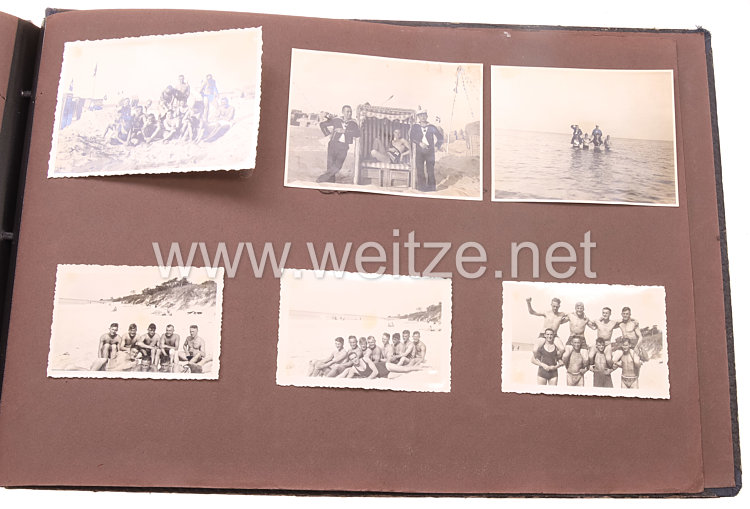
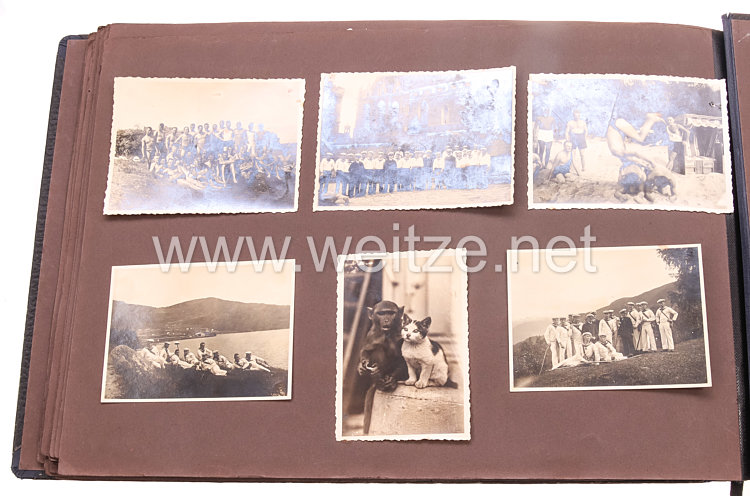
Reichsmarine Photo Album, Crew Member from Battleship "Hessen" on Mediterranean Cruise 1930

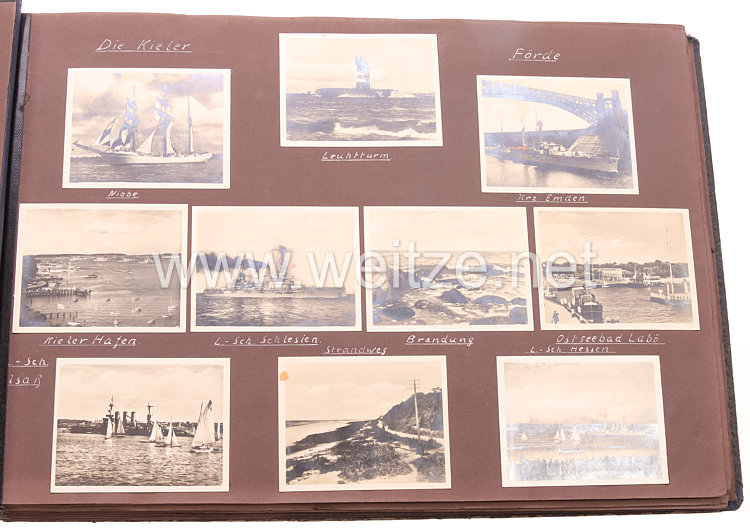
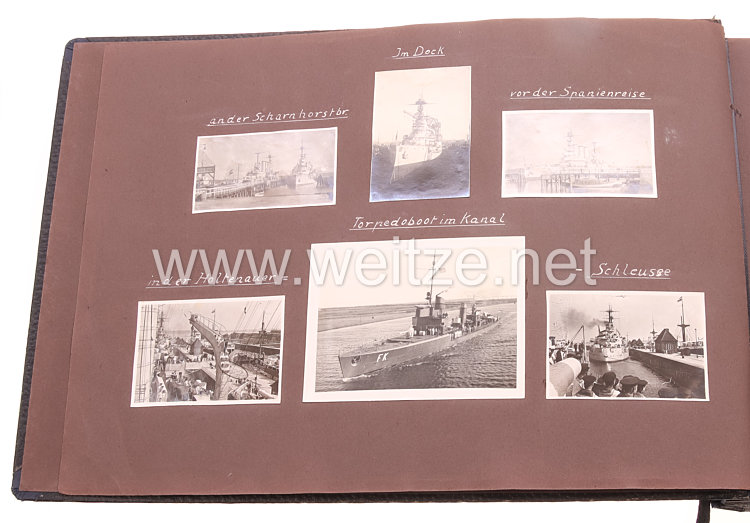
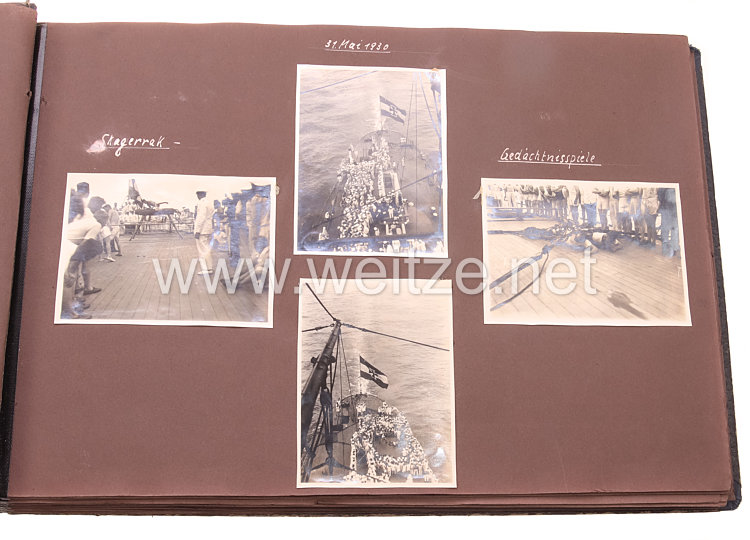
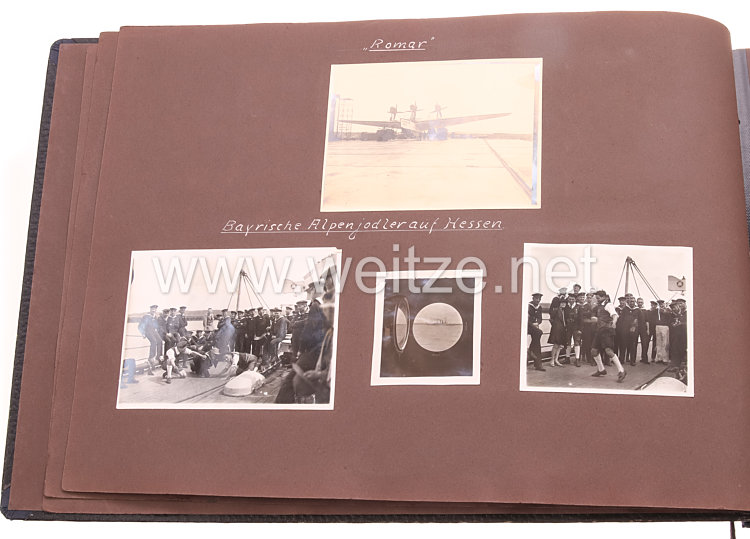
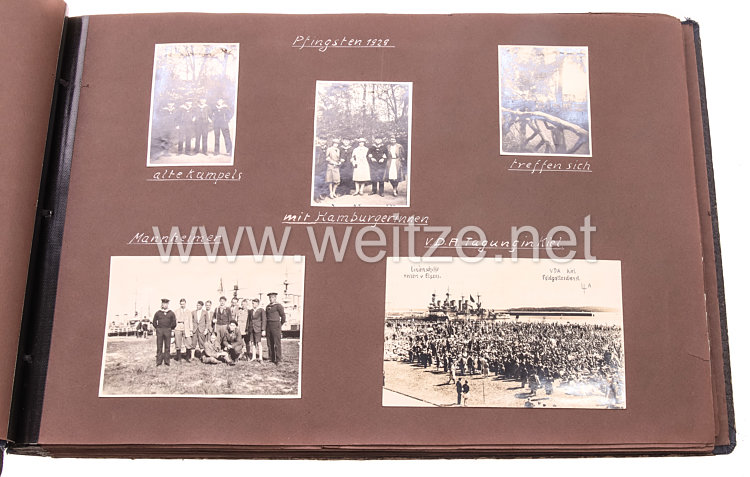
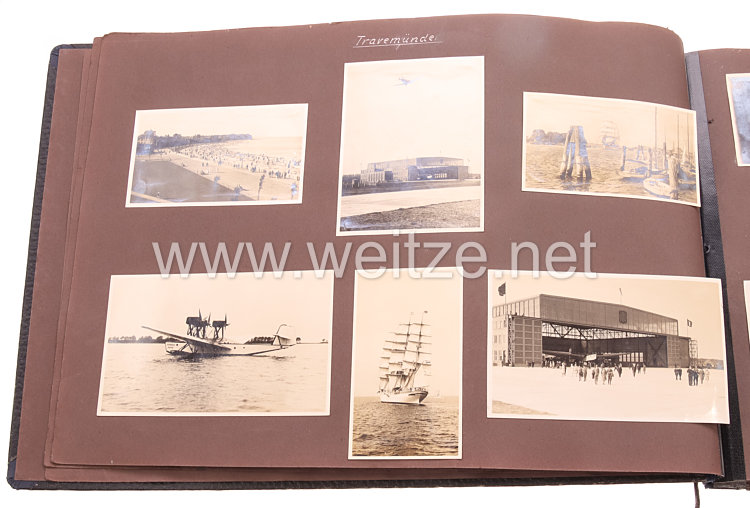
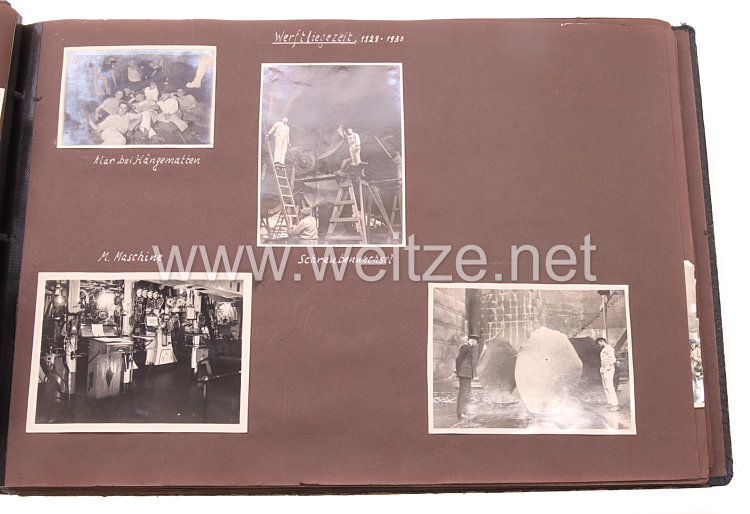
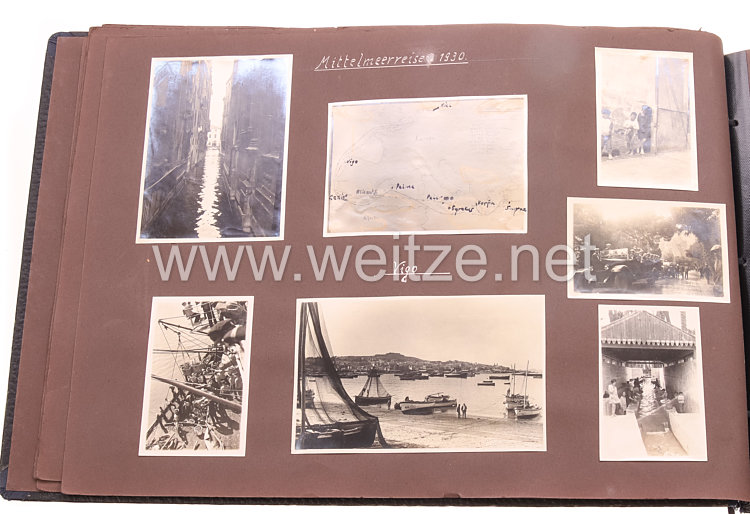
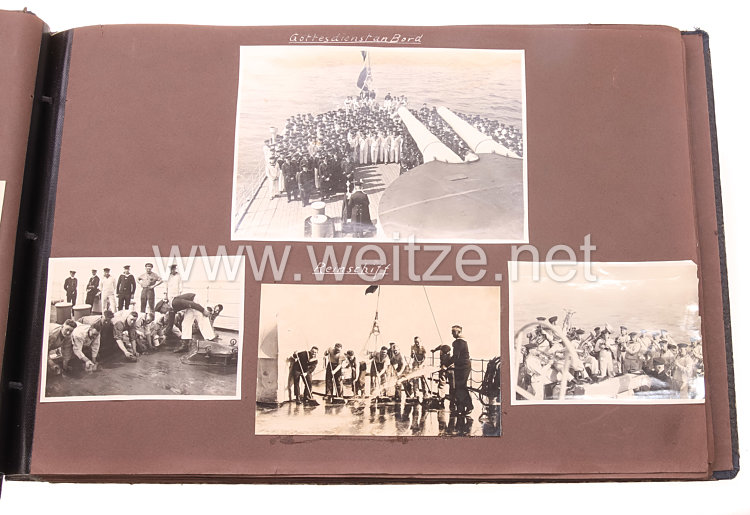
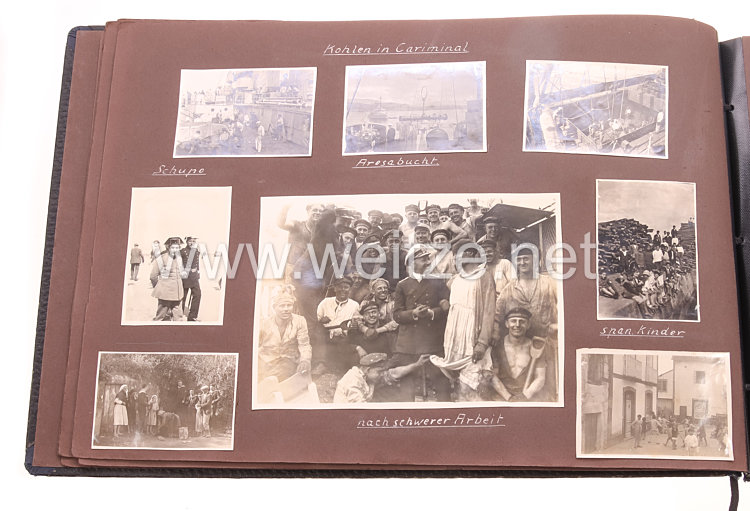
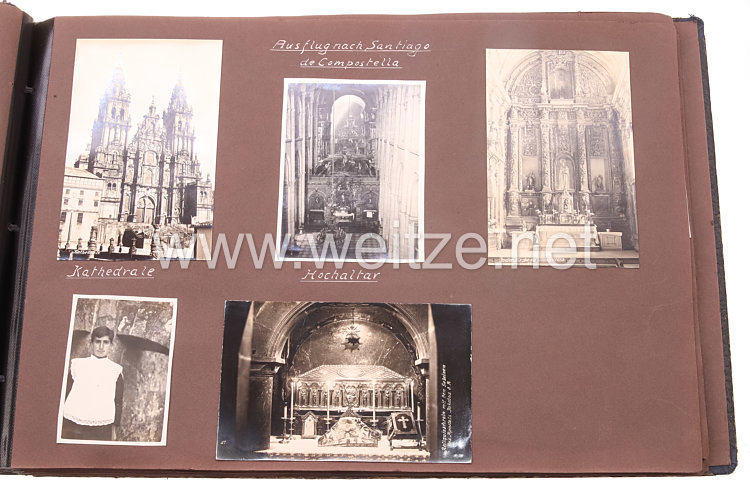
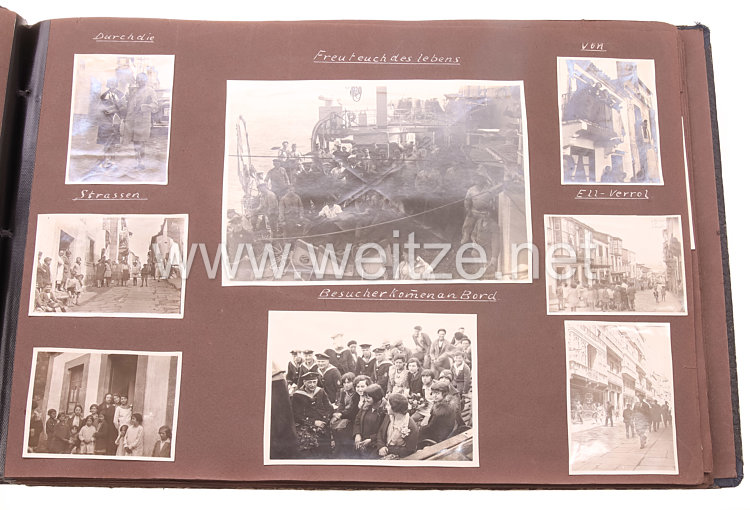
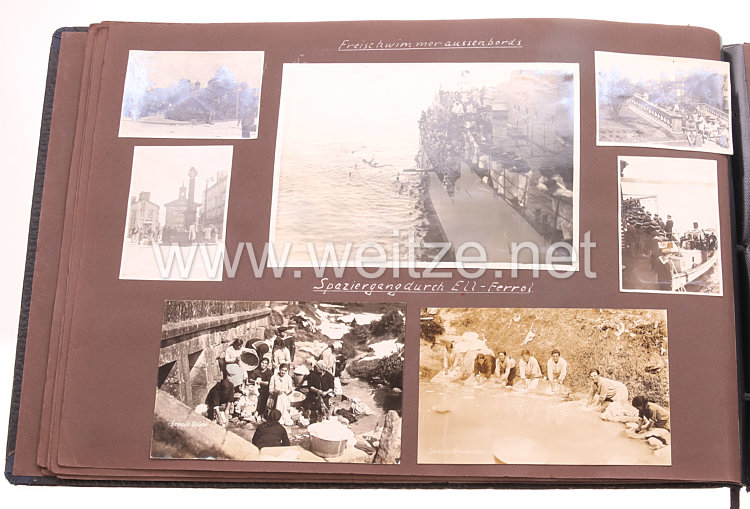
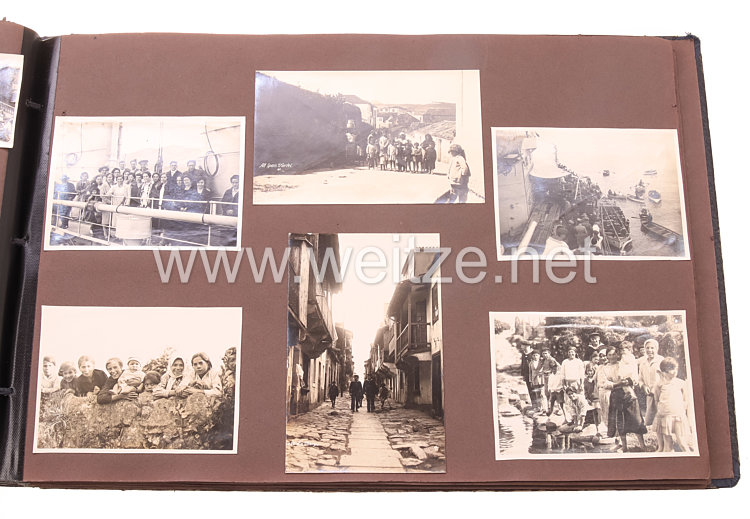
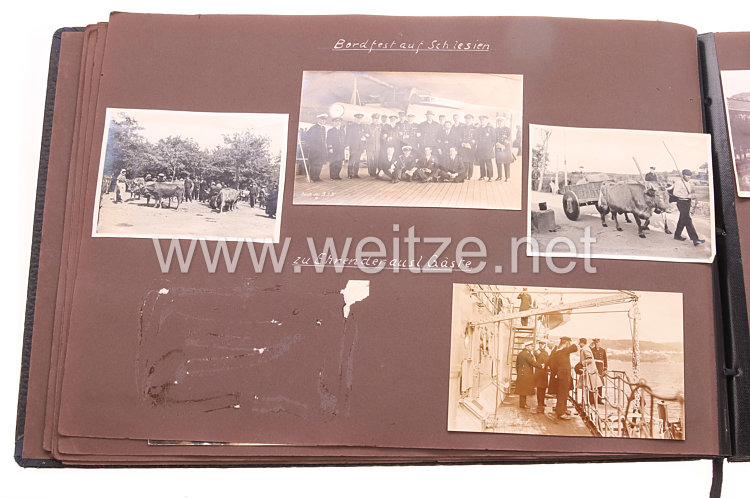
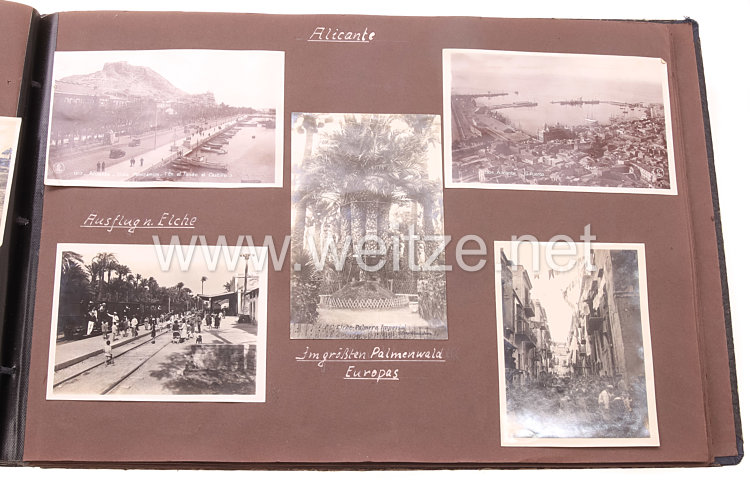
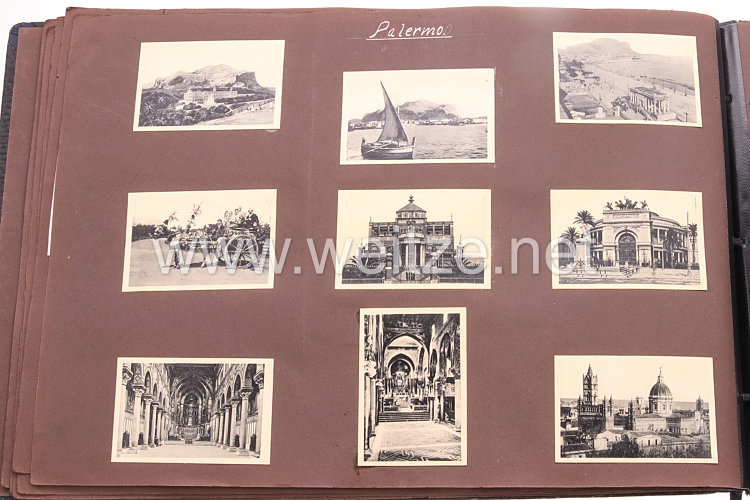
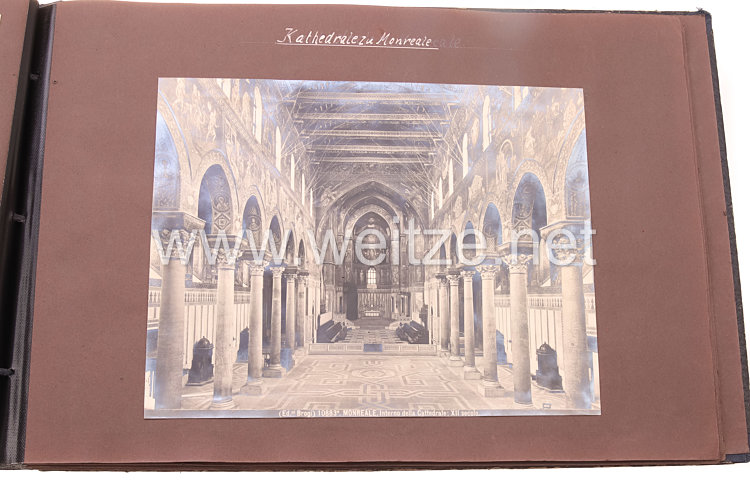
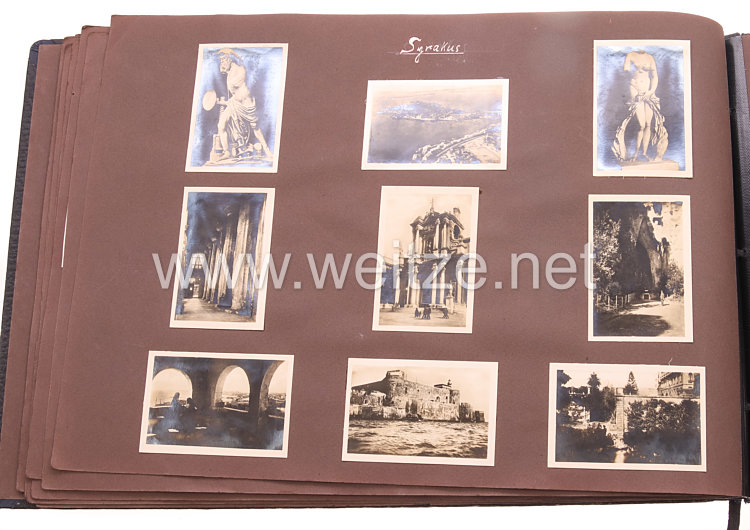
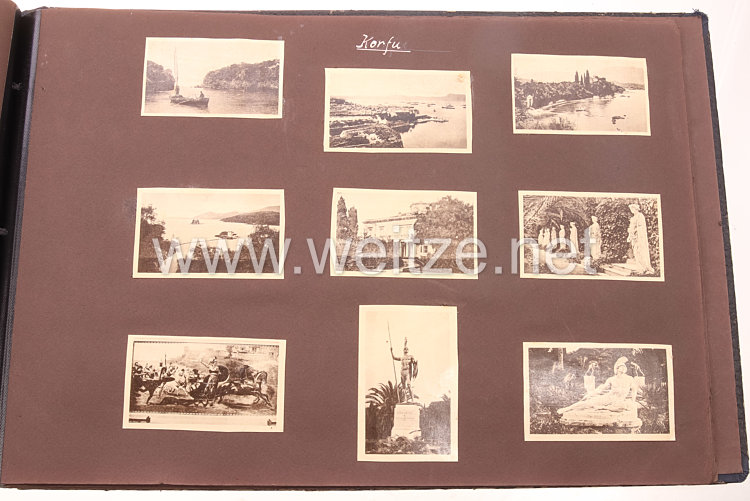
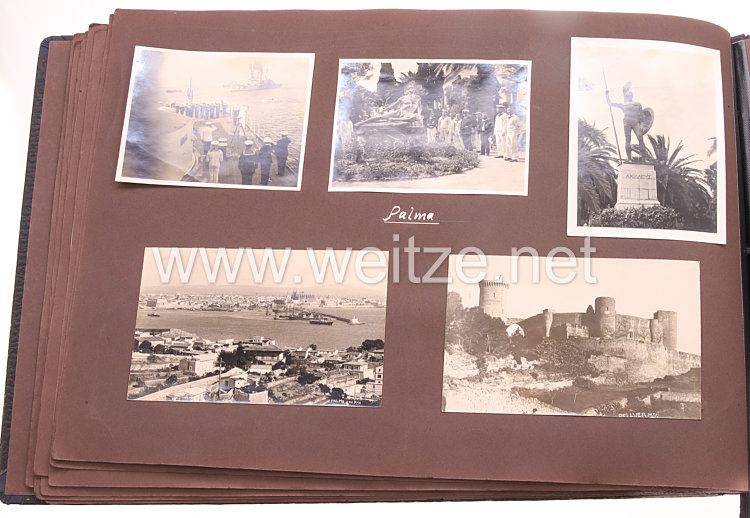
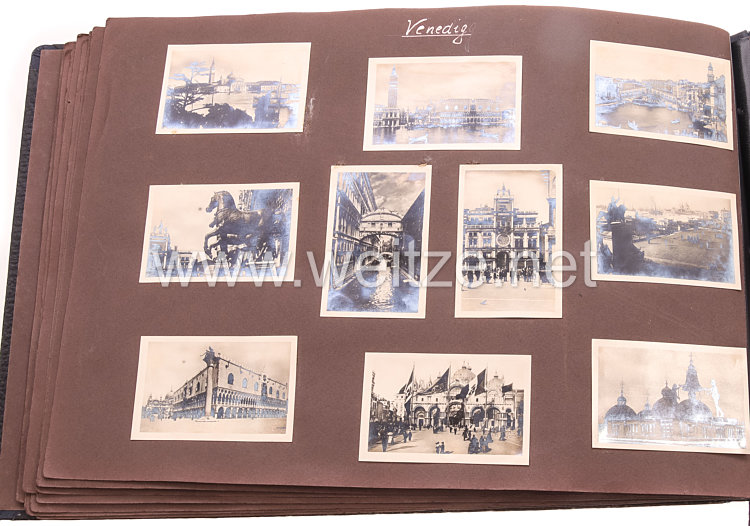
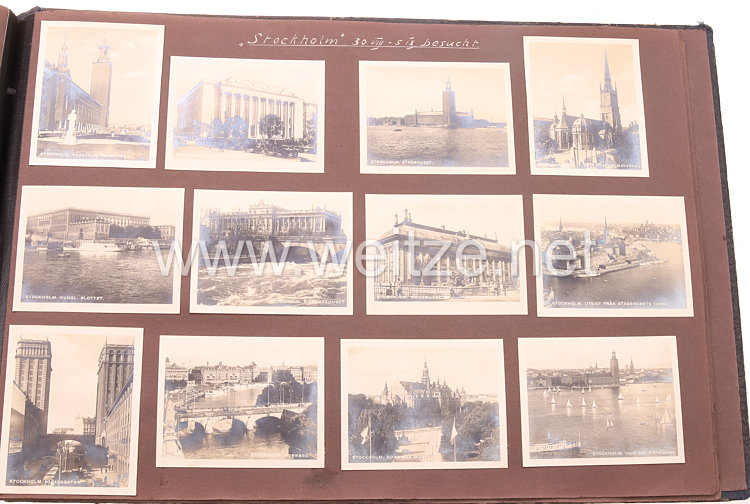
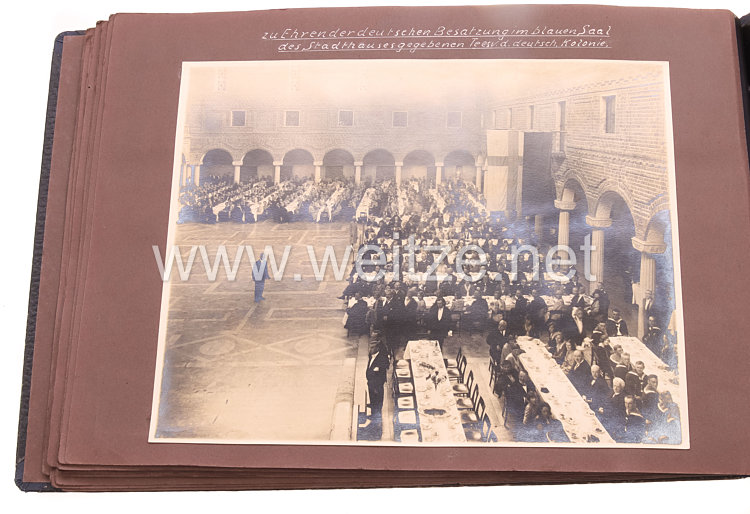
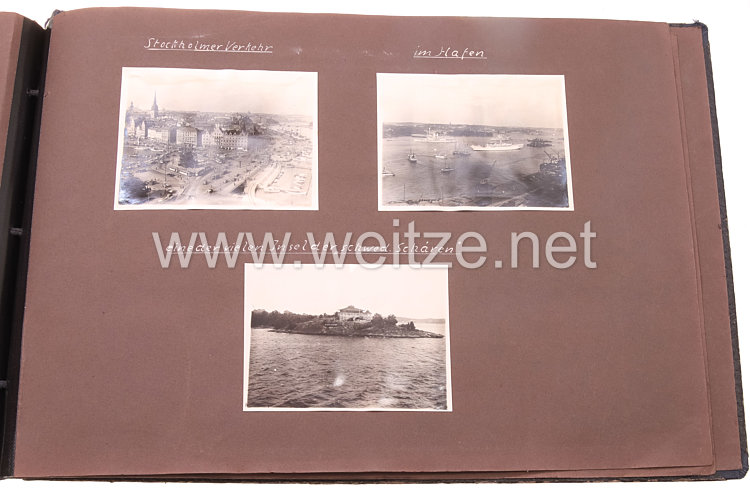
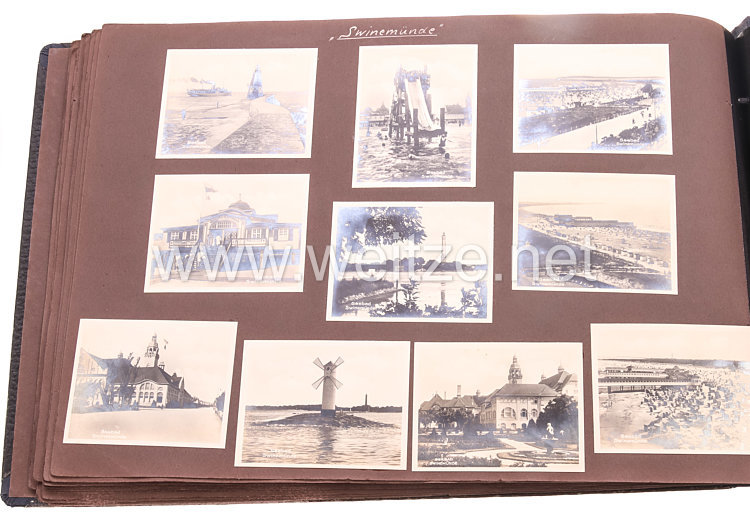
Album with inscription "Linienschiff Hessen", approx. 180 photographs. Kiel, in drydock, torpedo boat, Skagerrak 1930, Sassnitz on Rügen Island, seaplane "Romar", Pentecost 1929, Travemünde, shipyard period 1929/1930, religious service, Cariminal, Santiago de Compostela, Alicante, Palermo, Syracuse, Corfu, Palma, Venice, Stockholm, Swinemünde. Condition 2.
412476
230,00

Reichsmarine Photo Album, Crew Member from Battleship "Hessen" on Mediterranean Cruise 1930

This photograph album documents the life and travels of a crew member aboard the battleship Hessen of the Reichsmarine around 1930. With approximately 180 photographs, it offers a unique glimpse into daily life in the German Navy during the Weimar Republic and particularly the significant Mediterranean cruise of 1930.

The battleship Hessen was one of five pre-dreadnought battleships of the Braunschweig class, built between 1902 and 1906 for the Imperial German Navy. The ship was laid down in 1903 at the Germaniawerft in Kiel and commissioned in 1905. With a displacement of approximately 14,000 tons and a length of 127 meters, the Hessen was armed with four 28-cm guns in twin turrets. After World War I and under the terms of the Treaty of Versailles, Germany was permitted to retain only a limited number of warships, and the Hessen was among the few capital ships assigned to the newly formed Reichsmarine.

The Reichsmarine emerged in 1919 as the successor to the Imperial Navy and operated under considerable restrictions. The Treaty of Versailles limited the German fleet to a maximum of six battleships, six light cruisers, twelve destroyers, and twelve torpedo boats. During the Weimar Republic, the Hessen served primarily as a training ship and for representative purposes, undertaking numerous foreign cruises to show the German flag in European waters.

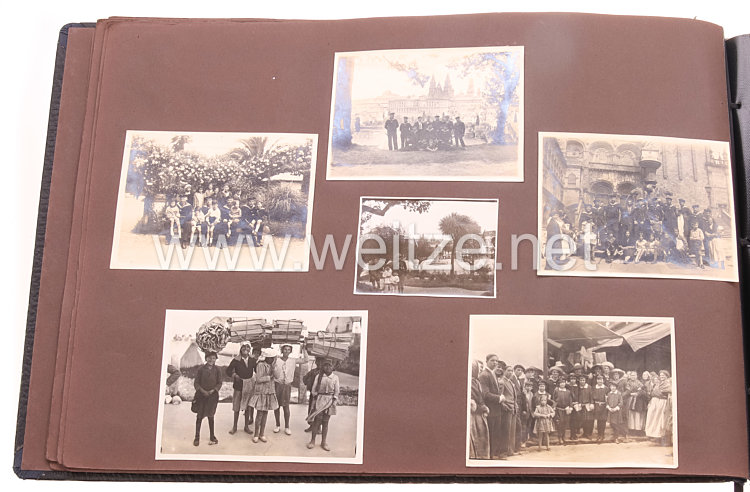
The Mediterranean cruise of 1930 documented in this album was one of these diplomatic and training missions. Such voyages served multiple purposes: they enabled practical training for the crew, represented Germany abroad, and attempted to improve the international standing of the young republic. The route of the journey, as documented through the photographs, included significant ports and cities: Cartagena, Santiago de Compostela, Alicante in Spain, Palermo and Syracuse in Sicily, Corfu in Greece, Palma de Mallorca, and Venice in Italy.

The photographs also reveal other important aspects of naval life. Images from Kiel, the main base of the Reichsmarine, and from drydock show the technical infrastructure necessary for operating such vessels. The mention of Skagerrak 1930 possibly refers to exercises or commemorative events related to the Battle of Jutland (Skagerrak) of 1916, the largest naval battle of World War I, which retained great symbolic significance for the German Navy.

Particularly interesting are the photographs of the seaplane “Romar”. The Reichsmarine experimented extensively with shipboard aircraft during the 1920s, and several ships were equipped with catapults. The locations noted on the album such as Travemünde, Sassnitz on Rügen Island, Stockholm, and Swinemünde demonstrate the Hessen's activities in the Baltic Sea, which was a primary operational area for the Reichsmarine.

The shipyard period of 1929/1930 indicates extensive maintenance and modernization work. Despite their age, the ships of the Braunschweig class underwent several overhauls during the 1920s to keep them suitable for service as training vessels. The photographs of religious services aboard reflect the continued importance of religious observance in military life, a tradition carried over from the Imperial Navy.

Such photograph albums are today of inestimable historical value. They offer a personal and immediate insight into the lives of naval personnel that cannot be conveyed through official documents and reports. The photographs show not only the ships and military installations but also the daily life of the crew, shore leave, cultural encounters, and the social aspects of military service.

The Hessen herself served in the Reichsmarine until 1934 before being decommissioned. Her fate reflects the transformation of the German Navy during the 1930s, as the Kriegsmarine under the Nazi regime began building modern ships and retiring the old pre-war units. This album thus documents a transitional period in German naval history – the final years of the Reichsmarine before the Nazi seizure of power and the massive fleet rearmament program of the 1930s.