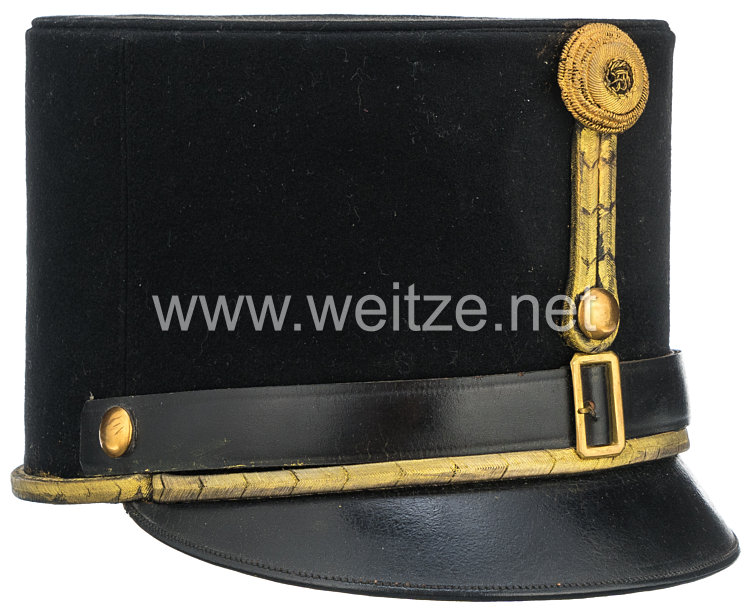
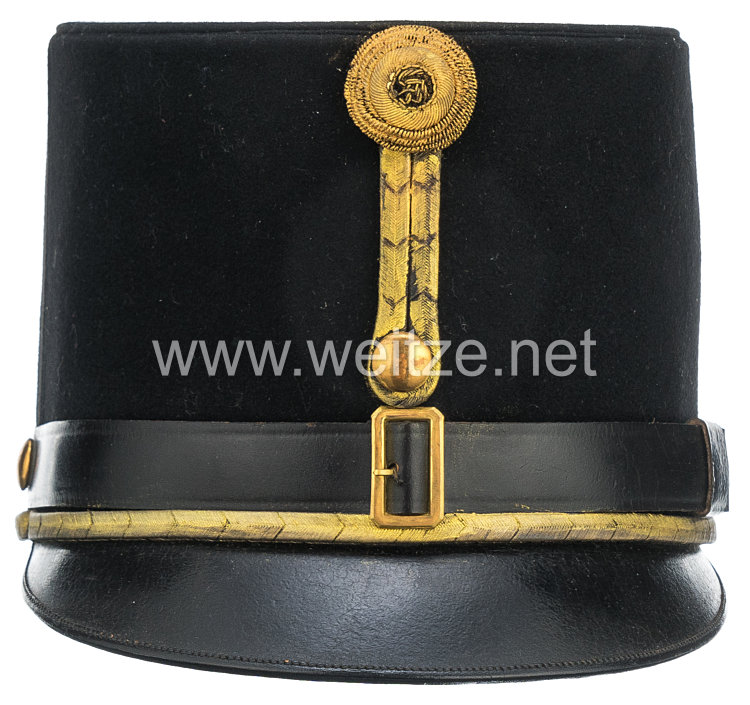
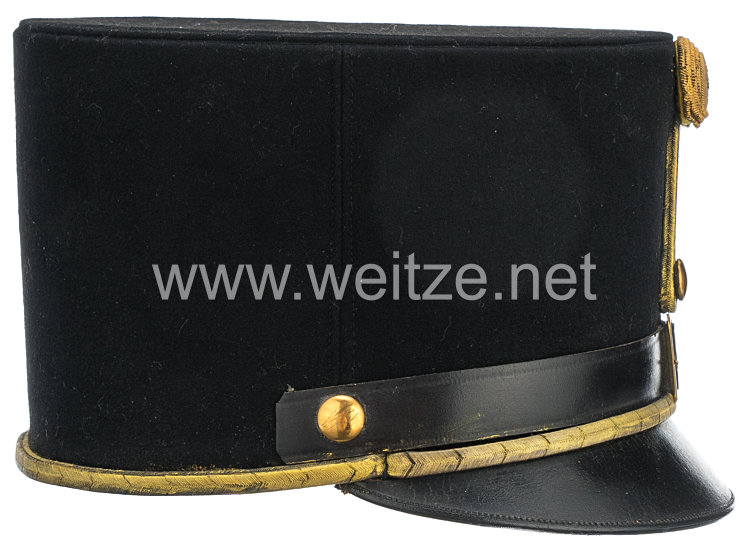
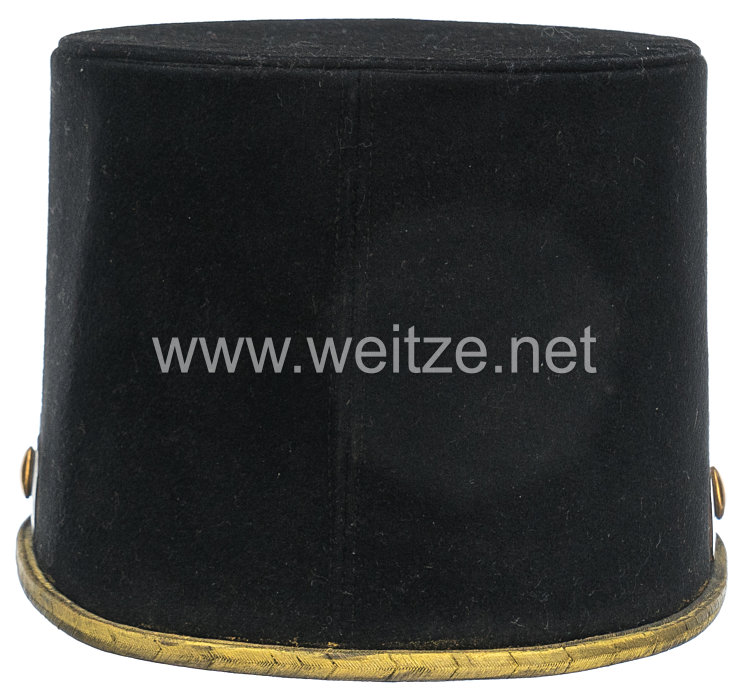
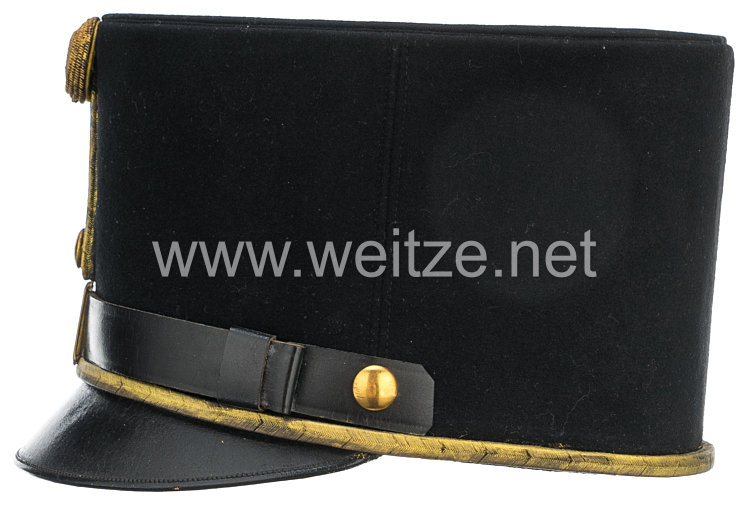
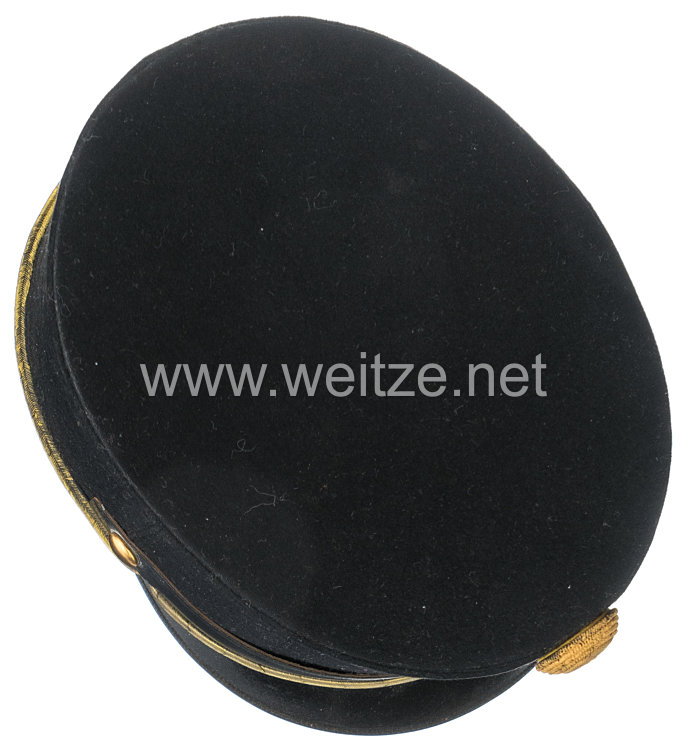
This officer's cap from the Imperial and Royal 9th Dragoon Regiment “Archduke Albrecht” represents the military splendor of the Austro-Hungarian Monarchy in its late phase before World War I. As a personal possession of Duke Robert of Württemberg (1873-1947), this object connects the dynastic networks of European high nobility with the military traditions of the Danubian Monarchy.
The 9th Dragoon Regiment belonged to the most traditional cavalry units of the Imperial and Royal Army. The dragoons, originally conceived as mounted infantry, had evolved during the 19th century into a full cavalry branch. The regiment bore the honorary name “Archduke Albrecht” after Archduke Albrecht of Austria-Teschen (1817-1895), the victorious commander at the Battle of Custozza (1866) and long-serving Inspector General of the entire armed forces.
The cap described here represents a luxury production typical for officers from high noble families. The Imperial and Royal Army had strict uniform regulations laid down in the Adjustierungsvorschriften (uniform regulations), yet these allowed officers certain freedoms in the quality of materials and craftsmanship. The black color of the cloth was characteristic of dragoon regiments, while the golden cord with black insets indicated officer rank.
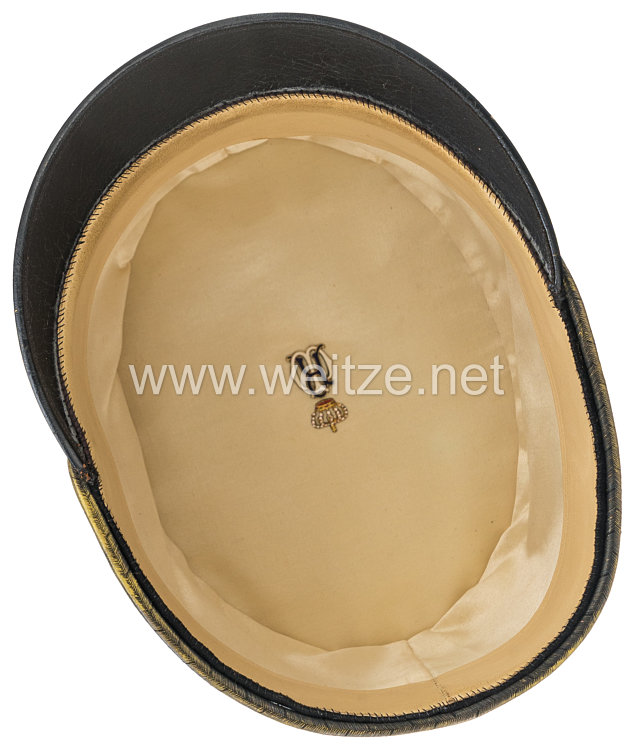
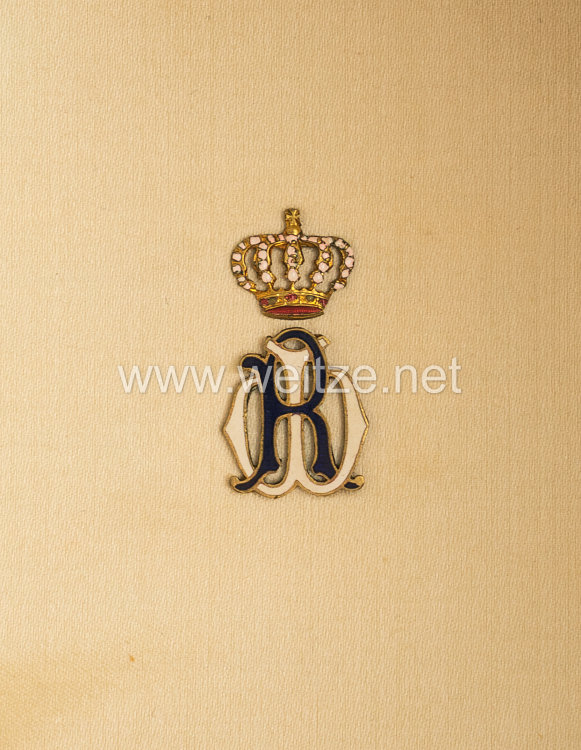
The technical execution of this cap meets the highest standards of the period around 1914. The fine black cloth, black patent leather strap and visor, as well as the surrounding gold cord, were typical elements of dragoon dress. Particularly noteworthy is the interior detail: the partially enameled crown and the black-and-white enameled initials “RW” in the white silk lining. This personal identification was customary among high noble officers and served not only for identification but also underscored the wearer's social status.
Duke Robert of Württemberg embodied the phenomenon of the “international” officer among European high nobility of the Belle Époque. His military career began in 1891 in the Württemberg army, where he rose to cavalry captain in the 2nd Dragoon Regiment. His appointment as first lieutenant in the Austro-Hungarian 9th Dragoon Regiment expressed the close dynastic relations between the houses of Württemberg and Habsburg. Additionally, he was à la suite of the Prussian 2nd Pomeranian Uhlan Regiment No. 9, demonstrating his connections to all three major German monarchies.
The cavalry headgear in the Imperial and Royal Army had undergone a long development. While the heavy cavalry (cuirassiers) wore the distinctive helmet with horsehair plume and the hussars their traditional fur cap (kolpak), the dragoons used various forms of caps and shakos. The elevated form presented here represents the style of the immediate pre-war period, when representative elegance was still valued.
The dress of Imperial and Royal dragoons was shaped by reforms of the second half of the 19th century. After the Austro-Prussian War of 1866 and the Compromise with Hungary in 1867, the army was modernized and standardized. The dragoon regiments received standardized uniforms, with the 9th Regiment belonging to the 5th Cavalry Division and stationed in peacetime in Moravia.
The year 1914, to which this cap is dated, marks a watershed in European military history. The magnificent uniforms and headgear that still reflected centuries of military tradition would soon give way to the practical requirements of modern warfare. The elegantly elevated officer's cap with its golden cord belonged to a world that would irretrievably vanish with World War I.
The craftsmanship quality of such luxury productions is remarkable. Specialized military equipment manufacturers in Vienna, Budapest, and other garrison cities of the monarchy created these masterpieces of tailoring. The use of finest cloth, genuine gold in the braiding, patent leather and silk, as well as the precise enameling of personal insignia, required the highest craftsmanship skills.
This officer's cap is thus more than a piece of military equipment – it is a historical witness to the declining Habsburg monarchy, the international networks of European high nobility, and the final flowering of centuries-old military splendor before the inferno of World War I. Such objects provide invaluable insights into the social structures, military culture, and material excellence of an era that would be swept away by the catastrophe of the Great War.
The preservation of such items in excellent condition allows modern historians and collectors to study the finest details of pre-war military dress and understand the world of the Imperial and Royal officer corps, particularly its aristocratic elite who moved seamlessly between the courts and armies of Europe's remaining monarchies.