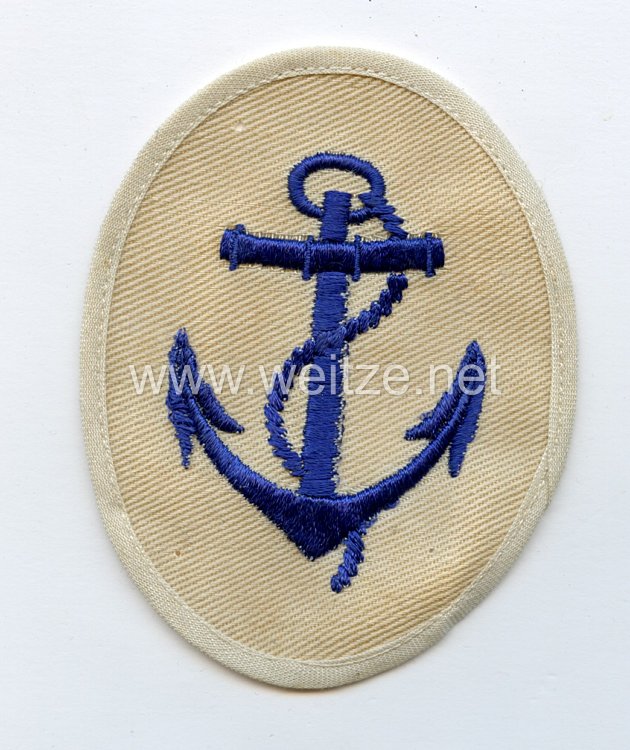
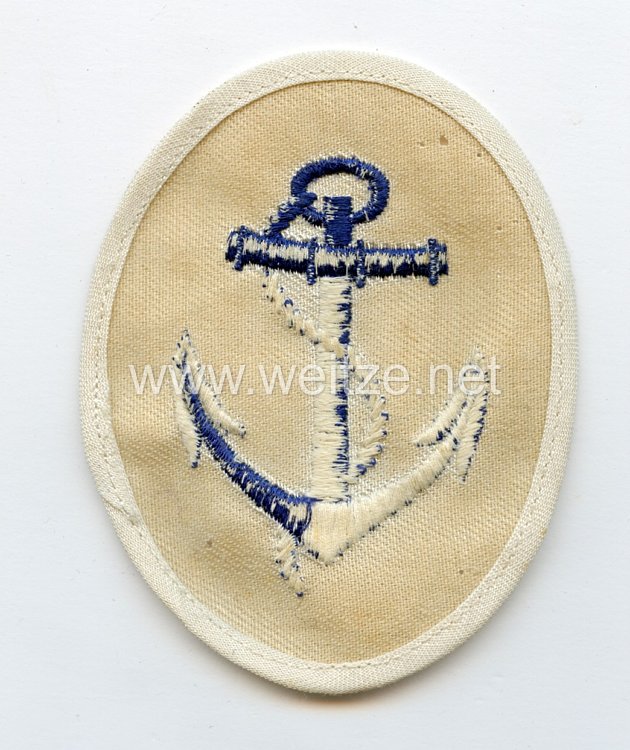
Kriegsmarine Sleeve Insignia Boatswain's Mate

For the white blouse, machine-embroidered, condition 2.
404675
15,00

Kriegsmarine Sleeve Insignia Boatswain's Mate

The Kriegsmarine sleeve badge for Bootsmannsmaat represents a fascinating example of German naval uniforms from the Second World War. This machine-embroidered version for the white blouse embodies the strict hierarchy and sophisticated rank identification system of the Kriegsmarine, the German naval forces from 1935 to 1945.

The rank of Bootsmannsmaat was positioned in the Kriegsmarine's hierarchy between the simple sailor and the non-commissioned officer ranks. The word “Maat” in German naval terminology designates an experienced sailor who has completed special training and bears responsibility for certain areas of duty. The Bootsmannsmaat was specifically employed in seamanship work, rigging, deck service, and boat maneuvers.

The rank insignia of the Kriegsmarine were regulated by detailed uniform regulations following the reestablishment of German naval forces in 1935. The sleeve badges for enlisted personnel and non-commissioned officers differed fundamentally from those of officers. While officers wore gold sleeve stripes, enlisted ranks were identified by special badges on the upper arm.

The white summer uniform of the Kriegsmarine was particularly common during warmer months and in southern waters. It consisted of a white drill blouse and white trousers. The sleeve badge was worn on the left upper arm and displayed the specific career group as well as the rank attained. For the Bootsmannsmaat, the badge typically consisted of a stylized anchor or a combination of anchors and stars, depending on exact length of service and qualifications.

The machine embroidery of these badges became standard production in the 1930s and 1940s. Unlike hand-embroidered versions, often used for officer ranks, machine-embroidered badges were more cost-effective to produce and were therefore preferred for enlisted and non-commissioned officer ranks. Nevertheless, the quality of machine embroidery was high and ensured durability under the harsh conditions of naval service.

The sleeve badges were typically manufactured on blue or white cloth backgrounds, depending on the uniform on which they were worn. For the white summer blouse, a dark blue or black background was typically used to create the necessary contrast. The embroidery itself was usually done in yellow or gold threads, corresponding to the traditional colors of the German Navy.

The organization of the Kriegsmarine comprised various career groups: deck officers and crew, technical personnel, medical service, administration, and other specialized areas. The Bootsmann belonged to the seamanship career path, one of the oldest and most traditional areas of the navy. These traditions extended back to the Imperial Navy and were continued in modified form in the Kriegsmarine.

During the Second World War, the Kriegsmarine expanded considerably. From approximately 50,000 men in 1939, it grew to over 800,000 members by 1945. This massive expansion required enormous production of uniforms and equipment items, including sleeve badges. Various manufacturers throughout the German Reich and in occupied territories produced these badges according to standardized regulations.

The preservation of such sleeve badges in good condition is relatively rare today. Many were damaged during the war, lost, or destroyed after the war's end. Examples in “condition 2” typically show slight signs of use but no major damage, making them valuable to collectors and museums. They serve as important witnesses to military history and enable researchers to study the uniforms, manufacturing techniques, and organizational structures of the Kriegsmarine.

Today, such objects have exclusively historical and museum value. They document an important, albeit dark, part of German and European history and contribute to understanding the military organization and everyday culture of this era.

r