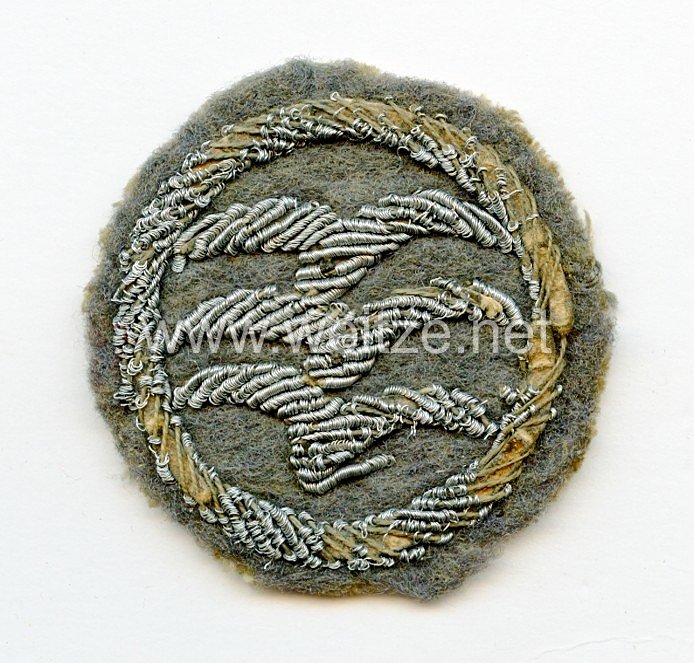
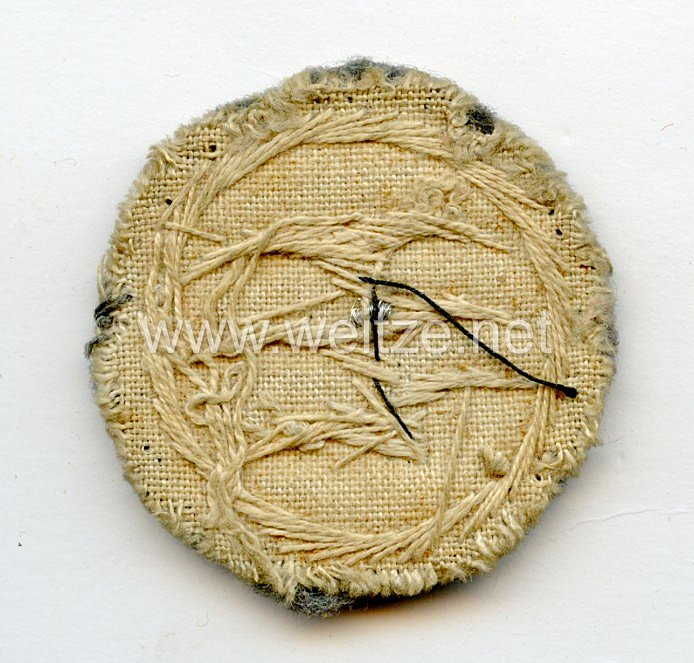
Glider Pilot Badge Grade “C”

Bullion hand-embroidered version for Luftwaffe uniform, heavily worn, condition 4.
405474
25,00

Glider Pilot Badge Grade “C”

The Glider Pilot Badge Grade C represents a significant award in the history of German aviation, playing an important role in both the civilian gliding movement and military pilot training. This hand-embroidered version in metal thread for the Luftwaffe uniform embodies the connection between sporting gliding and military aviation in the German Reich.

The tradition of gliding in Germany developed particularly intensively after World War I, as the Treaty of Versailles of 1919 prohibited Germany from building and possessing motorized military aircraft. Gliding offered a legal opportunity to develop and maintain flying skills. During the 1920s, a vibrant gliding movement emerged, promoted by organizations such as the German Air Sports Association (Deutscher Luftsportverband).

The three-tier glider badge system was established to document different levels of achievement. The C-Badge represented the highest level and required demanding flying accomplishments. To earn it, pilots had to demonstrate that they had completed a cross-country flight of at least 50 kilometers in a straight line or achieved a flight duration of at least five hours in a glider. These requirements ensured that only experienced and competent glider pilots received this award.

With the Nazi seizure of power in 1933 and the establishment of the Wehrmacht and the Luftwaffe in 1935 under Hermann Göring, gliding was systematically integrated into military training. The glider pilot badges retained their significance and were now also recognized as military qualification badges. Luftwaffe pilot candidates frequently completed glider training first before being retrained on motorized aircraft.

The present version in hand-embroidered metal thread technique was intended for wear on the Luftwaffe uniform. This elaborate manufacturing technique testifies to the high esteem in which this qualification was held. Unlike stamped metal badges, which also existed, embroidered versions were often intended for dress uniforms or cloth uniforms. The embroidery was typically done on a cloth backing, with aluminum or silver threads creating the characteristic appearance.

The badge design typically showed a stylized seagull in flight or glider, surrounded by a wreath, with a central “C” to indicate the highest performance level. The design language corresponded to the aesthetics of the time and emphasized dynamic, upward-striving lines symbolizing the concept of flight.

The awarding of glider pilot badges was strictly regulated and documented by authorized agencies. In the military sphere, the Reich Aviation Ministry (Reichsluftfahrtministerium) supervised the issuance of these awards. The badges were awarded in conjunction with corresponding certificates that detailed the achievements accomplished.

The heavily worn condition of this specimen suggests that it was actively worn over an extended period, possibly during World War II. The signs of wear tell the personal story of a glider pilot officer who wore his qualification with pride. Such traces of use are not unusual with cloth badges and do not diminish the historical value, but rather attest to authentic use.

After 1945, the tradition of gliding sports continued in both German states, but without the military connotation of the Nazi era. Glider pilot badges remained as sporting awards, albeit with modified designs and under civilian administration by the German Aero Club and later the Fédération Aéronautique Internationale (FAI).

Today, glider pilot badges from the World War II era are sought-after collectibles that represent important testimonies to aviation history. They document not only the technical and sporting development of gliding, but also the complex relationship between civilian sport and military training in this epoch. The hand-embroidered versions are particularly valued for their craftsmanship and relative rarity compared to machine-made or stamped variants.

These badges serve as tangible reminders of a time when gliding represented both an avenue for sporting achievement and a pathway to military aviation careers. The C-Badge specifically marked its wearer as an accomplished pilot with significant experience in unpowered flight, a skill that translated well to military aviation where understanding of aerodynamics and aircraft handling was paramount.