Braunschweig 1. Weltkrieg Persönlicher Geschenk-Bilderahmen des Herzogs Ernst August (III.)
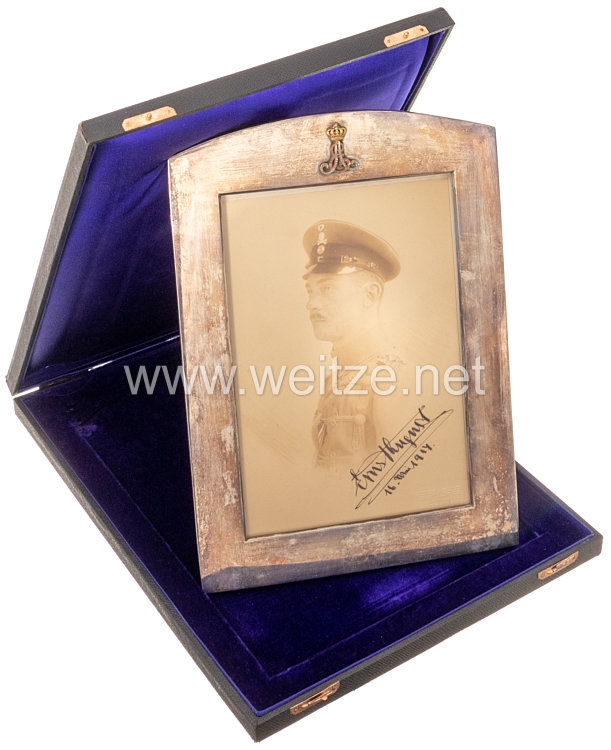
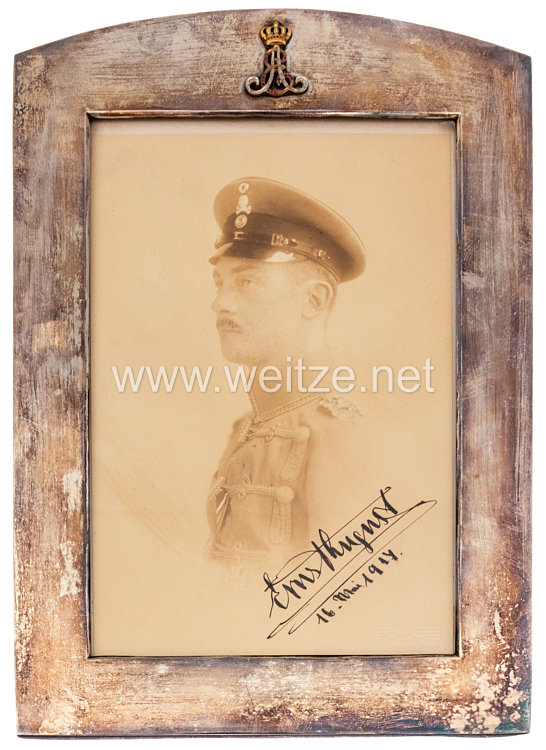
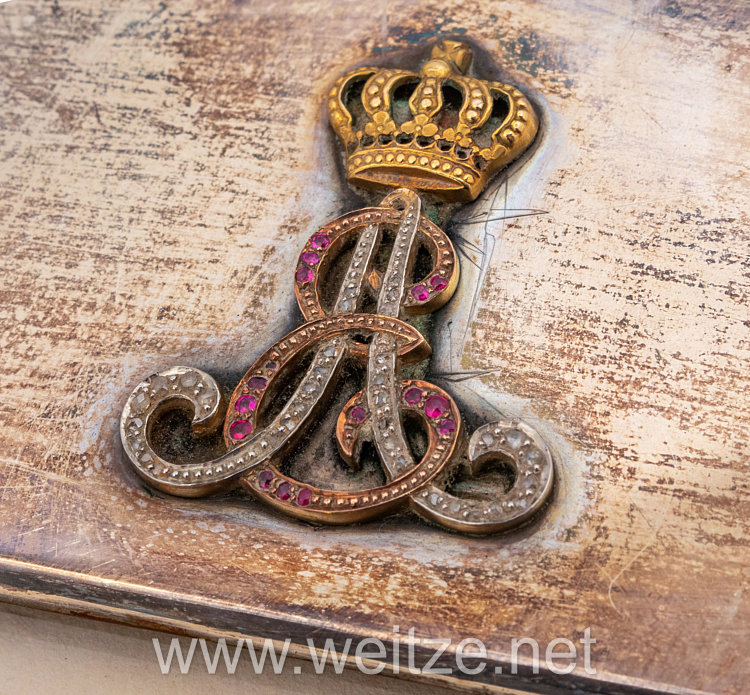
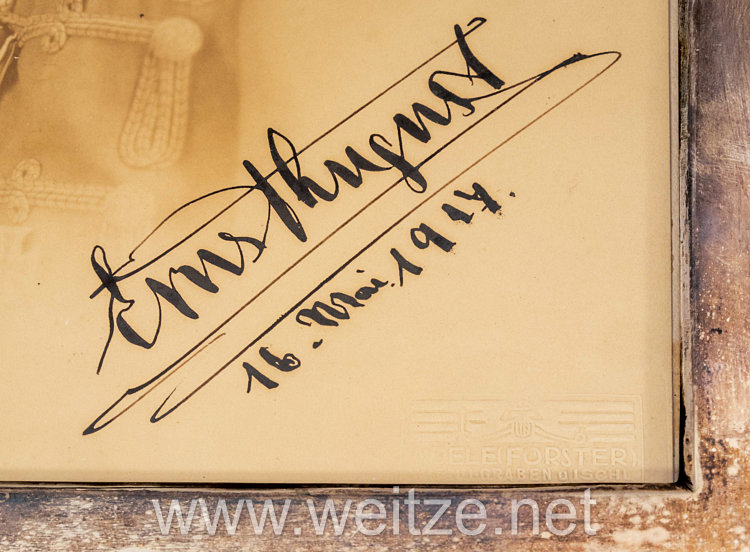
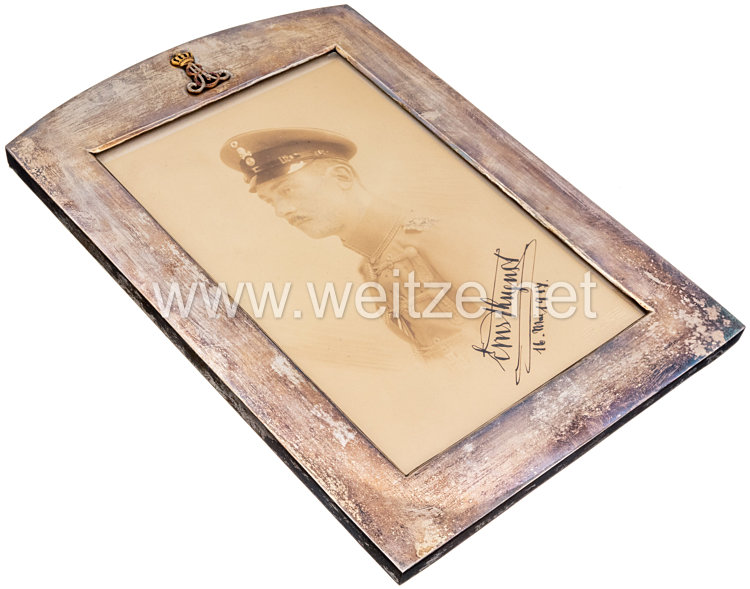
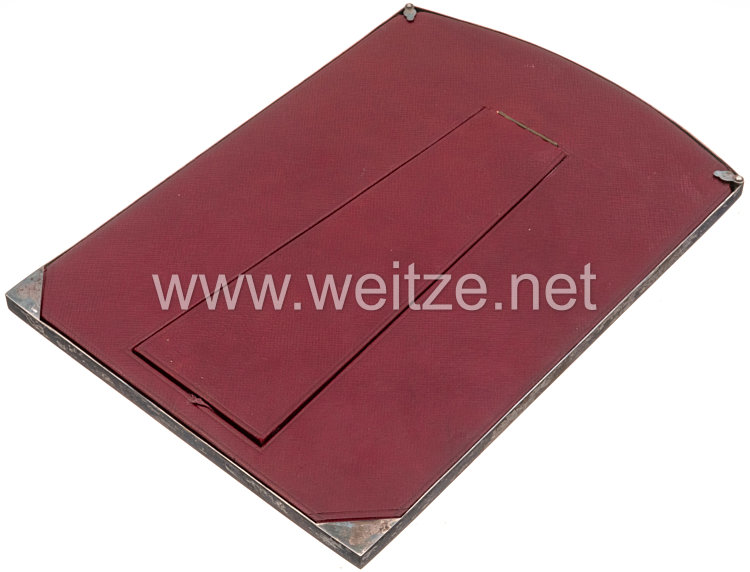
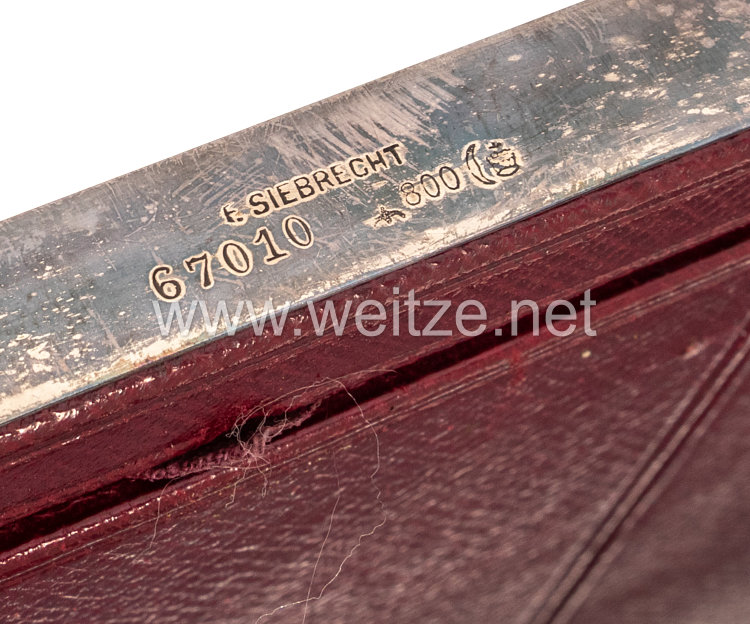
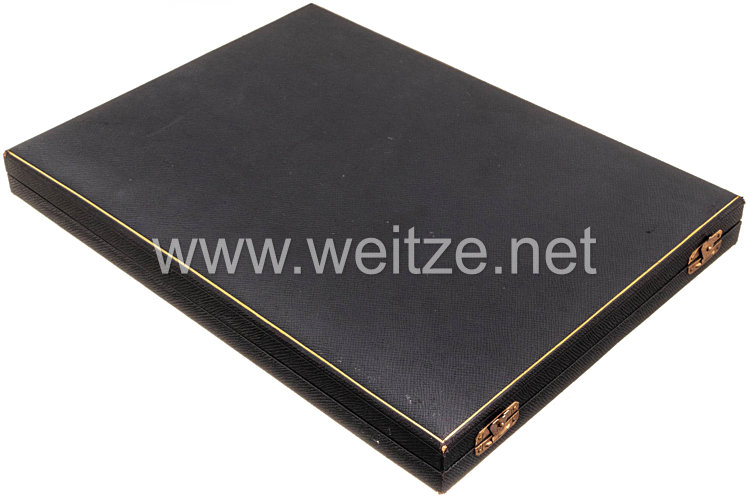
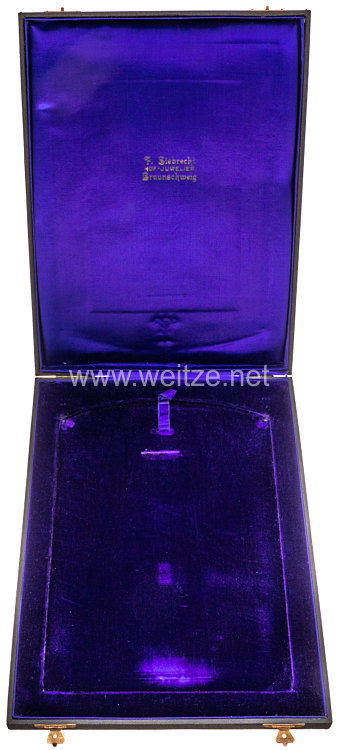
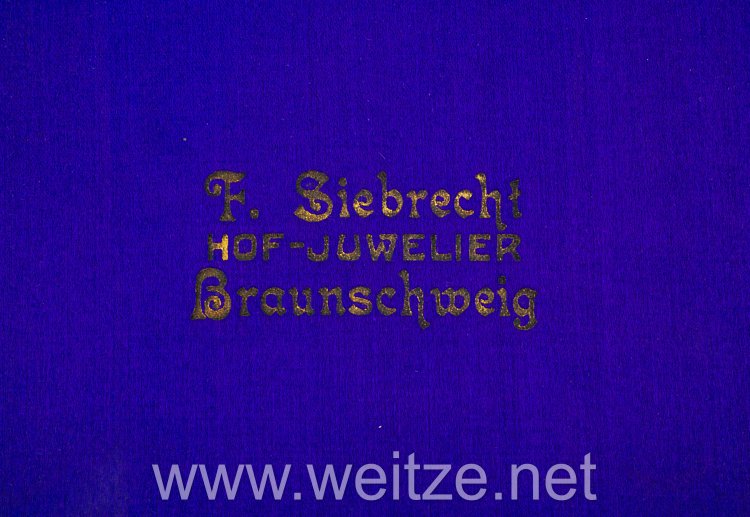
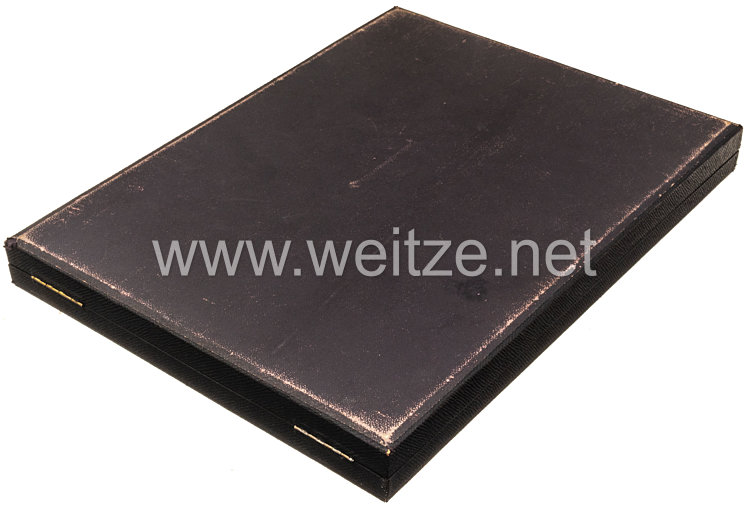
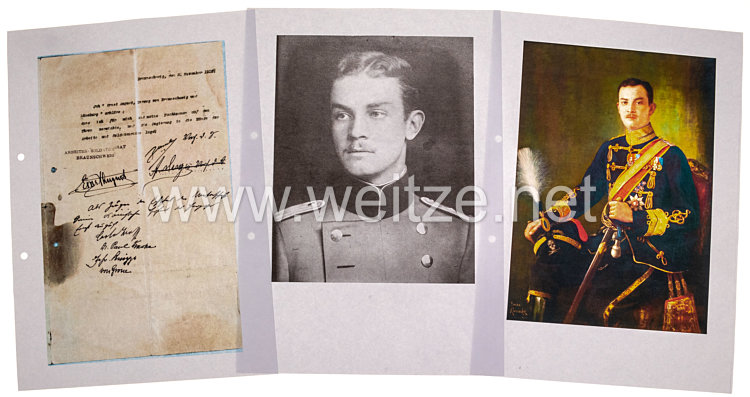
Braunschweig, um 1917. Im Rahmen das Porträtfoto des Herzogs Ernst August (III.) von Hannover in der Uniform eines Husaren des Braunschweigischen Husaren-Regiments Nr. 17, mit großer original Unterschrift des Herzogs vom "16. Mai 1917", unten rechts die Marke des Foto-Ateliers "Adele (Förster) Wien I Graben u. Ischl". Das Bildnis im Silberrahmen in feinster Friedensqualität, auf der Unterseite mit Silberstempel Halbmond und Krone sowie Silbergehalt "800" und Hersteller "F. Siebrecht" und Nummer "67010". Oben auf dem Rahmen aufgelegt die gekrönte Chiffre "EA", die Krone in Gold ausgeführt, die Chiffre mit Rubinen und Diamanten verziert. Die Rückenabdeckung in weinrotem Saffianleder bezogen, mit Aufsteller. Maße des Rahmens 20,2 x 29 cm. Im original Etui, innen mit violettem Samt und Seide ausgeschlagen, im Deckel in Gold aufgedruckt der Juwelier "F. Siebrecht Hof-Juwelier Braunschweig. Maße 25,5 x 34,5 cm. Zustand 2.
Es handelt sich bei dem hier vorliegendem Genschenkbilderrahmen um eine hochexquisite Arbeit, wahrscheinlih hergestellt vor Kriegsbeginn 1914. In dieser Qualität und Kostbarkeit kann der Empfänger des Stückes nur eine sehr hoch gestellte Persönlichkeit gewesen sein.
Ernst August (III.) war von 1913 bis zu seiner Abdankung 1918 der letzte regierende Herzog des Herzogtums Braunschweig und der letzte regierende Monarch des Hauses Hannover. Während des Ersten Weltkriegs wurde er zum Generalmajor befördert und diente im Generalkommando des X. Armee-Korps zu welchem auch das Braunschweigische Husaren-Regiment Nr. 17 gehörte.
Das Foto wurde von dem Fotoatelier "Adèle" in Wien angefertigt, welches für seine Porträtfotos berühmt war und auch für den kaiserlichen und königlichen Hof arbeitete.
Auch der Juwelier "F. Siebrecht" in Braunschweig ist bekannt und fertigte u.a. Orden für das Herzogtum Braunschweig.
Es handelt sich bei dem hier vorliegendem Genschenkbilderrahmen um eine hochexquisite Arbeit, wahrscheinlih hergestellt vor Kriegsbeginn 1914. In dieser Qualität und Kostbarkeit kann der Empfänger des Stückes nur eine sehr hoch gestellte Persönlichkeit gewesen sein.
Ernst August (III.) war von 1913 bis zu seiner Abdankung 1918 der letzte regierende Herzog des Herzogtums Braunschweig und der letzte regierende Monarch des Hauses Hannover. Während des Ersten Weltkriegs wurde er zum Generalmajor befördert und diente im Generalkommando des X. Armee-Korps zu welchem auch das Braunschweigische Husaren-Regiment Nr. 17 gehörte.
Das Foto wurde von dem Fotoatelier "Adèle" in Wien angefertigt, welches für seine Porträtfotos berühmt war und auch für den kaiserlichen und königlichen Hof arbeitete.
Auch der Juwelier "F. Siebrecht" in Braunschweig ist bekannt und fertigte u.a. Orden für das Herzogtum Braunschweig.