Prussia Order of the Red Eagle - Grand Cross with Oak Leaves

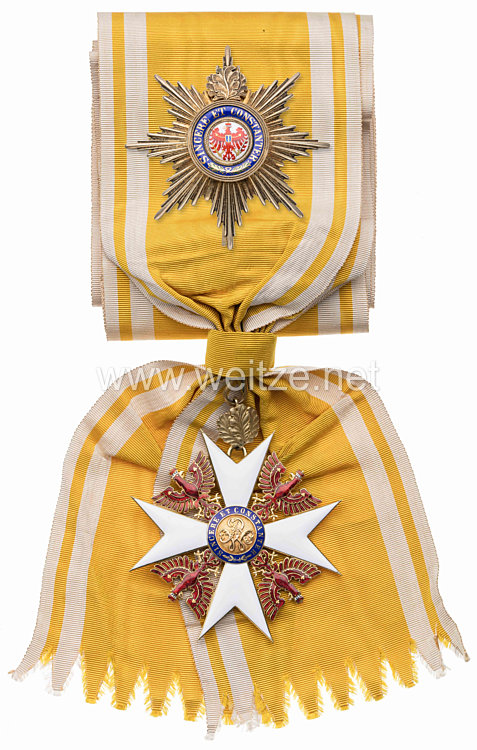
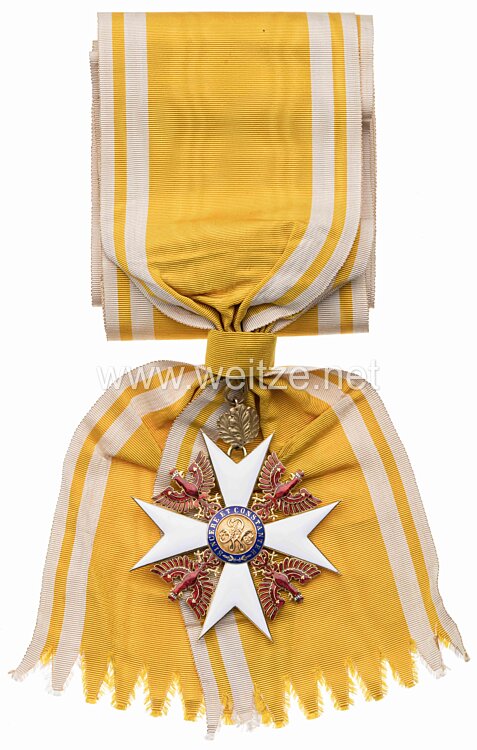
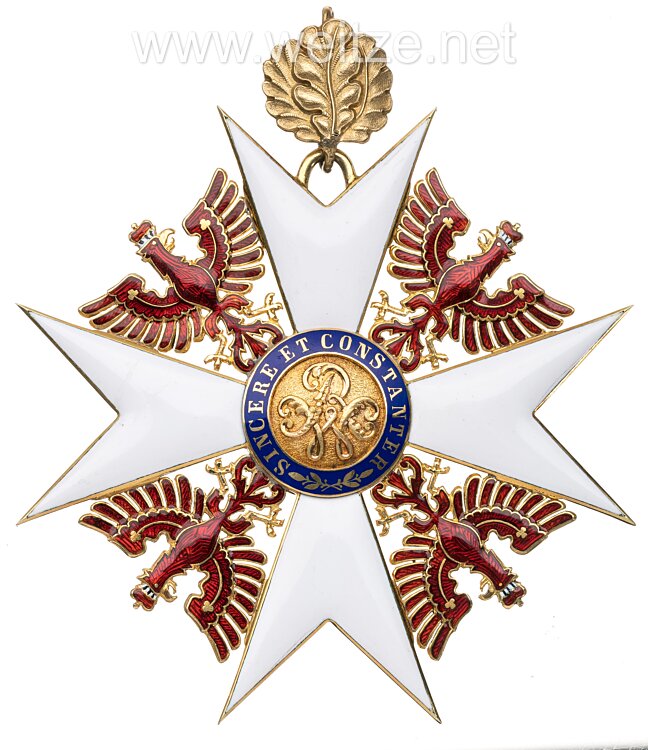
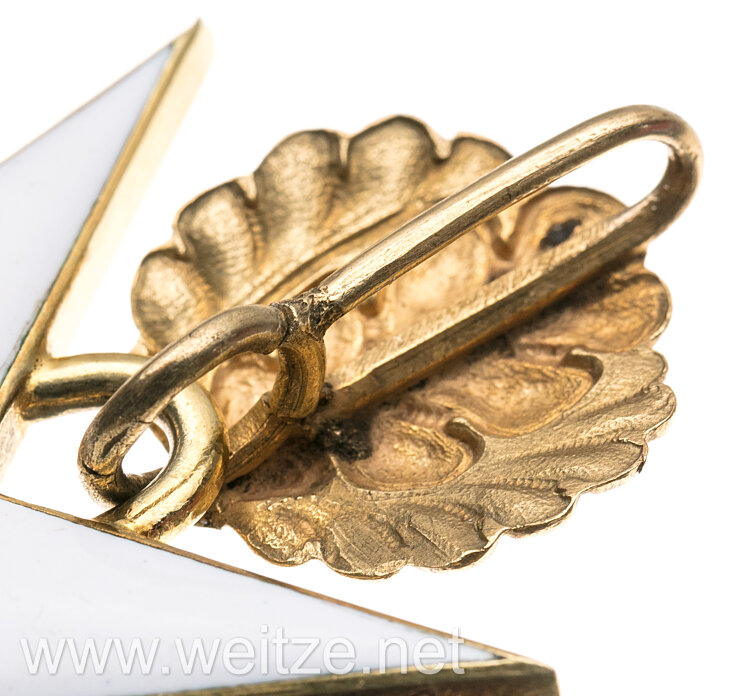
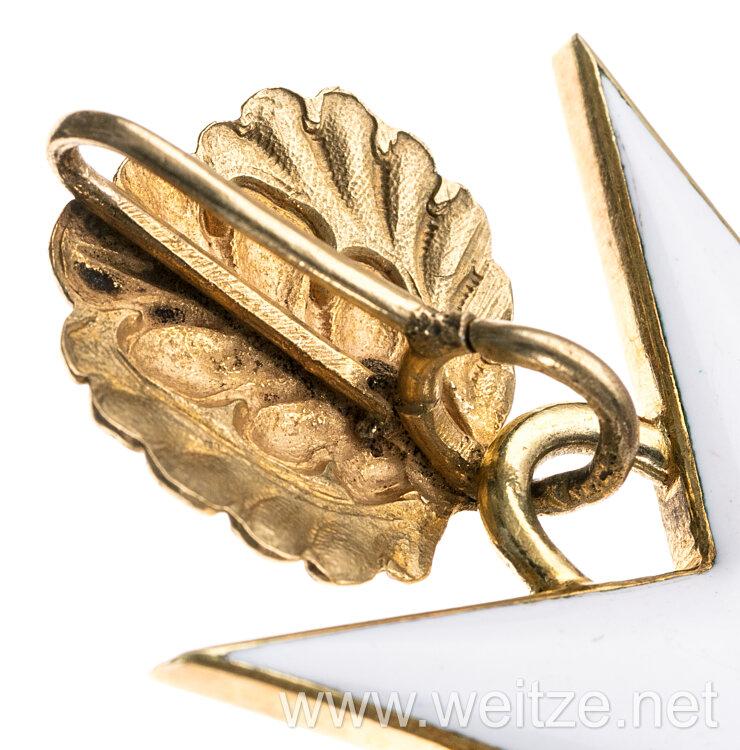
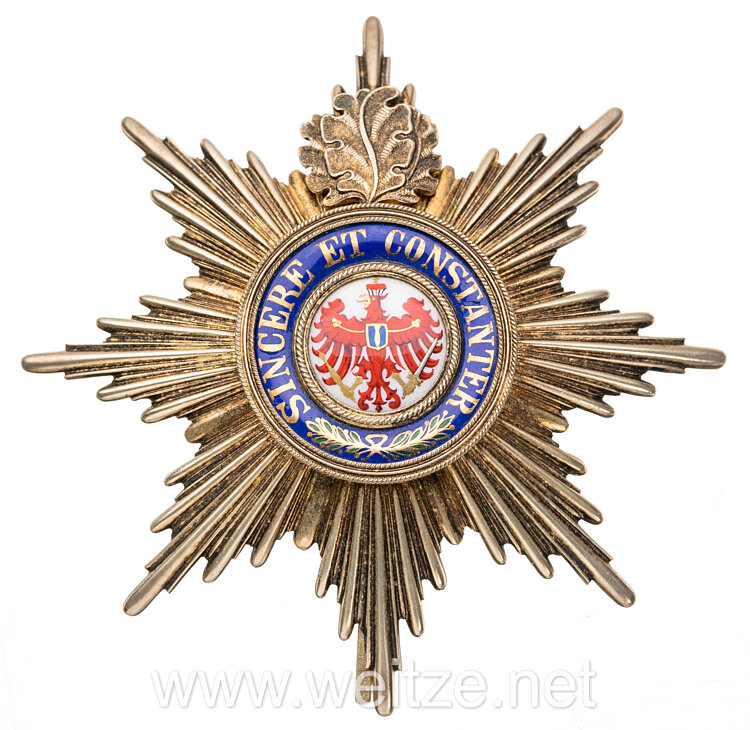
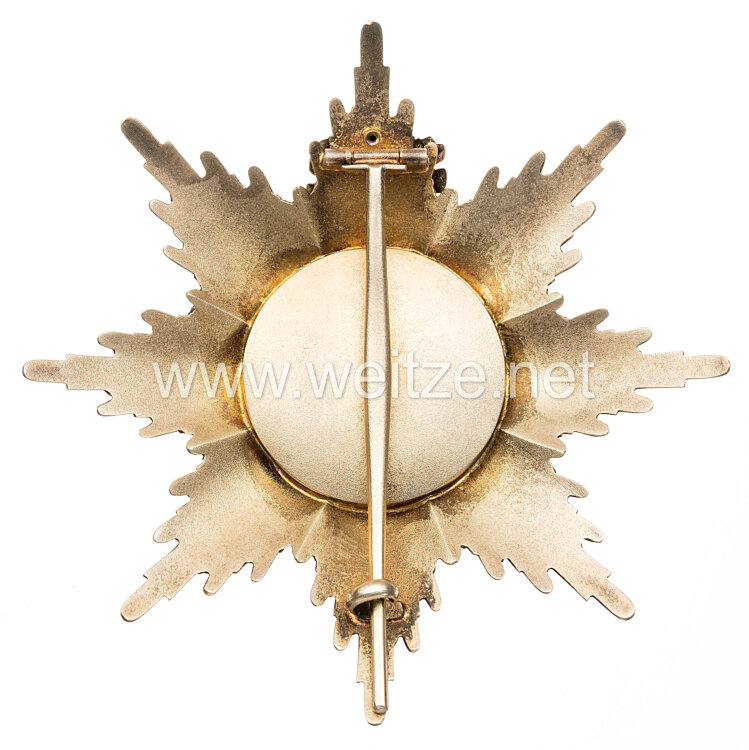
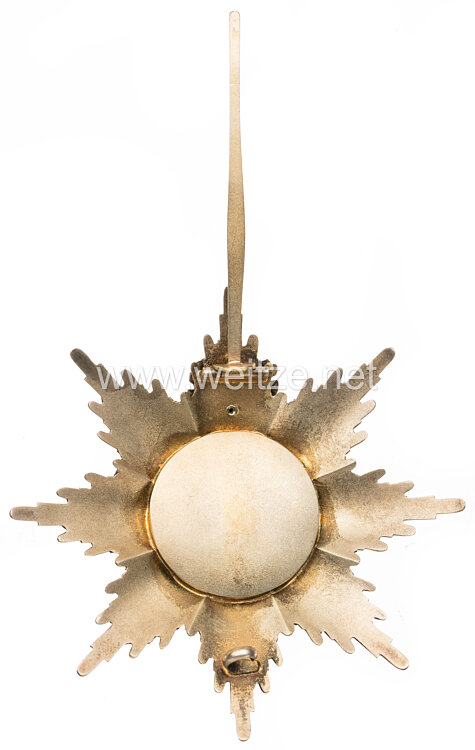
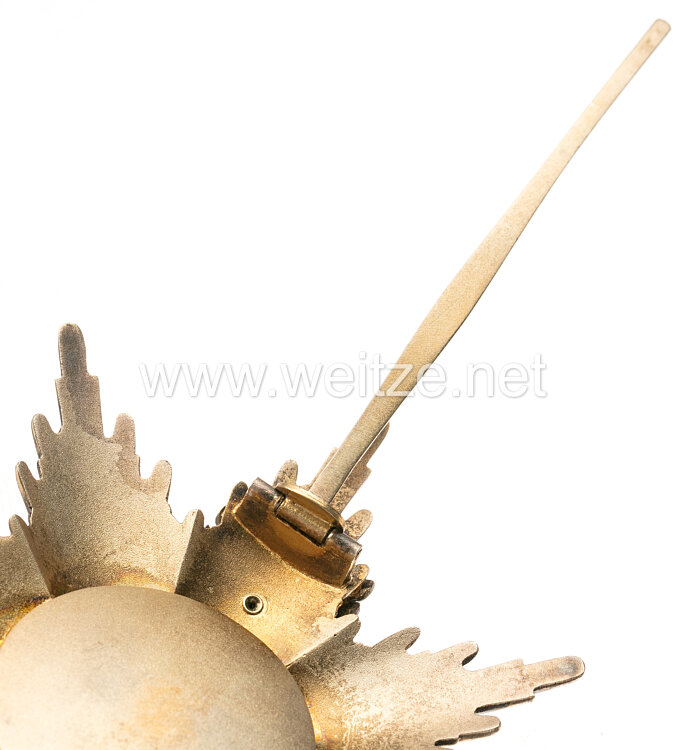
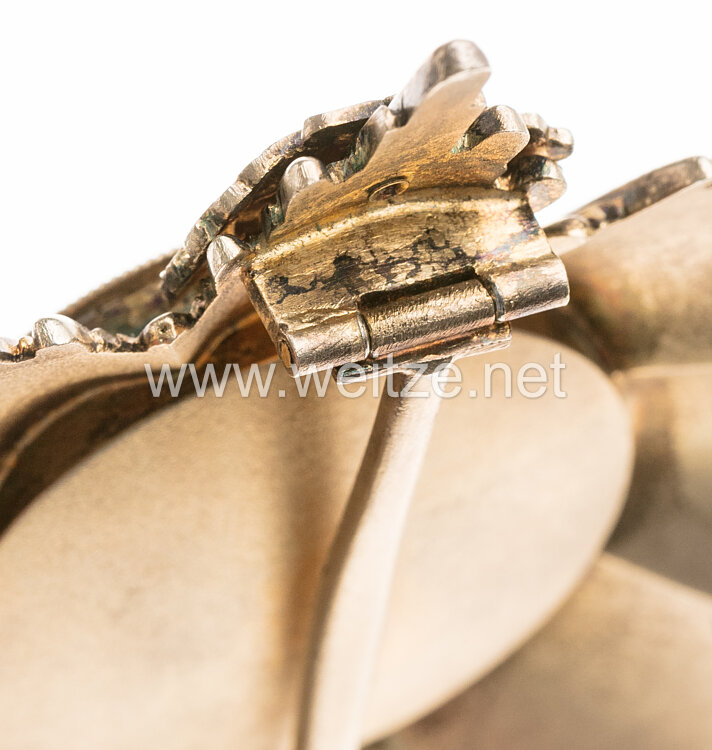
This is an award bestowed at the beginning of World War I. The Grand Cross is crafted in gold of the finest Berlin jeweler quality, unmarked, with the oak leaves in gilt finish. Complete with long original tailored shoulder sash with sewn-in snap hook. Accompanied by the matching breast star with oak leaves. 8-pointed breast star in silver gilt, the center finely enameled, the oak leaves attached at the top with 2 hollow rivets. The motto ring “SINCERE ET CONSTANTER” in gold. Reverse with gilt pin and pin hinge.
278373

Prussia Order of the Red Eagle - Grand Cross with Oak Leaves

The Prussian Order of the Red Eagle, Grand Cross with Oak Leaves represents one of the highest decorations of the Prussian monarchy and reflects the complex hierarchy of the German orders system throughout the long nineteenth century. This magnificent decoration dates from the early years of the First World War and represents the final flowering of the Prussian awards system before wartime material shortages and ultimately the Revolution of 1918 brought the monarchical orders tradition to an end.

The roots of the Order of the Red Eagle reach back to November 17, 1705, when Hereditary Prince Georg Wilhelm of Brandenburg-Bayreuth founded the Ordre de la Sincérité (Order of Sincerity). On June 12, 1792, King Friedrich Wilhelm II adopted this decoration for Prussia, where it rose to become the second-highest order after the Order of the Black Eagle. The motto SINCERE ET CONSTANTER (Sincere and Constant) on the blue enamel ring recalls these origins to this day.

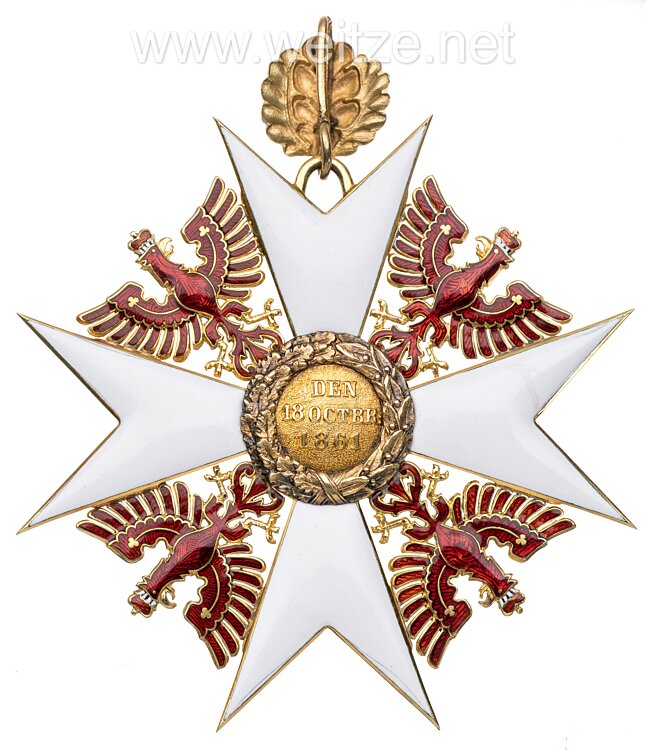
The Grand Cross grade itself was only instituted on October 18, 1861 by King Wilhelm I on the occasion of his coronation in Königsberg. This expansion occurred during a period of Prussian reform and growing self-confidence. The date DEN 18. OCTBR. 1861 appears on the reverse of every Grand Cross decoration within an oak and laurel wreath. The oak leaves as a special distinction had already been instituted on January 18, 1811 for the 1st and 2nd Classes and signified prior receipt of a lower class of the order.

The present execution embodies the highest craftsmanship. The Grand Cross appears as a gold Maltese cross in eight-pointed form with white enameled cross arms and gold borders. Red enameled eagles appear in the angles between the cross arms. The obverse medallion bears the royal monogram WR (Wilhelmus Rex), surrounded by the blue enamel ring with the order's motto. The eight-rayed breast star in silver-gilt displays at its center the red Brandenburg eagle with crown, sword and scepter in its claws, together with the Hohenzollern coat of arms, surrounded by the motto on blue enamel.

The three-leaved oak leaves ornament in gilt execution significantly enhances the significance of this award. The decoration is complete with the original tailored shoulder sash measuring 102 millimeters wide, displaying the characteristic coloring: white edges of 6 millimeters, orange-yellow side stripes of 4 millimeters each, then white stripes of 8 millimeters, and an orange-yellow center stripe of 63 millimeters width.

The award practice for the Grand Cross with Oak Leaves remained extremely restrictive. Recipients were typically high-ranking generals, admirals, statesmen, and members of royal families. Knights of the Order of the Black Eagle automatically received the Grand Cross of the Order of the Red Eagle. Among notable recipients were Paul von Hindenburg (with Oak Leaves and Swords), Otto von Bismarck, Helmuth von Moltke the Elder, Ferdinand Graf von Zeppelin, Prince Heinrich of Prussia, Empress Augusta Viktoria, and Crown Prince Wilhelm of Prussia.

The order recognized both military and civilian merit: valor in combat, excellence in military leadership, long and faithful service to the kingdom, or other significant achievements. During the First World War, the Grand Cross with Oak Leaves and Swords was awarded twelve times. For military awards, swords could be added beginning September 16, 1848; from 1864 onward, combat awards were worn on black-and-white ribbon.

The material execution of this example reflects a significant historical caesura. While the description speaks of gold manufacture, the Prussian orders chancellery mandated in 1916 that due to wartime material shortages, gold-based decorations should henceforth be made of silver-gilt marked with content mark 938. Gold was used until 1916, after which production shifted to silver-gilt.

After the November Revolution of 1918 and the end of the German monarchy, the Order of the Red Eagle ceased to be awarded. Like all Prussian and Imperial German orders, it was officially abolished with the fall of the Kaiserreich. All order decorations were required to be returned to the Prussian orders chancellery, making surviving examples relatively rare compared to original award numbers. This decoration thus stands as an impressive testimony to a vanished world of monarchical honors and Prussian military tradition.

r