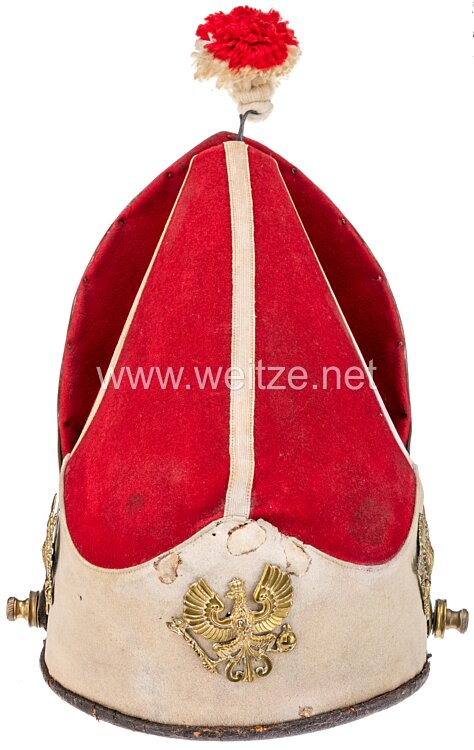
Prussian Fusilier Cap Model 1894 for Enlisted Men of the Kaiser Alexander Garde-Grenadier-Regiment Nr. 1, 3rd Fusilier Battalion

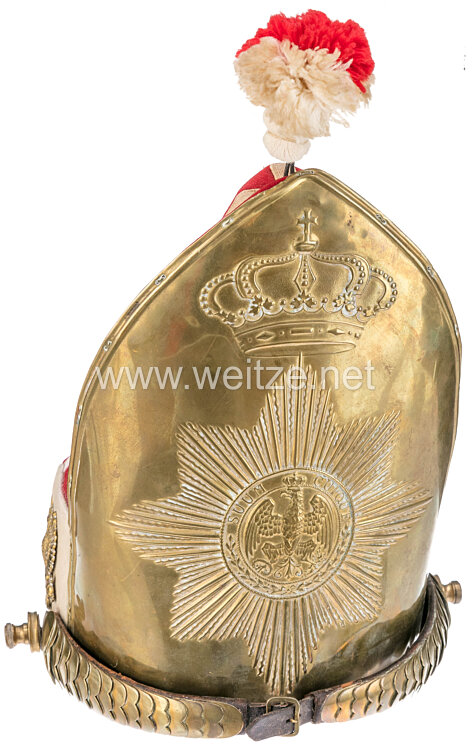
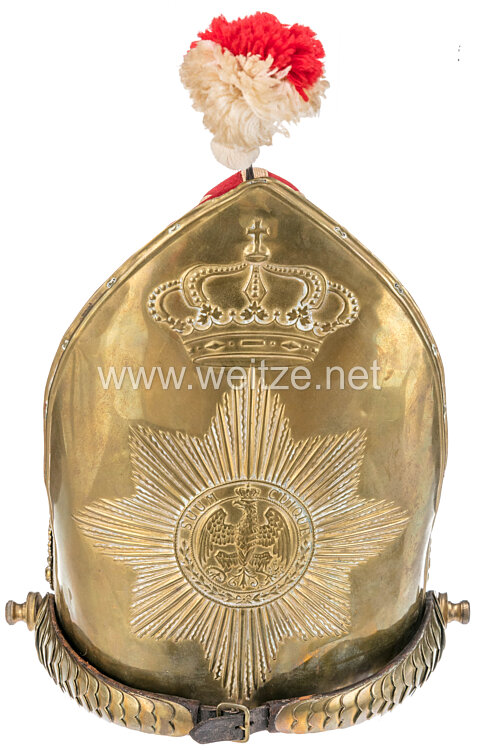
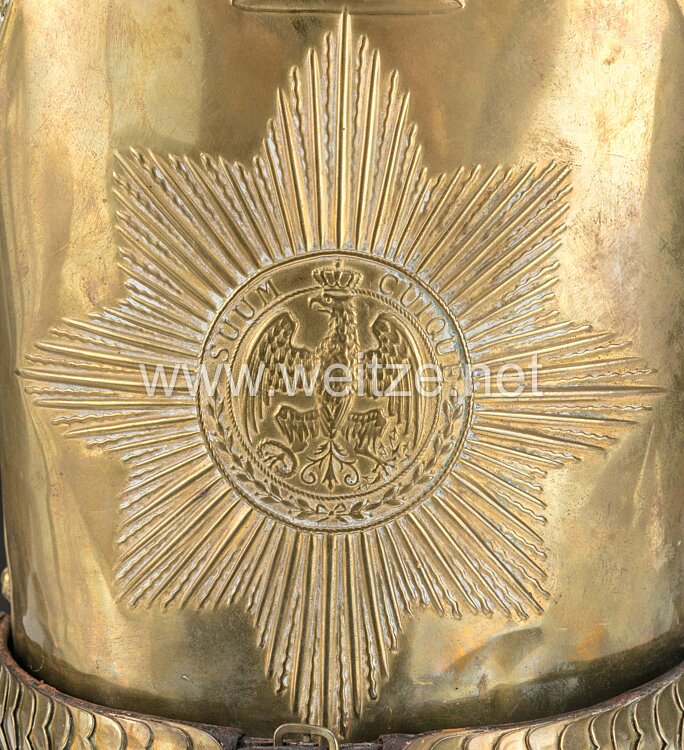
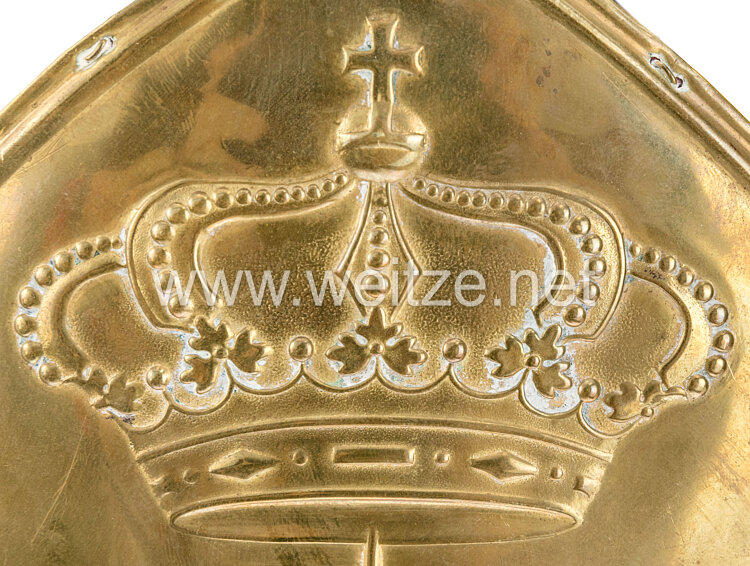
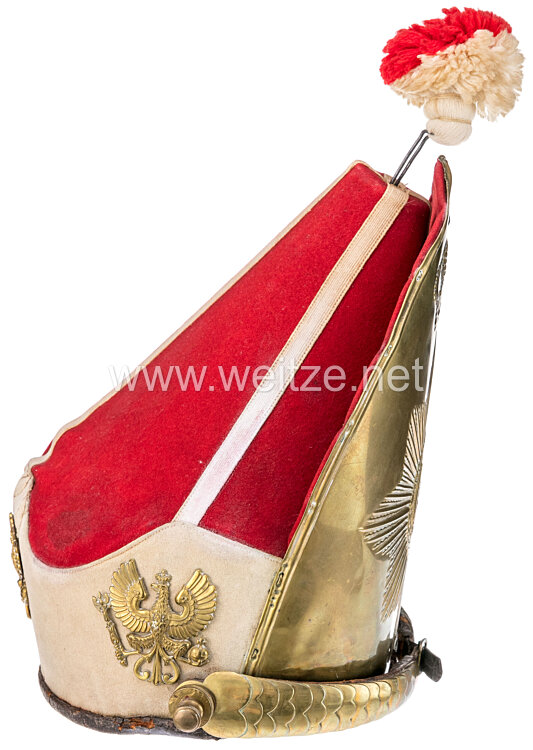
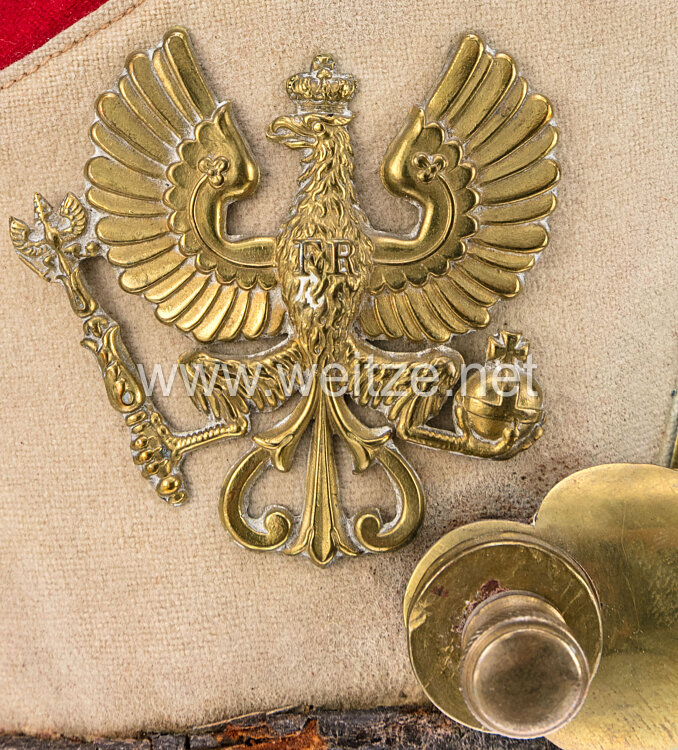
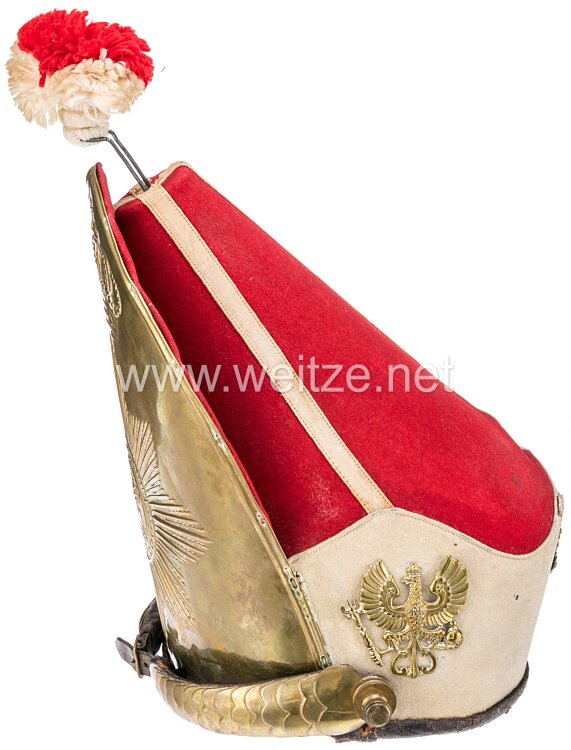
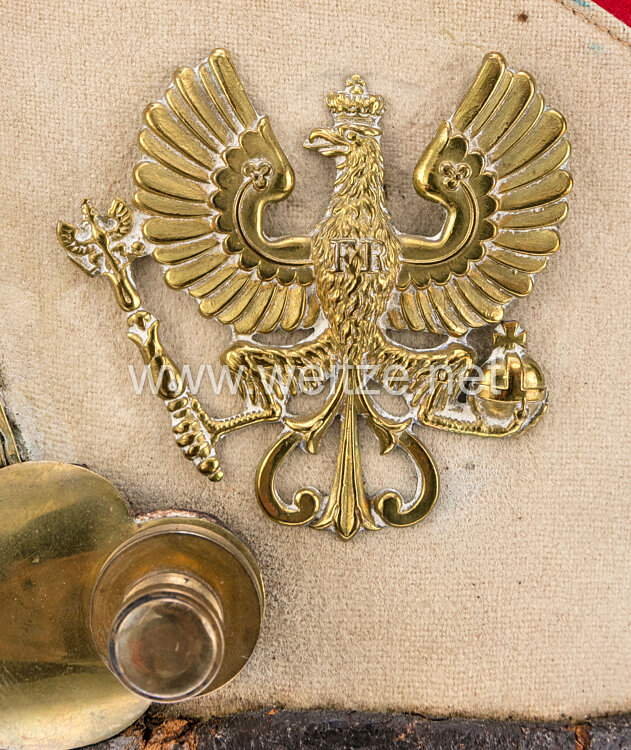
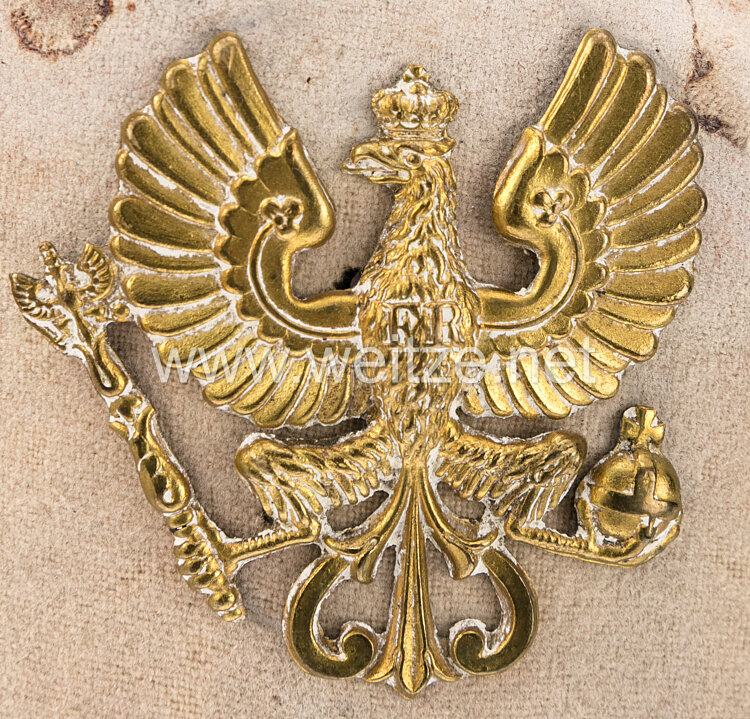
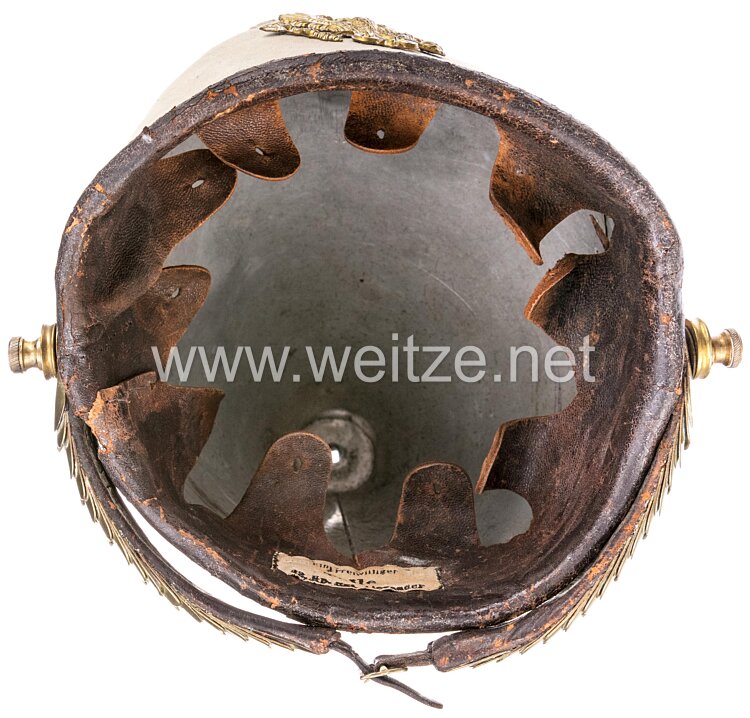
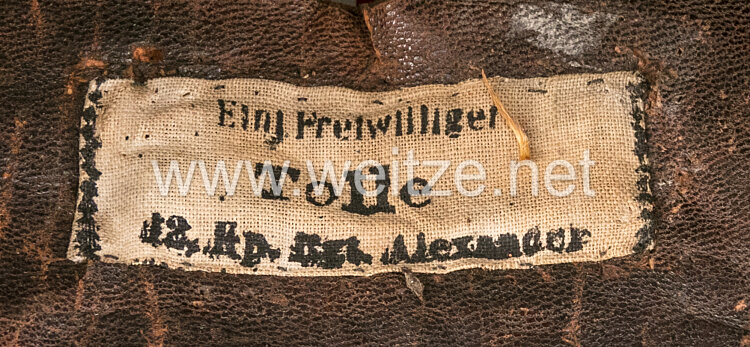
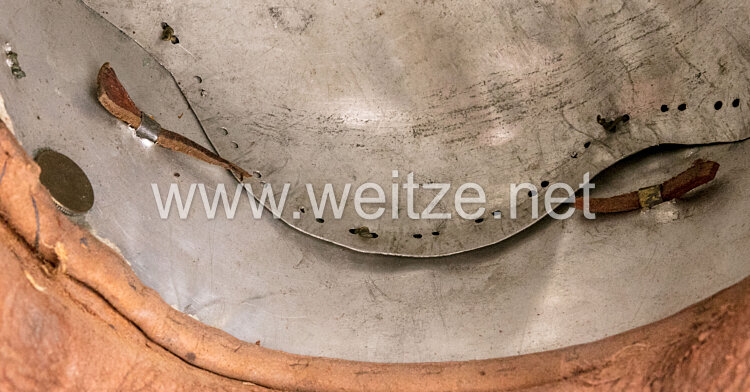
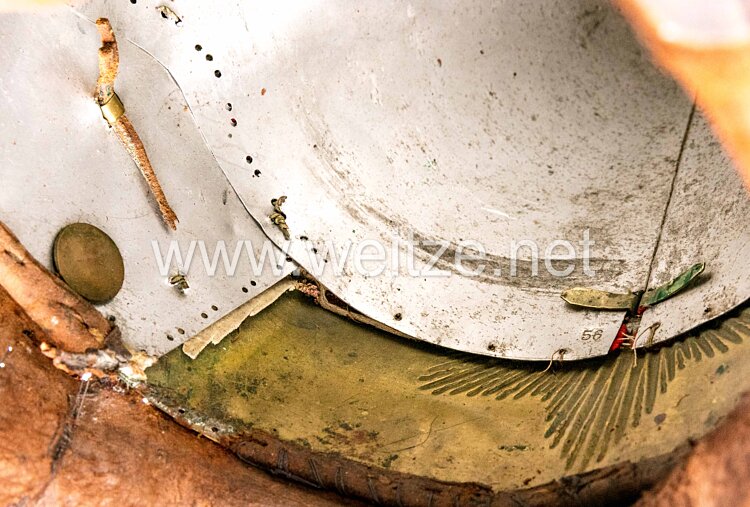
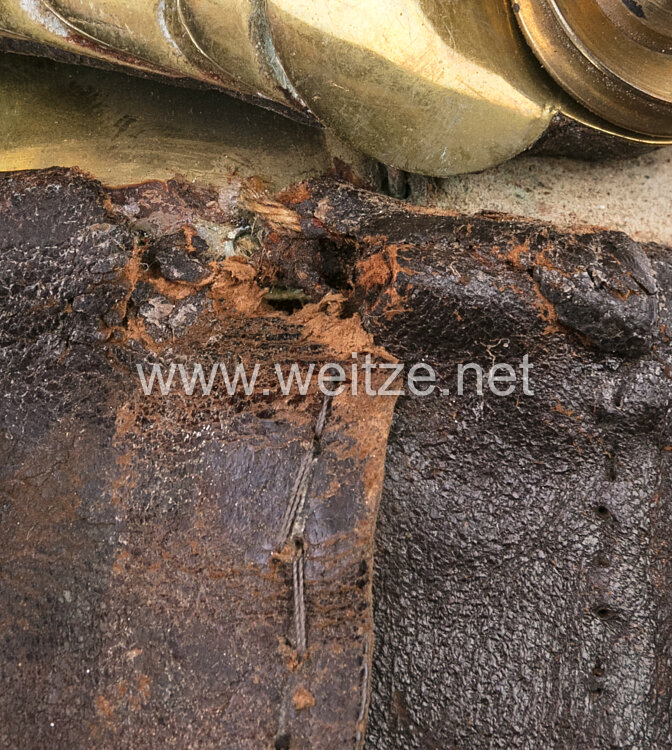
Berlin, circa 1910. Very fine chamber-quality manufacture. Unlike the caps of the two Grenadier battalions, the caps of the Fusilier battalion are designed not quite as tall with a rigid body. Front bears the brass plate with embossed Garde star and crown. Convex yellow scale chin chains in the special form, attached laterally with screws. Red bag, piped in white and with white braiding. On the white band laterally and to the rear with applied Prussian eagles for the Fusilier battalion. Complete with the original red and white pompom. Interior with laced leather lining, front with sewn-in owner's label “Einj. Freiwilliger tolle 12. Kp. Rgt. Alexander”. The fusilier cap interior with the original reinforcement of aluminum sheet.
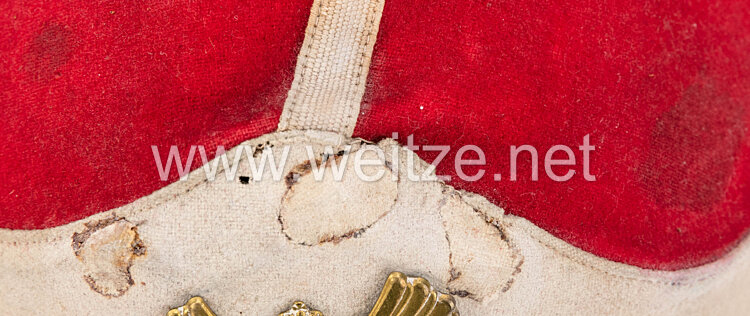
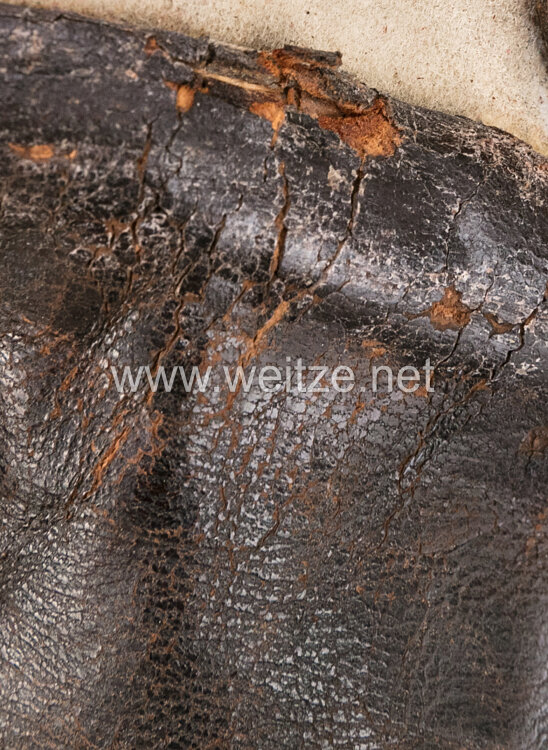
The fusilier cap is worn with typical age and wear signs. Rear of the white felt shows 3 small repair patches. Overall condition 2-. Very rare.
283973
3.500,00

Prussian Fusilier Cap Model 1894 for Enlisted Men of the Kaiser Alexander Garde-Grenadier-Regiment Nr. 1, 3rd Fusilier Battalion

The Fusilier Cap Model 1894 of the Kaiser Alexander Guard Grenadier Regiment No. 1 represents a significant chapter in Prussian military history during the late Imperial period. This headgear, manufactured around 1910 in Berlin, embodies the strict hierarchy and magnificent traditions of the Prussian Guard.

The Kaiser Alexander Guard Grenadier Regiment No. 1 was founded in 1814 and named after Russian Tsar Alexander I, who played an important role in the Wars of Liberation against Napoleon. The regiment was part of the prestigious Guard Corps and was stationed in Berlin. The special relationship with Russia manifested itself in various uniform details and the regiment's designation.

The structure of the regiment traditionally comprised two Grenadier battalions and one Fusilier Battalion (the 3rd Battalion). Historically, fusiliers differed from grenadiers in their role as lighter, more mobile infantry. This functional distinction was also reflected in the uniform: while the Grenadier battalions wore tall, rigid grenadier caps, the fusilier cap was designed lower and had a firmer but less rigid body.

The Model 1894 represented a standardization of Prussian military headgear. The Supreme Cabinet Order of January 23, 1894, regulated the introduction of this cap form for the Fusilier battalions of the Guard Grenadier regiments. The cap combined traditional elements with practical considerations for service in the late 19th century.

The characteristic features of this fusilier cap are diverse and symbolic. The front brass plate with the Guard star and crown immediately identified the wearer as a member of the Guard. The curved yellow scale chains in their special form were a remnant of the old grenadier caps of the 18th century, which were originally reinforced with metal scales to protect against saber strikes.

The red bag with white trim refers to the traditional colors of Brandenburg and Prussia. The white braids were a characteristic feature of Guard units. Particularly significant are the Prussian eagles on the white band at the sides and rear - these specifically marked the Fusilier Battalion and distinguished it from the Grenadier battalions.

The red and white pompom on the top of the cap had both decorative and identificatory functions. The color combination helped with quick recognition of troop affiliation on the parade ground and in combat.

The internal construction with laced leather lining and aluminum sheet reinforcement shows the practical aspects of this headgear. The aluminum reinforcement replaced older, heavier materials and offered a compromise between protection and wearing comfort. The sewn-in wearer's label “Einj. Freiwilliger tolle 12. Kp. Rgt. Alexander” refers to a One-Year Volunteer, an educated conscript who, due to his education, only had to serve one year instead of the usual two or three years.

The manufacture in chamber quality means that this cap was of the highest craftsmanship. Such pieces were frequently made by specialized court suppliers in Berlin who specialized in military equipment. The quality significantly exceeded the standard issue and was often privately purchased by officers or wealthy one-year volunteers.

The Kaiser Alexander Guard Grenadier Regiment No. 1 participated in World War I and was dissolved in 1918 with the end of the Empire. The magnificent parade uniforms and headgear were replaced by field-gray, more practical equipment in the first months of the war. The fusilier caps of the pre-war period remained in use as parade pieces but were no longer worn at the front.

During the Imperial period, these caps were not merely functional items but important status symbols. They represented membership in an elite unit and embodied the military values of the Prussian state. The precise regulations governing every detail of the uniform reflected the Prussian emphasis on order, discipline, and tradition.

Today, these fusilier caps are rare witnesses to Prussian-German military history. They document not only the military hierarchy and organization but also the craftsmanship and symbolic significance of military clothing in the Imperial era. The combination of traditional elements and the specific markings of the various battalions makes each of these caps a unique historical document.