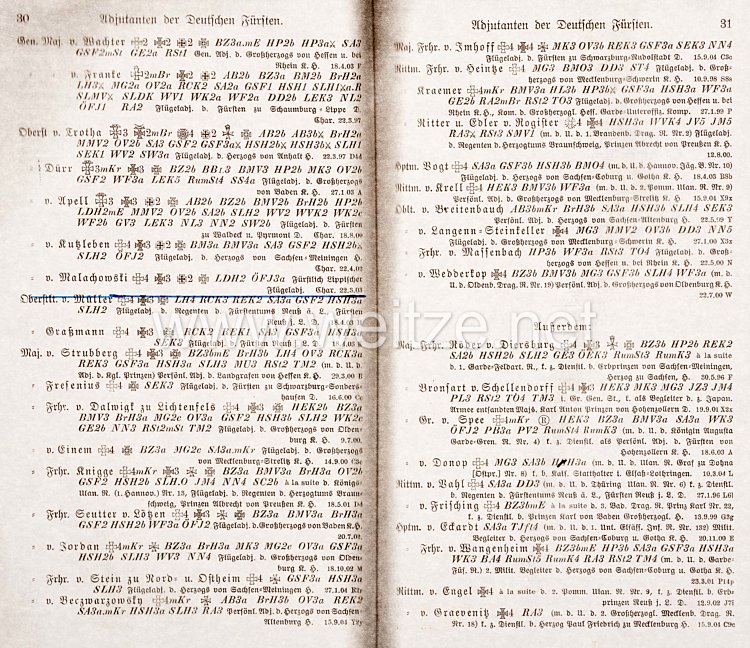
Lippe-Detmold Pickelhaube, Schabracke und Depechentasche aus dem Besitz des Flügeladjutanten Oberst von Malachowski
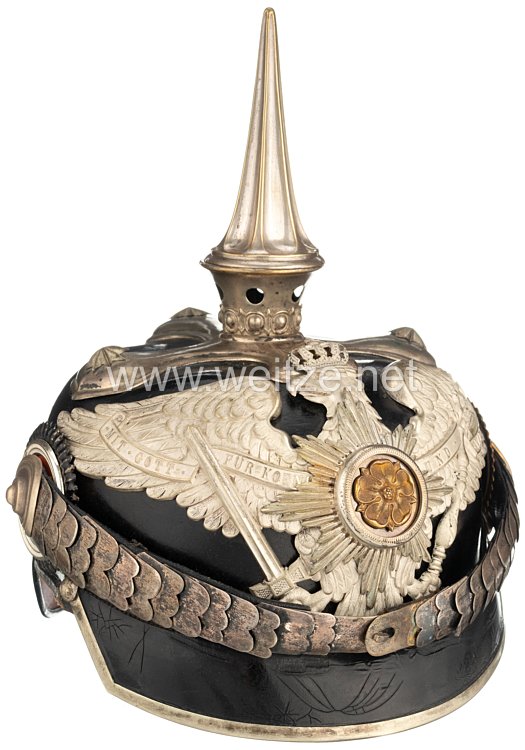
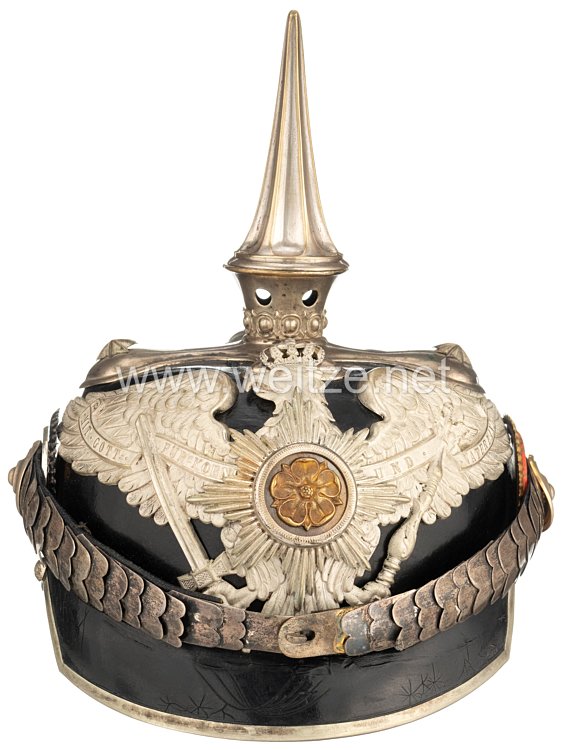
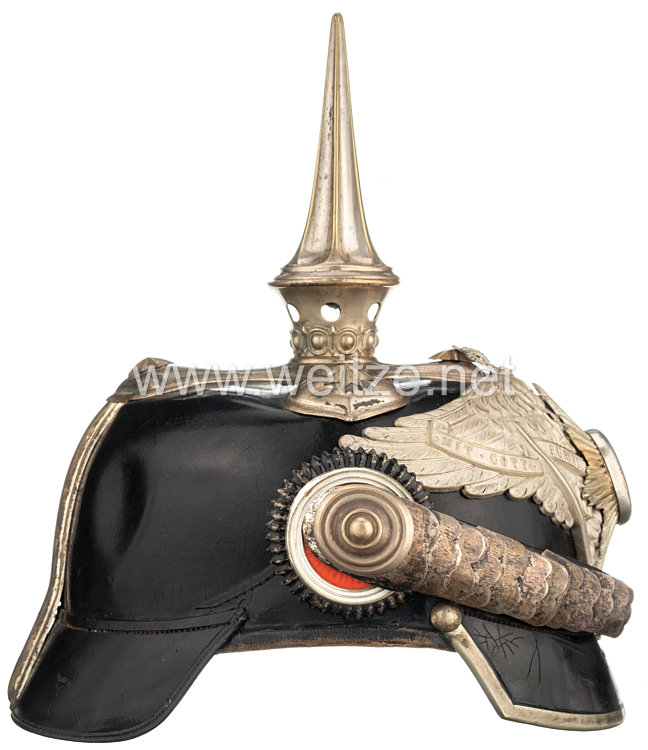
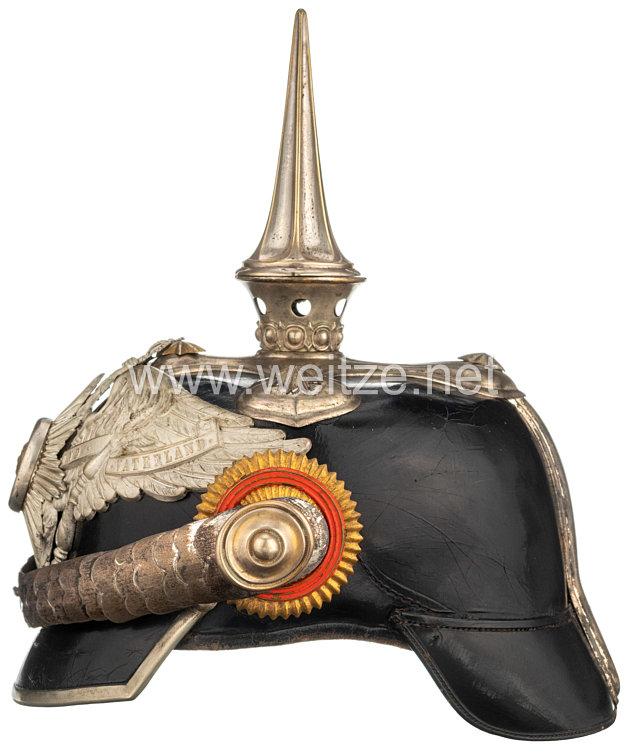
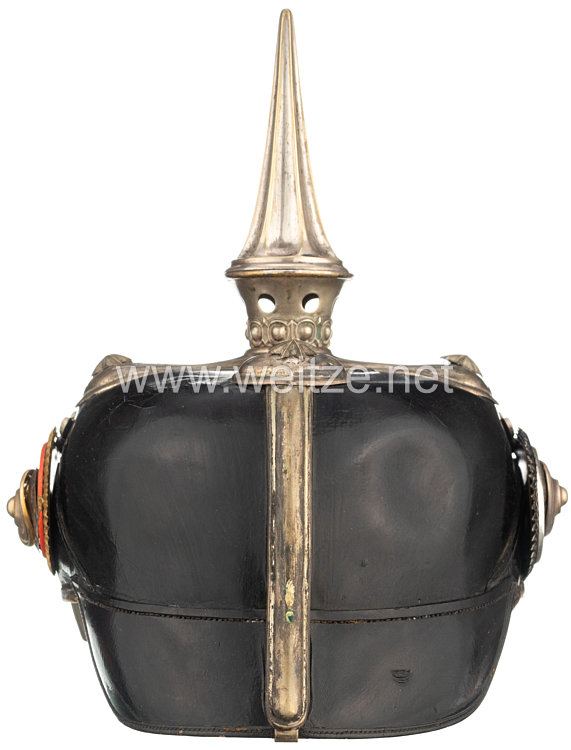
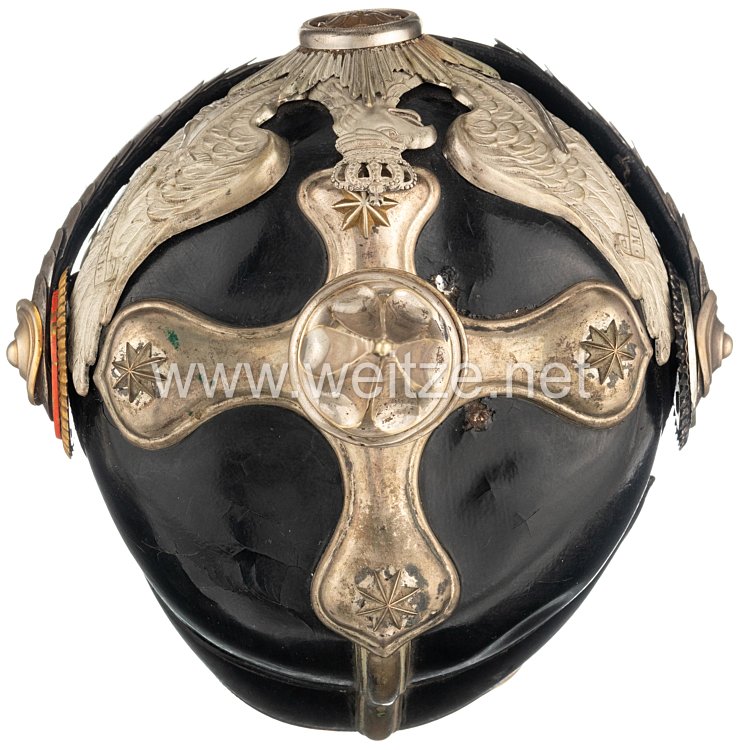
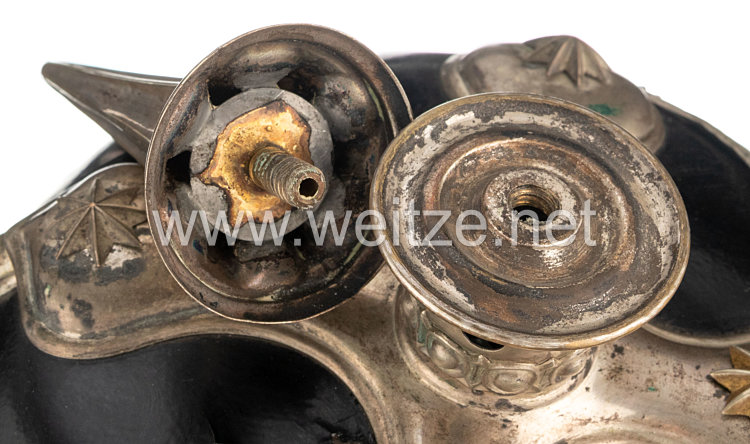
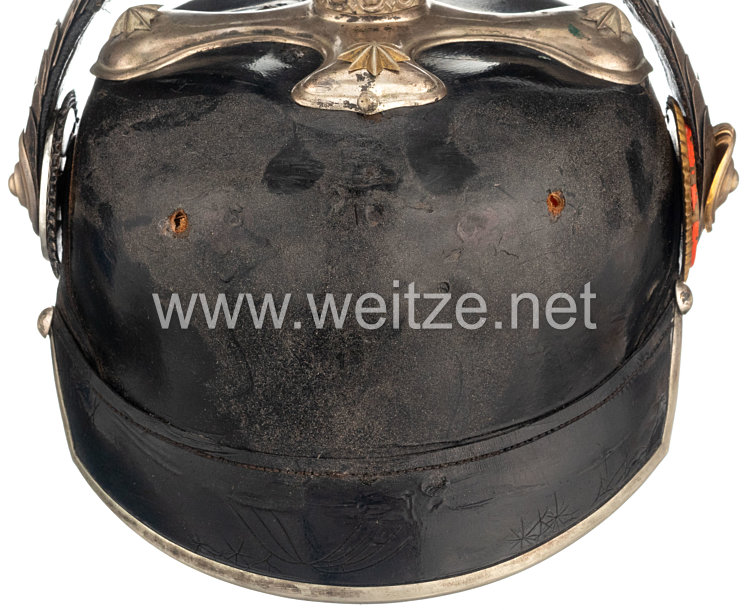
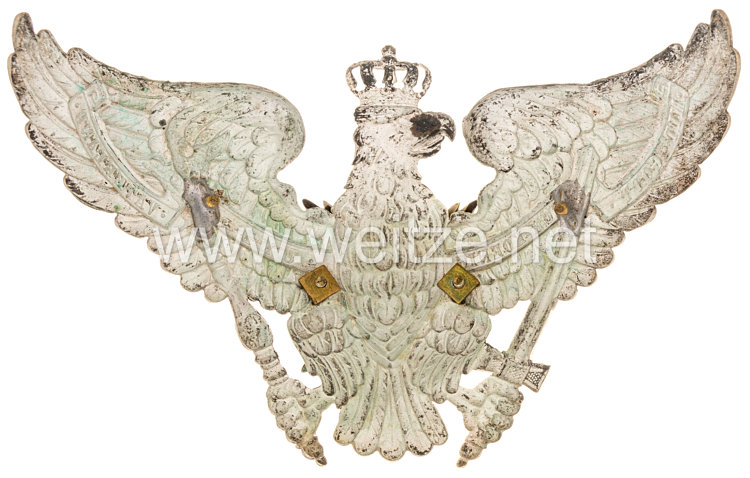
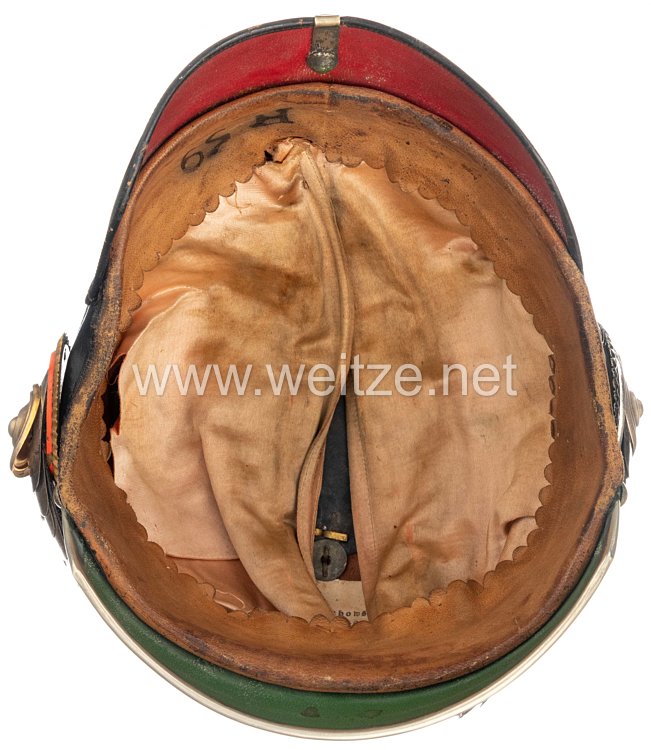
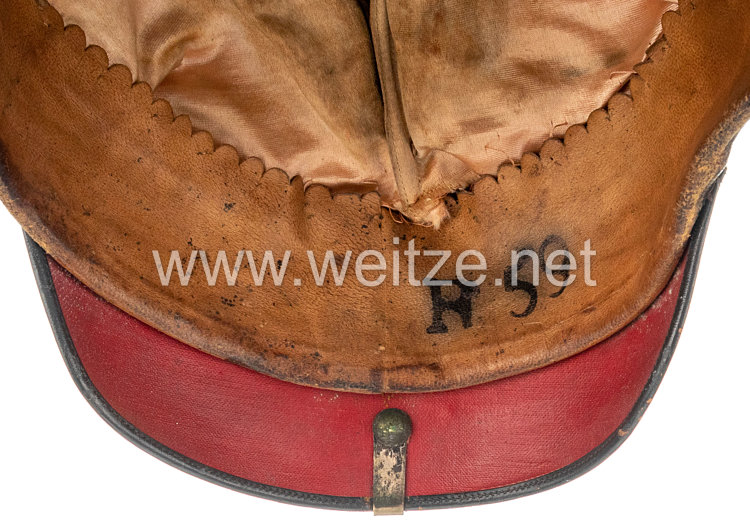
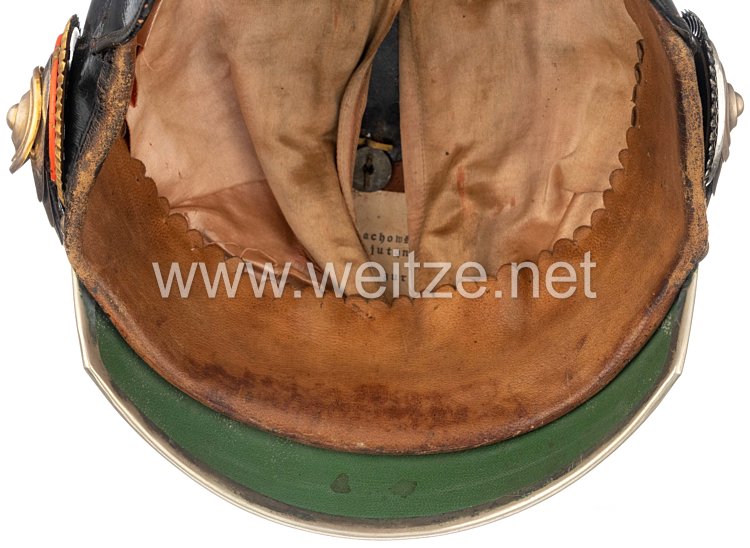
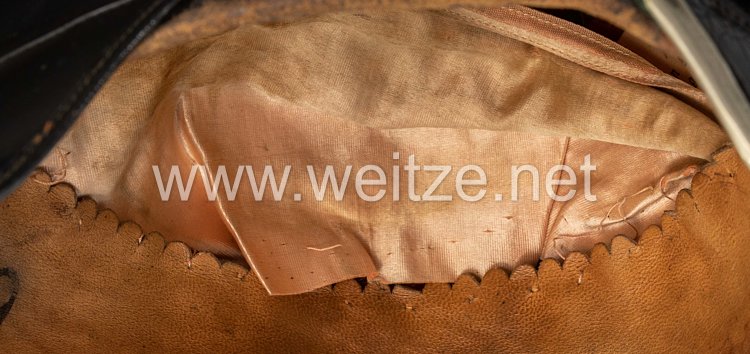
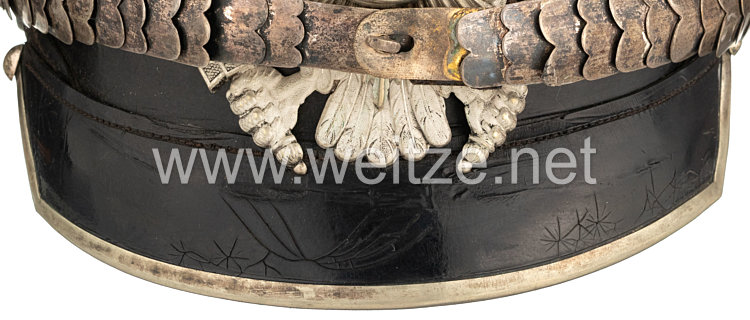
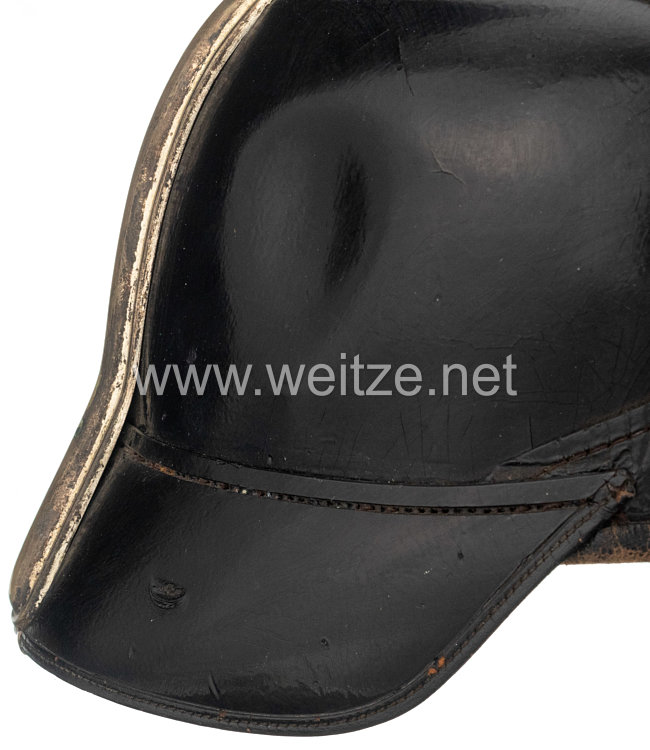
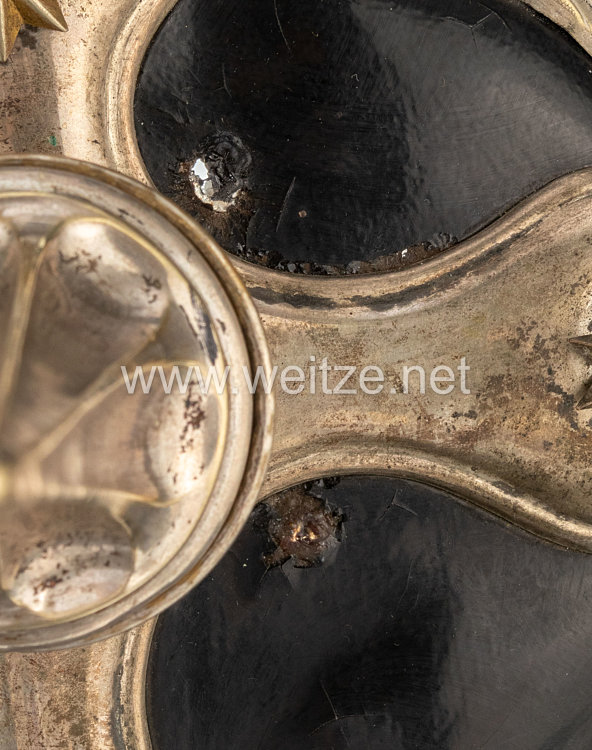
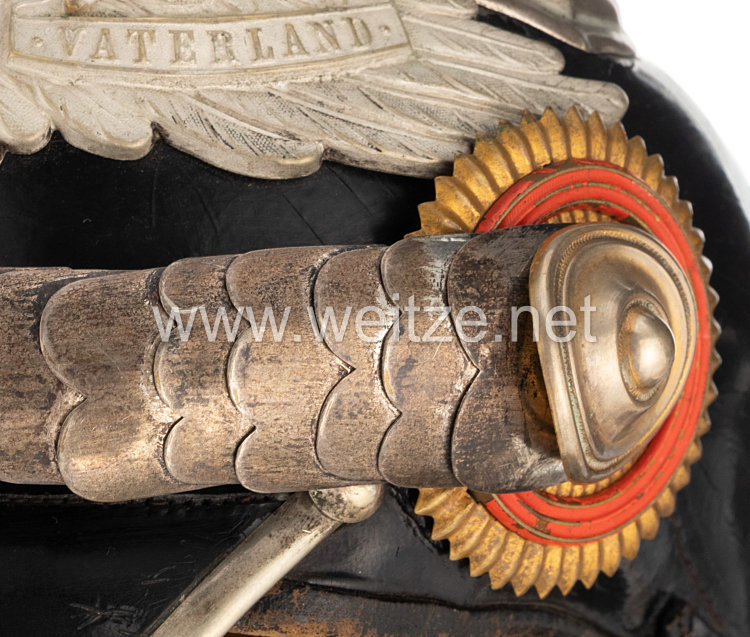
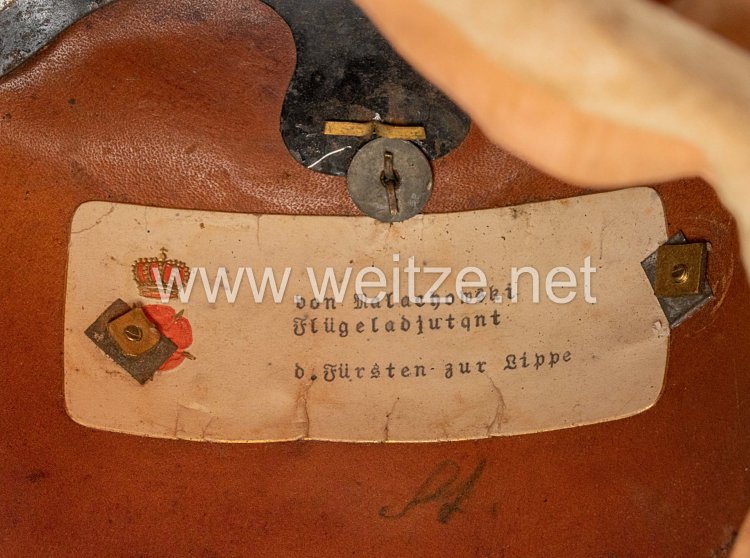
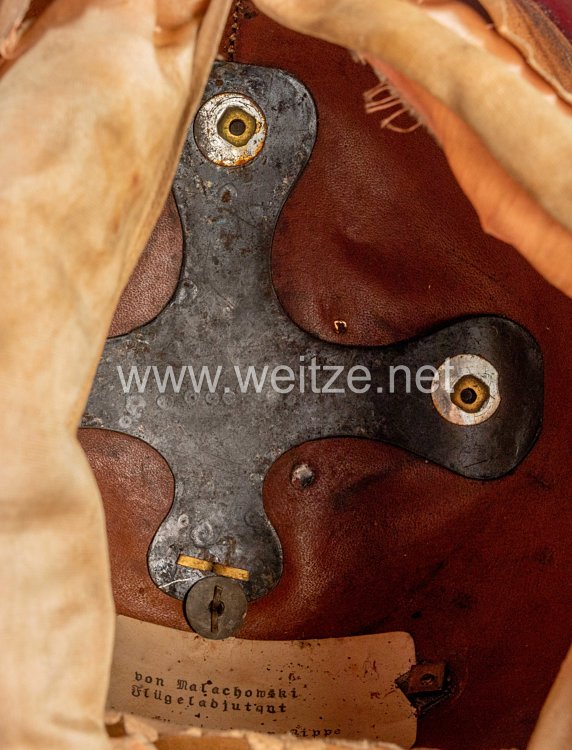
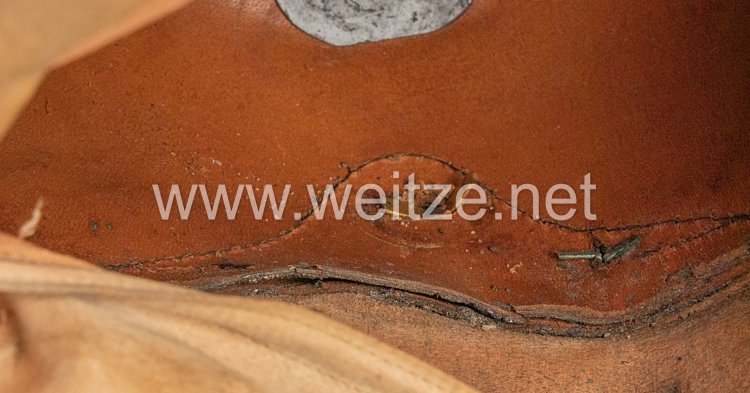
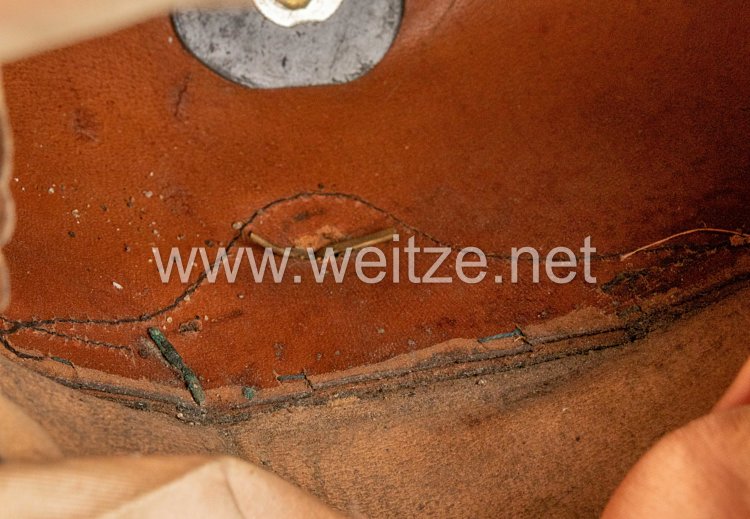
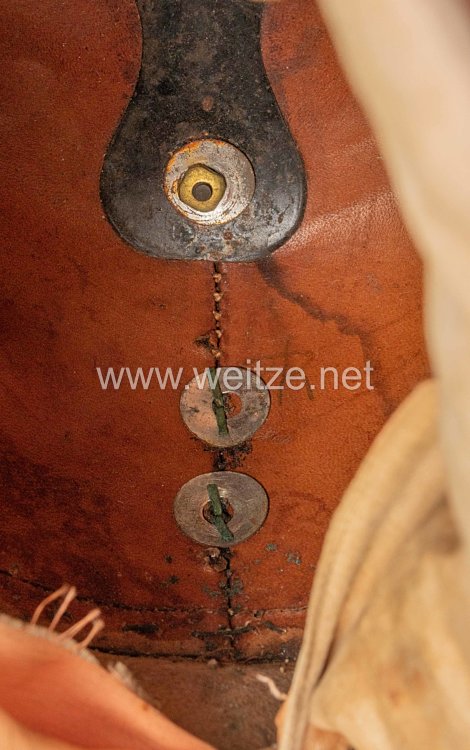
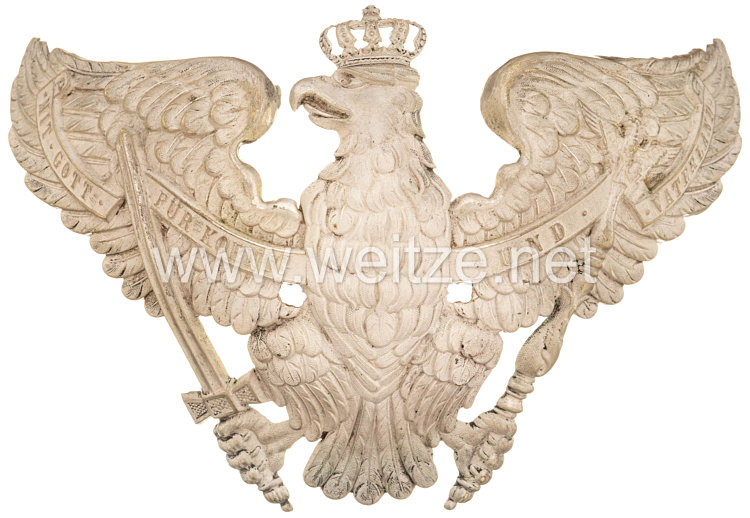
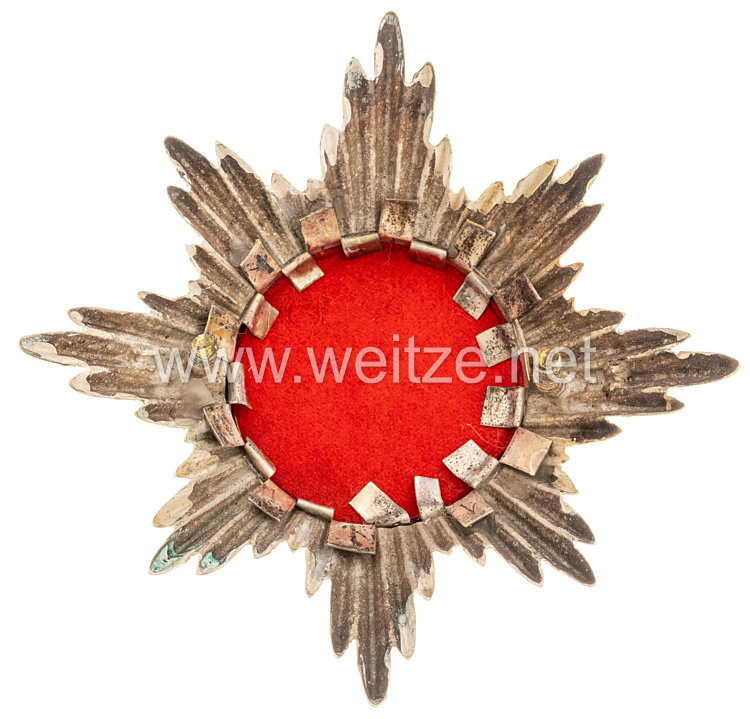
Um 1910. Pickelhaube für Flügeladjutanten, um 1910. Schwarzer Lederhelm in der Ausführung ähnlich dem der preußischen Generale à a Suite, komplett mit versilberten Beschlägen. Großer Gardeadler mit mi Devise "Mit Gott für Koenig und Vaterland", mit aufgelegtem hochgewölbten silbernem Stern, im Zentrum die vergoldete Lippische Rose. Kreuzblattbeschlag mit versilberten Sternschrauben und hoher gekehlter Spitze. Gewölbte echt silberne Schuppenkette mit versilberten Rosetten, beide Kokarden, links die gelb/rot/gelbe Landeskokarde für Lippe. Innen mit hellem Schweißleder und rosa Seidenfutter, innen mit großem Etikett "von Malachowski Flügeladjutant d. Fürsten zur Lippe", der Vorderschirm grün, der Nackenschirm rot gefüttert. Innen im Schweißleder eine alte Inventarnummer "R 59". Der Helm ist deutlich getragen, auf dem Helm oben 2 kleine Löchlein in der Helmglocke.
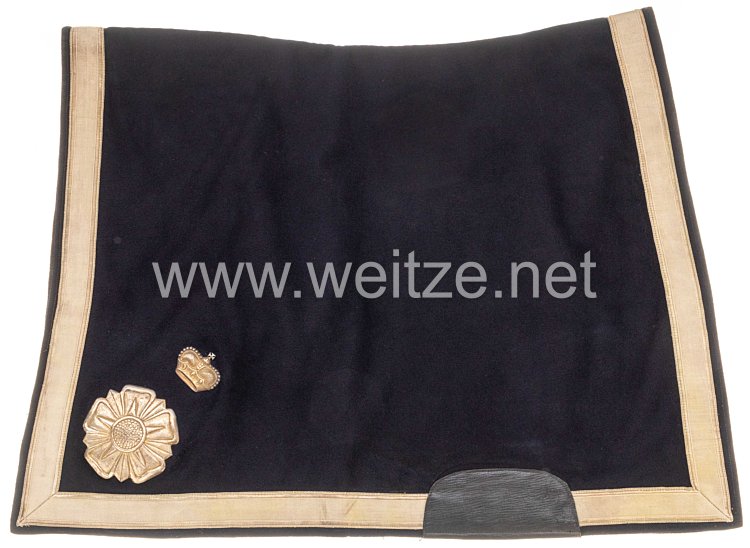
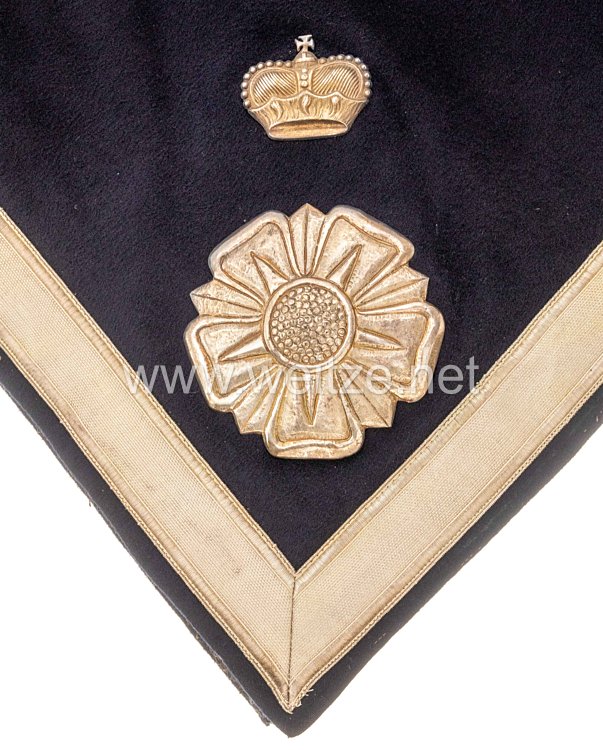
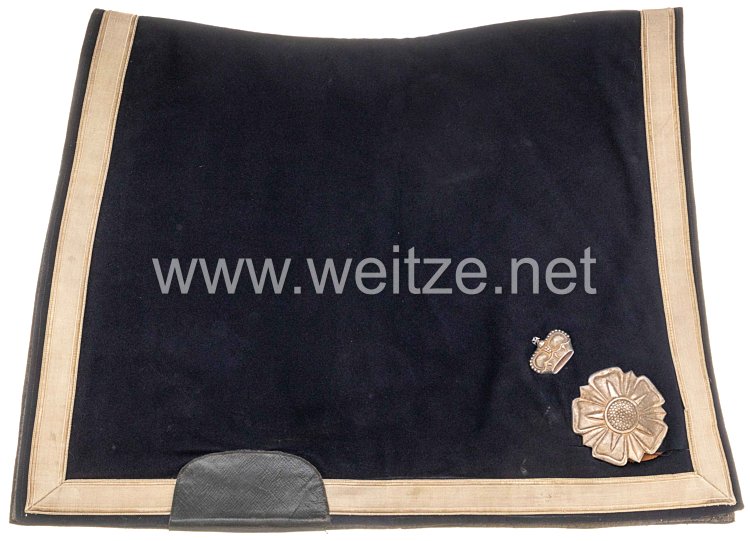
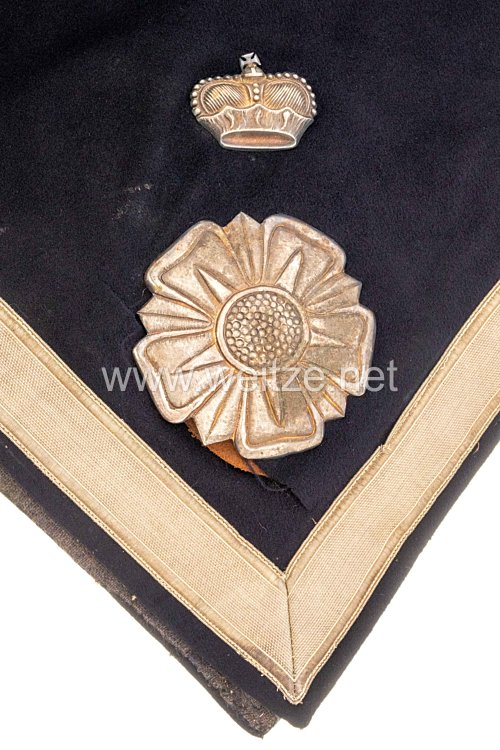
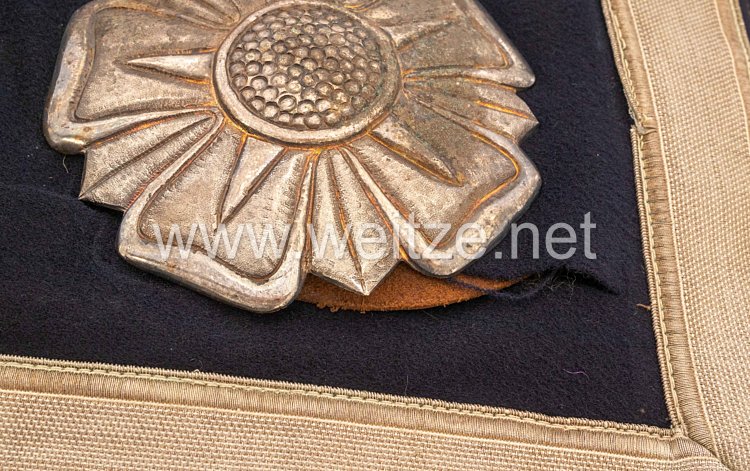
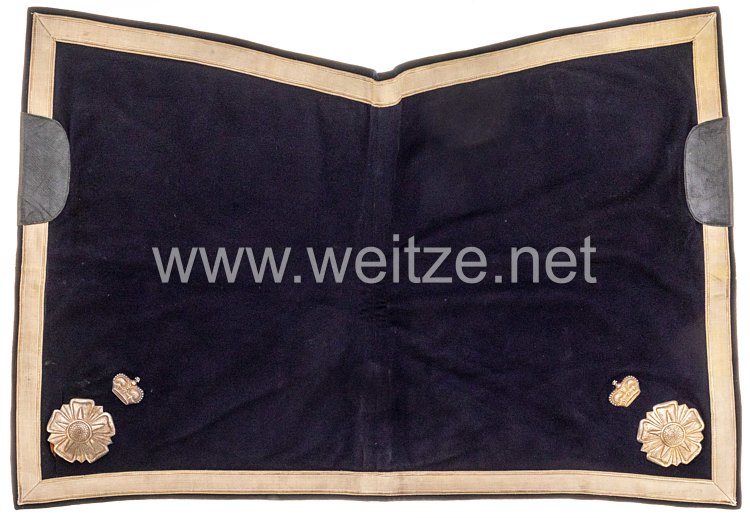
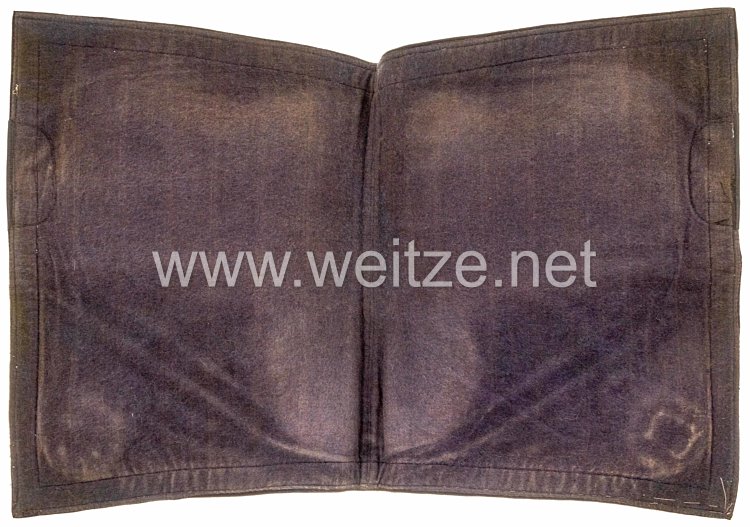
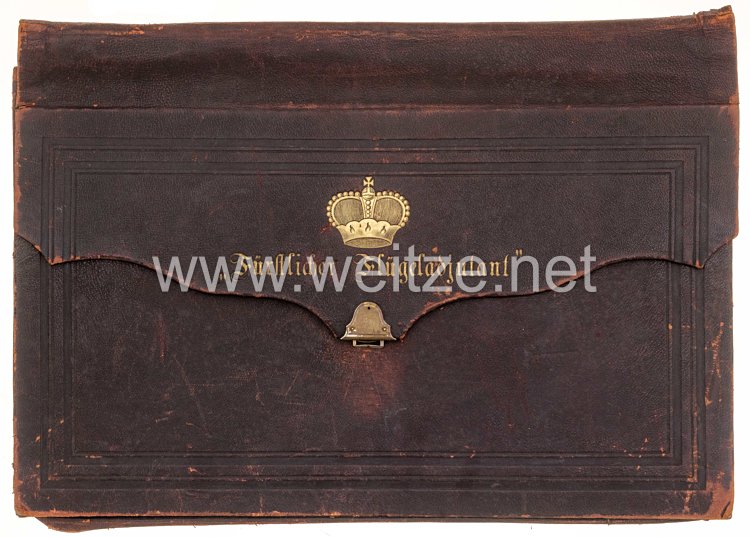
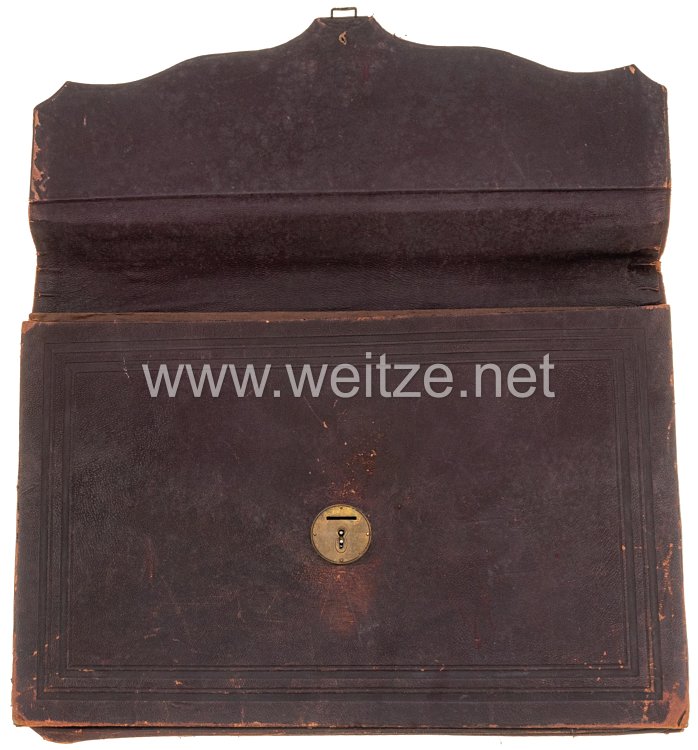
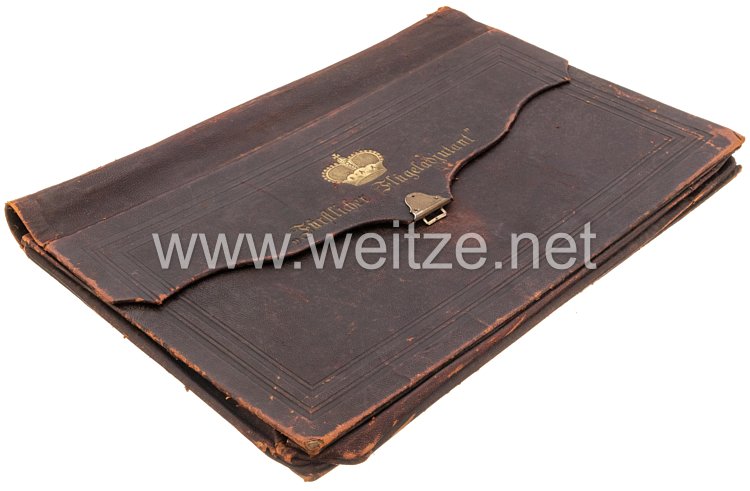
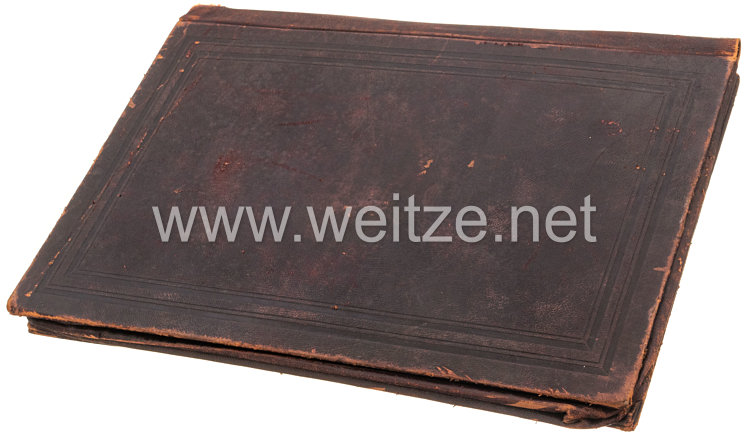
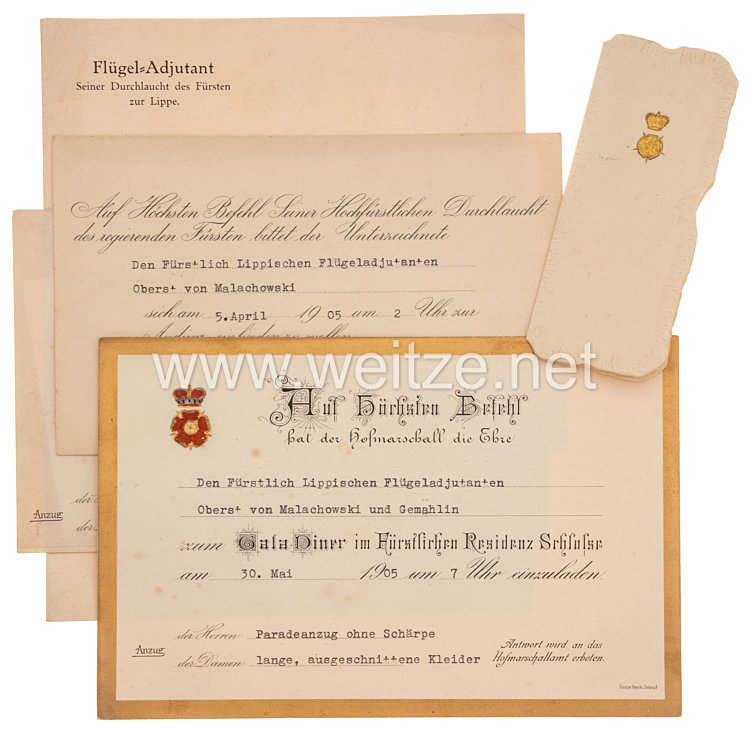
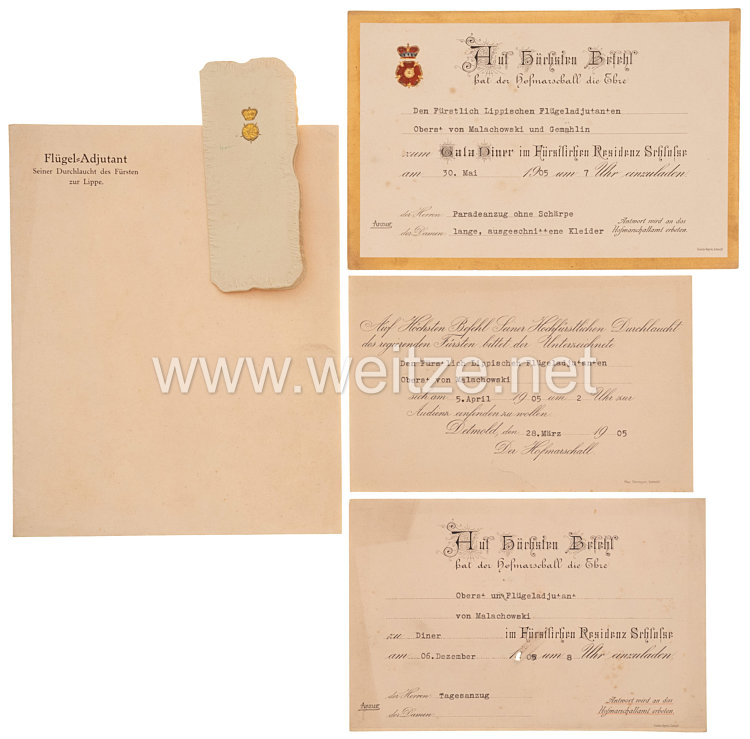
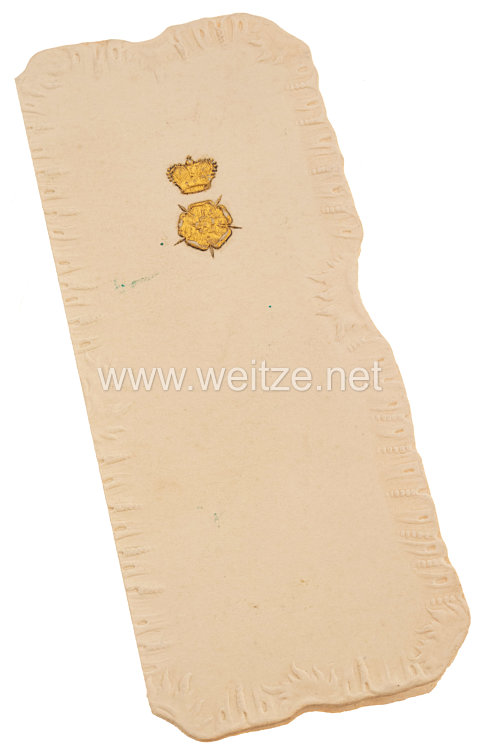
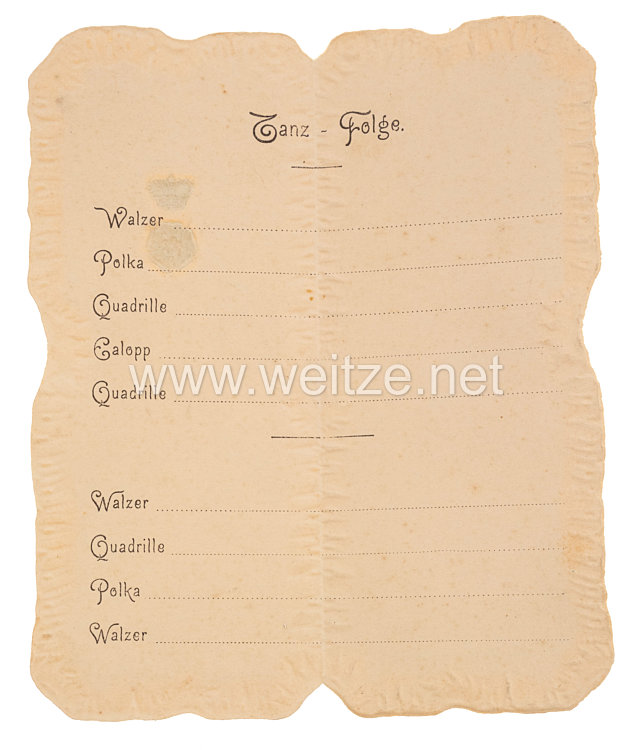
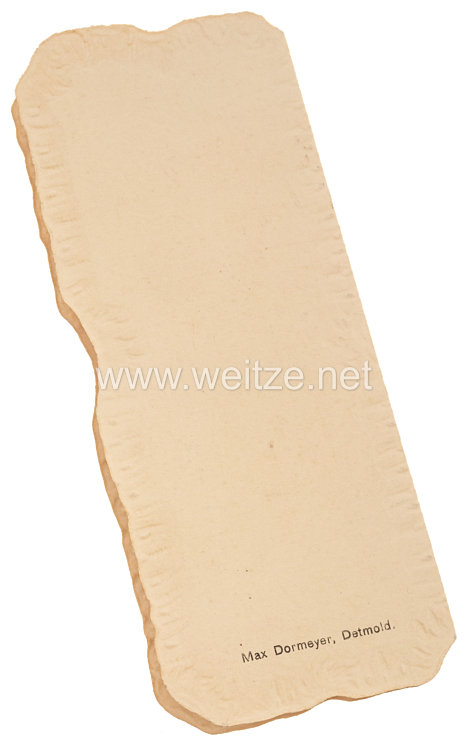
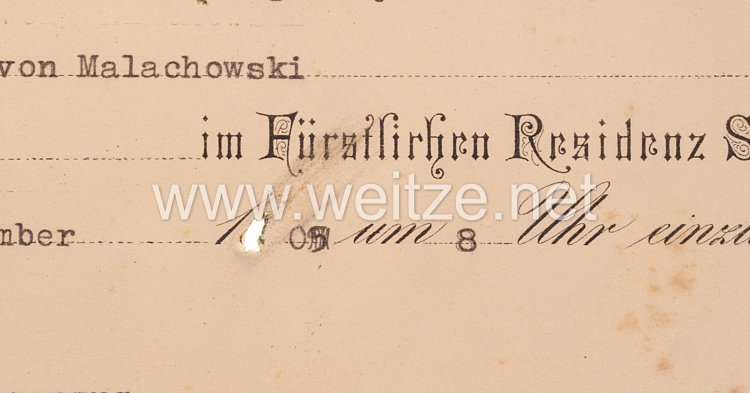
Die Schabracke/Satteldecke aus dunkelblauem Tuch mit breiter umlaufender Silberborte,in den hinteren Ecken jeweils aufgelegt die silberne Fürstenkrone über der Lippischen Rose. Typische Gebrauchs- und Altersspuren, Zustand 2. Dazu die Depeschentasche aus braunem Leder, von auf der Klappe in Gold geprägte Fürstenkrone über "Fürstlicher Flügeladjutant". Dazu noch 3 Einladungskarten für ein Gala-Dinner im Fürstlichen Residenz Schlosse sowie ein Briefbogen für den Flügeladjutanten Oberst von Malachowski.
Extrem selten, uns ist kein weiterer Nachlass eines fürstlich Lippischen Flügeladjutanten bekannt.
Die Schabracke/Satteldecke aus dunkelblauem Tuch mit breiter umlaufender Silberborte,in den hinteren Ecken jeweils aufgelegt die silberne Fürstenkrone über der Lippischen Rose. Typische Gebrauchs- und Altersspuren, Zustand 2. Dazu die Depeschentasche aus braunem Leder, von auf der Klappe in Gold geprägte Fürstenkrone über "Fürstlicher Flügeladjutant". Dazu noch 3 Einladungskarten für ein Gala-Dinner im Fürstlichen Residenz Schlosse sowie ein Briefbogen für den Flügeladjutanten Oberst von Malachowski.
Extrem selten, uns ist kein weiterer Nachlass eines fürstlich Lippischen Flügeladjutanten bekannt.