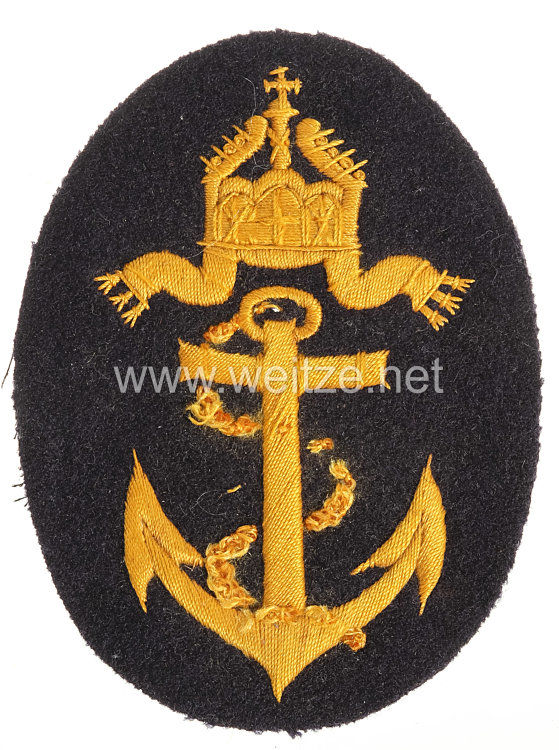
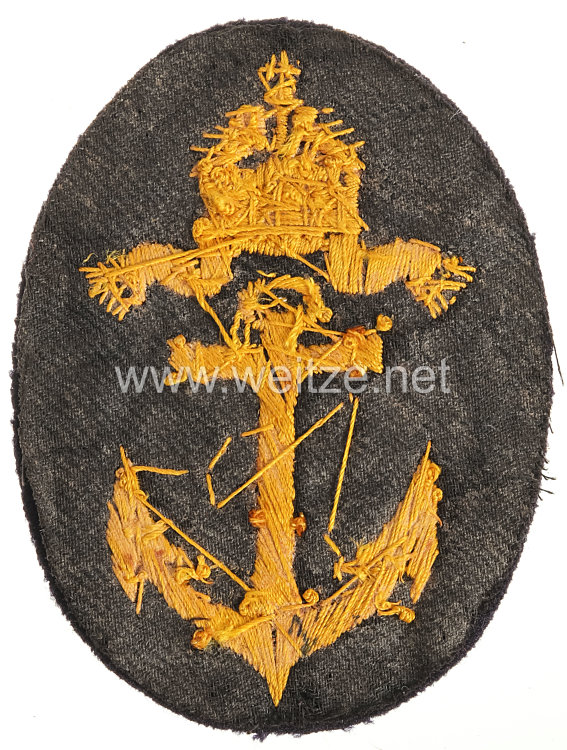
Imperial German Navy Sleeve Insignia for an Oberbootsmannsmaat
The sleeve insignia of an Oberbootsmannsmaat of the Imperial German Navy represents a fascinating testament to the maritime hierarchy and uniform traditions of the German Empire between 1871 and 1918. These hand-embroidered rank badges were an essential component of naval uniforms and reflected the strictly structured rank system of the imperial naval forces.
The Imperial German Navy (Kaiserliche Marine), founded in 1871 with German unification, developed under Kaiser Wilhelm II into one of the world's most significant naval powers. The rank of Oberbootsmannsmaat belonged to the group of non-commissioned officers without sword knot (Portepee) and represented an important position within the boatswain career path. The boatswain and his subordinate ranks were responsible for all nautical and seamanship work aboard ship, including training younger sailors in rigging work, anchor maneuvers, and general ship maintenance.
The present sleeve badge was made for the blue shirt, which was part of the crew's working uniform. The Imperial Navy distinguished between various types of uniforms: dress uniforms for official occasions, service uniforms for daily duty, and working clothes for practical tasks aboard ship. The blue shirt, often referred to as the “Blue Jacket,” was worn during daily service and work details.
The hand embroidery of these rank badges was characteristic of the period and demonstrates artisanal quality. Unlike machine-made badges of later periods, these rank identifications were individually embroidered onto the uniform fabric. The embroidery was typically executed with yellow thread on a dark background, with specific patterns and numbers of chevrons or stripes indicating the respective rank. For an Oberbootsmannsmaat, these would be specific combinations of chevrons that differed from those of simple sailors and higher boatswain ranks.
The career structure of the boatswain's division in the Imperial Navy was clearly defined: ascending from sailor (Matrose) through able seaman (Matrosengefreiter), leading seaman (Matrosenobermaat), to the various boatswain ranks such as Bootsmannsmaat, Oberbootsmannsmaat, Bootsmann, and finally Oberbootsmann. Each rank had specific responsibilities and authorities that were made visible through corresponding rank insignia.
The naval uniform regulations of the Empire were extremely detailed and precisely regulated which badges were to be worn where and how. These regulations were regularly updated and adjusted, although the basic structure remained largely constant throughout the entire existence of the Imperial Navy. Sleeve badges were affixed to the left upper arm, with the exact position specified by regulations.
Wearing these uniforms and badges was not only functional but also an expression of esprit de corps and belonging. The Imperial Navy developed its own identity and traditions that differed markedly from the Army. Naval personnel were proud of their membership in the fleet, and the uniform with its rank badges was a visible sign of this identity.
During World War I (1914-1918), the Imperial Navy played a significant, if often controversial, role. The large battleships on which men like the wearer of this badge served were involved in operations such as the Battle of Jutland in 1916. The non-commissioned officers and enlisted men formed the backbone of the fleet and were responsible for the smooth operation of complex warships.
After the war's end in 1918 and the November Revolution, which significantly originated with the sailors in Kiel and Wilhelmshaven, the Imperial Navy was dissolved. Uniforms and badges became meaningless or passed into private collections. Today, such original pieces are important historical artifacts that provide insight into the military structure and everyday culture of the Empire.
The state of preservation of such badges varies considerably. Worn examples like the one described show natural signs of use that underscore their authenticity and testify that they were actually used in service. These traces of time – slight wear to the embroidery, discoloration, or minor damage – make each piece a unique historical witness.