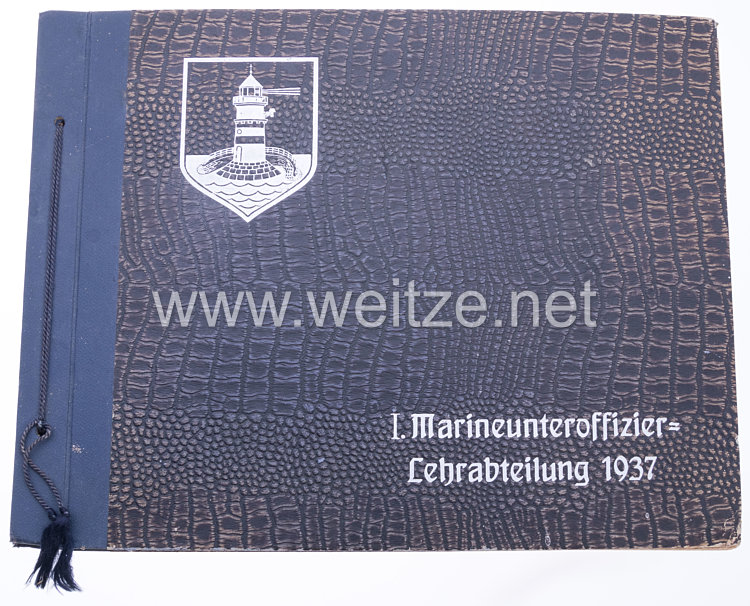
Kriegsmarine - I. Marineunteroffizier-Lehrabteilung 1937 - Commemorative Book

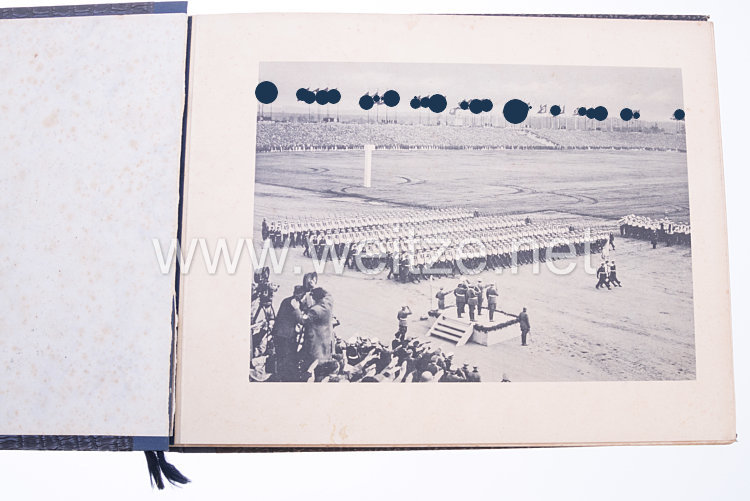
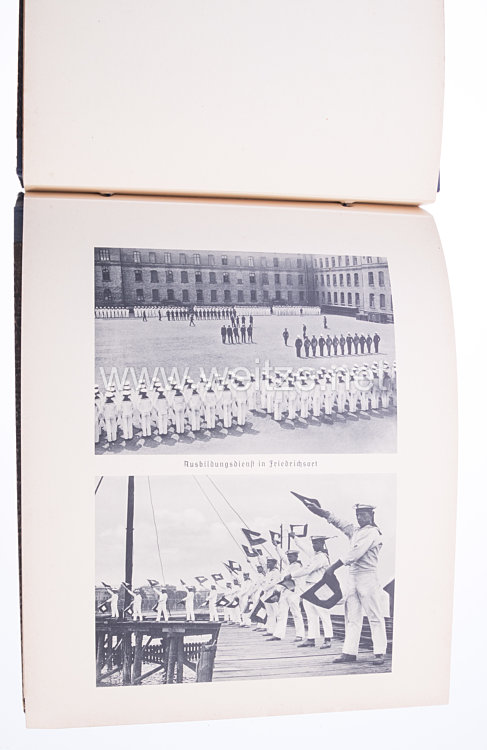
no place, no publisher, 1937, large format-landscape, unpaginated, photo book featuring e.g. Reichsparteitag, Führer parade in Berlin, daily service, etc., condition 2.
314871
125,00

Kriegsmarine - I. Marineunteroffizier-Lehrabteilung 1937 - Commemorative Book

This commemorative book of the I. Marineunteroffizier-Lehrabteilung (1st Naval Non-Commissioned Officer Training Department) from 1937 documents an important aspect of military training in Nazi Germany and the rearmament of the Kriegsmarine. Such commemorative books, also known as company books or course books, were firmly anchored in German military tradition and served both documentation and camaraderie purposes.

The Naval Non-Commissioned Officer Training Departments were central training facilities of the Kriegsmarine, which were significantly expanded after the Nazi seizure of power in 1933 and the official reintroduction of conscription in 1935. The year 1937 marks a phase of intensive rearmament and expansion of the German naval forces. Following the Anglo-German Naval Agreement of 1935, the Kriegsmarine was experiencing rapid growth, requiring qualified non-commissioned officers in large numbers.

The Navy's non-commissioned officer training was multi-staged and demanding. After basic training, prospective NCOs underwent specialized training in the training departments, where they acquired both military and technical knowledge. The training included navigation, weapons technology, ship operations, leadership qualities, and of course intensive political schooling in accordance with National Socialist ideology.

The present commemorative book documents through its selection of images the various facets of training routine and military life in 1937. The mention of the Reichsparteitag refers to the Nazi Party rallies in Nuremberg, which were staged as gigantic propaganda events. The 1937 Party Rally bore the title “Rally of Labour” and took place from September 6 to 13. The participation of naval units in such events was part of political indoctrination and was intended to demonstrate the Wehrmacht's loyalty to the National Socialist movement.

The Führerparade in Berlin (Leader's Parade) probably refers to one of the numerous military parades held in the Reich capital. Such demonstrations served as displays of power and were important propaganda instruments of the regime. For the participating soldiers, they were simultaneously marks of honor and part of their military socialization.

The depiction of “daily service” provides insight into the routine of naval training: drilling, theoretical instruction, practical exercises aboard training ships, sports, and field service. The Kriegsmarine placed great emphasis on comprehensive training that took into account both maritime traditions and modern military requirements.

Such commemorative books were typically created at the end of a course and presented to graduates as mementos. They were often accompanied by professional photographers who documented the entire training period. The books usually followed a standardized structure: group photos, images of superiors, training scenes, special events, and often private moments of camaraderie.

The large horizontal format was typical for such military commemorative books, as it enabled an effective presentation of often panoramic group shots and parade images. The production without specific page numbering suggests an individually compiled publication, possibly with varying extent for different copies.

From today's perspective, such documents are important historical sources. They offer insights into the everyday reality of military training, into the propaganda machinery of the Nazi regime, and into the gradual militarization of German society in the years before World War II. At the same time, they document the personal experiences of young men who were integrated into a system that would unleash a devastating world war just a few years later.

The preservation and scholarly examination of such objects is of considerable importance for historical understanding of this era. They enable subsequent generations to understand and critically reflect upon the mechanisms of military socialization, ideological indoctrination, and the lived experience of that generation.