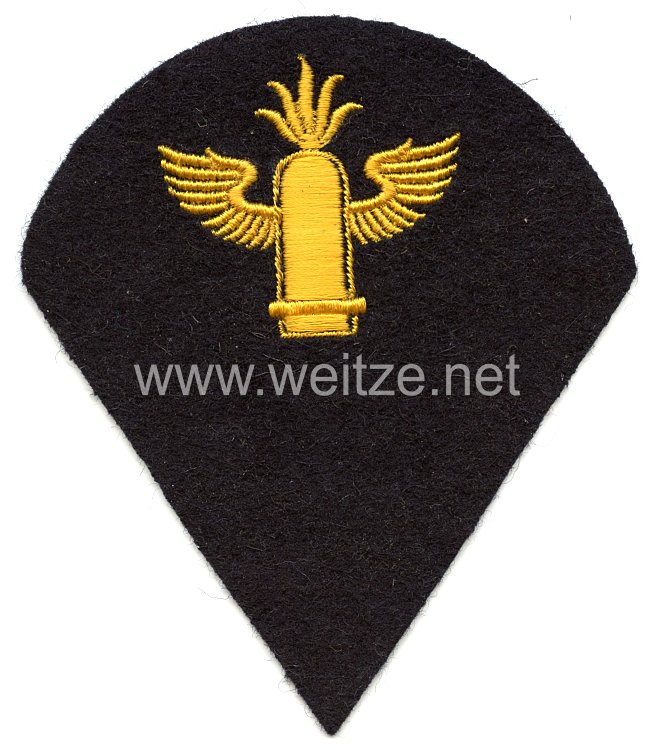
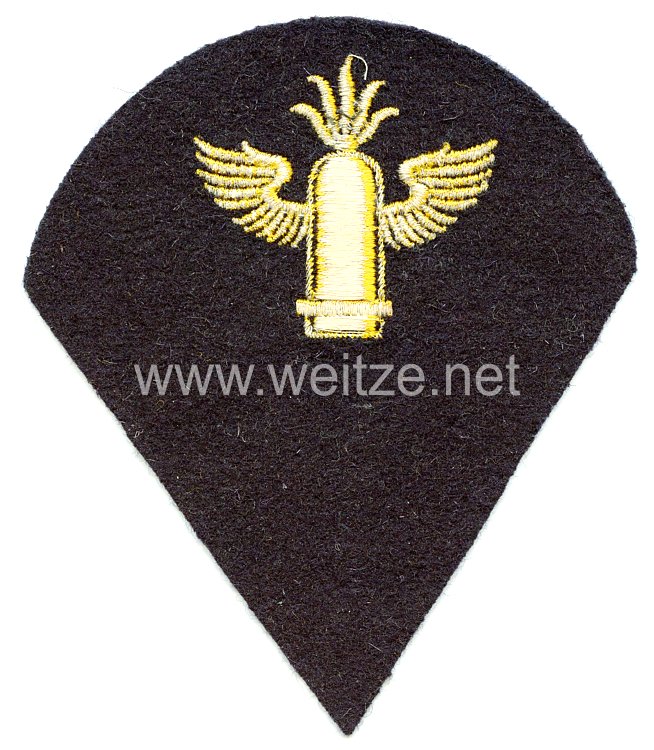
Kriegsmarine Sleeve Insignia Coastal Artillery Sailor
The Kriegsmarine sleeve badge for Coastal Artillery Sailors represents a significant example of the specialized insignia used within the German Navy during the Second World War. These badges served to visually identify the various specializations and technical branches within the complex organizational structure of the Kriegsmarine.
The Coastal Artillery (also known as naval artillery ashore) formed an essential component of German coastal defense. Its mission was to protect strategically important harbors, naval bases, coastal sectors, and sea lanes against enemy attacks. The crews of coastal artillery units were specially trained naval personnel who needed to possess both nautical knowledge and artillery skills.
The version for the Collani (naval collar) followed the precise regulations of the Kriegsmarine regarding uniform design. These sleeve badges were typically worn on the blue sailor's uniform and served as a distinctive identifier of the wearer's specialty. The regulations for wearing specialized badges were detailed in the Dress Regulations for the Kriegsmarine.
The badge for coastal artillery sailors displayed characteristic symbols representing their branch of service. Typically, these were stylized depictions of guns or other artillery elements, often combined with maritime motifs. The badges were manufactured in various quality grades, from machine-made standard versions to hand-embroidered variants for officers and non-commissioned officers.
The organizational structure of the coastal artillery developed considerably during the war. Originally relatively limited, it was massively expanded with the increasing Allied threat to European coasts, particularly as part of the Atlantic Wall project from 1942 onward. The coastal artillery comprised guns of various calibers, from smaller 88mm anti-aircraft guns to heavy naval guns with calibers of 280mm and more, installed in coastal batteries.
The training of a coastal artillery sailor was demanding and comprehensive. After basic training, specialized courses in artillery technology, fire control procedures, optics, and ballistics followed. The men had to be able to operate complex fire control equipment, calculate distances to enemy ships, and shoot accurately under various weather conditions.
The wearing of sleeve badges was strictly regulated. They were attached to the left upper arm of the uniform jacket, at a precisely defined distance from the shoulder seam. The correct placement and maintained condition of the badges were expressions of military discipline and were checked during inspections.
During the course of the war, coastal artillery units played an important role in defending strategic positions. Particularly along the Atlantic coast, in Norway, and later in the defense of German coasts, these units were deployed. The batteries were often housed in massive bunkers that were part of extensive fortification systems.
The present badge in Condition 2 indicates a well-preserved specimen showing typical signs of use but still displaying all essential details. Such badges were produced throughout the war, although manufacturing quality sometimes declined toward the end due to material shortages.
From a collector's and historical perspective, these sleeve badges are important witnesses to the military organization and hierarchy of the Kriegsmarine. They document the specialization and professionalization within the German naval forces and provide insight into the complex structure of a modern 20th-century navy.
The study of such military insignia contributes to understanding the daily reality of ordinary soldiers and complements military history, which often focuses on strategic and operational aspects, with important social-historical dimensions.
These artifacts serve as tangible reminders of the organization and structure of naval forces during a pivotal period in history, offering researchers and collectors valuable insights into the material culture and administrative systems of the Kriegsmarine.