Weimar Republic Red Cross: Estate of a Member of the Samariter-Verein
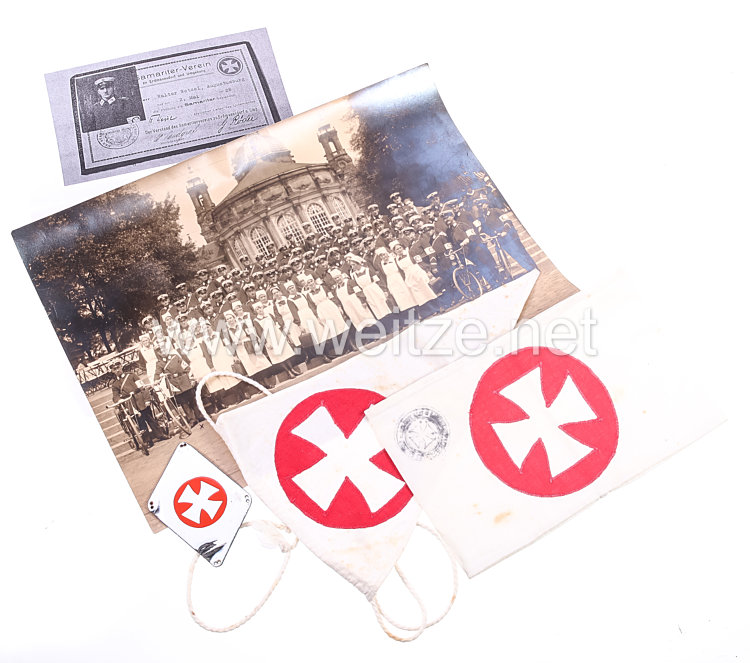
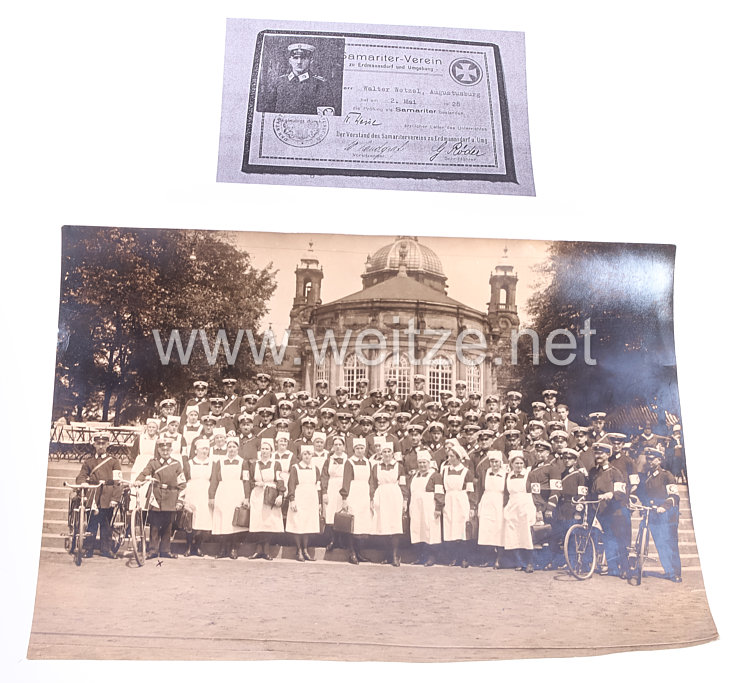
Also includes a photocopy of an identification card of the Samariter-Verein as documentation for this rare organization. All pieces worn, condition 2.
The Weimar Republic (1918-1933) was a period of profound social transformation in Germany, during which numerous humanitarian and medical aid organizations played a significant role. Among these organizations, the Samariter-Verein (Samaritan Association) occupied a special position—a now largely forgotten institution dedicated to first aid and emergency medical assistance.
The Samariter-Verein developed from the long German tradition of sanitary and aid organizations that had their roots in the 19th century. After World War I and the collapse of the German Empire in 1918, numerous new or reorganized welfare and sanitary organizations emerged in the young Weimar Republic. The Samariter-Verein was one of these organizations that existed and operated parallel to the far better-known German Red Cross.
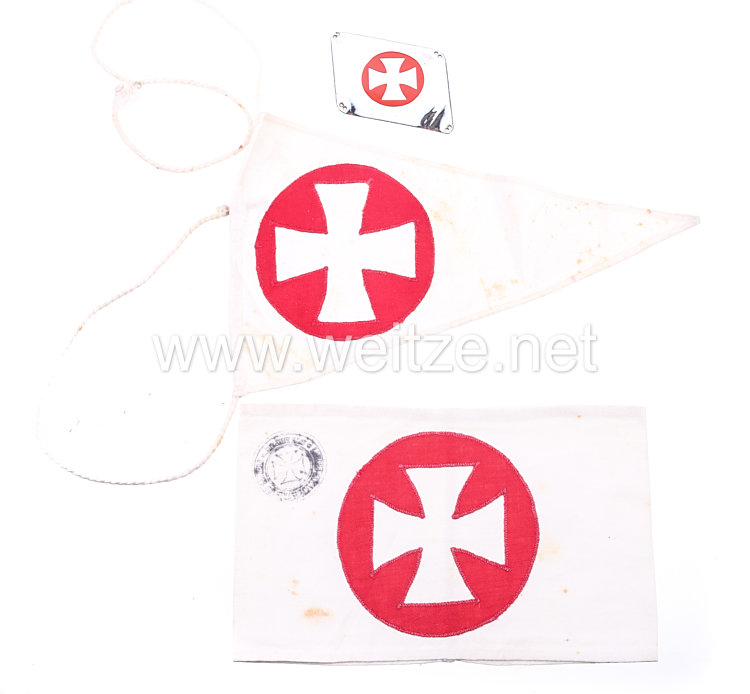
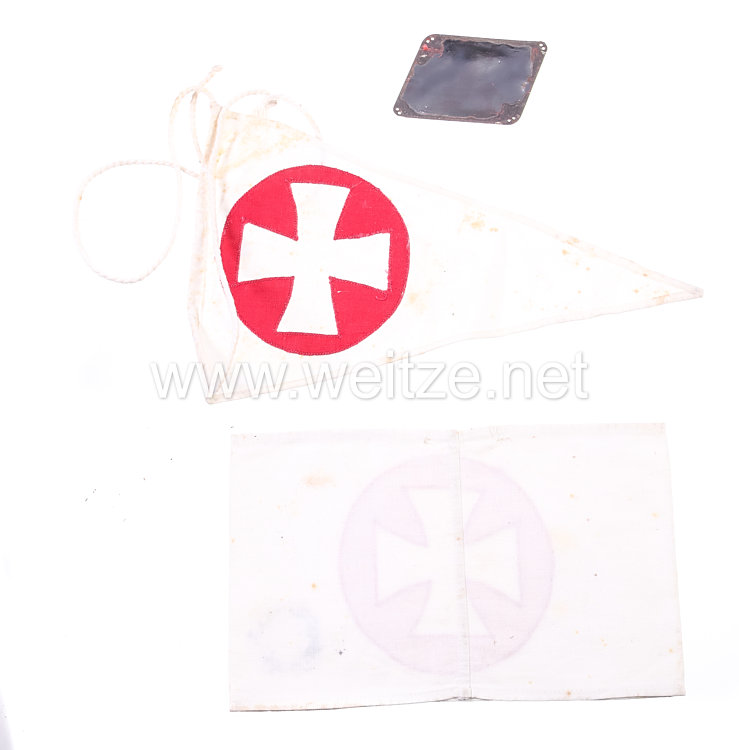
The typical equipment of a Samariter-Verein member around 1925 included several characteristic items. The armband served as the most important identifying mark during duty and legitimized the wearer as a helper during medical emergencies, public events, or accidents. These armbands typically bore the organization's emblem and were designed in the colors typical of medical services.
Particularly noteworthy is the pennant for the service bicycle, which documents the increasing mobilization of medical services in the 1920s. The bicycle was the most important means of transportation for rapid first-aid operations in urban areas during this period. Medics on bicycles could navigate through traffic and often reach accident sites faster than motorized vehicles, which were still relatively rare and expensive in the Weimar Republic. The pennant on the bicycle made the medic highly visible and signaled their official function.
The enameled collar patch for sewing onto the uniform represents the organizational structure and the effort to achieve a recognizable, professional presentation of aid organizations. Enameled badges were particularly popular during this period because they were durable, weather-resistant, and visually appealing. The enamel technique enabled detailed symbols and colors to be permanently displayed.
The existence of group photographs and identity cards documents the strongly developed community culture of these organizations. The Samariter-Verein, like many other associations of the Weimar Republic, cultivated a pronounced esprit de corps. Members met regularly for exercises, training sessions, and social occasions. Photographic documentation of these gatherings was common and served both personal memory and the organization's self-representation.
The Samariter-Verein identity card is a particularly valuable historical document, as it documents the official recognition of the organization and its members. In the Weimar Republic, such identity cards were not only membership documents but also legitimation papers that legally secured access to accident sites and the performance of first-aid measures.
The rarity of Samariter-Verein objects today underscores the historical significance of such estates. While the German Red Cross survived and still exists today, many smaller sanitary and aid organizations of the Weimar Republic disappeared during the 1930s. The Gleichschaltung (forced coordination) under the National Socialist regime from 1933 led to the dissolution or forced integration of many independent associations and organizations.
The social and medical significance of such organizations in the 1920s can hardly be overstated. In an era without comprehensive emergency medical systems, without mobile phones, and with only rudimentary public rescue services, voluntary helpers like the members of the Samariter-Verein were often the first and sometimes only helpers during accidents and medical emergencies. They provided medical care at sporting events, public festivals, and public gatherings.
The training of members included first aid, nursing, wound care, and transport of injured persons. Many members had acquired their skills during World War I or had been specially trained during the interwar period. The organizations conducted regular exercises and continuing education to keep their members up to date with the latest medical knowledge.
Such an estate documents not only the history of a single person but also an important chapter of German social and medical history. It demonstrates civic engagement, community spirit, and helpfulness during a politically and economically turbulent time that was nevertheless characterized by strong cohesion in local communities.